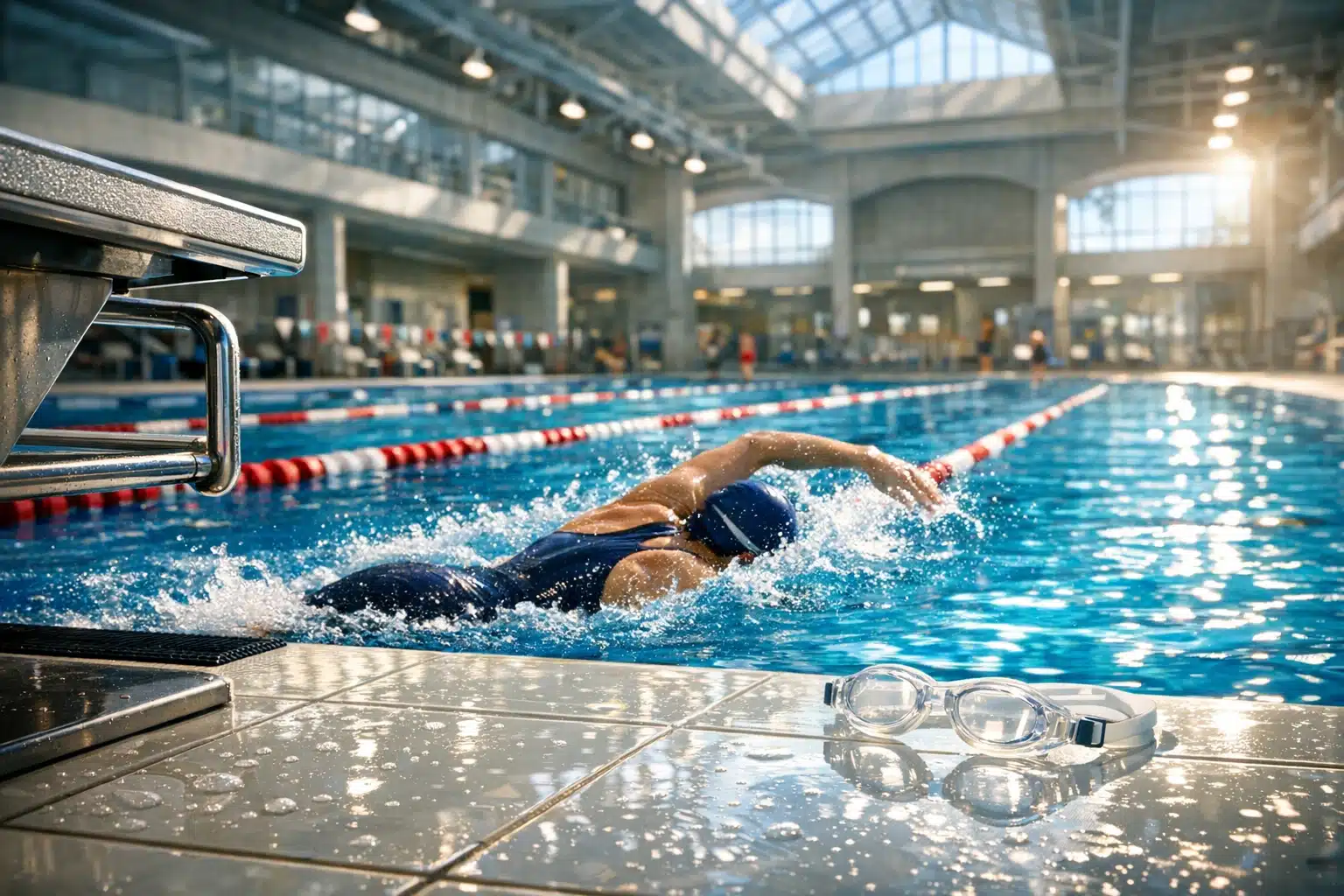
Explore the world of swimming
Swimming is one of those rare activities that can feel playful, demanding, calming, and intensely technical within the same hour. It matters because it meets people where they are: a child learning confidence, an adult protecting sore joints, or an athlete chasing speed. In pools, lakes, and coastlines, it combines survival skill, exercise, and recreation in a way few sports can. This guide maps the territory, from strokes and training to safety and lifelong enjoyment.
Outline:
– Why swimming matters as both a sport and a life skill
– How the major strokes differ in technique, rhythm, and purpose
– What science and experience say about fitness, recovery, and mental well-being
– Which safety habits, learning steps, and equipment choices make the biggest difference
– How readers can turn occasional swims into a sustainable habit that fits real life
Swimming as a Skill, Sport, and Everyday Life Tool
Swimming occupies an unusual place in human life because it is more than a pastime and more than a competitive discipline. It is a movement skill tied to safety, a form of exercise that works nearly the whole body, and a leisure activity that can be social or deeply solitary depending on the setting. Few physical practices can switch roles so easily. One day, a person may use swimming for rehabilitation after injury. Another day, the same person may join a masters club, play in the shallow end with family, or swim laps simply to think in peace. Water changes the rules of movement, and that is part of the appeal. On land, gravity dominates every step. In water, buoyancy lends a hand, resistance pushes back from every direction, and the body learns a different conversation with physics.
That flexibility helps explain why swimming remains relevant across age groups. Children often meet it first as a confidence-building skill. Teenagers may find in it a competitive sport with measurable progress. Adults frequently return to it because it is low-impact compared with many land-based activities, especially when knees, hips, or backs no longer enjoy repeated pounding. Older adults may appreciate the way water supports balance and allows steady movement without the same fear of falling. Public pools, school programs, community centers, beaches, and lakes all extend its reach, although access varies by region and season. In organized sport, swimming also offers clear benchmarks. Pool lengths are commonly 25 meters, 25 yards, or 50 meters, and times provide immediate feedback that is easy to track across weeks and years.
It is also worth seeing swimming through several lenses at once:
– as a safety skill that can reduce risk around water
– as an aerobic activity that can build endurance
– as a technical sport where small changes in body position matter
– as a restorative habit that many people use to manage stress
This article follows that wider perspective. Rather than treating swimming only as exercise or only as sport, the sections ahead look at technique, health effects, learning pathways, equipment, and long-term practice. That broad view matters because most readers are not choosing just one identity. They may be beginners who want to feel less uneasy in the water, parents considering lessons, former swimmers returning after years away, or active adults searching for a sustainable routine. Swimming has room for all of them, and understanding its many roles is the best way to start.
Understanding Technique: Strokes, Breathing, and Efficiency
If swimming looks graceful from the deck, that smoothness is usually the result of many small technical decisions. Good swimming is not simply about strength; it is about reducing drag, aligning the body, and turning effort into forward motion instead of turbulence. The four competitive strokes freestyle, backstroke, breaststroke, and butterfly each solve the problem of movement through water in a different way. Freestyle is generally the fastest and most commonly practiced because its alternating arm action and flutter kick create a relatively efficient rhythm for long distances. Backstroke shares some of that alternating pattern, but because the swimmer is face-up, it changes breathing demands and body awareness. Breaststroke is slower for most swimmers, yet often easier to learn at first because the head can rise more naturally and the stroke has a distinct glide phase. Butterfly is powerful and visually dramatic, but it demands timing, mobility, and coordination that make it challenging for newcomers.
At the center of all four strokes is body position. A horizontal, balanced body usually moves more cleanly than one with sinking hips or a lifted head. Water resistance increases quickly when shape and alignment break down, which is why beginners often feel exhausted after a short distance even when they are reasonably fit on land. They are not only working hard; they are also pushing a less streamlined form through a dense medium. Breathing matters just as much. In freestyle, for example, turning the head too far can disrupt the line of the body, while holding the breath tends to create tension. Skilled swimmers typically exhale into the water and inhale during a quick, well-timed rotation. It looks effortless, but it is really a practiced sequence.
Comparisons between strokes reveal how technique shapes training:
– Freestyle usually suits endurance sets and fitness-focused lap swimming
– Backstroke can improve posture awareness and shoulder rhythm when done well
– Breaststroke emphasizes timing and can feel more intuitive to cautious learners
– Butterfly develops power and coordination but is rarely the easiest starting point
Drills help translate these ideas into habit. A kickboard can isolate the legs, pull buoys can highlight arm mechanics, and side-kicking drills can teach balance during freestyle breathing. Yet tools work best when they support clear goals rather than replace sound instruction. One useful principle is to seek length before speed. A swimmer who takes fewer, cleaner strokes per lap often becomes faster later because efficiency lowers energy waste. In that sense, swimming resembles handwriting or music practice more than brute-force training. Precision first, fluency second, speed last. Once the water stops feeling like an obstacle and begins to feel like a partner, progress becomes far more enjoyable.
Why Swimming Benefits the Body and Mind
Swimming has a strong reputation as a full-body workout, and that reputation is well earned, though the reasons deserve a closer look. Because water provides resistance in every direction, even a steady lap session asks the shoulders, back, chest, core, hips, and legs to contribute. The exact muscular emphasis changes by stroke, but the whole system stays engaged. Freestyle and backstroke rely heavily on coordinated pulling and rotational stability. Breaststroke places more noticeable demand on the inner legs and timing of the kick. Butterfly can be especially taxing on the shoulders, trunk, and hip-driven undulation. Unlike many gym exercises that isolate one region at a time, swimming tends to blend effort across the body in a continuous pattern.
Its cardiovascular value is equally important. Health authorities such as the World Health Organization recommend that adults aim for at least 150 minutes of moderate-intensity aerobic activity per week, and swimming can clearly contribute to that target. Lap swimming can raise heart rate, improve endurance, and support long-term fitness, while lower-intensity water movement may suit people who need a gentler entry point. Because buoyancy reduces impact, many people with joint discomfort find swimming or water exercise more manageable than running or jumping-based workouts. That does not mean it is easy. Water can be deceptively demanding, especially for beginners whose technique is still developing, and even comfortable pool sessions can become challenging over time.
The mental side matters too. Many swimmers describe a session as both energizing and quieting. Repetitive strokes, controlled breathing, and the muffled soundscape of water can create a rhythm that feels almost meditative. Research on physical activity more broadly links regular exercise with improved mood and lower stress, and swimming often fits naturally into that picture. It can also restore confidence. Adults who learn to swim later in life frequently talk about overcoming embarrassment or fear, which turns each small milestone into something larger than fitness.
Several practical benefits make swimming attractive for long-term use:
– it can support aerobic conditioning without constant impact on joints
– it develops coordination as well as endurance
– it offers scalable intensity, from easy recovery swims to hard interval sets
– it can complement other sports by improving work capacity and mobility
Calorie expenditure, often a popular talking point, varies widely by body size, stroke, temperature, and pace, so broad estimates should be treated carefully. What matters more is consistency. A moderate swimmer who trains three times a week often gains more than someone who performs one exhausting session and disappears for a month. Swimming rewards regular contact with the water. Over time, that contact can improve fitness, sharpen body awareness, and make exercise feel less like punishment and more like competence in motion.
Learning to Swim Safely: Progression, Pool Habits, and Essential Gear
For beginners, swimming can feel like learning a new language with a physical accent. The water changes breathing, balance, vision, and even confidence, so the learning process works best when it is broken into clear steps. Floating, submerging the face, exhaling underwater, kicking while supported, and gliding are not trivial exercises; they form the foundation on which every later skill rests. Strong instruction matters here. A qualified teacher can spot inefficient habits early, choose drills that match the learner’s comfort level, and reduce the tendency to panic when coordination temporarily falls apart. Adult beginners in particular often benefit from lessons designed for adults rather than being placed into child-centered formats. They usually need explanation as much as repetition.
Safety is the non-negotiable side of swimming, and it extends well beyond the question of whether someone can cross a pool. Water depth, temperature, fatigue, weather, currents, and supervision all matter. Open water deserves special respect because it removes the tidy boundaries of lane lines and pool walls. A lake may hide sudden drop-offs, weeds, cold spots, or poor visibility. Sea swimming adds surf, tides, and currents. Even skilled pool swimmers can be surprised by these changes. That is why safety planning should be ordinary rather than dramatic. Swim with others when possible, choose supervised areas, know how to exit the water, and understand your own limits before they become visible from the shore.
Useful habits include:
– warming up before hard efforts instead of diving into top speed
– checking lane direction and pace before joining a busy pool
– keeping rest periods sensible when fatigue affects form
– using bright caps and tow floats for visibility in open water where appropriate
– stopping immediately if dizziness, chest pain, or unusual distress appears
Equipment can help, but it should stay in its proper place. A well-fitting swimsuit, goggles that seal comfortably, and a cap are enough for many swimmers. Kickboards, pull buoys, fins, paddles, and snorkels can all serve training goals, yet none of them replaces sound mechanics. Fins may improve body position, but they can also mask weak kicking habits. Paddles build awareness of the catch, though they place extra load on the shoulders if used carelessly. For beginners, the smartest approach is usually simple gear, steady coaching, and patient repetition. Confidence in water is built layer by layer. One calm breath leads to one good float, one good float leads to one controlled length, and eventually the pool stops feeling like a test and starts feeling like a place where the body knows what to do.
Conclusion: Building a Lifelong Relationship with Swimming
Swimming can begin as curiosity, necessity, or frustration, but it often becomes something steadier once it finds a place in ordinary life. That is one of its greatest strengths. It does not require every session to be heroic. A person can swim for competition, rehabilitation, exercise, stress relief, family fun, or all of these at different points in the year. Young athletes may pursue split times and race strategy, while busy adults may simply want a reliable workout that does not batter their joints. Parents may value lessons because water confidence opens doors to safer holidays and greater independence. Older swimmers may appreciate the way the pool offers movement without constant impact. The same medium serves different ambitions without losing its core appeal.
For readers wondering how to turn interest into action, the next steps do not need to be dramatic:
– book a lesson if technique or confidence is the main barrier
– choose a realistic weekly routine, even if it starts with one session
– focus on comfort, breathing, and consistency before chasing speed
– use progress markers such as smoother laps, easier recovery, or better body position
– treat safety habits as part of the sport, not as optional extras
Competitive swimming will always have its own theater of early-morning training, flip turns, race nerves, and scoreboard precision. Recreational swimming offers a different kind of reward: a quiet lane at dusk, sunlight scattering across the bottom of the pool, and the satisfying rhythm of strokes that finally feel connected. Neither path is more valid. In fact, many swimmers move between them over time. Someone who starts with fitness goals may later join a club. A former racer may return years later just for the pleasure of moving through water without a stopwatch.
That is why swimming remains so relevant. It teaches practical skill, cultivates health, and offers a rare combination of discipline and release. If you are a beginner, the best starting point is not perfection but familiarity. If you already swim, the next level may come from refining technique rather than adding strain. If you have been away from the pool, returning can be less about reclaiming an old identity and more about discovering a new one. The water does not ask for a grand introduction. It asks for attention, respect, and a willingness to learn. Give it those, and it gives back challenge, clarity, and a form of movement that can stay with you for decades.