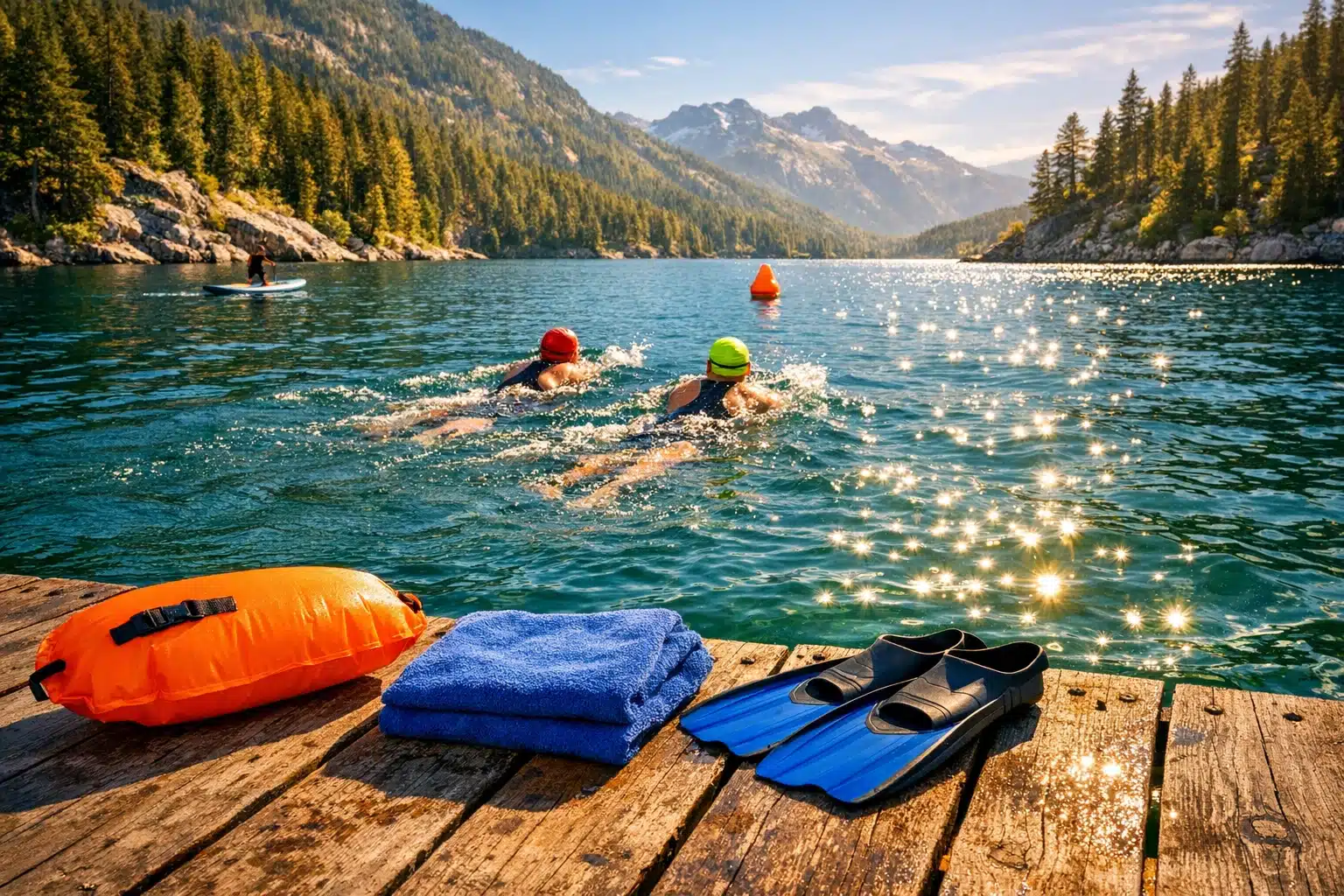
Explore the world of swimming
Swimming sits at a rare crossroads where sport, survival skill, therapy, and pure recreation meet in the same stretch of water. A child learning to float, an office worker easing stiff joints, and an athlete chasing split times all depend on buoyancy, breath control, and timing. Because it trains the heart while sparing the body from constant impact, it remains useful for many ages and fitness levels. This article explores technique, health benefits, training, equipment, and the habits that make time in the water safer and more rewarding.
Outline: This article begins with the basic science of moving through water and the differences between major strokes. It then examines why swimming is such an effective form of exercise for cardiovascular fitness, muscle engagement, and mental well-being. The third section focuses on learning technique and correcting common mistakes. After that, the article explores training methods, equipment, and competition. The final section covers safety, etiquette, and the lifelong value of swimming in pools and open water.
The Foundations of Movement in Water
Swimming looks graceful when done well, but beneath that smooth surface lies a fascinating mix of physics, coordination, and controlled effort. Water is far denser than air, which means every movement meets resistance. That resistance is the reason swimming can be both tiring and effective: the body works against pressure in every direction rather than only against gravity. At the same time, buoyancy supports body weight, reducing impact on knees, hips, and spine. This combination makes swimming unusual among sports. It can feel gentle on the joints while still demanding strong lungs, a steady core, and precise timing.
Good swimming begins with body position. A swimmer who stays long and level in the water travels more efficiently than someone whose hips sink or whose head lifts too high. Even small changes matter. Looking slightly downward instead of forward can bring the hips up. Relaxing the neck can reduce drag. Breathing, which seems simple on land, becomes an essential technical skill in the pool. Swimmers need to exhale underwater and inhale quickly when the body rotates or rises into position. When breath is mistimed, strokes often fall apart. The water then feels less like a partner and more like a wall.
The four competitive strokes each solve the problem of movement in a different way. Freestyle, usually swum as front crawl, is generally the fastest because it combines alternating arm recovery with a streamlined body line. Backstroke mirrors some freestyle mechanics but is performed face up, which changes breathing and spatial awareness. Breaststroke is slower but highly technical, relying on timing between pull, kick, and glide. Butterfly is the most physically demanding for many swimmers because both arms recover together and the body moves in a wave-like pattern. A useful comparison is this: freestyle rewards rhythm, backstroke rewards alignment, breaststroke rewards timing, and butterfly rewards power married to precision.
For beginners, a few principles are worth remembering:
• Long shapes move better than hurried splashing.
• Breathing should fit the stroke, not interrupt it.
• Kicks should support balance instead of creating chaos.
• Relaxation often improves speed more than extra force.
Once these basics are understood, swimming becomes easier to read and easier to improve. What seemed mysterious starts to reveal a logic of balance, leverage, and flow. In that sense, every lap is both physical work and a quiet lesson in applied mechanics.
Why Swimming Is a Powerful Form of Exercise
Swimming has earned a lasting place in fitness because it trains multiple systems at once without asking the body to absorb repeated impact. During a steady session, the heart and lungs work continuously to deliver oxygen to active muscles. That makes swimming an effective form of aerobic exercise, and it can also become anaerobic during fast intervals, sprint sets, or race efforts. Health organizations commonly recommend that adults get at least 150 minutes of moderate aerobic activity per week, and swimming can help meet that target in a way that many people find refreshing rather than repetitive.
One reason swimmers often describe the sport as “full-body” is that nearly every major muscle group contributes. The shoulders, chest, back, and arms drive the pull. The core helps maintain position and transfer force. The hips and legs stabilize the body and power the kick. Unlike some gym routines that isolate one area at a time, swimming ties movement patterns together. That does not mean it builds muscle in the same way as heavy strength training, but it does promote muscular endurance, posture awareness, and coordination. For people who spend long hours sitting, the contrast can feel dramatic: the body goes from compressed and static to stretched and rhythmic.
Swimming also appeals to people who need a lower-impact option. Runners with sore joints, older adults looking for safe activity, and individuals returning from some injuries often find water more forgiving than pavement or hard studio floors. The support of the water can reduce stress on the body, although technique and medical guidance still matter. It is not automatically effortless. In fact, many first-time lap swimmers are surprised by how demanding a few lengths can be. Resistance from water means even moderate sessions require real energy. Depending on pace, stroke, and body size, lap swimming may burn several hundred calories per hour, with vigorous efforts climbing much higher.
The mental benefits deserve equal attention. Repeated laps create a rhythm that many swimmers compare to moving meditation. Breath, stroke count, wall turns, and the muffled sound of water can narrow attention in a productive way. For some, the pool is one of the few places where phones, traffic, and constant noise cannot easily follow. Common benefits people report include:
• Reduced stress after structured sessions
• Better mood from regular movement
• Improved sleep when training is consistent
• A sense of progress that comes from measurable laps and times
In short, swimming is powerful because it offers efficiency without monotony. It can challenge elite athletes, welcome cautious beginners, and support long-term fitness in bodies that might not tolerate more jarring forms of exercise.
Learning the Strokes and Fixing Common Technique Errors
Learning to swim well is not only a matter of trying harder. In fact, extra effort applied to poor mechanics often makes the experience more frustrating. New swimmers frequently fight the water by lifting the head, kicking too widely, holding the breath, or rushing the arms. The result is predictable: the legs sink, fatigue arrives early, and confidence drops. Good instruction changes that pattern by breaking the skill into manageable parts. Before speed comes balance. Before power comes control. Before long workouts come short, repeatable movements that teach the body where it should be in the water.
Freestyle is usually the first stroke people learn for lap swimming, and it offers a useful example of how technique matters. A common beginner mistake is windmilling the arms while the body stays flat. Efficient freestyle depends on rotation through the torso, a relaxed recovery, and a catch that pulls water backward rather than pressing downward. Breathing can be another stumbling block. Many people try to lift the whole head to inhale, which drops the hips and interrupts momentum. Turning the head with the body rotation, with one goggle still in the water, often creates a cleaner breath. Backstroke introduces a different challenge: swimmers can breathe freely, but they must trust alignment without seeing where they are going. Breaststroke requires patience because its timing is easy to scramble. Butterfly often arrives later because it asks for coordinated rhythm, strong core control, and comfort with a dolphin kick.
Drills are especially valuable because they isolate one piece of the stroke at a time. A kickboard can help swimmers focus on leg action, though it should not become a permanent crutch. Side-kicking drills teach balance and rotation. Single-arm freestyle highlights the path of the pull. Sculling develops feel for the water, which is the subtle ability to sense pressure and angle rather than simply moving the limbs. Progress usually looks less dramatic than people expect. One small correction in head position or exhalation may save more energy than a week of brute-force training.
Useful technique reminders include:
• Exhale steadily underwater instead of waiting until the last second.
• Keep the kick narrow and controlled rather than frantic.
• Reach forward with purpose, but do not overextend into a locked shoulder.
• Let the body roll naturally in freestyle and backstroke.
• Think of the water as something to hold and move past, not something to slap.
There is a creative side to learning, too. A well-timed stroke can feel like sliding a letter into an envelope: clean, deliberate, and almost silent. When that sensation appears, even briefly, swimmers understand why technique is so addictive. Efficiency makes the pool feel larger, time feel slower, and effort feel smarter.
Training Plans, Equipment, and the Path from Casual Swims to Competition
Once the basics are in place, swimming opens into many possible directions. Some people want general fitness and stress relief. Others train for triathlons, masters meets, school teams, or open-water events. The structure of training depends on the goal, but most effective plans include a mix of easy volume, technique work, and faster efforts. A typical session may begin with a warm-up, move into drills, then shift to a main set built around intervals or distance targets, and finish with a cool-down. This format helps swimmers prepare the body gradually, practice skill while fresh, and then apply that skill under fatigue.
Training intensity matters as much as total distance. Endless easy laps can build comfort in the water, yet improvement often stalls if pace never changes. Intervals add purpose. For example, a swimmer might complete repeated 50-meter or 100-meter efforts with short rest, learning to hold a consistent speed. Sprint sets sharpen power and stroke rate. Longer aerobic sets build endurance and pacing. Competitive swimmers also pay attention to starts, turns, underwater push-offs, and split times because races are often decided by small efficiencies rather than obvious differences in strength. In a 25-meter pool, every wall becomes an opportunity to gain or lose momentum.
Equipment can help, though it works best when used thoughtfully. Goggles improve visibility and comfort. Caps reduce drag slightly and keep hair contained. Kickboards, pull buoys, fins, and paddles each serve a training purpose, but none should replace sound technique. Fins can improve body position and allow swimmers to feel speed. Pull buoys reduce the role of the legs so the upper body can be emphasized. Paddles increase resistance and reveal flaws in the catch, although they should be introduced carefully to protect the shoulders. A pace clock remains one of the sport’s simplest and most useful tools, turning vague effort into measurable training.
Different swimmers also benefit from different routines:
• Recreational swimmers often thrive on short, varied workouts that keep motivation high.
• Triathletes usually emphasize efficient freestyle, sighting skills, and sustainable pacing.
• Competitive pool swimmers need precise sets, race-specific work, and recovery planning.
• Older adults may prioritize technique, mobility, and manageable volume over raw speed.
The jump from casual swimming to organized competition can be exciting, but it does not have to be dramatic. Many local clubs and masters programs welcome adults of varied ability. The lane line then becomes something more than a divider. It marks the difference between drifting through a session and training with intention, which for many swimmers is where the sport becomes truly compelling.
Open Water, Pool Etiquette, and Essential Safety Habits
Swimming is rewarding partly because it can happen in many settings, but each environment carries its own demands. Pools offer measured distances, lane markings, controlled temperatures, and lifeguard supervision in many facilities. Lakes, rivers, and oceans provide variety, scenery, and adventure, yet they also introduce currents, waves, visibility issues, weather changes, and navigation challenges. A swimmer who feels strong in a pool may be surprised by how different open water feels. There is no black line on the bottom, no wall every 25 or 50 meters, and often no calm surface. Confidence must be built with preparation rather than assumption.
Safety starts long before the first stroke. Beginners should learn with qualified instruction whenever possible, especially if they are not comfortable floating, breathing, or treading water. Even experienced swimmers benefit from habits that seem simple because simple habits prevent avoidable trouble. Never underestimate fatigue. Never treat unfamiliar water casually. Never assume that confidence in one setting transfers perfectly to another. In open water, swimming with a partner or organized group is a wise standard, not an optional extra. Bright caps and tow floats improve visibility. Checking water temperature, weather, and local conditions can matter as much as physical fitness.
Pool etiquette is another part of swimming culture that deserves attention. Shared lanes work best when swimmers follow the pace of the group, rest in corners rather than blocking the wall, and communicate clearly before starting a set. Circle swimming, where swimmers keep to one side of the lane, reduces collisions. Passing should be done considerately, usually at the wall if space is tight. These small rules may sound mundane, yet they make a crowded pool far more efficient and pleasant. A smooth session often depends as much on awareness of others as on personal technique.
Core safety reminders include:
• Warm up before hard efforts, especially in cold water.
• Stop if dizziness, chest pain, or unusual shortness of breath occurs.
• Supervise children closely around any water, even shallow areas.
• Use lifeguarded venues when possible.
• Respect flags, warning signs, and local guidance in natural water.
There is also a broader lesson in swimming safety: skill creates freedom. The stronger and more aware a swimmer becomes, the more places water can be enjoyed with confidence rather than fear. A pool lane can be a training ground, but it is also preparation for a wider relationship with water that is practical, enjoyable, and, above all, responsible.
Conclusion for Readers Who Want to Swim Better and Safer
Swimming rewards patience more than showmanship. Whether your goal is basic water confidence, improved fitness, cleaner technique, or competitive progress, the most useful approach is consistent practice built on sound habits. Learn how your body sits in the water, give breathing the attention it deserves, and treat safety as part of skill rather than a separate topic. If you keep showing up with curiosity and discipline, the pool stops feeling like a challenge to survive and starts feeling like a place where strength, calm, and progress can grow together.