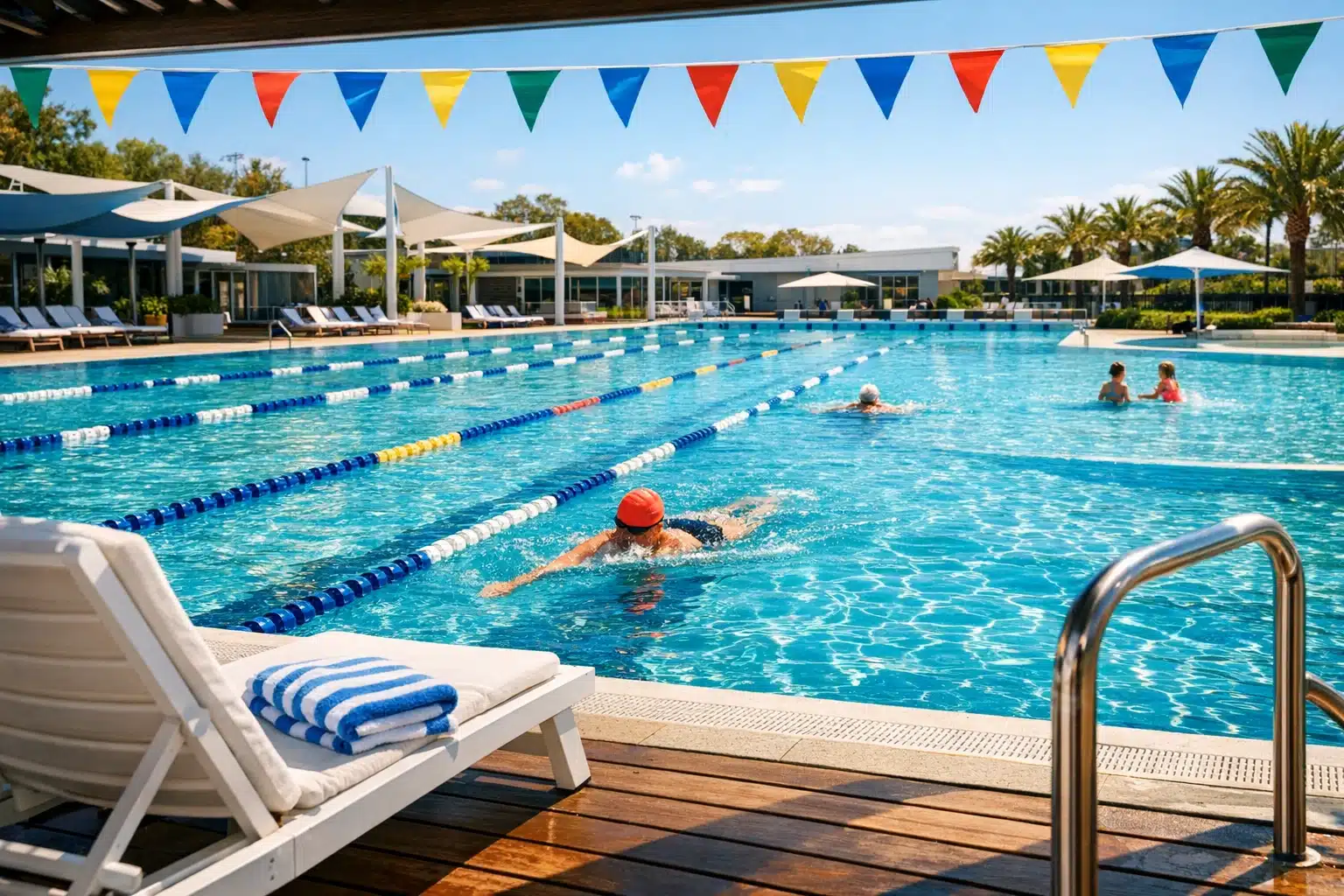
Explore the world of swimming
Swimming is one of those rare activities that feels playful and serious at once, welcoming children, busy adults, competitive athletes, and nervous beginners into the same blue space. It can strengthen the heart, calm the mind, and teach a life-saving ability in a single practice. Because it belongs equally to sport, therapy, and leisure, swimming stays relevant across ages, goals, and seasons. This article looks at its value, techniques, benefits, safety demands, and practical entry points for new swimmers.
Outline
- Swimming as a life skill, sport, and cultural practice
- The physical and mental benefits of regular time in the water
- A comparison of major strokes and the techniques behind efficient movement
- Safety, training environments, equipment, and smart practice habits
- A concluding guide for readers who want to begin, improve, or stay consistent
Swimming as a life skill, sport, and lifelong activity
Swimming occupies a special place among physical activities because it sits at the crossroads of survival, sport, and enjoyment. A person may first encounter it as a childhood lesson, later return to it as a fitness routine, and eventually rely on it as a gentle form of exercise that remains comfortable long after running or high-impact court sports become harder on the body. Few disciplines travel so well across the stages of life. It is equally at home in a school program, a summer camp, a rehabilitation center, an Olympic venue, and a quiet community pool at dawn.
Its practical importance is impossible to ignore. Water surrounds daily life in many parts of the world through beaches, rivers, lakes, canals, and backyard pools. Learning to swim does not remove all danger, but it improves confidence, decision-making, and emergency response in aquatic settings. The World Health Organization has repeatedly identified drowning as a major public health issue, with hundreds of thousands of deaths occurring globally each year. That fact alone makes swimming instruction more than a leisure option. It becomes part of basic safety education, much like learning how to cross a road or ride a bicycle responsibly.
Swimming also stands out for its accessibility in spirit, even if access to facilities still varies by location and income. In the water, body size matters differently. Gravity loosens its grip, and movement can feel more available to people who find land exercise uncomfortable. That sensation is part science and part magic. A pool can seem almost democratic: the lane does not care whether you arrived as a beginner, a former athlete, or someone rebuilding health after a long break.
From a cultural perspective, swimming has many identities:
- Competitive racing built around speed, strategy, and technique
- Recreational swimming that supports family time and stress relief
- Aquatic therapy used in recovery and mobility work
- Open-water swimming connected to adventure and endurance
- Instructional programs focused on safety and confidence
That variety helps explain its staying power. Some sports ask people to fit a narrow mold. Swimming does the opposite. It offers multiple entry points and different definitions of success. For one person, progress means finishing a first 25 meters without stopping. For another, it means refining a turn to shave a second from a race split. In both cases, the water rewards patience, repetition, and attention. It teaches through feel as much as force, and that is one reason swimmers often describe it not just as exercise, but as a relationship with movement itself.
The health benefits of swimming for body and mind
Swimming has earned its reputation as a full-body workout because it asks many systems to work together at once. The arms pull, the legs drive rhythm, the core stabilizes rotation, and the heart and lungs support every meter. Unlike some forms of exercise that heavily stress one region while neglecting another, swimming distributes the effort across the entire body. The result is a mode of training that can build endurance, coordination, and muscular balance in a single session.
Cardiovascular health is one of its strongest advantages. Sustained swimming challenges the heart to deliver oxygen efficiently while teaching the body to manage breath under controlled stress. Over time, regular aerobic activity can improve stamina, lower resting heart rate, and support healthier blood pressure when combined with good overall habits. Swimming sessions also burn meaningful energy. The exact number varies with body size, intensity, and stroke choice, but even moderate lap swimming can use several hundred calories per hour, while harder efforts climb much higher. Front crawl and butterfly typically demand more energy than breaststroke or easy backstroke, making the pool a flexible place for both steady conditioning and vigorous interval work.
Joint comfort is another major reason people choose swimming. Because water supports the body, many individuals with arthritis, previous injuries, or excess body weight find aquatic exercise easier to tolerate than pounding pavement. That reduced impact does not mean reduced value. In fact, the resistance of water can make movements feel smoother while still requiring real effort. Every sweep of the hand and kick of the leg meets steady opposition, which helps develop strength and control without the jarring effect common in land-based workouts.
The mental benefits deserve equal attention. Repetitive movement, measured breathing, and the muffled quiet of the pool can create a deeply focused state. Many swimmers describe a session as a reset button. The mind narrows to stroke count, exhalation, wall timing, and the shimmering stripe below. Research on physical activity more broadly links regular exercise with improved mood, reduced stress, and better sleep, and swimming fits neatly into that picture.
Its broad health appeal can be summed up simply:
- Supports heart and lung function
- Builds muscular endurance with low joint impact
- Improves flexibility and coordination
- Can aid recovery and active rehabilitation
- Encourages stress reduction through rhythmic motion
For older adults, swimmers returning from injury, and people who dislike crowded gyms, those benefits can be especially meaningful. The beauty of swimming is not that it does one thing brilliantly and ignores the rest. It is that it combines conditioning, resistance, mobility, and mental focus in a single environment. In a world full of fragmented wellness advice, that kind of efficiency is refreshingly straightforward.
Understanding the strokes and the technique behind efficient swimming
To an untrained eye, swimming can look simple: jump in, move forward, breathe when needed. In reality, good technique is a careful arrangement of body position, timing, balance, and propulsion. Water is less forgiving than air. Small mistakes create drag, and drag quietly steals speed, comfort, and endurance. That is why two swimmers with similar fitness can produce very different results. Technique is not decoration in swimming; it is the engine room.
The four competitive strokes each bring their own character. Front crawl, often called freestyle in racing contexts, is usually the fastest and most efficient over longer distances when performed well. It relies on a streamlined body line, a flutter kick, high-elbow recovery, and side breathing that does not lift the head too much. Breaststroke is slower but popular among recreational swimmers because the breathing pattern feels more natural and the face spends less time underwater. Its whip kick and timing, however, are more technical than they first appear. Backstroke offers a useful contrast: the body stays face-up, breathing is unrestricted, and symmetrical shoulder rotation helps reinforce awareness of body alignment. Butterfly is the most demanding of the four, requiring precise timing between arm recovery, core-driven undulation, and dolphin kick. When it works, it looks like poetry. When it does not, it feels like wrestling a wave.
A useful comparison looks like this:
- Front crawl: fastest, versatile, excellent for fitness and racing
- Breaststroke: approachable for many learners, slower, highly technical kick
- Backstroke: good for posture awareness and easier breathing, tricky navigation
- Butterfly: powerful and dramatic, but physically demanding and hard to master
No matter the stroke, several principles show up again and again:
- Keep the body as long and balanced as possible
- Exhale steadily rather than holding tension in the chest
- Use the core to connect upper and lower body movement
- Let the water be held and pushed, not slapped at
- Prioritize rhythm before raw force
Beginners often believe stronger kicking alone will solve everything. In truth, many problems begin with head position or poor alignment. Lifting the eyes too high can drop the hips. Rushing the arms can flatten the catch. Forgetting to exhale underwater can turn every breath into a minor panic. Skilled swimmers learn economy. Their motion appears calmer because it wastes less energy.
This is where coaching and drills make a difference. Single-arm practice, kick sets, sculling, pull buoy work, and breathing exercises isolate parts of the stroke so they can be improved without overload. Progress is rarely dramatic from one day to the next. Instead, it arrives quietly, like noticing that the wall comes closer with less struggle. In swimming, efficiency often feels like the water finally agreeing to cooperate.
Safety, training environments, and the habits that support progress
Swimming offers freedom, but it also demands respect. Confidence in water should never become carelessness, because conditions can change quickly and fatigue can arrive earlier than expected. Strong technique helps, yet safety depends on judgment just as much as skill. That matters in every setting, from a supervised public pool to a calm-looking lake that hides cold water, currents, weeds, or poor visibility below the surface.
Pool swimming is usually the most controlled environment for learning and consistent practice. Lane lines organize movement, water depth is known, and lifeguards may be present. For beginners, that structure reduces uncertainty and allows attention to stay on breathing, floating, and stroke mechanics. It also supports measurable training. Distances can be tracked, intervals repeated, and progress assessed over time. The predictable setting makes pools ideal for drills, lessons, and conditioning blocks.
Open water presents a different experience entirely. Lakes, rivers, and oceans can feel expansive and exhilarating, but they introduce variables that pools remove. Temperature shifts, chop, currents, changing weather, marine life, and navigation all add complexity. Even accomplished pool swimmers can be surprised by how different an open-water swim feels when there is no black line on the floor and no wall every 25 or 50 meters. That is why transition should be gradual and guided when possible.
Core safety habits are simple, but they matter:
- Never overestimate your endurance
- Swim with supervision or a partner when conditions call for it
- Learn basic floating, treading water, and safe entry techniques
- Check weather, water quality, and local warnings before open-water sessions
- Use visible gear such as bright caps or tow floats where appropriate
Equipment also shapes comfort and development. A well-fitted suit reduces distraction. Goggles protect the eyes and improve orientation. Caps help with visibility and warmth. Kickboards, pull buoys, fins, and paddles can all be useful training tools, though they should support technique rather than hide flaws. For serious outdoor swimmers, thermal layers, anti-chafing products, and safety floats may become part of the routine.
Training habits matter just as much as gear. A smart session usually includes a warm-up, a focused main set, and an easy finish. New swimmers benefit from short repeats with rest, because quality declines quickly when form collapses. More experienced athletes might use interval sets, pace work, sprint blocks, or longer aerobic swims. Whatever the level, progress is steadier when workouts follow a purpose instead of random laps.
There is also a social side to improvement. Masters clubs, local lessons, community centers, and informal training groups can make the process less intimidating. In the water, people often discover that discipline and friendliness travel well together. A shared lane teaches courtesy, patience, and rhythm. In that sense, swimming does more than train the body. It quietly trains attention, humility, and respect for an environment that never stops asking for both.
Conclusion: finding your own lane in the world of swimming
If you are the target reader for this article, there is a good chance you fit into one of several familiar groups: a beginner who wants to feel safe in water, a fitness-minded adult searching for a lower-impact routine, a parent thinking about lessons for a child, or a former swimmer wondering whether it is time to return. The encouraging news is that swimming has room for all of those starting points. It does not require a single body type, age bracket, or personality. It rewards curiosity, consistency, and patience more than instant brilliance.
The main lesson running through every part of swimming is that value comes in layers. At the most practical level, it teaches an essential life skill. At the physical level, it supports endurance, mobility, strength, and recovery. At the mental level, it offers focus and relief from the noise of daily life. Then there is the less measurable part: the satisfaction of moving through water with increasing ease, the quiet pride of finishing a set you once feared, and the strange joy of hearing only your own breath and the splash of a steady stroke.
If you want to begin, keep the plan simple:
- Start in a supervised, comfortable environment
- Take lessons if breathing, floating, or stroke basics feel uncertain
- Focus on technique before distance
- Build frequency gradually, even with short sessions
- Respect safety rules in every setting, especially outdoors
If you already swim, the next step may be refinement rather than reinvention. Improve body position. Vary the strokes. Track effort more carefully. Join a class or group for accountability. Give the craft your attention, and it usually gives something back.
Swimming is not just about crossing water from one side to another. It is about learning how to stay calm, move well, and trust a skill that can serve you for decades. For readers looking for a worthwhile habit, that combination is hard to dismiss. The pool, lake, or sea does not promise easy progress, but it does offer honest feedback and lasting rewards. Step in thoughtfully, keep practicing, and the water may become one of the most dependable teachers you ever meet.