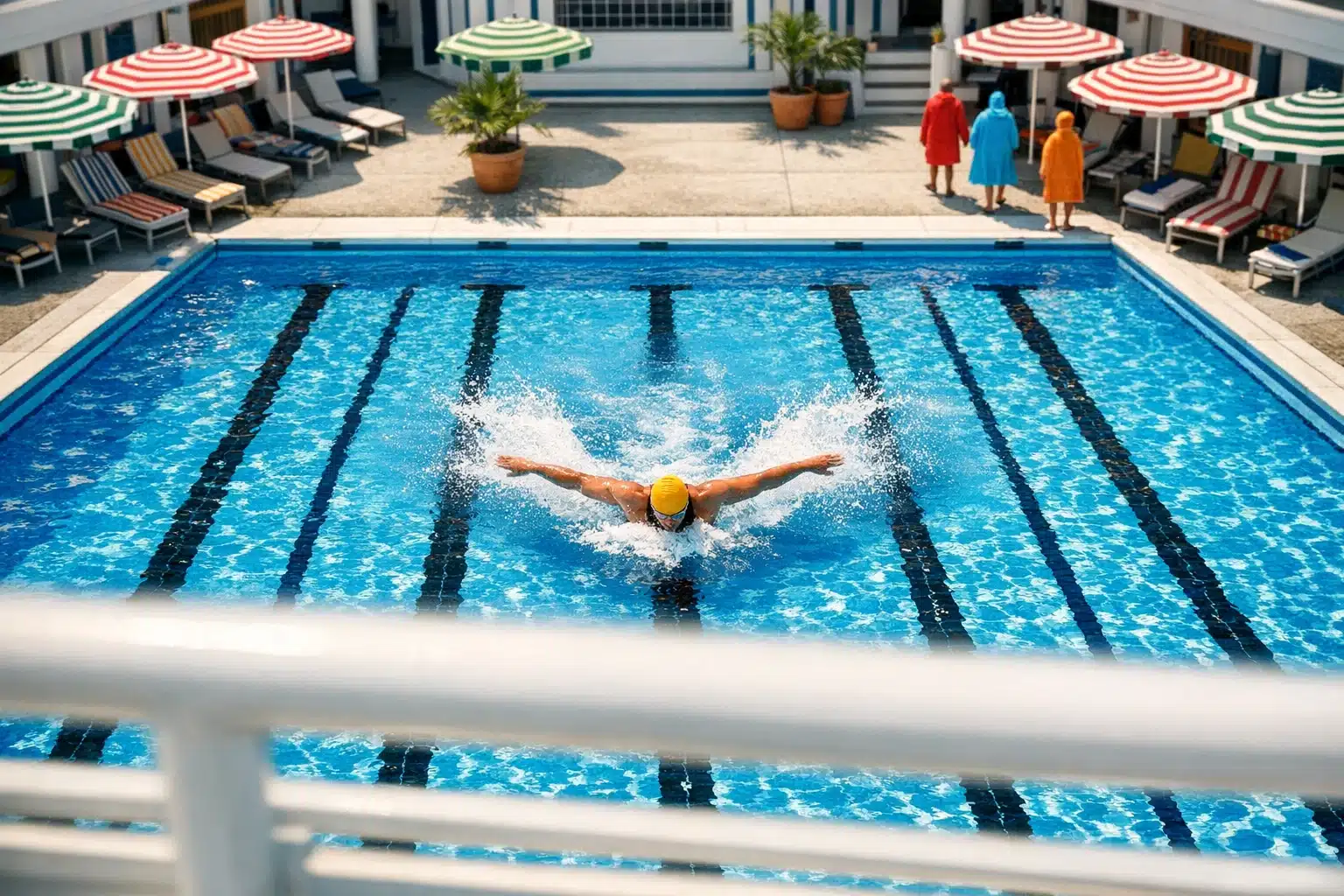
Explore the world of swimming
Swimming has a way of feeling both ancient and immediate: one moment it is simple movement, the next it is skill, sport, therapy, and escape all at once. It matters because few activities serve so many people so well, from children learning water confidence to adults chasing fitness without punishing their joints. In a crowded, noisy world, a lane of water can become a clear line of focus. This article explores why swimming deserves that rare title: useful, enjoyable, and remarkably adaptable.
Outline: This article looks at five key areas of swimming: why it matters in daily life, how the main strokes work, what benefits it offers for fitness and health, which safety habits and equipment deserve attention, and how different readers can build a realistic path into the water.
Why Swimming Matters Beyond the Pool
Swimming occupies a rare space in human life because it is at once practical and deeply enjoyable. It can be a survival skill, a form of exercise, a competitive pursuit, a therapy tool, and a social activity. Few other movements cover so much ground. A child who learns to float gains more than a party trick; that child gains confidence, awareness, and a measure of safety around water. An adult who returns to the pool after years away often discovers something equally valuable: a workout that feels demanding without feeling punishing.
Its relevance reaches far outside sports culture. According to the World Health Organization, drowning remains a serious public health concern in many parts of the world, which makes basic water competence important even for people who never plan to race or train intensely. Swimming lessons are not only about stroke mechanics. They usually include entering water safely, controlling breathing, turning over from front to back, floating, and moving toward an exit. Those skills can make the difference between panic and problem-solving.
Compared with many land-based activities, swimming is especially attractive for people seeking low-impact exercise. Running can be excellent for cardiovascular fitness, but it places repeated force through the ankles, knees, and hips. Swimming, by contrast, uses buoyancy to reduce stress on joints while still asking the heart, lungs, shoulders, core, and legs to work together. That combination helps explain why swimmers range from young children to older adults, from rehabilitation patients to elite athletes.
Swimming also offers an unusual emotional texture. Water is honest; it responds immediately to tension, rushed breathing, and poor alignment. It can humble a beginner in five minutes, then reward steady practice with unmistakable progress. Many people describe the soundscape of a pool as calming: the muted echo, the splash of turns, the rhythm of inhaling to one side and exhaling into bubbles. It is both physical and meditative.
Its broad appeal can be seen in the many settings where it appears:
• school lessons and community programs
• fitness routines for adults
• rehabilitation and recovery plans
• recreational family outings
• masters clubs, triathlon training, and competitive teams
That range is exactly what makes swimming relevant today. It does not demand one identity. You do not need to be a racer, a technician, or a natural water lover to benefit from it. Swimming meets people where they are, then quietly asks them to move a little better, breathe a little calmer, and trust themselves a little more.
Understanding the Main Strokes and the Basics of Good Technique
For newcomers, swimming can seem deceptively simple. Arms move, legs kick, body goes forward. In practice, technique changes everything. Good swimmers do not merely work harder; they move with more efficiency, which means they waste less energy fighting the water. That is one reason a trained swimmer can look almost relaxed while covering distance at a pace that leaves a beginner gasping.
The four competitive strokes are freestyle, backstroke, breaststroke, and butterfly, and each has its own personality. Freestyle, usually performed as front crawl, is generally the fastest and most common stroke for fitness swimming. It rewards a long body line, a steady flutter kick, and well-timed side breathing. Backstroke mirrors some freestyle mechanics but is done face up, which makes breathing easier for many learners. Breaststroke uses a sweeping arm pull and a frog-like kick; it is often more intuitive for casual swimmers, though efficient breaststroke is technically demanding. Butterfly is the most powerful and usually the most exhausting, combining a wave-like body motion with simultaneous arm recovery and a dolphin kick.
Technique rests on a few shared principles:
• body position should stay as long and level as possible
• breathing must be controlled rather than rushed
• propulsion works best when the hands and feet push water backward, not downward without purpose
• rhythm matters as much as strength
Beginners often make predictable mistakes. They lift the head too high to breathe, which drops the hips and creates drag. They kick from the knees instead of from the hips, turning the legs into brakes rather than engines. They slap at the water with hurried arms instead of catching and pressing it cleanly. In swimming, small inefficiencies multiply quickly, because water resists every awkward angle.
A useful comparison is to think of stroke choice the way a cyclist thinks about gears. Freestyle is the fast, versatile option for covering distance. Backstroke is often friendlier on breathing and posture. Breaststroke can be comfortable for easy movement and sighting ahead, especially in recreational settings. Butterfly is the high-power, high-skill choice, spectacular when done well but rarely the first stroke people use for long sessions.
Improvement usually comes from drills and awareness, not only from extra laps. A swimmer working on freestyle might practice side kicking to improve balance or fingertip drag to encourage a relaxed recovery. Someone refining breaststroke may focus on timing, learning that glide matters more than frantic motion. The breakthrough feeling is memorable: suddenly the water stops feeling like an obstacle and starts feeling like something you can shape. That is when swimming becomes more than motion; it becomes craft.
Health, Fitness, and Performance Benefits of Swimming
Swimming earns lasting respect because it trains multiple systems at once. It challenges cardiovascular endurance, muscular coordination, mobility, and breathing control in a single session. Few activities ask the entire body to cooperate so consistently. The arms pull, the legs drive, the core stabilizes, and the lungs settle into a rhythm that has to match movement rather than ignore it. This whole-body demand is one reason swimming can feel so satisfying after even a moderate workout.
From a health perspective, one of its biggest advantages is accessibility. Public health guidance commonly recommends that adults aim for at least 150 minutes of moderate aerobic activity per week, and swimming can help meet that target while being gentler on joints than high-impact exercise. People with knee discomfort, some forms of back pain, or a long break from training often find the pool more welcoming than pavement. That does not mean swimming is easy; it means the challenge arrives with less pounding.
Energy use can also be substantial. Depending on body size, pace, and stroke, swimmers may burn several hundred calories in an hour. Freestyle intervals tend to emphasize sustained aerobic work, while butterfly or fast sprint sets can feel more like repeated high-intensity efforts. Breaststroke may feel smoother at easy speeds, yet it still requires timing and lower-body engagement. Water adds continuous resistance in every direction, so even simple drills can become productive strength-endurance work.
The mental side deserves equal attention. Many swimmers report that the repetitive rhythm of laps helps reduce stress and sharpen focus. Unlike some gym environments that compete for attention with mirrors, screens, and noise, the pool narrows awareness. There is the wall ahead, the line beneath you, the pace of your breathing, and the decision to keep going. That simplicity can be restorative.
Swimming can support many goals:
• building aerobic capacity for general health
• improving muscular endurance without heavy impact
• aiding recovery days for runners and field-sport athletes
• creating a structured exercise option for older adults
• offering confidence and body awareness to beginners
It is also adaptable. A new swimmer might begin with short lengths and rest often. A fitness-oriented adult may use interval sets such as 8 x 50 meters with controlled recovery. A triathlete may prioritize efficient freestyle and sighting practice. Someone in rehabilitation may focus on gentle movement under professional guidance. In each case, the water changes the experience of exercise. It can challenge you fiercely, yet it cushions you while doing so. That balance helps explain why swimming remains both a training tool and a lifelong habit.
Safety, Training Habits, and Equipment That Actually Matter
Swimming becomes more rewarding when safety is treated as part of the skill rather than as an afterthought. This matters in pools, lakes, rivers, and the sea, because water does not forgive overconfidence. A strong gym background, for example, does not automatically translate into water competence. Someone may be fit on land and still struggle with breath control, orientation, or fatigue in deep water. Smart swimming starts with respect.
Formal instruction remains one of the most reliable ways to build that respect into action. Good lessons teach more than strokes. They address floating, rolling onto the back, treading water, entering and exiting safely, and recognizing limits. For children, close adult supervision is essential, especially around open or backyard water. For adults, the biggest safety upgrade is often humility: choosing a level-appropriate environment, asking for coaching, and avoiding the urge to perform.
Open water adds layers of complexity that pools usually remove. Visibility can be poor, temperatures can change quickly, currents may be stronger than expected, and distance can become deceptive when there is no lane rope or wall every 25 or 50 meters. Swimming in a lake or ocean often feels freeing, but it calls for planning. Conditions, local guidance, and the presence of a swimming partner or organized group matter greatly.
Useful safety habits include:
• never assuming shallow water is safe for diving
• avoiding solo swims in unfamiliar settings
• checking weather, currents, and local warnings before open-water sessions
• resting when technique breaks down instead of pushing through panic
• choosing lifeguarded facilities whenever possible
Equipment is another area where simple choices beat flashy ones. Essentials are modest: a comfortable swimsuit, well-fitting goggles, and access to a suitable place to swim. A cap can help keep hair controlled and may reduce drag. Kickboards, pull buoys, and fins are training tools, not status symbols; each serves a purpose when used correctly. A wetsuit can improve warmth and buoyancy in open water, but it should match conditions rather than fashion.
Training habits matter just as much as gear. A good session usually includes a gentle start, focused main work, and an easier finish. Beginners often benefit from short repeats with rest, because quality falls quickly when breathing becomes chaotic. Even experienced swimmers monitor how stroke form changes under fatigue. The smartest approach is surprisingly calm: build gradually, learn the environment, and let consistency do the heavy lifting. In swimming, safety is not the dull part of the story. It is the foundation that makes every other part possible.
A Practical Conclusion: Finding Your Lane as a New, Returning, or Curious Swimmer
For most readers, the real question is not whether swimming is impressive. It is whether swimming fits their life. The encouraging answer is that it often does, because the activity can be scaled so effectively. A nervous beginner can start with water confidence and basic breathing. A busy professional can use two short weekly sessions for fitness and stress relief. A parent can treat swim lessons as both recreation and safety education. An older adult may value the low-impact nature of the pool, while a competitive personality may enjoy measurable progress in times, distance, or technique.
The smartest way to begin is to choose one clear reason for getting in the water. That reason might be health, skill, recovery, confidence, or simple curiosity. Starting with a vague goal like “I should exercise more” often fades quickly. Starting with “I want to swim 20 calm minutes without stopping” or “I want to feel safe during family beach trips” creates direction. Swimming rewards specificity.
A practical starting plan could look like this:
• take a lesson or technique assessment if you are unsure about fundamentals
• swim two or three times per week instead of cramming long sessions into one day
• focus on relaxed breathing before chasing speed
• use short intervals to maintain form
• track small wins, such as cleaner turns, smoother exhalation, or less rest between lengths
It also helps to understand that progress in swimming is not always dramatic from day to day. Sometimes the improvement is visible, like swimming farther with less fatigue. Sometimes it is subtle, like feeling less rushed when your face returns to the water. Because the environment is so different from land exercise, adaptation can take time. That is normal, not a sign that you are unsuited to the sport.
What makes swimming especially worthwhile for today’s reader is its flexibility. It can be solitary without feeling lonely, social without requiring a team, intense without being destructive, and technical without becoming inaccessible. A pool lane can host many ambitions at once: recovery, competition, therapy, joy, and discipline. If you are standing at the edge wondering whether it is worth stepping in, the answer is usually yes. Start modestly, learn carefully, and let the water teach you its logic. The first goal is not elegance. It is familiarity. After that, the path opens surprisingly wide.