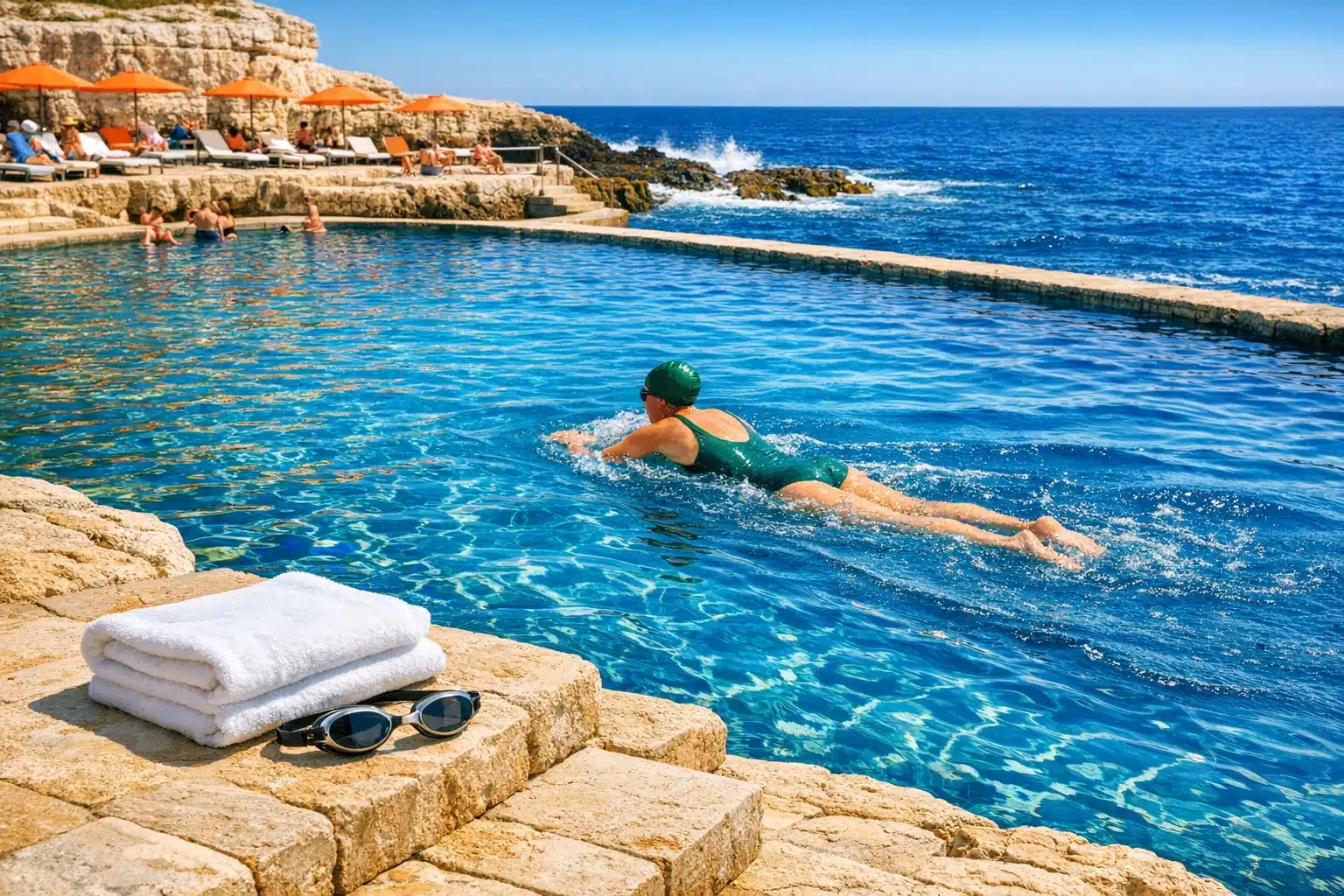
Explore the world of swimming
Few activities combine survival skill, sport, recreation, and therapy as naturally as swimming. In a single session, the water can challenge the lungs, unload the joints, sharpen concentration, and quiet a crowded mind. That mix gives swimming unusual relevance in modern life, where many people want exercise that is effective without being punishing. Whether you are curious about lap training, open-water adventure, or simple pool confidence, the subject is worth a closer look.
Outline
• Why swimming matters beyond leisure • The physical and mental benefits of regular time in the water • A comparison of the main strokes and the techniques behind them • Training habits, equipment choices, and safety rules • How swimming serves beginners, athletes, families, and older adults over the long term
Swimming as a Life Skill, a Sport, and a Human Tradition
Swimming is often introduced as exercise, but that description is too narrow. At its core, it is a life skill linked to safety, independence, and confidence in aquatic environments. For families, the ability to float, tread water, and move efficiently through a pool or natural body of water can be as important as learning to ride a bicycle. In many regions, formal swim lessons are treated as a public health priority because drowning remains a major preventable cause of accidental death, especially among children. That reality gives swimming a seriousness that goes far beyond medals, lane times, or beach holidays.
At the same time, swimming is one of the oldest forms of organized athletic competition. Ancient civilizations recorded swimming in military training, recreation, and ritual life, while modern competitive swimming became standardized in the nineteenth and twentieth centuries with the growth of clubs, pools, and international events. Today, it spans a remarkable range: school lessons, masters programs for adults, triathlon training, synchronized disciplines, water polo conditioning, and elite races measured down to hundredths of a second. A quiet local pool and an Olympic final may seem worlds apart, yet they rely on the same foundations of breath control, body position, and feel for the water.
What makes swimming especially interesting is its ability to mean different things to different people without losing its essence. For one person, it is rehabilitation after injury. For another, it is the first sport that feels welcoming to a body that struggles with impact-based movement. For a competitive swimmer, it becomes a technical craft where tiny adjustments in hand entry or kick timing change performance. Even casual swimmers discover this quickly: the water gives honest feedback. If your body line is uneven, the drag tells you. If your breathing is rushed, the stroke falls apart. A pool lane looks simple until the water starts answering back.
Swimming also carries social and cultural value. Public pools have long served as community spaces where children learn discipline, adults decompress after work, and older generations stay active. Open-water events and beach cultures add another dimension, connecting movement with landscape and seasonal tradition. In that sense, swimming is not just motion through water. It is a meeting point between skill, health, recreation, and resilience, which helps explain why it remains relevant across age groups, fitness levels, and national cultures.
The Physical and Mental Benefits of Swimming
Swimming earns much of its reputation from a simple truth: it trains the body thoroughly without the pounding associated with many land-based activities. Because water is far denser than air, every stroke meets resistance, which means muscles are working throughout the movement rather than only during impact or push-off. At the same time, buoyancy reduces weight-bearing stress on joints. For people with knee discomfort, back stiffness, excess body weight, or a return-from-injury plan approved by a clinician, that combination can make swimming more approachable than running or court sports. It is not effortless, but it is often gentler in the places where many adults feel wear and tear first.
From a cardiovascular perspective, regular swimming can support heart and lung health in the same way other forms of aerobic exercise do. Public health guidance commonly recommends at least 150 minutes of moderate-intensity aerobic activity each week for adults, and swim sessions can contribute meaningfully to that target. The exact energy cost varies by stroke, pace, body size, and skill level, but a steady session can burn a substantial number of calories while improving endurance. Freestyle intervals, for example, usually create a different metabolic demand than relaxed breaststroke, yet both can help build fitness when practiced consistently.
The benefits are not limited to the heart and muscles. Many swimmers describe the mental effect as one of the sport’s biggest rewards. Water reduces noise, narrows attention, and encourages rhythmic breathing, which can create a calming effect that feels almost meditative. A structured set of laps gives the mind a task, but not the kind that usually arrives with email alerts, traffic, or crowded schedules. For some people, swimming becomes a stress-management ritual because it combines movement with sensory reset.
Several practical advantages stand out:
• Full-body engagement that recruits the shoulders, back, core, hips, and legs
• Low-impact movement that can suit people managing joint sensitivity
• Flexible intensity, from gentle recovery sessions to hard interval training
• Improved coordination through timing, balance, and breath control
Of course, swimming is not a magic solution. Poor technique can overload the shoulders, inconsistent practice limits progress, and some beginners find breathing patterns frustrating at first. Yet its broad benefits remain unusually compelling. Few activities strengthen the body, build water competence, and provide mental relief in the same hour. That is why swimming works not only as a sport, but also as a sustainable habit for people who want exercise to fit real life rather than dominate it.
Understanding the Main Strokes and How They Compare
To outsiders, swimming can look like a blur of splashes and lane ropes, but the sport is deeply technical. The four main competitive strokes, freestyle, backstroke, breaststroke, and butterfly, each ask the body to solve the same problem in a different way: how to move forward with as little wasted energy as possible. That is why two swimmers with similar strength can produce very different results. In water, technique is not decoration. It is the engine.
Freestyle, usually performed as front crawl, is the fastest and most commonly taught stroke for fitness swimming. Its alternating arm action and flutter kick create a relatively continuous forward rhythm. Because the face is in the water much of the time, breathing must be timed well, usually to the side, which is where many beginners struggle. Once learned, however, freestyle is efficient for distance, interval sets, and general conditioning. Compared with the other strokes, it usually offers the best balance of speed and practicality for lap swimming.
Backstroke flips the body onto the back, which changes both the challenge and the appeal. Breathing is easier because the face remains above the surface, but body alignment becomes more delicate because swimmers cannot see where they are going. It is often recommended as a useful complement to freestyle because it develops shoulder movement in a different pattern and encourages awareness of rotation and posture. For swimmers who spend long hours sitting at desks, backstroke can feel surprisingly liberating, like stretching while racing at the same time.
Breaststroke is often seen as beginner-friendly because the head can rise frequently and the pace may feel more controlled. In truth, it is technically demanding. The stroke depends on precise timing between the pull, breath, kick, and glide. A wide or mistimed kick can create enormous drag, making progress feel slow and tiring. Breaststroke is usually the slowest of the four strokes in competition, but it remains popular for recreational swimmers who prefer a clear rhythm and a forward view.
Butterfly is the most dramatic and, for many people, the most punishing stroke. It uses simultaneous arm recovery and a dolphin kick powered by the core and hips. When done well, it looks almost airborne, like the swimmer is trying to turn water into momentum through rhythm alone. When done poorly, it feels like wrestling a wave that refuses to cooperate. Butterfly develops power and timing, but it is rarely the first choice for casual lap swimming because it demands so much coordination and energy.
A useful comparison looks like this:
• Freestyle: fastest, efficient, excellent for fitness and distance
• Backstroke: easier breathing, strong for posture and variety
• Breaststroke: controlled rhythm, accessible feel, high technical nuance
• Butterfly: powerful and impressive, but physically demanding
Across all strokes, the same basics matter most: horizontal balance, relaxed breathing, streamlined position, and well-timed propulsion. Fancy drills help, but nothing replaces patient attention to fundamentals. In swimming, small changes often bring the biggest breakthroughs.
Training, Equipment, and Safety: How to Swim Smarter
Good swimming rarely comes from random laps alone. Improvement is usually built from structure, repetition, and recovery. Beginners often make the understandable mistake of treating every pool visit as a test of endurance. They start fast, tire quickly, and leave feeling that swimming is harder than it should be. A better approach is to treat training like skill practice first and conditioning second. Short repeats with rest, focused drills, and manageable pacing help swimmers learn efficiency before chasing volume. In water, economy matters. A slightly cleaner stroke can save more energy than a stronger effort.
A simple session might include a warm-up, one technical focus, a main set, and a cool-down. For example, a swimmer could begin with easy freestyle and backstroke, spend several lengths practicing side breathing or kick timing, then complete intervals such as 8 x 50 meters at a steady effort with rest between repeats. This format makes progress easier to measure and keeps attention sharp. Over time, swimmers may organize training around goals:
• Water confidence and survival skills
• General fitness and weight management
• Speed and race preparation
• Cross-training for triathlon or another sport
• Recovery and mobility
Equipment can support learning, although it should not replace it. A well-fitted pair of goggles is almost essential for comfort. A swim cap helps manage hair and reduce distraction. Kickboards isolate leg work, pull buoys shift emphasis to the upper body, and fins can help swimmers feel body position and movement patterns more clearly. Paddles, snorkels, and tempo trainers also have their place, especially in coached settings. Still, there is a difference between useful tools and dependency. If a swimmer always needs equipment to maintain form, the underlying technique probably needs attention.
Safety deserves equal emphasis. Pools can create false confidence because they feel controlled, yet water demands respect in every setting. Basic rules remain non-negotiable: never overestimate your ability, supervise children closely, avoid swimming alone in open water, and learn how fatigue changes judgment. Weather, currents, cold water, and low visibility can transform an inviting lake or coastline into a serious hazard. Even experienced swimmers plan routes, use bright tow floats when appropriate, and pay attention to local guidance.
There is also an often-overlooked health detail: recovery. Shoulders, neck muscles, and lower backs can become irritated if volume rises too quickly or technique breaks down. Rest days, mobility work, and varied stroke choices reduce that risk. The smartest swimmers are not always the ones who train hardest. Quite often, they are the ones who understand when to push, when to reset, and when to let the water teach patience.
Why Swimming Can Stay With You for Life
One of swimming’s greatest strengths is its longevity. Many sports belong mostly to one life stage: childhood, school years, or early adulthood. Swimming is different. A child may begin with blowing bubbles and floating. A teenager might move into team training or lifesaving skills. An adult may return to the pool for stress relief, joint-friendly fitness, or triathlon preparation. Older swimmers often continue because the water allows meaningful exercise without the jarring impact that can make other activities less comfortable. That long arc gives swimming a rare kind of usefulness. It can evolve as the person evolves.
It also adapts to personality. Some people love the measurable side of the sport, counting splits, tracking distance, and refining turns. Others prefer the almost reflective quality of a quiet lane, where repetition becomes a rhythm rather than a scoreboard. Open-water swimmers may chase a sense of freedom that a pool cannot provide, while recreational swimmers may simply enjoy moving through water on a hot day with no performance target at all. Swimming can be competitive, therapeutic, social, solitary, technical, or playful, sometimes all in the same month.
Access and confidence do matter, and they should not be ignored. Not everyone grows up near pools, lessons, or supportive coaching. That is why inclusive programs, affordable facilities, and adult beginner classes are so important. Many adults assume they are too late to learn, yet patient instruction can change that quickly. Progress in swimming is often uneven at first, then suddenly obvious. A person who once clung to the wall may, after weeks of small practice, glide across the lane with visible ease. Few improvements feel quite as empowering.
For readers thinking about starting, restarting, or deepening their relationship with swimming, the practical message is simple:
• Begin with water confidence before chasing speed
• Choose consistency over heroic single sessions
• Learn technique early, because it makes every meter easier
• Respect safety rules in pools and natural water
• Let your goals be personal, not performative
In the end, swimming deserves attention not because it promises perfection, but because it offers range. It can make you fitter, calmer, safer, and more capable, all while meeting you at your current level. If you are a beginner, start small and stay curious. If you are returning after years away, give yourself time to rebuild feel and rhythm. If you already love the sport, keep refining the details that make the water open up. For almost any reader, swimming is less about conquering the pool and more about learning how to move through challenge with steadiness, skill, and confidence.