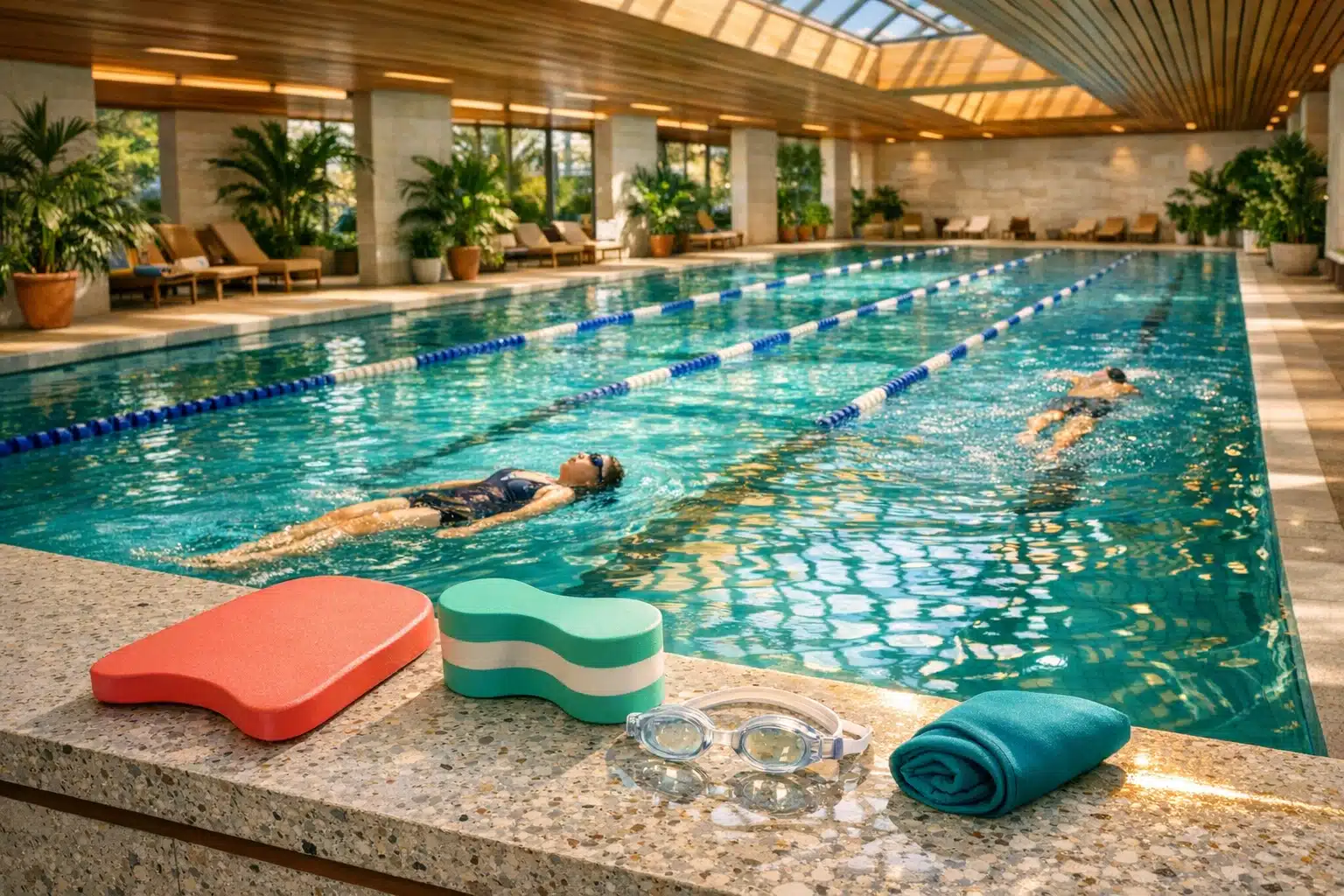
Explore the world of swimming
Swimming has a rare kind of reach: it can be a childhood game, a life skill, a steady fitness habit, and an elite sport at the same time. In one lane you find breath control, rhythm, strength, and calm sharing the same space. That mix gives swimming unusual relevance, whether you want better health, safer time around water, or a training method that challenges the body without the pounding of many land sports.
Article Outline
- The broad value of swimming for fitness, health, and mental balance
- A comparison of the main strokes and what each one teaches
- How beginners and improving swimmers can train safely and effectively
- The difference between pool swimming and open-water swimming, plus essential gear
- How different people can make swimming part of their lives, with a practical conclusion
Why Swimming Matters: Fitness, Health, and Mental Balance
Swimming stands out because it works in several directions at once. It is exercise, but it is also a survival skill. It can be competitive, yet many people use it to slow down after a stressful day. That flexibility helps explain why swimming appears in so many stages of life, from lessons for children to rehabilitation plans for older adults. Public health guidance often recommends at least 150 minutes of moderate aerobic activity each week for adults, and swimming fits that target well. A steady lap session can raise the heart rate, strengthen large muscle groups, and improve stamina without the repetitive impact that often bothers knees, ankles, or hips on land.
One of the most useful comparisons is swimming versus running. Running is efficient, familiar, and accessible, but it produces repeated ground force. Swimming, by contrast, places the body in a buoyant environment where water supports movement and softens impact. That does not mean swimming is easy. Water creates resistance in every direction, so even smooth motion demands effort. Because water is much denser than air, a swimmer feels resistance with every pull, kick, and turn. The result is a form of training that can build endurance and muscular coordination at the same time.
Swimming also rewards controlled breathing in a way that few other sports do. You cannot separate movement from breathing when your face returns to the water every few seconds. Over time, many swimmers become more aware of posture, timing, and relaxation. That is one reason people often describe a good session as both energizing and settling. The soundscape helps too: the splash at the wall, the brief silence underwater, the regular pattern of strokes. A lane can feel like a moving metronome.
Its benefits are broad rather than magical. Swimming can support cardiovascular fitness, improve shoulder and core endurance, and help with weight management when paired with realistic nutrition habits. Calorie use varies by body size, stroke, and pace, but many adults may expend roughly 400 to 700 calories in an hour of continuous swimming. More importantly, it is an activity people can continue for years if they enjoy it.
- It develops aerobic capacity and muscular endurance together.
- It offers a joint-friendly option for many people who dislike hard impact.
- It improves comfort and safety in and around water.
- It can be social in a club or deeply personal in a quiet morning lane.
That combination is rare. Swimming asks the body to work, but it often leaves the mind clearer than it found it. Few activities manage both so naturally.
The Four Main Strokes and What Each One Teaches
To many beginners, swimming looks simple from the deck: get in, move forward, breathe when needed. In practice, the sport is technical, and the four competitive strokes each teach a different lesson. Freestyle, usually referring to front crawl, is the fastest and most commonly used stroke in fitness swimming. Backstroke reverses the body position and changes how balance is felt. Breaststroke relies on timing and glide. Butterfly is the most demanding of the four, combining rhythm, power, and mobility. Learning their differences turns swimming from random movement into a skill you can understand and improve.
Freestyle is often the first serious stroke people practice because it is efficient over distance. A swimmer rotates through the torso, keeps a long body line, and uses alternating arm pulls with a flutter kick. The key comparison here is between effort and drag. New swimmers often fight the water by lifting the head too high, kicking too hard, or shortening the stroke. Skilled swimmers do almost the opposite: they streamline, rotate smoothly, and let each pull travel fully. Freestyle becomes faster not just through force, but through reduced resistance.
Backstroke teaches spatial awareness and posture. Since the face stays above water, some people find breathing easier, but staying straight in the lane can be a challenge. Good backstroke depends on a stable head position, hip rotation, and a consistent kick. It can feel freeing, almost like looking at the ceiling while the body solves a puzzle below. For swimmers who spend long hours hunched over desks, backstroke can also encourage a more open chest position, though technique still matters to avoid shoulder strain.
Breaststroke is unique because the arms and legs move together in a more symmetrical pattern. It is often seen as a gentler stroke, yet efficient breaststroke is highly technical. A mistimed kick or a rushed breath can slow the swimmer dramatically. The stroke emphasizes patience. There is a brief moment of glide after each cycle, and that pause is not laziness; it is part of the design. Compared with freestyle, breaststroke is usually slower, but it can be comfortable for recreational swimmers who prefer a steady pace and forward vision.
Butterfly is the stormy sea inside a pool. It uses a wave-like body motion, a simultaneous arm recovery, and a powerful dolphin kick. It is physically demanding, but it also teaches rhythm better than almost anything else. When butterfly is forced, it collapses. When it is timed well, it looks almost musical.
- Freestyle rewards efficiency and rotation.
- Backstroke improves balance and body alignment.
- Breaststroke emphasizes timing, glide, and controlled pacing.
- Butterfly develops rhythm, power, and whole-body coordination.
Even swimmers who focus on one stroke benefit from learning all four. Each one reveals a different conversation between body, water, and breath.
Learning to Swim and Training Smarter
For beginners, the hardest part of swimming is often not strength but trust. Water feels unfamiliar until the body learns that floating, exhaling, and moving forward can happen without panic. That is why the best early instruction usually starts with comfort, not speed. Before worrying about lap counts, a new swimmer benefits from learning how to submerge the face, blow bubbles, float on the front and back, push off the wall, and recover to standing. These are small skills, but together they create confidence. Without that foundation, technique advice arrives too early and tends to sound like static.
Once basic comfort improves, training should follow a clear progression. Many swimmers make the mistake of trying to swim continuously with poor form until they are exhausted. A smarter approach uses short repeats, rest intervals, and simple drills. Instead of grinding through ten uneven lengths, a beginner might swim eight short lengths with pauses, focusing on one cue at a time. That cue could be keeping the head still, exhaling underwater, or reaching forward before the next pull. In swimming, quality matters because inefficient habits multiply quickly.
Breathing deserves special attention. On land, breathing is automatic and often unnoticed. In the pool, it becomes part of the technique. A common error is to hold the breath underwater and then rush a desperate inhale at the side. More effective swimmers exhale gently into the water and take a quick, calm breath when the body rotates. That simple change often reduces tension immediately. Another frequent issue is kicking too hard. New swimmers sometimes try to solve every problem with faster legs, but frantic kicking can waste energy and disturb balance. A smaller, steady kick usually serves fitness swimmers better.
Structured practice makes improvement easier to measure. A session does not need to look professional to be useful. It only needs a purpose. A basic format might include:
- A warm-up of easy swimming and relaxed breathing
- A drill set focused on one technical detail
- A main set built around manageable repeats, such as 6 x 50 meters with rest
- A cool-down to lower effort and reset stroke quality
Safety belongs in every stage of learning. Swim in supervised areas when possible, respect lane etiquette, and avoid training beyond your skill level when fatigued. If you are new, lessons with a qualified instructor can shorten the learning curve enormously. A good coach does more than correct errors; they help translate sensation into action. Swimming is full of strange truths. Going slower for a moment can help you go faster later. Relaxing can increase control. And the strongest stroke is often the one that wastes the least.
Pool Swimming, Open Water, and the Gear That Actually Matters
Swimming changes character depending on where it happens. A pool is controlled, measured, and predictable. Open water is dynamic, scenic, and far less forgiving. Neither setting is inherently better; they simply ask for different habits. In a pool, you get clear lane lines, known distances, and frequent walls that break a long swim into pieces. This makes the pool ideal for technique work, timed sets, and progress tracking. If you want to compare effort from week to week, few environments are cleaner. A 50-meter repeat is still 50 meters tomorrow.
Open water offers a very different experience. Lakes, rivers, and the sea remove many of the visual references swimmers rely on. There may be currents, chop, temperature shifts, and reduced visibility. Breathing can feel different when waves interrupt your rhythm, and swimming straight requires sighting ahead rather than following a black line on the floor. For some people, that sounds intimidating. For others, it is exactly the appeal. Open-water swimming often feels expansive in a way pools cannot match. The horizon does not care about your split times.
Because the environments differ, the gear conversation should stay practical. For pool swimming, the essentials are simple: a well-fitting swimsuit, goggles that seal comfortably, and access to a safe place to swim. A swim cap can help manage hair and reduce drag, though its importance depends on personal needs and pool rules. Training tools such as kickboards, pull buoys, fins, paddles, and snorkels can be useful, but they are not shortcuts. They work best when they support a clear purpose, such as isolating the kick, improving body position, or helping a swimmer focus on one part of the stroke.
Open water adds a few smart considerations. Visibility matters, so bright caps are common. In cooler conditions, a wetsuit may improve warmth and buoyancy where rules and local norms allow. Safety becomes less negotiable:
- Never swim alone in unfamiliar open water.
- Check weather, current, and water quality before entering.
- Use a tow float or other visibility aid when appropriate.
- Know the entry and exit points before you start.
There is also an etiquette side to swimming that newcomers appreciate once someone explains it. In pools, circle swimming, passing carefully, and resting at the corner of the lane help everyone share space. In open water, respecting local conditions and other users of the water is just as important. Good equipment can make swimming more comfortable, but it cannot replace judgment. The best gear choice is usually the one that solves a real problem, fits properly, and lets you focus on the water rather than on constant adjustment.
Conclusion: How Swimming Can Fit Real Life
Swimming becomes most valuable when it stops being an abstract “good activity” and starts matching a real person’s routine, body, and goals. For children, it can begin as water confidence and safety, then grow into play, discipline, and social connection. For busy adults, it can be a compact form of exercise that trains the heart and large muscle groups without demanding a long recovery from impact. For older swimmers, it may provide a manageable way to stay active, maintain mobility, and preserve a sense of independence. For athletes from other sports, it can work as cross-training that develops aerobic fitness while giving overworked joints a change of pace.
The important point is that swimming does not have to look the same for everyone. One person may enjoy calm morning laps three times a week. Another may prefer structured masters sessions with interval sets and feedback. A third may never care about speed at all and simply want to feel at ease in deep water during vacations or family outings. All of those are valid versions of success. The sport has room for ambition, but it also has room for practicality.
If you are a beginner, the most useful mindset is patience. Progress in swimming can feel slow at first because technique affects effort so strongly. You may feel tired before you feel smooth. That is normal. If you are already comfortable in the water, your next gains may come less from trying harder and more from refining details: body position, timing, breathing, and pacing. Small adjustments matter here more than they do in many gym-based workouts.
A simple way forward is often the best one:
- Choose a realistic schedule you can repeat.
- Work on one technical focus per session rather than six at once.
- Measure progress by comfort, consistency, and control, not only by speed.
- Seek instruction if you feel stuck, especially with breathing or body position.
Swimming asks for humility in the beginning and rewards it over time. The water gives immediate feedback, but it is fair feedback. When your movements become more balanced, the difference is unmistakable. For readers considering where to invest their energy, swimming offers something uncommon: a skill that improves fitness, expands confidence, and stays useful far beyond the workout itself. That is a strong reason to start, and an even better reason to keep going.