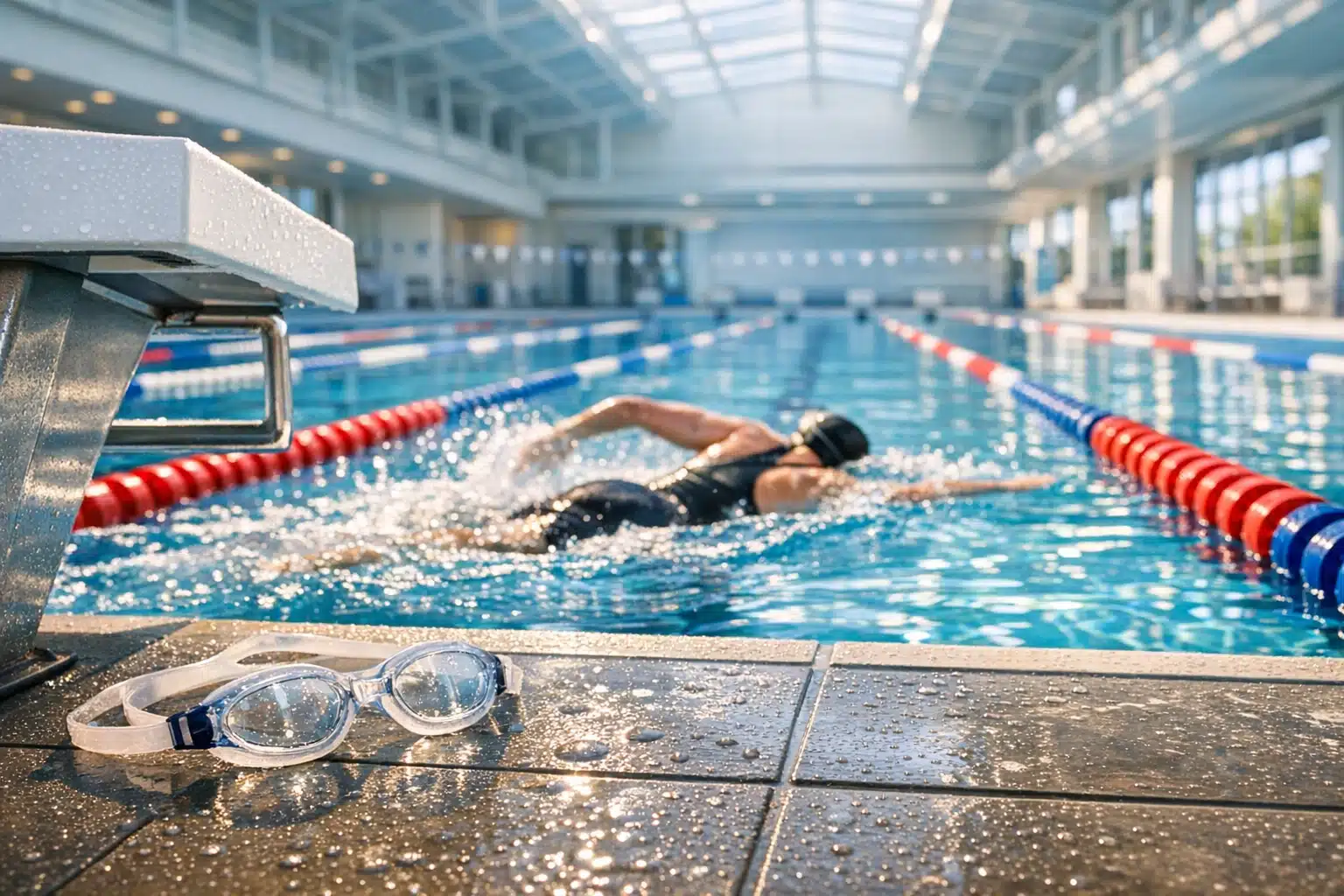
Explore the world of swimming
Swimming sits at the rare crossroads of sport, survival skill, and everyday wellbeing, which is why it remains relevant from childhood lessons to masters competition. In one session, a swimmer can build endurance, sharpen coordination, and enjoy the steady mental reset that water often brings. The topic matters because pools, lakes, rivers, and coastlines each ask for different habits, decisions, and forms of confidence. This article maps the essentials so readers can understand how swimming works, why it rewards patience, and where improvement usually begins.
Article outline:
- Why swimming matters for health, confidence, and long-term fitness
- The main strokes and the technical ideas that make them efficient
- How training changes for beginners, fitness swimmers, and competitors
- Safety, equipment, and the major differences between pool and open-water swimming
- Why swimming can become a lifelong habit for recreation, community, and personal growth
Why Swimming Matters: Fitness, Confidence, and Everyday Value
Swimming matters because it does several jobs at once. It can be exercise, transport, therapy-supporting movement, recreation, and a practical safety skill. Few activities combine those roles so naturally. A runner may build stamina, and a cyclist may strengthen the legs, but a swimmer learns to move through an environment that most people cannot navigate well without training. That alone gives swimming unusual importance. Knowing how to stay calm in deep water, float, tread, and move efficiently is not just athletic knowledge; it can be deeply useful in real life.
From a fitness perspective, swimming is often valued because water changes the rules of movement. The body is supported by buoyancy, which reduces impact on joints compared with activities such as jogging on pavement. At the same time, water provides resistance in every direction, so even simple movements require effort. This combination makes swimming appealing for a wide range of people, including younger athletes, older adults, and those returning to exercise after a long break. Public health guidance commonly recognizes water-based activity as a valid way to build aerobic capacity and support overall physical activity goals.
Swimming also asks the body to coordinate breathing with timing, posture, and propulsion. That is one reason it can feel difficult at first: you are not only moving forward, you are learning how to do it without wasting energy. Yet that challenge is part of its reward. Improvement tends to feel measurable. A person who once fought the water can gradually begin to slide through it. The first smooth length of a pool often feels less like a workout milestone and more like a quiet small victory.
- It trains endurance without constant impact loading.
- It improves body awareness because balance in water is highly sensitive.
- It develops confidence through repeated problem-solving in a new environment.
- It can be social, competitive, meditative, or playful depending on the setting.
There is also a mental dimension that regular swimmers frequently mention. Water narrows attention. You hear breath, feel rhythm, count strokes, watch the lane line, and notice how tension changes speed. For some people, that creates a focused calm that is hard to find elsewhere. Others love the opposite sensation: the bright noise of a team practice, the slap of turns, the starter’s signal, and the shared fatigue at the end of a hard set. Whether swimming becomes your weekly reset or your chosen sport, its value comes from this rare blend of utility and depth.
Understanding the Strokes: Technique, Efficiency, and the Logic of Movement
To a casual observer, swimming can look simple: arms pull, legs kick, body moves. In practice, the four main competitive strokes each have their own logic, rhythm, and technical demands. Front crawl, commonly called freestyle, is usually the fastest and most efficient stroke over distance for most trained swimmers. Backstroke turns the athlete upward, making breathing easier but body alignment harder. Breaststroke relies on timing and glide rather than constant speed, and butterfly is powerful, beautiful, and unforgiving when technique falls apart. Learning the differences between them helps any swimmer appreciate why progress depends on more than effort alone.
Front crawl rewards streamline. The swimmer rotates through the torso, reaches forward, anchors the hand in the water, and pulls back while maintaining a long body line. The kick supports balance and momentum, but many beginners overkick and tire themselves early. Efficient crawl is not frantic; it is controlled. When it works well, the stroke feels less like wrestling and more like threading a path through resistance. Backstroke uses a similar alternating arm pattern, yet its challenge is orientation. Because the swimmer faces upward, small errors in alignment can send the body drifting across a lane. Strong hip position and steady rotation matter more than many new swimmers expect.
Breaststroke is often the first stroke people try because the head can stay up more easily for part of the cycle. However, good breaststroke is highly technical. The pull, breath, kick, and glide must happen in the correct order. Pull too long and speed drops. Rush the kick and the body never settles into a streamlined shape. Butterfly, by comparison, is the most dramatic stroke in the set. It requires simultaneous arm recovery and a wave-like body motion powered by the core and hips. Done poorly, it feels exhausting within seconds. Done well, it looks almost musical.
- Freestyle usually offers the best mix of speed and efficiency.
- Backstroke simplifies breathing but demands straight-line control.
- Breaststroke depends heavily on timing and patience.
- Butterfly rewards power, rhythm, and excellent coordination.
Across every stroke, certain principles repeat. Balance matters more than brute force. Exhaling underwater helps prevent breath-holding tension. A streamlined body reduces drag, which is often the biggest hidden opponent in swimming. Coaches frequently remind swimmers that “feel for the water” is real: the more time you spend practicing, the better you sense pressure, catch, and timing. That is why two people of similar strength can swim at very different speeds. Technique is not decoration in swimming; it is the engine room.
Training and Improvement: From First Lengths to Structured Workouts
Swimming improvement rarely comes from doing endless random laps. Progress is usually faster when sessions have a purpose. A beginner may need to focus on breathing, floating, and completing short distances with control. A fitness swimmer may want better endurance, while a competitive swimmer often trains around pace, stroke efficiency, starts, turns, and race strategy. These are very different goals, and the training should reflect that difference. One of the most helpful shifts for any swimmer is to stop asking, “How far did I go?” and start asking, “What was I trying to improve?”
For beginners, short repeats with rest are often more productive than one long struggle. Swimming 8 x 25 meters with attention to exhaling underwater and keeping the head neutral can teach more than forcing a shaky 200-meter effort. Early progress usually depends on comfort and control. Once that foundation exists, swimmers can build volume gradually. A simple session might include a warm-up, a drill set, a main set for endurance or speed, and a cool-down. That structure sounds formal, but it simply gives the body a clearer lesson.
Fitness swimmers often benefit from variety. Mixing strokes, changing intensity, and using tools carefully can prevent boredom while developing broader ability. Kick sets can improve body position, pull sets can highlight upper-body connection, and technique drills can sharpen details that fatigue tends to blur. Competitive swimmers usually add interval discipline, using the pace clock to hold target times and manage recovery. They also spend more attention on turns and breakouts, because a race can be shaped dramatically by seconds won or lost at the wall.
- Beginners improve fastest when they practice balance, breath control, and relaxed repetition.
- Intermediate swimmers often need clearer session structure rather than simply more distance.
- Advanced swimmers gain from pace awareness, technical consistency, and recovery planning.
- Everyone benefits from patience, because swimming adapts slowly but reliably.
It is worth noting that swimming fitness can feel deceptive. A strong gym athlete may enter the pool and tire quickly, not because they lack conditioning, but because they lack efficiency. Water exposes wasted movement with ruthless honesty. That can be frustrating, yet it is also encouraging. Technical gains often unlock endurance gains. A small change in head position, breathing pattern, or hand entry can make a length feel entirely different. Improvement in swimming tends to arrive like dawn rather than lightning: gradually, then all at once, you notice that the pool has become less of an opponent and more of a training partner.
Safety, Equipment, and the Difference Between Pool and Open Water
Swimming is enjoyable, but it should never be treated casually when safety is concerned. Even strong swimmers can make poor decisions if they overestimate their ability, ignore conditions, or assume familiar water is harmless. The basic rule is simple: confidence is valuable, complacency is risky. In pools, safety often feels built into the environment because there are lane lines, lifeguards, and marked depths. In open water, those comforts may disappear, replaced by currents, changing weather, limited visibility, and uncertainty about distance. The skills overlap, but the context changes everything.
Pool swimming is controlled. Temperature is usually stable, walls provide regular rest points, and lanes create a predictable path. That makes pools ideal for learning technique and measuring progress. There are still important habits to follow, including proper lane etiquette, awareness of faster swimmers, and respect for posted rules. Diving into shallow water, horseplay near walls, or pushing beyond fatigue without rest can still cause trouble. Yet compared with natural settings, pools are generally easier places to learn how your body responds to training.
Open water swimming is more variable and often more demanding. Lakes may be calm at the surface but cold underneath. Rivers add current. Seas and oceans introduce chop, tides, and navigation challenges. Sighting becomes essential because there is no lane line to follow. Wetsuits may help with warmth and buoyancy in some conditions, while brightly colored caps improve visibility to others. Many experienced swimmers strongly advise never swimming alone in open water. That advice is practical, not dramatic. Conditions can shift quickly, and even a short distance can feel much longer when there is no wall nearby.
- Core pool equipment often includes goggles, a comfortable suit, and sometimes a kickboard or pull buoy.
- Open-water swimmers may add a tow float, wetsuit, ear protection, and anti-chafing products.
- Hydration and sun protection matter, especially during long outdoor sessions.
- Learning to float, tread water, and stay calm is as important as learning to swim fast.
Good safety also involves honest self-assessment. Can you maintain effort without panic when breathing becomes harder? Do you know how to stop, roll, float, and reset? Can you recognize cold stress or mounting fatigue? Those questions matter more than personal pride. The smartest swimmers are not the ones who never worry; they are the ones who plan carefully, respect the environment, and know when to shorten a session. Water can feel welcoming, glassy, even magical in early morning light, but it always deserves attention.
Swimming for Life: Community, Competition, and a Practical Conclusion for Readers
One of swimming’s greatest strengths is that it can evolve with a person over time. A child may begin with lessons focused on floating and safety. A teenager may discover racing, team culture, and the discipline of structured practice. An adult may return to the water for fitness after years away, or use it as low-impact cross-training alongside cycling, rowing, or strength work. Later in life, swimming may remain attractive precisely because it is demanding without always being punishing. Few activities can travel with someone across so many phases of life while still feeling meaningful.
The community side should not be underestimated. Swim clubs, masters groups, school teams, and local open-water circles often create a rhythm of accountability that solo exercise lacks. Swimming can be quiet, but it is rarely empty of connection. Teammates share sets, coaches refine details, lifeguards keep spaces safe, and even public lap swimmers develop an unspoken etiquette that makes the pool function. Competition adds another layer. Race times, split comparisons, relay exchanges, and personal bests give swimmers clear markers of improvement. Yet not every meaningful goal has to involve a stopwatch. For many people, success is swimming longer with less fatigue, learning a new stroke, or feeling calm in deep water for the first time.
For readers deciding where to begin, the best advice is pleasantly ordinary. Start with consistency, not drama. Take lessons if technique feels confusing. Practice one or two focal points per session instead of trying to fix everything at once. If possible, alternate easy days with more challenging sets so that improvement has room to settle. Small gains matter. Better exhalation, cleaner body position, smoother turns, and steadier pacing are not glamorous changes, but they are exactly how real swimmers are built.
- If you are new, prioritize safety, comfort, and basic technique.
- If you already swim, add structure so each session has a purpose.
- If you want challenge, explore timed sets, stroke work, or supervised open water.
- If you want longevity, protect recovery and enjoy the process.
In the end, swimming rewards patience more than impatience. It teaches the body to work with resistance instead of only against it. It can sharpen competitive ambition or soften a stressful day. Most importantly, it offers readers a skill set that is useful, enjoyable, and expandable. Whether your goal is to finish your first confident length, improve lap times, or simply feel at home in the water, swimming gives back what you bring to it: attention, repetition, humility, and eventually, a remarkable sense of flow.