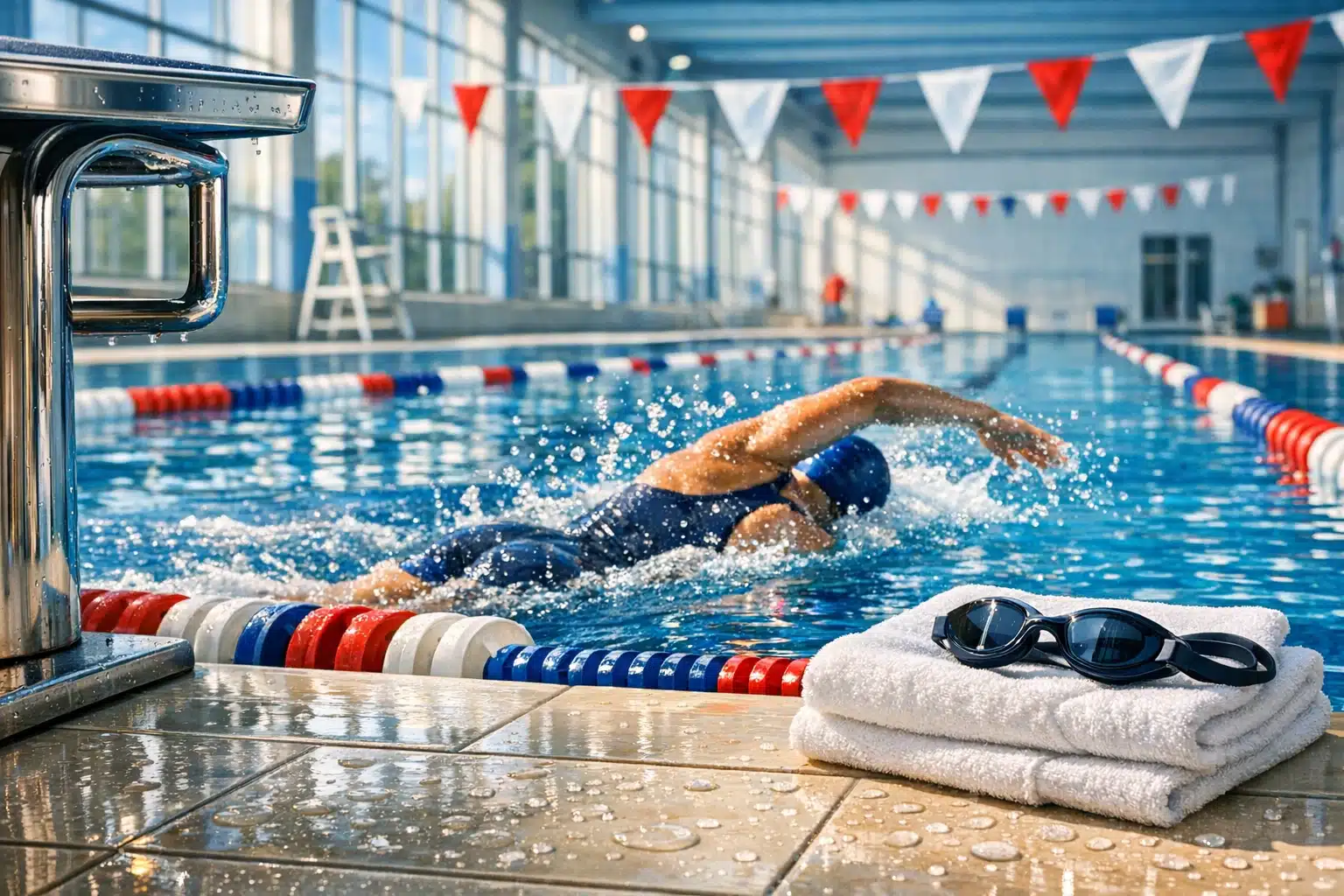
Explore the world of swimming
Swimming is one of those rare activities that feels playful and serious at the same time, inviting children, athletes, older adults, and cautious beginners into the same blue space. It matters because it builds endurance, supports low-impact exercise, teaches water safety, and creates room for recreation as well as competition. Whether your goal is fitness, confidence, stress relief, or skill, knowing more about swimming makes every minute in the water count.
Article Outline
- The place of swimming in history, culture, and modern daily life
- The physical and mental benefits that make it useful across age groups
- The main strokes, technique basics, and how efficient movement is built
- Safety principles, equipment choices, and the contrast between pools and open water
- How to create a lasting swimming habit, find community, and choose a path that suits your goals
Swimming in History, Culture, and Everyday Life
Swimming is far older than modern sport. People have moved through water for survival, transport, ritual, work, and pleasure for thousands of years. Ancient art from Egypt shows swimmers in recognizable positions, while Greek and Roman societies treated swimming as a practical skill tied to education and military readiness. Over time, what began as necessity gradually became recreation and then organized competition. By the late nineteenth century, swimming clubs were taking shape in Europe and elsewhere, and the sport eventually joined the Olympic program in 1896 for men and in 1912 for women. That timeline matters because it shows how swimming developed from instinct into technique, and from technique into a global language of movement.
Today, swimming occupies a unique place in everyday life. Unlike some sports that require a specific season, body type, or expensive field of play, swimming can serve many purposes at once. One person uses it for therapy after injury, another for weekend fun, another for racing, and another simply for the pleasure of floating after a difficult day. Public pools, school programs, community centers, lakes, beaches, and fitness clubs all contribute to its reach. In many countries, learning to swim is seen not only as an athletic step but as a life skill. That is an important distinction. A person may never compete in a race, yet the ability to stay calm and move effectively in water can still be deeply valuable.
Swimming also carries a strong social dimension. Family outings often revolve around water, and summer memories are filled with the sounds of splashing, whistles, and laughter bouncing off tile or drifting over a shoreline. At the same time, elite swimming can be intensely disciplined, measured in tenths and hundredths of a second. Few activities stretch so easily from playful to precise.
Its relevance in modern life can be summed up in several ways:
- It supports health, recreation, and personal safety at once.
- It is accessible to many age groups when proper supervision and instruction are present.
- It works as both an individual pursuit and a shared community activity.
- It can be practiced casually or developed into a highly technical competitive sport.
That wide range is part of swimming’s lasting appeal. A lane line may separate one swimmer from another, yet the water connects them all. In that sense, swimming is less like a single activity and more like a broad world with many doors into it.
Why Swimming Benefits the Body and Mind
Swimming is often praised as a full-body workout, and that description is fair when it is understood properly. In the water, the arms pull, the legs kick, the core stabilizes, and the lungs work rhythmically against resistance. Unlike running or many court sports, swimming takes place in a buoyant environment, which reduces impact on joints. Immersion changes how the body carries weight; depending on water depth, effective weight-bearing can drop significantly, which is why swimming and water exercise are often recommended for people managing joint discomfort, recovering from certain injuries, or easing back into activity after long periods of inactivity.
From a cardiovascular standpoint, swimming can help improve endurance when practiced regularly. Health organizations commonly recommend at least 150 minutes of moderate aerobic activity per week for adults, and swimming can contribute to that target. A steady session builds heart and lung capacity, while interval-based training can add intensity without the pounding associated with land-based exercise. Because water provides resistance in every direction, even moderate effort can feel substantial. A swimmer may leave the pool pleasantly tired without the jarring after-effects that sometimes follow high-impact training.
The benefits are not only physical. Many swimmers talk about the mental effect of being in water: the quiet between breaths, the repeating rhythm of strokes, the way attention narrows to movement and sensation. That rhythm can act like a reset button. While swimming is not a cure-all for stress, many people find that it reduces mental clutter and improves mood. There is a reason a long, smooth swim is often described with almost musical language. One stroke leads to the next, the turn interrupts the phrase, and then the pattern starts again.
Swimming can also support confidence in a very practical way. Progress is visible and measurable. A beginner may first learn to float, then kick with a board, then complete a single length, and later swim continuously for twenty minutes. Each step builds competence. For children, that can mean safer behavior around water. For adults, it often means replacing anxiety with calm control.
Some of the clearest advantages include:
- Low-impact conditioning for joints compared with many land activities
- Improved aerobic fitness and muscular endurance
- Better coordination through timing, breathing, and body position
- A calming, structured environment that can support stress management
- A scalable challenge, from gentle movement to demanding athletic training
Of course, benefits depend on frequency, technique, safety, and personal health status. Still, the broad appeal is easy to understand. Swimming asks much from the body, but the water gives something back in return: support, resistance, and a feeling of freedom that is hard to replicate elsewhere.
Strokes, Technique, and the Craft of Moving Efficiently
At first glance, swimming may look simple: enter the water, move your arms, kick your legs, and go forward. In practice, efficient swimming is a refined technical skill. The four competitive strokes—butterfly, backstroke, breaststroke, and freestyle, usually raced as front crawl—each demand different timing, body alignment, and breathing patterns. Good swimmers are not simply strong; they are economical. They waste less energy fighting the water, and that efficiency is often what separates a smooth swimmer from an exhausted one.
Freestyle is usually the first stroke people learn for continuous lap swimming because it is fast and adaptable. The body stays long and horizontal, the kick remains relatively compact, and the arms alternate in a cyclical pull. Breathing is turned to the side rather than lifted forward, which helps reduce drag. Backstroke shares some of freestyle’s alternating rhythm but flips the body face-up, making breathing easier while introducing a different challenge: maintaining straight direction without seeing where you are going. Breaststroke is more symmetrical and often more intuitive for beginners, yet it is highly technical. Its pull, kick, and glide must be timed carefully, or the stroke becomes tiring and inefficient. Butterfly is the most demanding of the four for many swimmers, using simultaneous arm recovery and a wave-like body action coordinated with a dolphin kick.
Technique rests on a few core principles that apply across strokes:
-
Body position matters. A streamlined line through the water reduces drag and conserves energy.
-
Breathing should fit the stroke instead of disrupting it. Lifting the head too high often causes the hips and legs to sink.
-
Propulsion comes from well-timed movements, not frantic effort. More force does not always mean more speed.
-
Consistency builds efficiency. Repeating clean movements is more useful than practicing poor habits at higher intensity.
Beginners often improve quickly when they focus on one technical idea at a time. A coach may ask a new swimmer to work only on exhaling underwater, or to lengthen the reach, or to soften a kick that is creating unnecessary splash. These small adjustments can create dramatic results. A swimmer who once felt as if the pool were pushing back suddenly begins to slide through it.
Training methods vary by goal. Recreational swimmers may alternate easy lengths with rest to build confidence and stamina. Fitness swimmers often use structured sets, such as 8 x 50 meters with a set rest period, to develop endurance and pacing. Competitive swimmers add turns, starts, race strategy, sprint work, and detailed stroke drills. Video analysis is now common in higher-level training because underwater footage can reveal flaws invisible from the deck.
There is also a useful comparison between swimming and other endurance sports. In cycling or running, a novice can often get moving with imperfect form and still complete a session. In swimming, technique errors can make even short distances feel disproportionately hard. That is why patience is so important. The reward for patient practice is striking: once the fundamentals click, the water feels less like a wall and more like a road.
Safety, Equipment, and the Difference Between Pool and Open Water
Swimming offers enjoyment and health benefits, but water is never something to treat casually. Safety is the quiet foundation beneath every good swim, whether that swim happens in a brightly lit pool or under a broad sky at a lake or beach. For beginners, supervision and formal instruction are especially important. Knowing how to float, tread water, control breathing, and recognize fatigue can make the difference between a pleasant session and a dangerous one. For children, layered protection matters: attentive adults, barriers around private pools, swimming lessons, and rules that discourage rough or unsupervised play.
Pool swimming is generally more controlled. Distances are marked, water conditions are predictable, lifeguards are often present, and lane structure helps organize space. Yet pools still require awareness. Slippery decks, collisions, overexertion, and poor lap etiquette can all create problems. Something as simple as choosing the correct lane speed helps everyone. If a swimmer stops at the wall, moves predictably, and allows faster swimmers to pass, the experience becomes safer and more pleasant for the whole group.
Open-water swimming introduces a different set of variables. There may be currents, waves, changing temperatures, limited visibility, marine life, uneven bottoms, or sudden weather shifts. Distance can feel deceptive when there is no lane line beneath you. Even experienced pool swimmers sometimes find open water unsettling at first because the environment removes familiar visual cues. For that reason, open-water sessions are best approached with preparation. Swimming with a partner or organized group, checking local conditions, using visible gear, and staying within personal limits are sensible habits rather than optional extras.
Basic equipment can improve comfort, performance, and safety:
- Swimsuit or jammers that allow unrestricted movement
- Goggles that fit well and suit the lighting conditions
- Swim cap for comfort, visibility, or hair management
- Kickboard, pull buoy, fins, or paddles for specific drills when used correctly
- Bright tow float for open-water visibility where appropriate
It is worth noting that gear supports swimming, but it does not replace skill. Expensive goggles will not fix poor breathing mechanics, and a flashy suit cannot substitute for water awareness. In fact, some of the most important habits cost nothing at all: warming up gradually, hydrating, respecting signs of fatigue, and leaving enough energy to finish safely.
The central comparison between pool and open water is control versus variability. Pools are measured, repeatable, and ideal for technical development. Open water is dynamic, demanding, and often deeply rewarding for those who enjoy adventure. Both environments can be excellent, provided the swimmer understands what each one asks of them.
Building a Lasting Swimming Habit and Finding Your Place in the Water
For many people, the hardest part of swimming is not the first lesson or even the first length of the pool. It is staying with the activity long enough to discover how much it can offer. A lasting swimming habit grows from realistic expectations, steady structure, and a clear sense of purpose. Some swimmers want better fitness, some want stress relief after work, some are training for triathlon, and others simply want to feel safe during family trips near water. There is no single correct reason to swim, but there is a common pattern behind long-term success: goals work best when they are specific, flexible, and connected to everyday life.
A beginner’s routine does not need to be dramatic. Two or three sessions a week can be enough to build familiarity and confidence. Early progress often comes from short, manageable sets with regular rest rather than one long struggle. For example, a new swimmer might begin with several lengths broken into intervals, focusing on relaxed exhalation and body position. An intermediate swimmer may choose themed sessions, such as one day for technique, one for endurance, and one for speed control. Competitive swimmers usually rely on larger weekly volume and coaching feedback, but even they return again and again to the basics.
Community also matters more than many people expect. Masters programs, school teams, local clubs, and public lessons create accountability and make improvement feel shared rather than solitary. Swimming can be meditative, but it does not have to be lonely. A good coach can shorten the learning curve dramatically, and supportive lane partners often make difficult sessions more enjoyable. There is a quiet comfort in entering a pool where others are also working, breathing, turning, and trying to improve a little from last week.
If you are building a sustainable practice, a few principles are especially useful:
- Start with consistency before intensity.
- Measure progress in multiple ways, including comfort, technique, and confidence.
- Use lessons or feedback early to avoid repeating inefficient habits.
- Respect recovery, especially if you combine swimming with other sports.
- Choose goals that fit your schedule rather than an idealized version of your life.
In the end, swimming remains valuable because it meets people where they are. It welcomes the child learning to float, the adult returning after years away, the athlete chasing time standards, and the older swimmer moving with calm precision through an early morning lane. If you are the kind of reader who wants an activity that can challenge you without punishing your joints, sharpen your focus without turning joy into drudgery, and stay relevant across decades, swimming deserves serious consideration. The first few sessions may feel awkward, as if the water is asking questions in a language you do not yet speak. Keep going. With time, those questions start to sound less like resistance and more like invitation.