Explore the world of swimming
Swimming at a Glance: Why It Matters and What This Article Covers
Swimming is one of those rare activities that feels playful and demanding at the same time, inviting beginners, athletes, children, and older adults into the same blue space. It builds endurance, supports heart health, teaches lifesaving confidence, and offers relief from the pounding impact of many land-based sports. In a world where stress, screen time, and inactivity compete for attention, swimming remains refreshingly relevant because it trains the body while steadying the mind.
At first glance, swimming can look simple: move through water, breathe, repeat. In reality, it combines technique, rhythm, awareness, and patience. Water adds resistance in every direction, which means even gentle movement can become meaningful exercise. Unlike some sports that demand expensive facilities, complex team structures, or a specific body type, swimming offers several entry points. A child taking first lessons, an adult returning to fitness, a triathlete refining endurance, and a retiree protecting joint health can all find value in the same lane, even if their goals are completely different.
This article follows a clear path so readers can understand swimming without getting lost in jargon or competitive detail. The outline is simple:
- Why swimming matters in modern life
- How the main strokes differ in movement, speed, and difficulty
- What swimming does for physical and mental health
- How to approach safety, equipment, and training wisely
- Who benefits most from swimming and how to begin with purpose
Swimming is relevant far beyond race times and medal tables. It is an essential life skill, a practical fitness tool, and, for many people, a welcome escape from gravity and noise. Pools create structure and measurable progress, while lakes, rivers, and oceans add adventure and respect for nature. In both settings, the swimmer learns a useful lesson: progress in water cannot be forced. The body moves best when effort and technique cooperate. That makes swimming a fascinating subject. It is athletic, but also meditative. It is social, yet often deeply personal. For readers who want a fuller understanding of the sport and the habit, the sections ahead explore not only what swimming is, but why it continues to matter so much.
The Main Strokes: Technique, Rhythm, and Practical Differences
One of the best ways to understand swimming is to look at its four main competitive strokes: freestyle, backstroke, breaststroke, and butterfly. Each stroke has a distinct rhythm, breathing pattern, and technical challenge. Freestyle, often swum as front crawl, is usually the first stroke people learn for fitness because it is efficient and relatively fast. The alternating arm action and flutter kick allow steady forward movement, making it a strong choice for lap swimming, endurance work, and triathlon training. For many swimmers, freestyle becomes the default language of the pool.
Backstroke shares the alternating pattern of freestyle, but the body faces upward. That changes everything. Breathing becomes easier because the face stays above water, yet direction and body alignment become more complicated. New swimmers often drift sideways or struggle to maintain a straight path. Backstroke can feel surprisingly freeing, though. Looking at the ceiling or the sky gives it a calmer mood than front-facing strokes, and it encourages balance through the hips and shoulders.
Breaststroke is slower for most swimmers, but it is also one of the most recognizable and approachable strokes. Its pull, breath, kick, and glide pattern makes timing more obvious than in freestyle. Many casual swimmers prefer it because they can keep their head above water more often and control pace easily. At the same time, good breaststroke technique is harder than it looks. The kick requires coordination and flexibility, and poor timing can waste energy quickly.
Butterfly is often viewed as the most demanding stroke, and that reputation is well earned. Both arms recover together, the body undulates, and the kick comes from a dolphin motion rather than alternating legs. When done well, butterfly looks almost theatrical, as if the swimmer is briefly flying over the surface before being pulled back into the water. It requires strength, timing, and efficient breathing. For beginners, it is usually the last stroke to learn well.
Here is a practical comparison:
- Freestyle: fastest for most swimmers, efficient for fitness and distance
- Backstroke: good for posture awareness and easier breathing, but harder navigation
- Breaststroke: comfortable pace for many learners, though technically detailed
- Butterfly: powerful and dramatic, but physically demanding and less sustainable for long sets
Choosing a stroke depends on purpose. If the goal is endurance, freestyle often leads. If the goal is variety and body awareness, mixing strokes helps prevent boredom and overuse. If the goal is skill development, learning how each stroke changes body position and breathing can transform a swimmer from someone who “gets through laps” into someone who truly understands the water.
Health, Fitness, and Mental Benefits in the Water
Swimming earns respect from coaches, doctors, and recreational athletes because it combines aerobic training with muscular work in a low-impact environment. Public health guidance commonly recommends at least 150 minutes of moderate aerobic activity per week, and swimming can help people meet that target while reducing repetitive impact on knees, ankles, and hips. That matters for beginners, people returning after injury, older adults, and anyone who wants challenging exercise without the constant pounding associated with many land-based activities.
Water provides resistance in every movement. That means the arms, shoulders, back, core, and legs all contribute, even during relaxed swimming. A gentle session may feel smooth and almost effortless, but the body is still working against drag. Faster sets increase cardiovascular demand and muscular fatigue quickly. In practical terms, swimming can improve endurance, breathing efficiency, and coordination at the same time. It also supports flexibility, especially through the shoulders, ankles, chest, and spine, when technique is taught correctly.
The comparison with other forms of exercise is useful. Running can build strong cardiovascular capacity, but it may be uncomfortable for people with joint pain. Cycling is effective and scalable, yet it is less upper-body intensive. Strength training builds muscle directly, though it does not always provide sustained aerobic work. Swimming sits in a valuable middle space. It is not a perfect replacement for every other activity, but it offers a broad training effect that few single exercises can match. Depending on pace, stroke, and body size, a lap session can also burn a meaningful number of calories, making it relevant for general fitness and weight management plans.
Mental benefits are just as important. The repetitive rhythm of laps, the muffled sound under water, and the need to focus on breath create a setting that many swimmers find calming. The pool can become a moving form of mindfulness. Stress does not magically disappear, but structured movement often helps lower mental clutter and restore a sense of control. People with demanding work schedules often describe swimming as a reset button because it removes phones, noise, and multitasking from the equation.
Some of the most reported benefits include:
- Improved cardiovascular endurance
- Lower impact on joints compared with many field or court sports
- Full-body muscular engagement
- Better breath control and body awareness
- A calming routine that can support stress management
For readers looking at fitness realistically, swimming is not magic and it is not effortless. Technique takes time, and progress can feel humbling at first. Yet that learning curve is part of its value. As skills improve, swimming becomes not only a workout, but a dependable practice that supports both physical health and emotional balance.
Safety, Equipment, and Smart Training Habits
Swimming is widely praised for its benefits, but it should never be separated from safety. Water is enjoyable, but it is also unforgiving when people overestimate their ability, ignore fatigue, or treat technique as optional. The first smart habit is simple: know your current level honestly. A beginner in shallow water, a regular lap swimmer, and an open-water athlete face different risks. Confidence is valuable, yet false confidence is one of the most dangerous things a person can bring into the pool or the sea.
For learners, formal instruction matters. Lessons teach more than stroke mechanics; they teach floating, breathing control, safe entry, turning, and what to do when something feels wrong. For children, close supervision remains essential even after lessons begin. For adults, a coach or instructor can quickly correct habits that cause wasted energy or panic, such as lifting the head too high, holding the breath, or kicking from the knees instead of the hips. Many people think they need more strength when what they actually need is better timing.
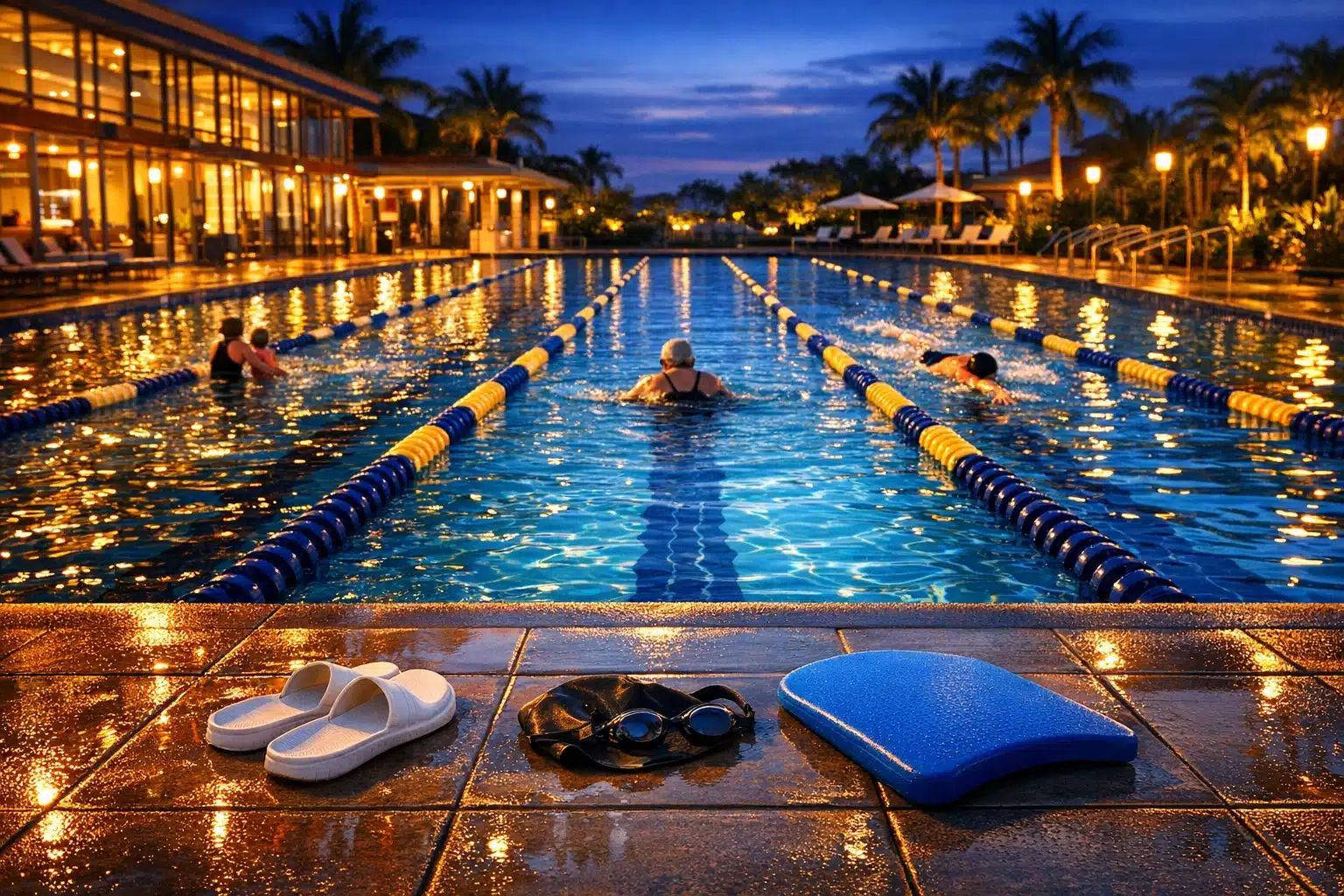
Equipment in swimming is relatively simple, but choosing it well improves comfort and consistency. A basic kit often includes:
- A swimsuit designed for movement rather than fashion alone
- Goggles that fit securely without painful pressure
- A swim cap if required or preferred for hair control
- A kickboard or pull buoy for drills, when used with purpose
- Flip-flops or pool shoes for hygiene and traction around wet surfaces
Beyond equipment, training habits shape progress. Good sessions usually begin with an easy warm-up, followed by focused sets and a brief cool-down. That structure helps the body adapt gradually. It also reduces the temptation to sprint every length and burn out halfway through the workout. Beginners often benefit from interval training, such as swimming one or two lengths, resting briefly, and repeating. This builds confidence without turning the pool into a survival test.
Open-water swimming deserves special respect. Unlike pool swimming, it introduces current, temperature changes, visibility issues, waves, and navigation challenges. Even strong pool swimmers can feel unsettled in a lake or ocean because there are no lane lines, walls, or predictable conditions. Safe open-water practice usually involves a partner, visible safety gear, knowledge of local conditions, and conservative decision-making.
Perhaps the best safety rule is also the most ordinary: stop when something feels wrong. Cramping, dizziness, unusual breathlessness, or confusion should not be pushed through. Swimming rewards discipline, but good judgment is part of that discipline. The strongest swimmer is not always the fastest one; often, it is the person who respects the water enough to prepare properly.
Swimming for Different Ages and Goals: A Practical Conclusion for Readers
Swimming remains valuable because it adapts so well to different lives. A child may begin with water familiarity and basic safety, then gradually build stroke skills and confidence. A teenager might use swimming for school sport, cross-training, or social connection. An adult with a desk job may discover that regular lap sessions undo some of the stiffness and mental noise created by long hours indoors. An older adult may appreciate the way swimming supports mobility and cardiovascular health without demanding constant impact on vulnerable joints. Few physical activities scale across life stages this smoothly.
Goals matter, and swimming can serve several at once. Some people want fitness. Others want stress relief, weight management support, improved technique, rehabilitation-friendly movement, or a safer relationship with water before traveling or taking children to beaches and pools. Competitive swimmers focus on pace, turns, and race strategy, while recreational swimmers may care more about consistency and enjoyment. Neither approach is more legitimate than the other. The useful question is not whether someone swims “seriously,” but whether the habit matches the person’s needs and keeps them engaged over time.
For readers wondering how to begin, the best plan is usually modest and specific:
- Start with one or two sessions per week rather than an extreme schedule
- Choose one clear aim, such as learning freestyle breathing or completing ten relaxed lengths
- Track simple progress markers like comfort, distance, or reduced rest time
- Mix drills and easy swimming to avoid boredom and technical stagnation
- Seek instruction early if frustration rises, because small corrections can change everything
There is also a deeper appeal to swimming that numbers do not fully capture. Water changes how effort feels. A hard set can be exhausting, yet the body leaves the pool feeling lighter. A quiet swim after a difficult day can feel like clearing fog from a window. Progress arrives through repetition, but not empty repetition; each lap offers immediate feedback on balance, breath, and control. That is one reason swimmers often stay with the activity for years. It keeps teaching.
For the target audience of this article, whether you are curious, cautious, or already committed, swimming offers a practical next step. If you are a beginner, start safely and learn fundamentals well. If you are returning after time away, focus on consistency before intensity. If you are already comfortable in the water, refine technique and broaden your training. Swimming is not only a sport to watch or admire from the deck. It is a skill, a health tool, and a lifelong companion waiting just beneath the surface.