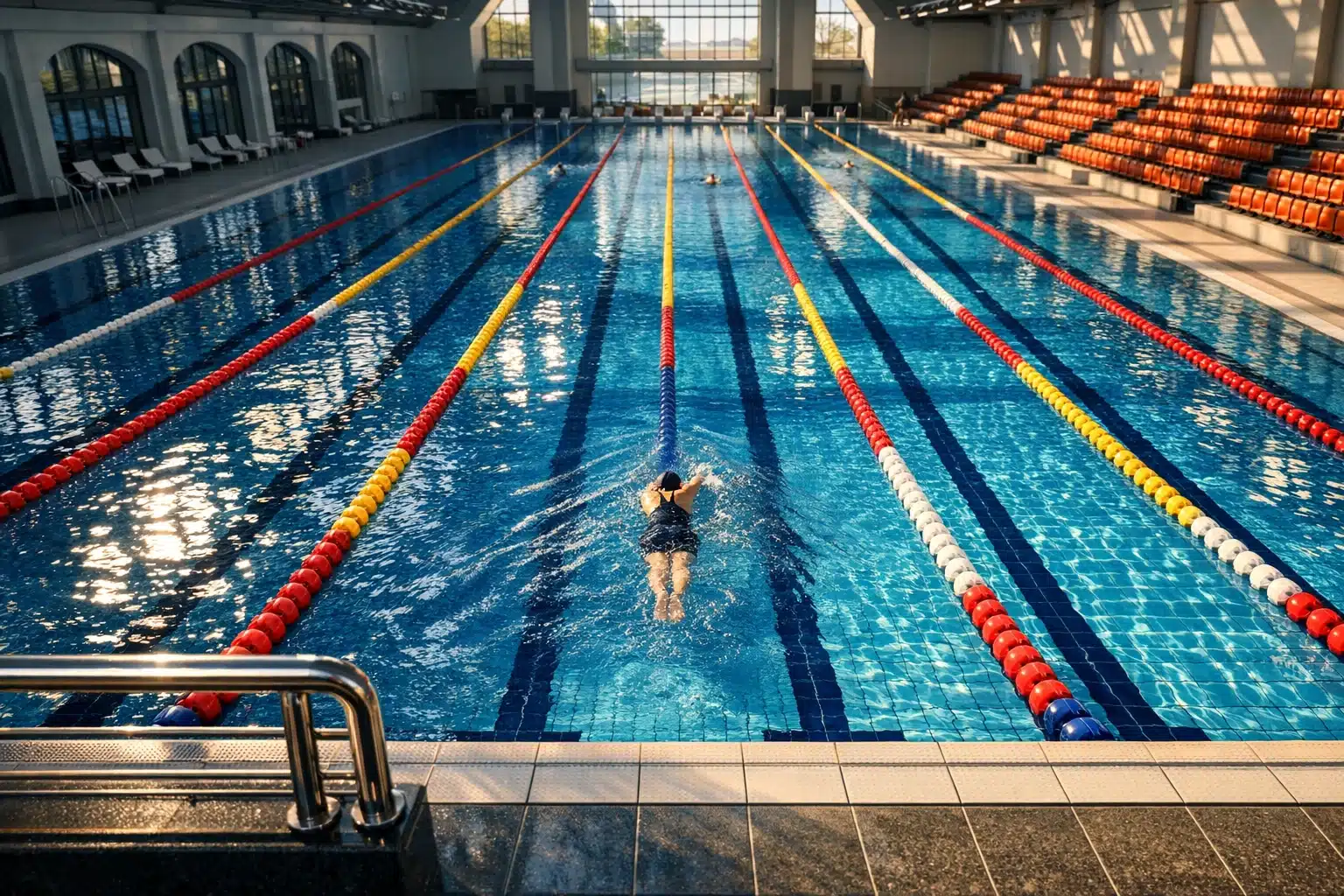
Explore the world of swimming
Swimming is one of the rare activities that can feel playful, competitive, meditative, and practical all at once. It matters because it teaches a life-saving skill while improving endurance, mobility, and confidence for people of nearly every age. From neighborhood pools to open water coastlines, it connects fitness with freedom in a way few sports can match. If you have ever wondered why so many people keep returning to the water, the answer begins with how deeply swimming supports both body and mind.
Outline
- The meaning and relevance of swimming in history, culture, and daily life
- The physical and mental benefits that make swimming distinct from many other sports
- The main swimming strokes, how they compare, and what each one teaches
- Safe practice, training environments, and the equipment that supports progress
- A practical conclusion for beginners and regular swimmers who want a lasting routine
Swimming as a Life Skill, Sport, and Cultural Tradition
Swimming has a wider role in human life than many people first realize. It is a sport, a recreational activity, a survival skill, and in many communities, part of local identity. Long before modern pools were marked with lane lines and timing systems, people swam in rivers, lakes, seas, and baths for transport, ritual, work, and simple enjoyment. Ancient civilizations recorded swimming in art and writing, and by the late nineteenth century it had become organized competition in many countries. Swimming appeared in the first modern Olympic Games in 1896 for men, while women’s events were added in 1912, showing how the activity steadily moved from necessity into formal athletic culture.
Its relevance today is just as strong, only broader. Unlike some sports that depend on a narrow age range or a specific body type, swimming can be adapted for children learning water safety, adults building fitness, older people protecting mobility, and elite athletes chasing fractions of a second. A pool can be a classroom in the morning, a therapy space at noon, and a training ground by evening. That flexibility helps explain why swimming remains one of the most valued activities in schools, clubs, and public health programs.
There is also a serious reason swimming matters: water safety. According to the World Health Organization, drowning causes hundreds of thousands of deaths globally each year, making swimming ability and supervision critically important. Learning to float, breathe calmly, and move efficiently in water is not only empowering; it can save lives. In that sense, swimming differs from sports that are purely optional hobbies. It carries a practical benefit far beyond medals, calorie counts, or race times.
Swimming also builds a special relationship between the individual and the environment. Running asks you to push against the ground. Cycling asks you to master balance and momentum. Swimming asks you to cooperate with water itself. That makes it humbling at first and deeply satisfying over time. Progress often comes quietly: a smoother breath, a longer glide, a calmer mind at the deep end.
- It is useful for recreation, competition, and safety.
- It can be taught early and practiced across the lifespan.
- It connects personal wellness with a real-world survival skill.
For readers deciding whether swimming deserves more space in their week, this broad relevance is the strongest starting point. Few activities offer enjoyment, discipline, and practical value in such equal measure.
The Physical and Mental Benefits of Swimming
Swimming is often praised as a full-body workout, and that description is accurate, but it only tells part of the story. The body moves through water against constant resistance, so the muscles of the shoulders, back, core, hips, and legs all work together rather than in isolation. At the same time, buoyancy reduces impact on the joints, which is why swimming is often recommended for people who need a lower-impact form of exercise. In chest-deep water, the body bears far less weight than it does on land, making movement more comfortable for many people with joint pain, excess body weight, or those returning from injury.
Compared with running, swimming usually creates less pounding stress on knees and ankles. Compared with cycling, it recruits the upper body more evenly while demanding precise breathing control. Because of this combination, swimmers can improve cardiovascular endurance and muscular stamina without the repetitive impact that sometimes limits land-based training. A moderate to vigorous swim session can also burn substantial energy. Exact numbers vary with body size, stroke choice, and pace, but many adults burn roughly 400 to 700 calories per hour while swimming laps. The point is not the exact figure; it is that swimming can be gentle on the body while still being physically demanding.
The mental benefits deserve equal attention. Repetitive movement, measured breathing, and the sensory quality of water often create a calming effect. Many swimmers describe a lane session as a reset button. There is rhythm in the pull, kick, and exhale, and that rhythm can reduce mental clutter. Research on exercise and mental health consistently shows that regular physical activity supports mood, stress management, and sleep quality. Swimming fits that pattern well, especially for people who dislike loud gyms or high-impact routines.
Another strength is accessibility across life stages. Children gain coordination and confidence. Adults can use swimming to meet the commonly recommended weekly target of at least 150 minutes of moderate aerobic activity. Older adults often appreciate its support for mobility and circulation. Pregnant swimmers, with medical guidance, may also find the water relieving because it eases the sense of body weight while allowing continued movement.
- Cardiovascular fitness improves through sustained effort and breath control.
- Muscle groups work together, especially the back, shoulders, core, and legs.
- Water reduces joint stress while still providing meaningful resistance.
- Steady swimming can support mood, focus, and sleep.
If exercise on land feels punishing, swimming offers a different conversation with the body. It can challenge you without constantly jolting you, and that difference is exactly why so many people stick with it for years.
Understanding the Main Strokes and How They Compare
One reason swimming stays interesting over time is that it is not just one movement. The four main competitive strokes, freestyle, backstroke, breaststroke, and butterfly, each create a different technical puzzle. Even for casual swimmers, understanding these styles makes practice more effective and far more enjoyable.
Freestyle, usually swum as front crawl, is the fastest and most common stroke for fitness swimming. It uses alternating arm pulls and a flutter kick, with the body rotating slightly from side to side. Because it is efficient and continuous, freestyle is often the first choice for lap training and endurance work. It rewards timing and relaxation. Beginners often think speed comes from splashing harder, but strong freestyle usually looks smoother, not more dramatic. A clean catch, steady kick, and controlled breath matter more than frantic effort.
Backstroke is sometimes described as freestyle turned to the ceiling, yet it feels quite different in practice. Swimmers float on their backs while alternating arm recovery and maintaining a flutter kick. Breathing is easier because the face stays above water, but body alignment becomes more challenging. Without careful core control, the hips sink and the stroke loses efficiency. Backstroke is particularly useful for balancing the muscular demands of other strokes because it opens the chest and strengthens the back in a distinct way.
Breaststroke is slower, but it is often the easiest stroke for beginners to understand because the face can stay forward more often and the motion feels more deliberate. The arms sweep outward and inward while the legs perform a whip kick. Timing is everything: pull, breathe, kick, glide. Breaststroke can feel graceful when done well, though it places different stresses on the knees and hips than flutter-kick strokes. For relaxed recreational swimming, it remains a favorite because the pace is naturally controlled.
Butterfly is the most physically demanding of the four. Both arms move together, and the body undulates with a dolphin kick. When elite swimmers perform butterfly, it looks like power shaped into rhythm. For beginners, it can feel like negotiating with gravity and waves at the same time. Still, learning even a simplified butterfly drill can improve core strength, timing, and awareness of body position.
- Freestyle is typically best for speed and endurance.
- Backstroke supports posture, balance, and varied muscle use.
- Breaststroke offers a measured pace and clear rhythm.
- Butterfly develops power, coordination, and precise timing.
The best stroke for a swimmer depends on the goal. Someone training for long aerobic sessions may favor freestyle. A learner seeking comfort might spend more time on breaststroke or backstroke. A competitive athlete will often practice all four. In every case, technique matters more than force. Water rewards efficiency, and every stroke teaches that lesson in its own language.
Pools, Open Water, Safety, and the Right Equipment
Where you swim shapes how you swim. A pool offers predictability: measured distances, visible lane lines, controlled temperature, and lifeguards in many facilities. That structure makes it ideal for beginners, technique work, interval sets, and rehabilitation. You know where the wall is, you can monitor pace, and you can stop when needed. For people who like clear benchmarks, a pool is almost like a notebook filled with water. Every length gives feedback.
Open water, by contrast, is more variable and more demanding. Lakes, rivers, and oceans introduce currents, waves, temperature shifts, visibility challenges, and navigation issues. Some swimmers love this unpredictability because it feels adventurous and expansive. There is a unique thrill in lifting your eyes to sight a distant buoy instead of another tiled wall. Yet open water also requires more preparation and caution. Even experienced pool swimmers can be surprised by cold shock, fatigue caused by current, or anxiety triggered by low visibility. That is why open water swimming is best approached gradually, ideally with partners, safety support, and a clear understanding of conditions.
Safety should never be treated as an afterthought. Basic rules matter because water can turn small mistakes into serious problems very quickly. Swimmers should understand depth, weather, supervision, and their own energy limits. Children need close, attentive observation, not casual glances from a distance. Adults also benefit from humility; being generally fit does not automatically mean being safe in every aquatic setting.
- Swim in supervised areas whenever possible.
- Use bright caps or safety buoys in open water for visibility.
- Check temperature, currents, and local guidance before entering natural water.
- Stop immediately if breathing becomes uncontrolled or muscles begin to cramp.
Equipment can help, though it should support skill rather than replace it. A well-fitted swimsuit reduces drag and distraction. Goggles protect the eyes and improve orientation. Swim caps can keep hair contained and make the head more visible. Kickboards, pull buoys, fins, and paddles are common training tools, each with a specific purpose. Fins can help body position and ankle flexibility. A pull buoy isolates upper-body work. Paddles increase feel for the water, though they should be used carefully to avoid shoulder strain.
The most important tool, however, is judgment. Fancy gear cannot make up for poor awareness. Whether you swim in a calm community pool or a restless sea, progress is built on skill, patience, and respect for the environment.
Conclusion: How to Begin, Improve, and Keep Swimming for Life
For beginners, the smartest way to start swimming is to keep the early goals simple. Do not aim to look elegant on day one or to complete a punishing workout by the end of the week. Start with comfort in the water, relaxed breathing, and short, repeatable distances. A few lessons from a qualified instructor can save months of frustration because small corrections in body position or breathing often make an immediate difference. Many adults hesitate because they think swimming must be learned in childhood, but that belief does not hold up in practice. People begin at every age, and steady improvement remains completely possible with patient instruction.
For developing swimmers, structure matters. Random laps can be enjoyable, yet progress comes faster when sessions have purpose. One day might focus on endurance, another on drills, another on mixed strokes or recovery. Tracking simple markers can help: total distance, number of lengths without stopping, pace per 100 meters, or how calm the breathing feels. These signs of progress are more useful than comparing yourself to the strongest swimmer in the lane next door.
Motivation also becomes easier when swimming is connected to a personal reason. For one person, that reason is health after years of sedentary work. For another, it is stress relief after long days. For a parent, it may be the wish to share water confidence with a child. For an older adult, it may be preserving mobility without pounding the joints. The best routine is rarely the most extreme one; it is the one you can return to consistently.
- Begin with safety and comfort before speed.
- Use technique lessons to build efficiency early.
- Create a routine that matches your schedule and energy.
- Measure progress by skill, confidence, and consistency.
Swimming offers something rare in modern life: challenge without chaos. It asks for effort, but it also rewards patience. It can sharpen athletic ability, support long-term health, and provide a quiet mental space in the middle of crowded days. If you are deciding whether to make room for it in your life, the answer is practical and encouraging. Start where you are, learn the basics well, respect the water, and let improvement arrive one length at a time. That is how swimming stops being an occasional activity and becomes a lifelong companion.