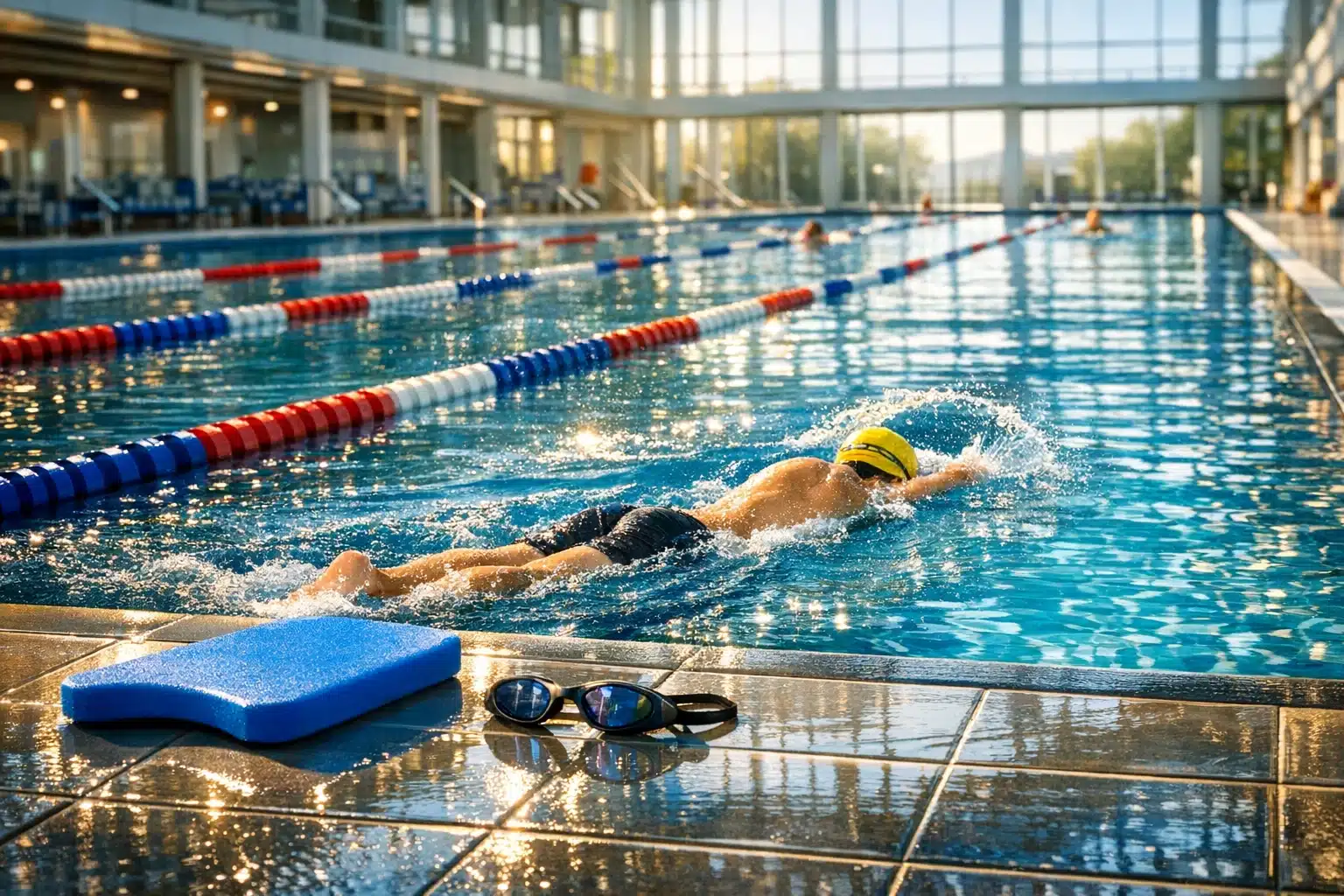
Explore the world of swimming
Swimming is one of those rare activities that feels playful and serious at the same time, inviting children, athletes, older adults, and cautious beginners into the same blue space. It builds fitness without the jarring impact of many land-based sports, rewards patience with visible progress, and can turn a tense afternoon into something steadier. This article explores strokes, training, safety, health benefits, and the deeper appeal that keeps people returning to the water.
Before moving into the full discussion, here is a simple outline of the article so readers can follow the current.
- The foundations of swimming and how water changes movement
- The physical and mental benefits that make swimming widely useful
- The four main strokes and how they compare in technique and effort
- Training, equipment, and safety for beginners and regular swimmers
- A concluding guide for readers who want to build a lasting relationship with the sport
The Foundations of Swimming: Water, Movement, and Confidence
Swimming begins with a truth that is easy to forget from the pool deck: water is not a passive setting. It pushes back, lifts, slows, supports, and tests every movement. That is why swimming feels so different from walking, cycling, or lifting weights. Air lets the body move with relatively little resistance, but water is far denser, which means even small changes in hand position, body angle, or breathing rhythm can change the result. A swimmer does not simply move through water; a swimmer learns to cooperate with it.
At the beginner level, the first challenge is usually not speed but comfort. Many new swimmers discover that floating, exhaling underwater, and turning the head to breathe can feel more technical than expected. Confidence comes from repeated exposure rather than force. Short sessions spent practicing gliding, kicking with a board, and blowing bubbles often do more for long-term progress than jumping straight into full laps. Coaches frequently focus on body position early because a high, balanced posture in the water reduces drag. In simple terms, the more level the body stays, the less energy is wasted pushing unnecessary water aside.
Breathing deserves special attention because it often shapes the entire experience. On land, people breathe automatically without planning. In the pool, inhalation must be timed, and exhalation is often extended into the water. This creates a rhythm that affects relaxation and efficiency. A tense swimmer tends to hold the breath, lift the head too high, and sink the hips. A calmer swimmer exhales steadily and rotates or lifts only as much as needed. That difference can turn a difficult length into a manageable one.
Swimming also introduces a unique blend of skill and sensation. Unlike sports where the ground gives immediate feedback, the water gives softer signals. Swimmers learn through feel: the catch of the hand, the pressure on the forearm, the balance of the kick, the line of the spine. Over time, what once felt chaotic begins to make sense.
- Buoyancy helps support body weight, which is why swimming is gentler on joints than many impact-heavy activities.
- Drag punishes poor alignment, making technique central even at recreational levels.
- Rhythm links breathing, kicking, and arm movement into a pattern that saves energy.
Confidence grows as these elements connect. A child learning to float, an adult returning after years away, and a competitive swimmer refining a turn all face the same principle: water rewards patience. Progress is often quiet at first, then suddenly obvious. One day a person clings to the wall. A few sessions later, that same person crosses the pool with a surprising smile and the unmistakable look of discovery.
Why Swimming Is a Full-Body Health Tool
Swimming has earned a special place in health and fitness because it combines cardiovascular work, muscular engagement, mobility, and recovery in a single activity. Many forms of exercise do one or two of these jobs very well. Swimming can do all of them at once, depending on pace, stroke, and session design. That versatility is one reason it appeals to such a wide audience, from schoolchildren and triathletes to older adults and people rebuilding strength after injury.
From a cardiovascular standpoint, swimming can raise the heart rate and improve endurance much like brisk walking, cycling, or jogging. Public health guidelines commonly recommend at least 150 minutes of moderate aerobic activity per week for adults, and lap swimming can help meet that target. The difference is that water reduces weight-bearing stress. For people with sore knees, back discomfort, or limitations that make running unpleasant, the pool often provides a more comfortable path to consistent movement. That does not mean swimming is easy. In fact, many beginners are surprised by how demanding it feels, especially because coordinated breathing adds another layer of challenge.
Muscularly, swimming is unusually broad in its reach. The shoulders, back, chest, core, hips, and legs all contribute. Freestyle asks for rotation and pulling strength, breaststroke emphasizes timing and leg drive, backstroke challenges posture and shoulder control, and butterfly calls for powerful whole-body coordination. Even easy swimming activates stabilizing muscles because the body must remain aligned while moving through a resistant environment. Unlike some gym routines, where a single machine isolates a limited area, swimming teaches parts of the body to work together.
Mental health is another major part of the picture. Many swimmers describe the water as a place where noise softens. The repetitive sound of strokes, the measured breathing, and the visual simplicity of the lane can create a calming effect. Exercise in general is associated with improved mood and reduced stress, and swimming adds a sensory quality that many people find restorative. A hard set can feel energizing; a smooth recovery swim can feel meditative.
Swimming is also widely used in rehabilitation and active recovery. Because buoyancy reduces impact, exercise specialists often recommend pool work for people managing arthritis, recovering from certain injuries, or easing back into activity after long breaks. Of course, medical advice should be individualized, but the basic principle is well established: water can make movement more accessible.
- Low impact does not mean low value; swimmers can train hard while sparing joints.
- Full-body involvement encourages balanced conditioning rather than narrow specialization.
- The mental reset offered by the water can support long-term exercise consistency.
In practical terms, swimming is valuable because it meets people where they are. Someone chasing race times and someone trying to move without pain may share the same pool yet pursue entirely different goals. That flexibility is not a small advantage. It is one of swimming’s greatest strengths.
Understanding the Four Main Strokes: Technique, Purpose, and Personality
The four competitive strokes, freestyle, backstroke, breaststroke, and butterfly, are often introduced as technical categories, but each one has its own personality. Learning them is not just about memorizing arm patterns. It is about understanding how propulsion, timing, and body position create a different experience in the water. Even recreational swimmers who never plan to race benefit from knowing how these strokes compare, because that knowledge makes training more varied and purposeful.
Freestyle, usually swum with a front crawl, is the fastest and most commonly practiced stroke. Its alternating arm action and flutter kick allow for continuous forward movement. Because the swimmer rotates from side to side, breathing can be integrated without stopping momentum. Freestyle is popular in fitness sessions because it is efficient over long distances. When technique is solid, it offers a good balance of speed and energy cost. However, beginners sometimes struggle with head position, crossing the hands over the center line, or kicking too hard without gaining much propulsion.
Backstroke is often described as freestyle turned upward, but it has its own demands. Swimming on the back makes breathing easier because the face stays above the surface, yet orientation becomes trickier since the swimmer cannot see straight ahead. A strong backstroke depends on body rotation, relaxed shoulders, and a steady kick. It can be especially useful for balancing training, because it works the posterior chain and encourages openness through the chest and upper back. For some swimmers, it feels freeing. For others, it feels like trusting a moving ceiling.
Breaststroke stands apart from the previous two because its movement is more symmetrical. Both arms pull together, both legs perform a whip kick, and the stroke includes a visible glide phase. Many casual swimmers find it approachable at low speed because the head can come forward more naturally for breathing. Yet efficient breaststroke is technical and timing-heavy. A poorly coordinated kick or a rushed pull can create enormous drag. In competition, it is slower than freestyle, but its precision gives it a distinctive charm.
Butterfly is the most dramatic of the four. The simultaneous arm recovery, dolphin kick, and wave-like body motion demand strength, timing, and confidence. It is physically expensive, which is why even strong swimmers often use it in shorter bursts. Butterfly exposes flaws immediately: if the rhythm breaks, the stroke can unravel. Still, it is not just a power stroke. Done well, it can look almost musical, with each undulation flowing into the next.
- Freestyle: fastest, efficient, ideal for endurance and general conditioning
- Backstroke: good for posture awareness, shoulder control, and breathing comfort
- Breaststroke: slower but accessible, highly technical, useful for pace variation
- Butterfly: demanding, powerful, rhythm-driven, excellent for advanced coordination
No stroke is universally superior. The best choice depends on the swimmer’s goal, body mechanics, and experience. A beginner may start with freestyle drills and easy backstroke. A triathlete may prioritize freestyle almost exclusively. A young swimmer developing all-around skills benefits from exposure to each stroke. Together, the four strokes show how rich swimming really is: it is not one movement repeated forever, but a family of techniques shaped by water, timing, and control.
Training, Equipment, and Safety: Turning Effort Into Progress
Good swimming rarely comes from enthusiasm alone. It grows from structure. A swimmer who enters the pool with a simple plan usually improves faster than someone who just accumulates random lengths. That plan does not have to be elaborate. In fact, for many people, consistency matters more than complexity. Two or three focused sessions each week can build skill and endurance surprisingly well, especially when each swim includes a warm-up, a main set, and a short cooldown.
A practical session might begin with easy swimming and drills to wake up technique. The main set could focus on endurance, such as repeated moderate laps with rest, or speed, such as shorter bursts with more recovery. Drills are especially useful because they isolate a skill that full-speed swimming tends to hide. Catch-up freestyle can improve timing. Kicking on the side can reinforce balance. Single-arm work can reveal whether one side is doing more than its share. This is where swimmers begin to understand that improvement is not only about working harder. It is also about working more precisely.
Equipment can help, but it should support learning rather than replace it. The basics are simple: a swimsuit that allows movement, goggles that fit well, and a cap if needed for comfort or hair management. Beyond that, training tools can add variety.
- Kickboards help isolate leg work and body alignment.
- Pull buoys reduce leg involvement so swimmers can focus on upper-body mechanics.
- Fins can improve ankle mobility, body position, and drill quality when used sensibly.
- Paddles increase resistance and can highlight flaws, but they should be introduced carefully.
Safety is the part of swimming that should never feel optional. Pool swimmers need to respect lane direction, avoid diving in shallow water, and pay attention to fatigue. Open-water swimmers must add another layer of caution because conditions can change quickly. Cold water, currents, poor visibility, boats, and distance from shore all raise the level of difficulty. Many experienced athletes recommend never swimming alone in open water and using visible safety gear such as bright caps or tow floats where appropriate.
Beginners sometimes underestimate the value of lessons, especially adults who feel self-conscious. Yet instruction can shorten the learning curve dramatically. A coach or qualified teacher can spot issues a swimmer may not notice, such as dropped elbows, inefficient kicks, or breath timing that creates tension. Feedback saves time.
Progress also depends on recovery. Because swimming is low impact, people occasionally assume they can ignore rest. The muscles and nervous system disagree. Sleep, hydration, and easier days still matter. The most effective swimmers are not always the ones who grind the hardest; often they are the ones who train with enough discipline to stay healthy and enough patience to keep showing up.
Conclusion: A Lifelong Lane for Every Swimmer
Swimming matters because it meets people at very different stages of life and asks each of them a slightly different question. For a child, the question may be about confidence and water safety. For a busy adult, it may be how to stay active without punishing sore joints. For an older swimmer, it may be how to keep moving with freedom and dignity. For a competitive athlete, it may be how to turn technical detail into measurable performance. Very few activities stretch across those needs so naturally.
If you are a beginner, the most useful goal is not elegance on day one. It is comfort. Learn to float, exhale underwater, and move across short distances without panic. That foundation is more valuable than trying to look advanced too quickly. If you are returning after years away, let consistency beat ego. Short swims with sound form will serve you better than one heroic session followed by a long break. If you are already comfortable in the water, variety can keep motivation high. Mixing strokes, drills, easy aerobic work, and occasional faster sets turns routine into practice with purpose.
Parents and caregivers have a special reason to value swimming. Beyond sport and exercise, aquatic skills are a form of safety education. Communities also benefit when pools are accessible and instruction is available, because swimming can reduce barriers to fitness for people who do not enjoy traditional gym settings. For schools, clubs, and local programs, that makes it more than a hobby. It becomes public value with personal rewards.
There is also something quietly remarkable about the atmosphere swimming creates. The lane line trembles, the light shifts across the surface, the body settles into rhythm, and the mind follows. Improvement in the water rarely arrives in a dramatic burst. It comes in cleaner breaths, smoother turns, calmer starts, and the pleasant surprise of realizing that a distance which once felt intimidating now feels ordinary.
For the reader standing at the edge of this topic, the best takeaway is simple. Swimming does not demand one identity. You do not need to be a racer, a triathlete, or a lifelong expert to belong in the pool. You only need a reason to begin and enough curiosity to continue. Whether your aim is health, skill, enjoyment, or resilience, swimming offers a path that can stay open for decades. Few pursuits ask so much of the whole body while giving back such a durable sense of strength, ease, and possibility.