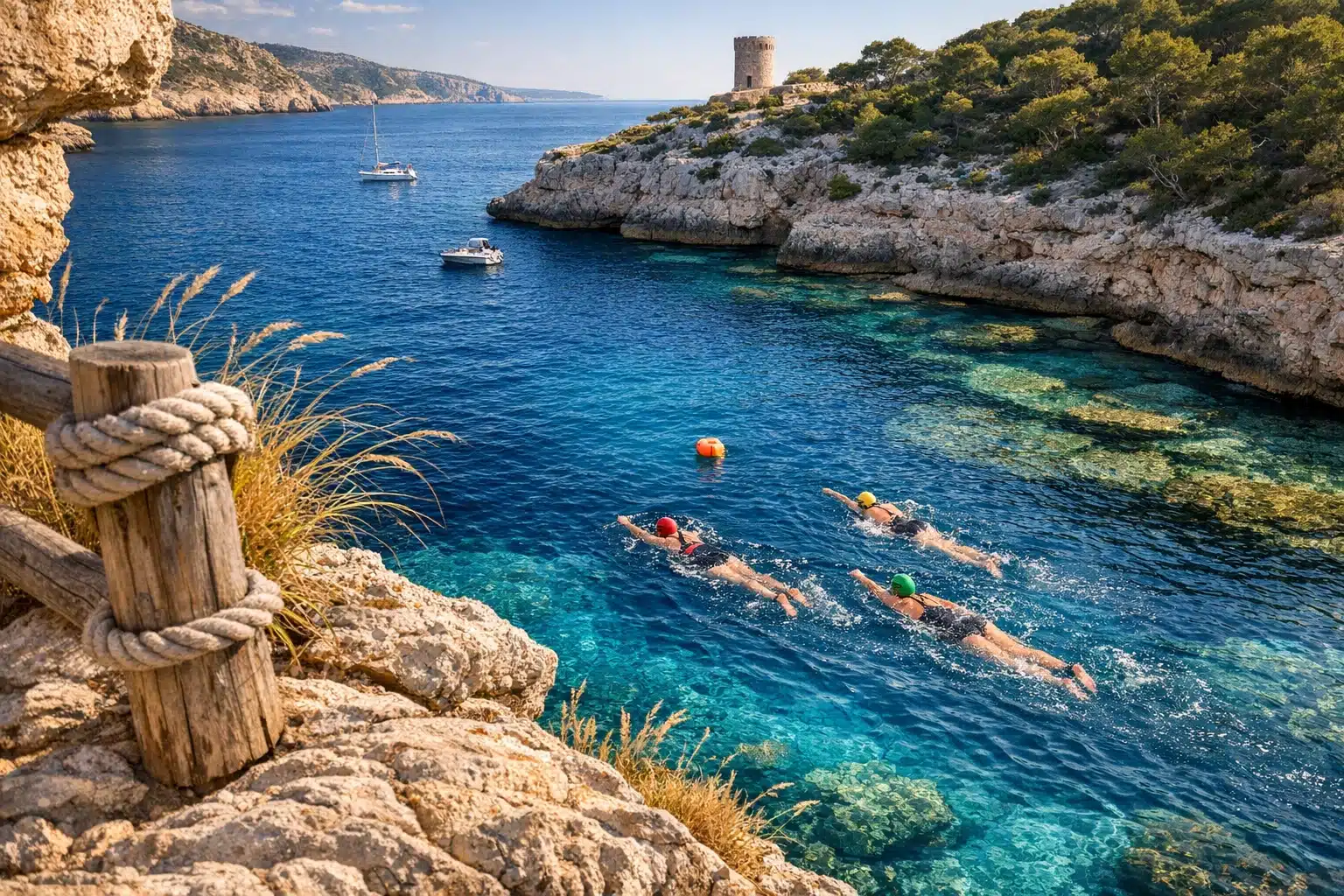
Explore the world of swimming
Swimming reaches far beyond the image of laps in a bright pool. It is a life skill, a full-body workout, a competitive discipline, and for many people a rare form of movement that feels both demanding and freeing. Because water supports the body while still resisting every stroke, swimming can challenge elite athletes and welcome cautious beginners at the same time. That unusual balance is exactly why the subject remains relevant across fitness, education, health, and recreation.
This article follows a clear path through the topic before diving into the details.
- The history and cultural importance of swimming
- The physical and mental benefits of regular practice
- The differences between major strokes and core skills
- Training habits, equipment, and safety principles
- How different readers can make swimming part of everyday life
1. Swimming Through History and Human Culture
Swimming feels modern when seen through the lens of Olympic lanes, digital stopwatches, and sleek training suits, yet its roots stretch far into human history. Some of the earliest visual evidence comes from prehistoric rock art in Egypt, often called the Cave of Swimmers, suggesting that humans have been entering water intentionally for thousands of years. Ancient civilizations did not treat swimming as a novelty. In places such as Greece and Rome, it was tied to education, military readiness, hygiene, and public life. To be unable to swim was sometimes viewed as a sign of incomplete training, which says a great deal about how essential the skill once seemed.
Over time, swimming evolved from a practical necessity into a structured sport. During the nineteenth century, clubs began forming in Europe, organized competitions appeared, and rules became more standardized. The first modern Olympic Games in 1896 included swimming events, though conditions were quite different from the climate-controlled pools many athletes know today. Swimmers competed in open water, where temperature, currents, and visibility could be as challenging as the opponents themselves. Since then, swimming has grown into a global sport with highly refined coaching methods, advanced performance analysis, and a wide range of events from 50-meter sprints to marathon open-water races.
Yet history alone does not explain the staying power of swimming. Water has a special effect on human imagination. A river can suggest danger, a lake can suggest peace, and the sea can feel endless. Swimming sits right in the middle of those meanings. It turns water from scenery into experience. That transformation helps explain why people approach swimming for very different reasons:
- Some learn it for safety and confidence
- Some use it for sport and competition
- Some return to it for recovery and low-impact exercise
- Some simply want the quiet rhythm that comes with moving through water
Culture has reflected this fascination in literature, film, travel, and public recreation. Beaches, pools, and lakeside towns have long been social spaces where swimming meets leisure. In schools, community centers, and summer camps, it often becomes a first taste of independence. A child who learns to float is not just practicing a skill; that child is discovering how fear can become control. An adult who returns to the pool after years away often finds something equally powerful: not just exercise, but a reconnection with the body in a new environment.
That broad cultural role makes swimming unusual among sports. It can be deeply personal while also being communal. It can be ancient in meaning and highly technical in practice. Few activities carry so much history while still feeling fresh every time the surface breaks around the first stroke.
2. Why Swimming Is Such a Powerful Form of Exercise
Swimming is often praised as a full-body workout, and that description is accurate, but it barely captures the range of benefits involved. When a person moves through water, the body works against far more resistance than it does in air. Water is much denser than air, which means even simple motions require continuous muscular effort. Unlike some land-based exercises that load certain joints heavily, swimming spreads the work across the shoulders, back, core, hips, and legs while the buoyancy of water reduces impact. For people managing joint discomfort, recovering from injury, or seeking exercise without repetitive pounding, this combination can be especially useful.
The physical effects of regular swimming are broad. Cardiovascular endurance improves because the heart and lungs must support sustained effort over time. Muscular endurance increases because every stroke repeats resistance-based movement. Flexibility can also benefit, especially in the shoulders, ankles, hips, and thoracic spine, depending on technique and stroke choice. Calorie expenditure varies by body size, pace, and stroke, but an hour of moderate to vigorous swimming may burn roughly 400 to 700 calories or more. Faster freestyle, butterfly, and interval work can push the number higher, while easy technique sessions may sit at the lower end.
Swimming also changes how many people experience effort. On land, heavy breathing and impact can make exercise feel harsh. In water, the effort is filtered through rhythm. The face turns, the breath arrives, the arms recover, and the body glides for a moment before the next demand begins. That pattern can make challenging work feel more manageable, which is one reason swimmers often stay with the activity long term.
The mental benefits deserve equal attention. Many swimmers describe the pool as a place where noise drops away. Laps create repetition, and repetition can be calming. Research on exercise more broadly links regular physical activity with improved mood, reduced stress, and better sleep, and swimming fits well within that picture. In some cases, the sensory environment of water adds another layer of relief. The cooling effect, the muffled sound, and the focus on breath can feel restorative after a crowded or screen-heavy day.
- Low-impact movement can suit people with sensitive joints
- Resistance in every direction supports balanced muscular work
- Breath control encourages body awareness and pacing
- Structured sessions can improve stamina without monotony
Another important advantage is accessibility across life stages. Children can begin with water confidence and basic skills. Adults can use swimming to build fitness or cross-train for running and cycling. Older adults often appreciate the support water gives to the body, especially when compared with higher-impact exercise. Pregnant people may also find water exercise more comfortable than some land routines, though personal medical guidance is always wise.
In practical terms, swimming offers something many forms of exercise struggle to provide: intensity without violence to the body. It can be hard, technical, strategic, meditative, social, or solitary. That flexibility is part of its strength. Whether the goal is heart health, improved mobility, better stress management, or simply a more enjoyable way to stay active, swimming has a strong case to make.
3. Understanding the Main Strokes and Core Swimming Skills
To a new observer, swimming may look like a smooth sequence of arms and splashes, but technique changes everything. Two people can cover the same distance with very different levels of efficiency depending on body position, breathing, timing, and stroke mechanics. Learning the major strokes is not only useful for sport; it helps swimmers understand how the body interacts with water and why certain movements feel easy while others waste energy.
Freestyle, often called front crawl, is the fastest and most commonly used stroke in both training and racing. Its alternating arm action, flutter kick, and side breathing pattern create forward speed with comparatively efficient energy use. Good freestyle depends on a long body line, a stable head position, and rotation through the torso rather than frantic arm turnover. Beginners often think they need to fight the water, but the better lesson is to align with it.
Backstroke reverses the orientation but preserves an alternating rhythm. Because the face stays above the surface, many learners find breathing easier, though body position can be tricky. Hips that sink create drag, and poor shoulder rotation can reduce power. Backstroke is excellent for balance and posture awareness because swimmers must trust alignment without seeing where they are going.
Breaststroke is usually slower, but it is highly popular in lessons and recreational swimming. The stroke uses a pull, breath, kick, and glide sequence, with the whip kick providing much of the propulsion. Timing matters more here than speed of movement. If the swimmer rushes, the stroke becomes tiring and choppy. Done well, it feels almost conversational, with each cycle offering a brief pause.
Butterfly is the most demanding of the four competitive strokes. Both arms recover together, the body undulates, and the dolphin kick drives rhythm from the core. Butterfly rewards strength and timing but punishes poor coordination. It is often dramatic to watch because the stroke looks like a controlled battle with gravity and water at once.
- Freestyle: fastest, efficient, versatile
- Backstroke: good for alignment and breathing comfort
- Breaststroke: technical, rhythmic, popular with casual swimmers
- Butterfly: powerful, advanced, highly demanding
Beyond the strokes themselves, several core skills matter just as much. Floating builds confidence and teaches balance. Streamlining reduces drag after push-offs. Kicking drills help body position, but they should support whole-stroke movement rather than become an end in themselves. Breathing technique is crucial, especially for new swimmers who tend to hold the breath too long and tense up. Exhaling into the water and inhaling during a quick, well-timed turn of the head is more effective than lifting the head forward, which often drops the hips.
Turns and starts become important as swimmers progress. In competition, they can decide races, but even in general training they improve momentum and body control. A strong push from the wall with a tight streamline can teach more about reducing drag than an entire length of careless swimming.
The most useful comparison between strokes is not simply which one is fastest or hardest. It is what each stroke teaches. Freestyle teaches flow, backstroke teaches alignment, breaststroke teaches timing, and butterfly teaches integrated power. Together, they show that swimming is less about overpowering water than about learning its rules well enough to move through it with purpose.
4. Training, Safety, and the Equipment That Really Matters
Swimming rewards consistency more than occasional heroic effort. A beginner who swims three short sessions a week with attention to form will usually progress more reliably than someone who attacks the water once every ten days and leaves exhausted. Good training begins with realistic structure. A typical session might include a warm-up, a drill set for technique, a main set for endurance or speed, and an easy cooldown. That formula is simple, but it allows room for almost any goal, whether the swimmer wants general fitness, race preparation, or more comfort in deep water.
For new swimmers, the first objective should not be speed. It should be control. That means learning to float, breathe without panic, and maintain body position. Distances can be very short at first. Four lengths with rest may be more valuable than one messy, stressful continuous swim. As technique improves, volume can grow. Intermediate swimmers often benefit from interval training, such as repeated 50-meter or 100-meter swims with planned rest, because it builds both conditioning and pace awareness.
Equipment can help, but it should support skill rather than replace it. A few items are genuinely useful:
- Goggles improve comfort, visibility, and confidence
- A swim cap can reduce drag and keep hair out of the face
- A kickboard helps isolate kicking and body position drills
- A pull buoy supports the legs during arm-focused work
- Fins can assist body line and make some drills easier to feel
At the same time, swimmers do not need an overflowing mesh bag to make progress. Technique, repetition, and thoughtful feedback matter more than gear. That is a good reminder in an age when many sports are surrounded by expensive extras.
Safety is where swimming becomes more than exercise. Because water is inherently less forgiving than a gym floor or walking path, basic precautions are essential. Weak swimmers should stay in supervised environments and avoid overestimating their ability. Open-water swimming introduces additional variables such as currents, waves, cold temperature, low visibility, and changing weather. A calm lake can turn difficult with surprising speed, and the sea follows its own logic entirely. Bright swim caps, a partner or group, local knowledge, and respect for conditions are not signs of caution alone; they are signs of competence.
Pool safety matters too. Wet decks, crowding, poor lane etiquette, and fatigue can all create preventable problems. Swimmers should learn when to rest, how to share space, and how to recognize the difference between effort and distress. Parents and guardians should understand that flotation toys are not substitutes for supervision or formal swimming ability.
There is also a training principle worth remembering: not every session should be hard. Skill development often happens when the swimmer is calm enough to notice details. A rushed hand entry, dropped elbow, or mistimed breath can become a habit if intensity arrives before technique. In that sense, smart swimming resembles good writing or music practice. Quality repetitions build the foundation, and speed becomes meaningful only after control is in place.
5. Who Swimming Is For and How to Make It Part of Real Life
One of swimming’s greatest strengths is that it does not belong to just one type of person. It is not reserved for children, elite athletes, or people chasing medals. It suits many life stages and many intentions, which makes it easier to fit into real routines than some sports with narrower demands. A teenager may use swimming to build confidence and fitness. A working adult may rely on it for stress relief after long hours at a desk. An older adult may value the support water gives to knees, hips, and back. A triathlete may use the pool for performance. Someone recovering from a long break from exercise may simply appreciate that the water welcomes slow beginnings.
Competitive pathways are available for those who want structure. Age-group teams, school programs, university clubs, masters swimming, and open-water events provide goals and community. Competition can sharpen technique because it gives training a clear purpose. It also teaches pacing, discipline, and resilience. Still, competition is only one branch of the swimming tree. Recreational swimmers can gain just as much satisfaction from setting personal targets, such as swimming continuously for twenty minutes, learning bilateral breathing, or becoming comfortable in deeper water.
For readers wondering how to begin, the best approach is practical rather than dramatic:
- Choose a local pool with beginner-friendly lane times or lessons
- Start with two or three short sessions per week
- Focus first on breathing, floating, and relaxed movement
- Track small milestones instead of chasing instant transformation
- Ask for coaching feedback before bad habits settle in
Many people quit too early because they mistake unfamiliarity for inability. Swimming has a steeper technical learning curve than walking, cycling, or simple gym machines. At first, the water may feel awkward, and progress may seem strangely invisible. Then one day the stroke catches. The body rides higher. The breath arrives on time. A length that once felt impossible becomes a warm-up. Those moments are subtle, but they are memorable because they reveal how skill changes effort.
Swimming can also become a social anchor. Community pools create regular encounters, masters groups offer encouragement without requiring elite speed, and open-water clubs often build strong bonds through shared challenge. At the same time, swimming remains one of the few activities that can feel pleasantly solitary. The lane offers room to think, count, reset, or simply be quiet for a while.
For the target audience of this article, whether you are curious, hesitant, returning after years away, or already swimming and looking to understand it better, the central message is simple. Swimming is worth learning because it combines utility, health, and enjoyment in a single practice. It can protect life, strengthen the body, clear the mind, and open doors to recreation or sport. You do not need perfect technique on day one, and you do not need to love every session immediately. You only need a safe place to begin and enough patience to let the water teach you what it has taught people for centuries: progress comes stroke by stroke.