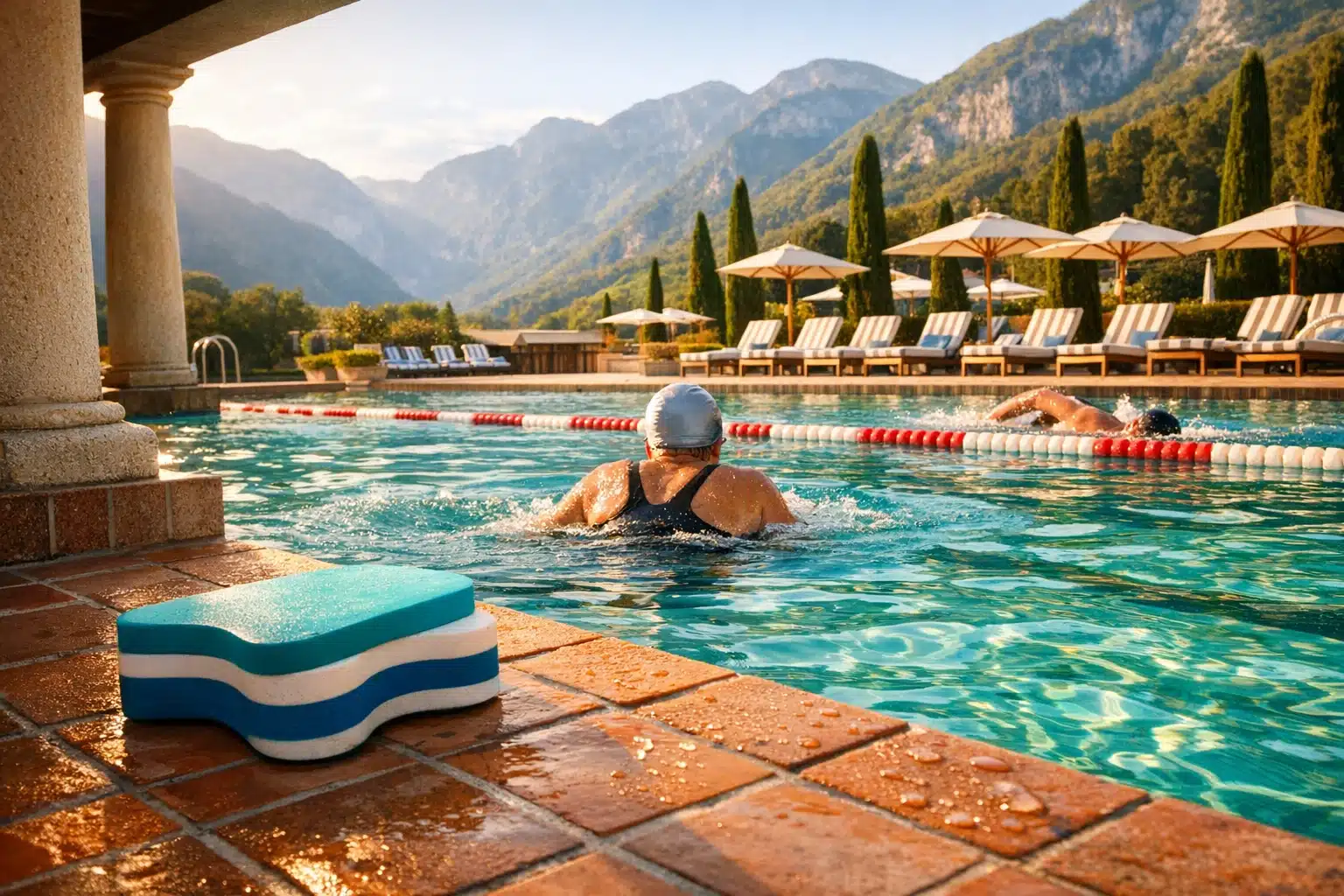
Explore the world of swimming
Swimming blends movement, rhythm, and resilience in a way few activities can match, making it relevant to children learning confidence, adults seeking balanced exercise, and athletes chasing precision. It builds endurance without constant impact, sharpens technique through small corrections, and turns water into both a training ground and a place of calm. This article explores the foundations of swimming, the major strokes, its health value, training methods, and practical ways to enjoy it safely for life.
Outline
- The foundations of swimming and why it matters worldwide
- The four main strokes and how they differ in technique and purpose
- Physical and mental health benefits supported by science and experience
- Training, skill development, and common pathways from beginner to advanced swimmer
- Safety, access, equipment, and ways to make swimming a lifelong habit
Swimming as a Life Skill, Sport, and Global Cultural Practice
Swimming is far more than a recreational pastime. It is a life skill, a competitive sport, a therapeutic activity, and for many communities, a meaningful cultural practice connected to geography, climate, and tradition. Human beings have interacted with water for thousands of years, whether for travel, survival, exercise, military training, or ceremony. Today, swimming remains one of the most widely taught physical skills in the world because it serves practical needs while also opening the door to fitness and leisure.
One reason swimming holds such broad relevance is accessibility across age groups. Children often begin with water familiarization and basic floating skills. Adults may turn to swimming for low-impact exercise, especially when running or contact sports feel too hard on the joints. Older adults frequently value the buoyancy of water, which reduces load on the body while still allowing muscles and the cardiovascular system to work. This range makes swimming unusual: it can be playful on one day, rehabilitative on the next, and intensely competitive when the context changes.
Competitive swimming is also one of the most established modern sports. It has been part of the Olympic Games since the late nineteenth century for men and early twentieth century for women, and it now includes a wide range of distances and strokes. Elite swimmers train with extraordinary discipline, refining details that seem almost invisible to spectators. A slight adjustment in hand entry, body position, or breathing timing can affect speed over an entire race. At the highest level, medals are sometimes decided by hundredths of a second, which shows how technical the sport really is.
Beyond the pool, swimming intersects with many related forms of movement and competition:
- Open-water swimming emphasizes endurance, navigation, and environmental awareness.
- Water polo combines swimming with strategy and team play.
- Triathlon uses swimming as one of three endurance disciplines.
- Artistic swimming highlights synchronization, breath control, and performance.
In public health discussions, swimming lessons are often treated as essential rather than optional. Drowning prevention programs around the world stress early water safety education, supervised practice, and respect for changing conditions in lakes, rivers, and oceans. For families, teaching a child to swim is not simply signing up for another hobby; it is investing in competence and safety.
There is also something emotionally distinctive about the water itself. Land sports often feel loud, fast, and forceful. Swimming can still be demanding, yet it introduces a muffled world where breathing has a rhythm and movement leaves a visible trail. In that space, people often discover a rare combination of effort and quiet. That balance helps explain why swimming survives trends, crosses generations, and continues to matter almost everywhere people meet water.
Understanding the Main Swimming Strokes and Their Unique Demands
To understand swimming properly, it helps to look closely at the four competitive strokes: freestyle, backstroke, breaststroke, and butterfly. Each stroke asks the body to solve the same challenge in a different way: how to move efficiently through dense water while maintaining balance, propulsion, and controlled breathing. For beginners, the strokes can seem like variations of arm and leg movement. For experienced swimmers, they are distinct systems of timing, body alignment, and energy use.
Freestyle, usually swum as front crawl in competition, is generally the fastest and most commonly taught stroke for fitness swimming. Its alternating arm action and flutter kick create steady propulsion, while the body rotates from side to side to support breathing and improve reach. Because one arm recovers above the water while the other pulls underneath, freestyle rewards rhythm and streamlining. A swimmer with strong technique often appears smooth rather than forceful, slicing through the lane with minimal wasted motion. It is widely used in lap training because it is efficient over short and long distances alike.
Backstroke is the only competitive stroke performed on the back, which changes orientation and spatial awareness. Swimmers must keep their hips high and maintain a stable head position while using alternating arm action and a flutter kick similar to freestyle. Breathing is less restricted because the face remains out of the water, but steering and timing become harder because the ceiling offers fewer visual cues than the pool floor. Backstroke develops posture, coordination, and comfort in a supine position, which can feel strangely liberating once the swimmer learns to trust the water.
Breaststroke is often seen as slower, yet it is technically demanding and easy to perform inefficiently. The arms sweep outward and inward while the legs execute a whip kick, followed by a glide phase. Timing is everything. If the kick is late, the swimmer stalls; if the head lifts too high, resistance increases. Many recreational swimmers prefer breaststroke because it allows frequent breathing and a clear forward view, but strong breaststroke requires flexibility, coordination, and careful control of drag.
Butterfly is perhaps the most dramatic stroke. Both arms recover simultaneously over the water while the body undulates and the legs perform a dolphin kick. It demands power, rhythm, and excellent timing. Although it has a reputation for difficulty, butterfly is not just brute strength. Skilled swimmers rely on wave-like coordination, using the chest, hips, and kick to support the arm cycle rather than fighting the water with isolated effort.
A useful comparison highlights why stroke choice matters:
- Freestyle: fastest, versatile, efficient for endurance training
- Backstroke: posture-focused, easier breathing, harder navigation
- Breaststroke: slower, highly technical, popular for recreational swimmers
- Butterfly: powerful, demanding, dependent on timing and core control
Learning these strokes gives swimmers more than variety. It teaches adaptability. Water never rewards the same mistake for long, and each stroke exposes different weaknesses in balance, mobility, and timing. Mastering even one stroke is valuable, but understanding all four offers a fuller view of what swimming can become.
The Physical and Mental Benefits of Swimming
Swimming is often praised as a full-body workout, and that description is accurate, though incomplete. Its benefits extend beyond muscle engagement and calorie use. Swimming challenges the cardiovascular system, builds coordination, supports mobility, and often creates a mental state that many people describe as focused and calming at the same time. Because the body works against water resistance in every direction, even steady lap swimming recruits a broad set of muscles while demanding controlled breathing and pacing.
From a physical standpoint, swimming can improve aerobic capacity, muscular endurance, and general functional fitness. The heart and lungs work continuously during sustained swimming, particularly when intervals, longer distances, or faster sets are involved. Water also provides natural resistance without the heavy impact associated with repeated running or jumping. That makes swimming especially useful for people managing joint sensitivity, recovering from some injuries under professional guidance, or seeking exercise variety. The buoyancy of water reduces stress on hips, knees, and ankles while still requiring effort from the shoulders, back, core, and legs.
Energy expenditure in swimming varies widely depending on stroke, pace, body size, and skill. A relaxed swimmer may use moderate energy, while an advanced swimmer performing butterfly intervals or sprint sets can produce a very high training load. Technique matters greatly here. Two swimmers can spend the same amount of time in the pool and experience very different demands because one glides efficiently while the other fights unnecessary drag. In this sense, swimming rewards learning as much as exertion.
Mental benefits are just as important. Many swimmers experience the pool as a place where noise fades and attention narrows in a healthy way. Breathing patterns create rhythm. Repeated turns structure time. Small technical goals, such as lengthening the stroke or relaxing the kick, keep the mind occupied without the mental clutter of daily life. This can make swimming restorative even when it is physically hard. Some research on physical activity supports the broader idea that regular exercise helps mood, stress management, and sleep quality, and swimming fits well within that evidence.
Commonly reported benefits include:
- Improved cardiovascular fitness and stamina
- Better breath control and movement coordination
- Lower-impact conditioning compared with many land-based sports
- Opportunities for stress relief and mental reset
- Useful cross-training for runners, cyclists, and team-sport athletes
Swimming also has social value. Group lessons, masters programs, youth clubs, and community pool sessions offer structure and connection. A lane can look solitary, but the culture around swimming often depends on quiet encouragement, shared routines, and collective respect for steady progress. For some people, that atmosphere matters more than speed or distance.
Perhaps the most interesting benefit is sustainability. People can return to swimming after long breaks, adapt intensity as life changes, and continue practicing across decades. Few activities allow a teenager, a working parent, and a retiree to train in the same facility for entirely different reasons, each finding a challenge that fits. That staying power is one of swimming’s greatest strengths.
How Swimmers Build Skill: Training, Technique, and Long-Term Progress
Improvement in swimming rarely comes from effort alone. Unlike some activities where more force can temporarily cover weak form, swimming tends to expose inefficiency immediately. Water punishes excess movement, poor alignment, and rushed breathing. That is why training usually combines fitness with technical refinement. Progress happens when swimmers learn to move more effectively before simply trying to move harder.
For beginners, the first milestones are often comfort and control rather than speed. Floating, exhaling underwater, kicking with balance, and coordinating simple arm actions create the base on which all later skill depends. Instructors commonly use drills to isolate one element at a time. A swimmer might practice side breathing without worrying about pace, or focus on streamlining off the wall before adding a full stroke cycle. These early steps may look modest, but they solve major problems. Once a swimmer stops fearing the water or fighting to stay level, energy can be directed toward learning and endurance.
As swimmers advance, training becomes more structured. A typical session may include a warm-up, drill work, a main set, and a cool-down. Warm-ups prepare muscles and establish feel for the water. Drills sharpen technique. Main sets develop endurance, speed, or race-specific capacity. Cool-downs help the body settle and offer time to reflect on what changed during the session. Even recreational swimmers benefit from simple structure because it turns random lengths into purposeful practice.
Coaches and experienced swimmers pay close attention to several technical themes:
- Body position: keeping the body long and balanced reduces drag.
- Breathing: relaxed, timely breaths prevent tension and maintain rhythm.
- Catch and pull: effective underwater movement creates propulsion rather than splashing.
- Kick control: the legs support alignment and timing, not just raw power.
- Turns and push-offs: efficient wall work can save considerable time and energy.
Training methods vary according to goals. A fitness swimmer may use moderate continuous sets with short rests. A competitive swimmer often works with intervals, pace targets, stroke counts, and periodized weekly plans. Open-water swimmers may train sighting, navigation, and longer sustained efforts. Triathletes usually balance swim development with bike and run demands, so efficiency becomes especially important. In every case, feedback matters. Video analysis, coach observation, and even self-awareness during a set can reveal patterns that numbers alone miss.
Plateaus are common and should not be mistaken for failure. A swimmer may improve fitness while technique temporarily stalls, or learn better mechanics that feel slower before they become natural. The process is often uneven: one month brings a breakthrough in breathing, another brings frustration with timing. Yet that stop-and-start pattern is normal in technical sports. Real progress usually looks less like a straight ladder and more like a tide line moving forward in small returns.
The long-term lesson is encouraging. Swimming skill is highly trainable. Age, background, and natural feel for water influence the starting point, but most swimmers can improve meaningfully with consistent practice, patient correction, and realistic goals. In the pool, precision compounds. A small gain repeated over every stroke becomes a very big change by the time the swimmer reaches the far wall.
Safety, Equipment, and Making Swimming a Lifelong Habit
For swimming to remain rewarding, it must be practiced safely and realistically. The sport carries enormous benefits, but water always deserves respect. Good swimmers are not reckless swimmers; they are people who understand their environment, know their limits, and make thoughtful choices before fatigue or conditions make decisions for them. This principle applies in pools, lakes, rivers, and oceans alike.
Pool safety begins with basics that are easy to overlook. Swimmers should know lane etiquette, enter water carefully, stay aware of other users, and avoid training beyond their current ability without supervision. Beginners benefit from formal lessons because technique and safety are closely linked. A person who knows how to float, tread water, and breathe calmly is better prepared if something unexpected happens. For children, adult supervision remains essential even when lessons are underway. Water confidence is valuable, but overconfidence is risky.
Open-water swimming introduces a broader set of variables. Temperature, currents, waves, visibility, weather, and boat traffic can change conditions quickly. Unlike a pool, natural water does not provide lane lines or walls every 25 or 50 meters. Swimmers may need to sight regularly to maintain direction, wear bright caps for visibility, and use support such as a tow float when appropriate. In unfamiliar conditions, swimming with a partner or organized group is often the wiser choice. Strong fitness in a pool does not automatically translate into safe judgment in the sea or a river.
Equipment in swimming is generally simple, which is part of the sport’s appeal. A suit, cap, and goggles cover the essentials for most people. Yet small gear choices can improve comfort and training quality:
- Goggles protect the eyes and help maintain alignment.
- Caps reduce drag slightly and keep hair managed.
- Kickboards and pull buoys isolate parts of the stroke during drills.
- Fins and paddles can develop strength or body position when used thoughtfully.
The key is not to let equipment replace skill. Tools should support learning, not disguise weaknesses. A swimmer who relies on fins for body position, for example, still needs to solve balance without them. This is where patient practice matters more than collecting accessories.
Making swimming a lifelong habit often comes down to routine and fit. Some people love early-morning lane sessions before work. Others prefer weekend open swims or family time at the community pool. The best approach is the one that can continue through changing seasons of life. Setting modest, trackable goals helps: swim twice a week, learn one new stroke skill this month, build to 1,000 continuous meters, or join a local club for accountability.
Swimming can be serious without becoming rigid. It offers room for ambition, but it also welcomes people who simply want to move, breathe, and feel better. That flexibility is rare. If approached with respect, consistency, and curiosity, swimming can remain useful and enjoyable for decades, carrying a person from first splash to confident routine with surprising grace.
Conclusion: Why Swimming Continues to Matter for Modern Readers
For today’s readers, swimming stands out because it answers several needs at once. It is practical, since water safety can save lives. It is physical, offering endurance, coordination, and lower-impact conditioning. It is mental, providing a focused rhythm that many people find restorative in a distracted age. And it is adaptable, meeting beginners, fitness enthusiasts, parents, competitors, and older adults on different terms without losing its value.
If you are curious about swimming, you do not need to begin with grand goals. A lesson, a few structured lengths, or a better understanding of one stroke can be enough to start. Progress in the water is built from calm repetition and small corrections, not dramatic breakthroughs. Over time, those quiet improvements add up to real confidence and lasting health benefits.
What makes swimming memorable is not only what it does for the body, but how it changes the experience of movement itself. Water resists, supports, and teaches at the same time. For readers looking for a skill they can carry for life, a sport that respects different bodies, or simply a new way to reconnect effort with ease, swimming remains a smart and deeply rewarding choice.