Explore the world of swimming
Swimming is one of those rare activities that feels both ancient and modern, as useful in a village river as it is in an Olympic pool. It teaches survival, builds fitness without punishing the joints, and creates a quiet confidence that often reaches beyond the water. For children, adults, and older swimmers alike, it can mean exercise, therapy, sport, or a reliable break from crowded routines. This article explores why swimming matters, how technique works, what safety demands, and how a simple session can become a lasting habit.
Outline
- The place of swimming in everyday life, sport, and human history
- The major strokes, breathing patterns, and key technical principles
- Health, fitness, and mental performance benefits in and out of the pool
- Safety skills for pools, beaches, lakes, and open water settings
- How to build a realistic swimming routine, choose gear, and stay motivated
Swimming as a Life Skill, Fitness Tool, and Global Sport
Swimming matters for a simple reason before any medal, stopwatch, or calorie count enters the conversation: it is a basic survival skill. Being able to float, breathe calmly, and move through water can reduce panic and expand safety around pools, rivers, and coastlines. That practical value alone gives swimming a place in family life, public health, and school programs. Yet the story does not stop there. Swimming also sits at a rare crossroads where recreation, competition, therapy, and daily movement all meet. Few activities can shift so smoothly from a child’s first lesson to rehabilitation after injury and then to elite racing under stadium lights.
Historically, swimming has deep roots in human life. People learned it for transport, fishing, military movement, and survival long before it became organized sport. In the modern Olympic Games, swimming has been part of the program since 1896, and women’s events were added in 1912. That long sporting tradition helped create clear rules, standard strokes, and training methods, but it also made swimming more visible to the general public. A televised race may last under a minute, yet it can inspire years of ordinary participation in neighborhood pools.
What makes swimming especially relevant today is its versatility. Water supports body weight through buoyancy, which means the joints usually absorb less impact than they would during running or court sports. At the same time, water creates resistance in every direction, so movement is not effortless. A relaxed lap may feel gentle, but the body is still working against a medium far denser than air. That mix of support and resistance helps explain why swimming is used by such different groups: young athletes, older adults, people returning from injury, and adults looking for an exercise routine they can sustain.
Swimming also adapts to different goals without changing its basic language. One person swims to improve cardiovascular endurance. Another uses it to manage stress after long hours at a desk. A third joins a masters club and learns to care about split times, turns, and pacing. In each case, the water asks for coordination, rhythm, and patience. It can be playful one day and demanding the next. That is part of its appeal. The same lane can host a beginner learning to exhale underwater and an experienced swimmer refining a race strategy.
Compared with many land-based activities, swimming has a lower barrier to lifelong use once skills are learned. It does require access to safe water and some instruction, which should never be ignored. But once those pieces are in place, swimming becomes more than exercise. It becomes a practical competence, a social activity, and for many people, a quiet ritual in which the world narrows to breath, pull, kick, and the clean line of the next wall.
Understanding Strokes, Breathing, and Efficient Movement
To someone watching from the deck, swimming can look smooth and almost effortless, like motion written in cursive. In reality, efficient swimming is built from many small technical decisions. Body position, breathing timing, arm path, kick rhythm, and head alignment all affect speed and energy use. A skilled swimmer is not merely strong; that swimmer is organized in the water. When technique improves, the body stops fighting the environment and begins to cooperate with it.
The four competitive strokes each ask for a different balance of power and control. Front crawl, often called freestyle, is generally the fastest because it pairs continuous arm recovery with a flutter kick and a streamlined body position. Breaststroke is slower but highly technical; it relies on precise timing between the pull, breath, kick, and glide. Backstroke keeps the face above the water, which many beginners find reassuring, though maintaining straight direction can be tricky. Butterfly is the most demanding for many swimmers because it requires coordinated timing, upper-body strength, core control, and a wave-like body motion that punishes sloppy rhythm.
Breathing is often the first challenge for beginners and the hidden limiter for experienced swimmers. On land, breathing is automatic and flexible. In the pool, it becomes structured. The swimmer must exhale into the water and inhale quickly during the brief window created by body rotation or head lift. People who hold their breath tend to tense up, elevate the heart rate, and lose rhythm. By contrast, steady exhalation often reduces anxiety and helps the stroke settle into a repeatable pattern. In front crawl, for example, rotating the body rather than lifting the head too high allows the swimmer to breathe without dropping the hips.
Body position is another decisive factor. Water rewards length and punishes drag. A low, balanced head, engaged core, and controlled kick keep the body closer to horizontal. When the legs sink, the swimmer spends extra energy just trying to stay aligned. That is why technique sometimes matters more than fitness for new swimmers. A very fit runner may enter the pool and feel exhausted after a few lengths, not because the heart is weak, but because the stroke leaks energy with every movement.
Useful skill-building drills often isolate one piece of the stroke at a time:
- Kick with a board to focus on leg rhythm and ankle relaxation
- Single-arm freestyle to improve catch awareness and rotation
- Backstroke balance drills to develop alignment and calm breathing
- Breaststroke timing drills to separate pull, kick, and glide
- Sculling to improve feel for the water and hand position
Comparing strokes can also help swimmers choose what to practice. Front crawl is usually best for aerobic conditioning and lap efficiency. Breaststroke can feel more intuitive for many casual swimmers, especially when they want a slower pace. Backstroke offers a useful counterbalance by opening the chest and changing posture. Butterfly is often introduced in small doses because even strong swimmers can lose form quickly when fatigued. In all cases, the basic truth remains the same: better technique makes swimming safer, easier, and more enjoyable. Speed may impress the crowd, but efficiency is what keeps a swimmer coming back for another session.
Health, Fitness, and Mental Benefits of Swimming
Swimming earns its reputation as a full-body activity because it asks multiple systems to work together at once. The cardiovascular system supplies oxygen, the muscles generate force, the core stabilizes the body, and the nervous system coordinates timing in a constantly shifting environment. That combination makes swimming one of the more complete forms of exercise available to the general public. It can support health goals ranging from basic movement and weight management to endurance development and active recovery.
One of its biggest advantages is that it is low impact without being low effort. In water, buoyancy reduces the load placed on the hips, knees, and ankles, which can make swimming appealing for people who find running uncomfortable. This does not mean swimming is effortless or automatically easier. A hard set of intervals can be extremely demanding. The point is that the stress is distributed differently. The heart and lungs can work hard while the joints are spared repeated pounding. For people with arthritis, those returning after injury, or adults carrying extra body weight, that distinction matters.
Swimming also supports general fitness guidelines in a practical way. Public health recommendations commonly advise adults to get at least 150 minutes of moderate-intensity aerobic activity each week. Regular lap swimming can contribute meaningfully to that target. Depending on stroke choice, body size, and intensity, a session can raise the heart rate steadily and improve aerobic capacity over time. Stronger swimmers often use interval training to build speed and endurance, while beginners may benefit more from shorter repeats with generous rest.
The muscular benefits are broad rather than narrowly isolated. The shoulders, back, chest, core, glutes, and legs all contribute, though each stroke emphasizes them differently. Front crawl and backstroke rely heavily on shoulder rotation and upper-back engagement. Breaststroke places unique demands on hip mobility and timing. Butterfly challenges trunk strength and coordination to a high degree. Because water resists movement in every direction, even relatively simple drills can create meaningful muscular work. Still, swimmers who want maximum power often combine pool training with dry-land strength work, since water resistance alone does not replace all forms of strength development.
The mental side of swimming is easy to underestimate. Repetitive laps can create a meditative rhythm in which breathing and movement become the main focus. Many swimmers describe the pool as a place where stress becomes quieter, not because life has changed, but because attention finally has a narrow channel to follow. There is also the confidence that comes from competence. Learning to float, to tread water, or to cross a lane without panic can shift a person’s relationship with fear.
Commonly reported benefits include:
- Improved cardiovascular endurance
- Lower-impact movement for many joints
- Better coordination and body awareness
- Stress relief through rhythmic breathing and repetition
- A flexible path for beginners, competitive athletes, and older adults
Compared with some other workouts, swimming has a hidden challenge: progress can feel technical before it feels athletic. A person may not immediately swim farther simply by trying harder. That can be frustrating, but it is also valuable. Swimming teaches that effort matters most when it is directed well. In that sense, the pool becomes more than a fitness space. It becomes a classroom where patience, precision, and resilience all have a role.
Water Safety, Risk Awareness, and Smart Habits
No discussion of swimming is complete without safety. Water can be joyful, restorative, and thrilling, but it can also turn dangerous very quickly when skill, supervision, or judgment is missing. That is why learning to swim should always include learning how to assess conditions, respect personal limits, and respond calmly under stress. Safety is not a gloomy side note to the sport. It is the foundation that makes everything else possible.
In pools, the hazards often seem smaller because the setting is controlled, yet accidents still happen. Slippery decks, shallow diving areas, overconfidence, rough play, and fatigue all create preventable risks. Children need attentive supervision around any water, even when lifeguards are present. For adults, lane awareness matters more than many newcomers expect. Crossing into another swimmer’s path, stopping in the middle of a lane without looking, or pushing through fatigue with poor technique can create collisions or distress. Good pool habits are simple but powerful: know the depth, obey posted rules, enter carefully, and rest when breathing becomes hard to control.
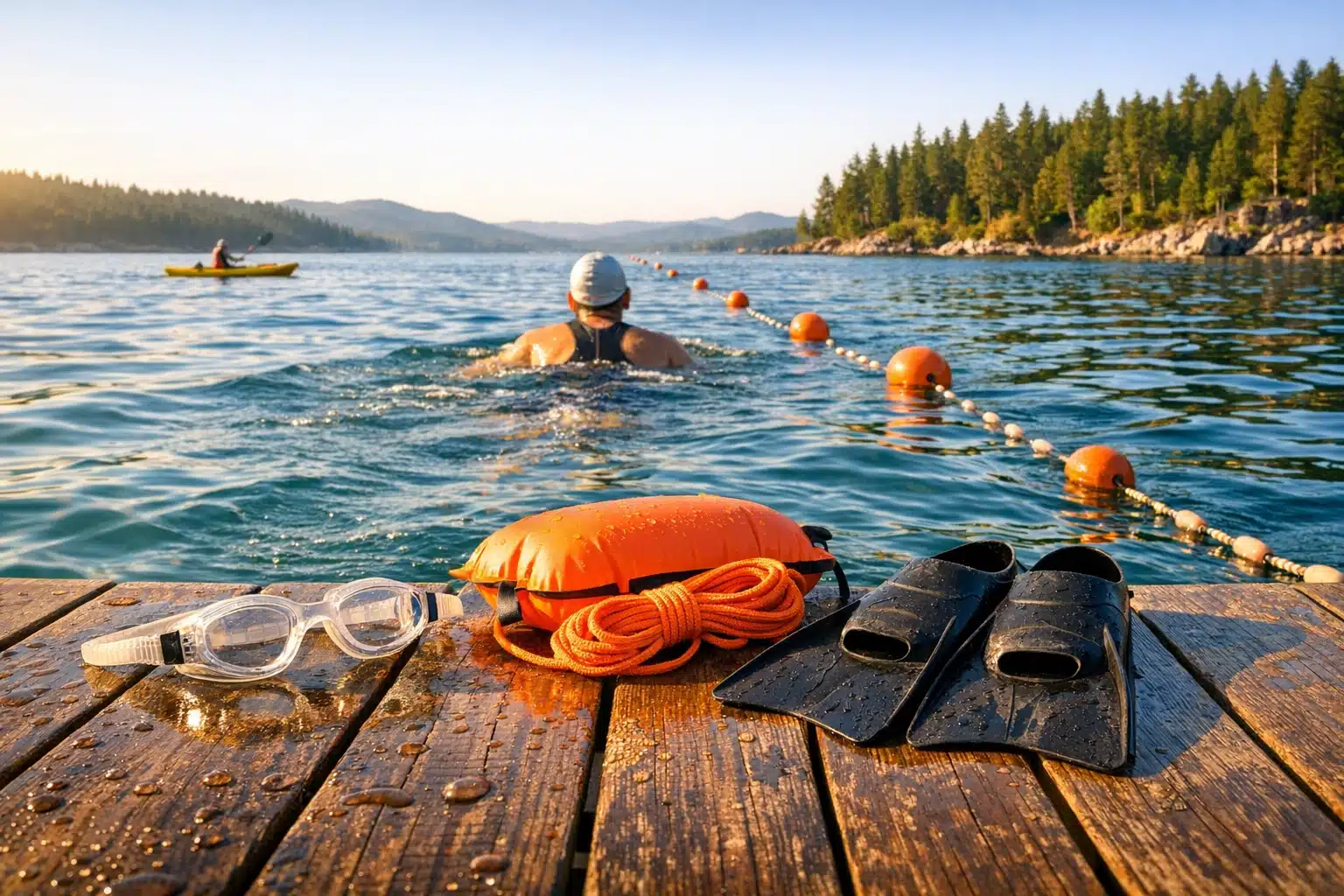
Open water introduces a different level of complexity. Lakes, rivers, and oceans are beautiful precisely because they are not controlled environments. Currents, waves, changing weather, cold water, low visibility, boat traffic, and uneven bottoms can challenge even capable swimmers. A person who feels strong in a warm pool may be surprised by how quickly cold water tightens the breath and changes coordination. That is why open-water swimming should be approached progressively. Local knowledge, a swim partner, visible safety equipment, and a realistic route matter far more than bravado.
Essential safety habits include:
- Learn basic self-rescue skills such as floating, rolling onto the back, and treading water
- Never dive into water of unknown depth
- Use properly fitted life jackets during boating and in situations where swimming ability may not be enough
- Check weather, water temperature, and local conditions before entering open water
- Swim with a buddy or under qualified supervision whenever possible
- Recognize fatigue early rather than treating it as a test of character
There is also a health side to safety. Pool hygiene, ear care, and sun protection deserve attention. Goggles that fit well can reduce eye irritation. Showering before entering a pool supports cleaner water for everyone. Swimmers spending time outdoors should use sun protection even on cloudy days, since reflection from water can increase exposure. In natural water, cuts, poor visibility, and contamination can add risks that are easy to dismiss when the day feels carefree.
The deeper lesson is that confidence and caution are not opposites. The best swimmers are often the most respectful of water because experience teaches them how quickly conditions can shift. Calm judgment is part of skill. Knowing when to keep going is useful; knowing when to stop is wiser. In swimming, maturity is not measured only by speed, distance, or daring. It is measured by the ability to enjoy the water while still taking it seriously.
Building a Sustainable Swimming Routine and Staying Engaged
Many people admire swimming from a distance but struggle to turn it into a habit. The usual reasons are familiar: access to a pool, uncertainty about technique, discomfort in shared lanes, or the sense that every session must be highly structured to count. The good news is that a sustainable swimming routine does not need to look like elite training. It needs to be realistic enough to repeat. Consistency, not spectacle, is what transforms occasional swims into meaningful progress.
A practical routine begins with honest goal setting. Someone learning basic water confidence needs a very different plan from a triathlete training for endurance or a former swimmer returning after years away. Beginners often benefit from short sessions two or three times per week, with rest built into the design. Instead of chasing distance immediately, it is better to focus on relaxed exhalation, body balance, and repeatable movement. More experienced swimmers can add pace control, interval work, and stroke variety. The pool rewards patience. Trying to skip the learning phase usually produces frustration rather than fitness.
Equipment should serve the swimmer, not the other way around. A comfortable suit, well-fitted goggles, and a cap are usually enough to start. Pull buoys, kickboards, paddles, fins, and snorkels can all be useful, but only when they support a clear purpose. A beginner who buys every training tool may still need the simplest correction: stop lifting the head so high to breathe. Technology can help, yet the old pace clock on the wall remains one of swimming’s most honest teachers. It does not flatter, it does not complain, and it tells the truth every repeat.
A simple session might include:
- Easy warm-up to settle breathing and loosen the shoulders
- Technique drills focused on one skill, such as rotation or kick timing
- Main set with short repeats and measured rest
- Easy recovery swimming to restore control and rhythm
- Brief notes afterward on what felt smoother or harder than expected
Community also plays a larger role than many swimmers expect. Masters teams, adult lessons, local clubs, and open-water groups can reduce intimidation and provide structure. Even one regular training partner can improve adherence. Swimming can be solitary in the lane, but it does not have to be socially isolated. Shared routines, posted goals, and quiet encouragement often carry people through the weeks when motivation dips.
Comparison matters here as well. Unlike team sports, swimming offers clear personal benchmarks. You can measure progress by fewer stops, calmer breathing, better turns, cleaner technique, or simply greater comfort in deep water. Not every improvement shows up as a dramatic time drop. Sometimes progress arrives disguised as ease. A lane that once felt long becomes familiar. A breath that once felt rushed becomes steady. The water, which first seemed to resist every move, begins to feel like a partner. That is often the moment when swimming stops being a task and starts becoming part of a person’s life.
Conclusion: Why Swimming Is Worth Your Time
If you are new to swimming, returning after a long break, or trying to choose a form of exercise you can keep for years, swimming deserves serious consideration. It teaches a practical safety skill, offers broad fitness benefits, and remains adaptable across age, experience, and ambition. You do not need to begin with long workouts or polished technique. A modest goal, a safe setting, and consistent practice are enough to create real progress.
For parents, swimming can be one of the most useful skills to encourage early, not only because it opens the door to sport, but because it builds confidence around water. For adults with busy schedules or sensitive joints, it can provide a rare mix of challenge and relief. For experienced athletes, it offers endless technical depth. In every case, the central lesson stays the same: improvement comes from calm repetition, smart habits, and respect for the environment.
Swimming will not solve every fitness problem, and it should not be romanticized as effortless. It asks for patience, instruction, and attention to safety. Yet once those pieces are in place, it can become one of the most rewarding ways to move. Start where you are, learn deliberately, and let the water teach you one length at a time.