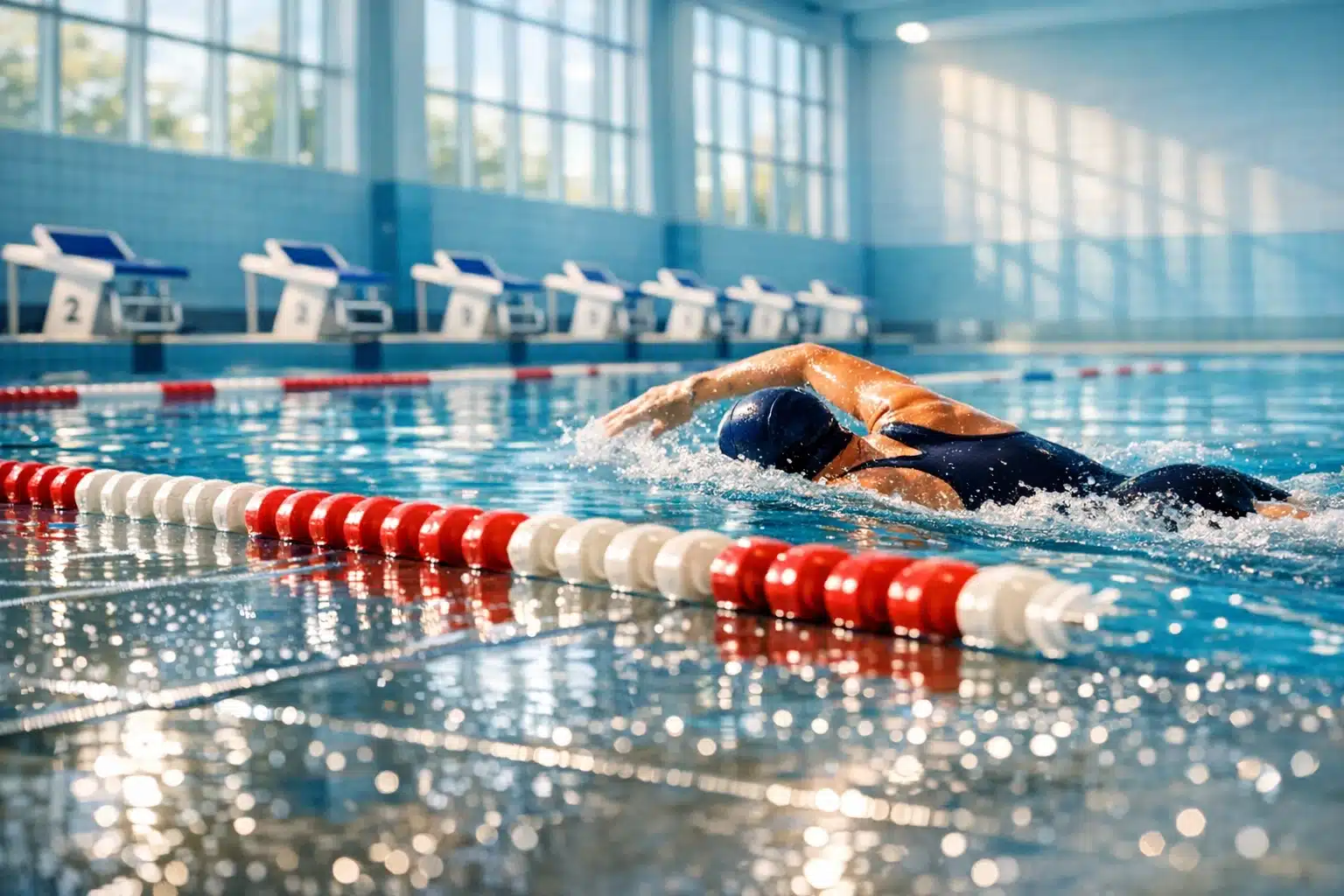
Explore the world of swimming
Water has a way of turning effort into rhythm, which helps explain why swimming stays popular across generations and ability levels. Beneath its calm appearance, it is a technical sport, a practical safety skill, and a reliable form of exercise that strengthens the heart without punishing the joints. It also develops breath control, timing, and confidence in settings where awareness truly matters. This article maps the subject clearly, from core strokes and training habits to safety, etiquette, and the long-term value of moving well through water.
Outline:
1. Why swimming matters: history, relevance, and access
2. Physical and mental benefits of regular swimming
3. Comparing the main strokes and technical demands
4. Training methods, equipment, and steady improvement
5. Safety, open-water awareness, and a conclusion for everyday swimmers
Why Swimming Matters: More Than a Sport
Swimming sits at an unusual crossroads. It is a competitive sport, a leisure activity, a rehabilitation tool, and a life skill with direct safety value. Few forms of movement can claim such a wide range of uses. A child learns to float for protection, a triathlete chases faster splits, an older adult uses the pool to stay active with less joint stress, and a physical therapist may recommend water exercise during recovery. The same lane can serve all of them, which says something important about the reach of swimming.
Its history also gives the subject depth. Human beings have been swimming for thousands of years, and ancient artwork suggests that water movement was practiced long before modern instruction existed. In the organized sporting world, swimming has been part of the modern Olympic program since the first Games in 1896, later expanding into a major international discipline with pool events, open-water races, and relays. Yet the appeal of swimming is not limited to elite competition. On a summer morning at a local pool, the scene is usually democratic: beginners gripping kickboards, teenagers racing each other for fun, lap swimmers counting strokes, and parents teaching children how to blow bubbles without fear.
Swimming matters partly because water changes the rules of movement. On land, gravity dominates every step. In water, buoyancy supports the body and resistance meets every motion. That combination creates a different physical conversation, one where technique often matters as much as effort. A strong person who fights the water may lose efficiency quickly, while a calmer swimmer with better balance can travel farther with less strain.
Its public-health relevance is just as important. Drowning remains a serious global issue, and basic swim competence can reduce risk when combined with supervision, safe environments, and rescue awareness. That is why swimming lessons are not simply another extracurricular option. They are often part of a broader education in safety and confidence.
Several factors explain why swimming remains widely valued:
• It combines fitness with practical water safety.
• It can be adapted for children, adults, and older people.
• It works in recreational, therapeutic, and competitive settings.
• It rewards technique, patience, and consistency rather than impact tolerance alone.
In short, swimming is not only about crossing a pool. It is about learning how the body behaves in water, how skill reduces effort, and how a basic human ability can become a lifelong source of strength and freedom.
The Physical and Mental Benefits of Swimming
Swimming is often praised as a full-body workout, and that description is accurate, but it is also incomplete. The real advantage lies in how many systems it trains at once. Regular swimming challenges the cardiovascular system, asks the muscles to produce force against steady resistance, and improves coordination through repeated, rhythm-based patterns. Because water supports the body, many people can train consistently with less pounding than they would experience while running or jumping. That makes swimming especially useful for individuals seeking endurance work that feels demanding without being harsh.
From a physiological perspective, the heart and lungs benefit first. Lap swimming can raise heart rate, improve aerobic capacity, and support endurance when practiced with enough consistency. Public health guidelines commonly recommend at least 150 minutes of moderate aerobic activity per week, and swimming can contribute meaningfully to that target. Depending on body size, pace, and stroke, an hour of swimming may use several hundred calories, with harder sessions pushing energy demand even higher. Freestyle intervals generally feel different from an easy recovery backstroke set, yet both can help build fitness when placed intelligently in a weekly routine.
The muscular effects are equally notable. The shoulders, back, chest, core, hips, and legs all participate, though the balance shifts by stroke. Water offers resistance in every direction, so even controlled movements demand work. Unlike some gym exercises that isolate one region at a time, swimming asks the body to coordinate chains of muscles smoothly. That makes it excellent for teaching integrated movement. A clean stroke is not a collection of separate actions. It is a linked sequence, where alignment, kick, pull, and breathing support each other.
Mental benefits deserve equal attention. Many swimmers describe the pool as a place where noise fades and focus sharpens. Counting laps, matching breath to movement, and feeling the repetition of strokes can create a steadying effect similar to moving meditation. Research in exercise science has repeatedly linked regular physical activity with better mood, reduced stress, and improved sleep, and swimming often amplifies those benefits through its sensory environment. Water cools the skin, muffles outside sound, and encourages controlled breathing, which can make a hard session feel strangely calming once rhythm takes over.
Common benefits include:
• Improved aerobic endurance and circulation
• Greater muscular endurance across the whole body
• Joint-friendly exercise supported by buoyancy
• Better posture, balance, and body awareness
• Stress relief through rhythmic breathing and repetitive motion
Swimming is not effortless, and that is precisely its strength. It asks much from the body, but it gives back in range, resilience, and a kind of quiet confidence that grows one length at a time.
Understanding the Main Strokes: Speed, Efficiency, and Skill
To an untrained eye, swimming can look simple: arms move, legs kick, and the swimmer goes forward. In practice, each stroke has its own logic, timing, and energy cost. The four competitive strokes, freestyle, backstroke, breaststroke, and butterfly, create four very different relationships with the water. Learning to compare them helps swimmers choose goals, improve technique, and understand why one stroke feels smooth while another feels like solving a puzzle at high speed.
Freestyle, usually swum as front crawl, is the fastest and most common stroke for fitness and racing. Its alternating arm action and flutter kick allow relatively continuous propulsion, which is one reason it dominates lap swimming and distance events. Efficient freestyle depends on body position, rotation, and well-timed breathing. A beginner often loses speed not because of weak arms, but because the hips sink, the head lifts too high, or the catch phase slips through the water. When freestyle clicks, it feels almost like sliding downhill on a liquid surface.
Backstroke shares some mechanics with freestyle, including alternating arm recovery and a flutter kick, but the face stays above the water. That makes breathing easier for many learners, though orientation can be tricky because the swimmer cannot see where they are going without counting flags or using lane cues. Backstroke is often useful for improving shoulder control and balance. It also provides a welcome change of posture during training sets.
Breaststroke is slower but highly technical. Its kick, often called the whip or frog kick, must coordinate precisely with the arm pull and glide. Recreational swimmers frequently enjoy breaststroke because the head can rise more naturally and the pace feels measured. Competitive breaststroke, however, is extremely specialized, with fine margins in timing and a heavy premium on efficiency.
Butterfly is the most physically demanding for many people. Both arms recover together, the body undulates, and the dolphin kick drives rhythm through the hips and core. Swum poorly, butterfly can feel exhausting within seconds. Swum well, it becomes powerful and graceful, almost theatrical in the best sense.
A quick comparison helps:
• Freestyle: fastest, versatile, ideal for fitness and racing
• Backstroke: useful for balance and breathing comfort
• Breaststroke: technical timing, slower tempo, distinct kick pattern
• Butterfly: highest power demand, advanced coordination requirement
No stroke is inherently superior in every context. Freestyle often wins on speed, breaststroke may feel friendlier to the casual swimmer, backstroke offers variety and relief, and butterfly teaches whole-body timing like few other movements can. Together, they show that swimming is not one skill but a family of related techniques shaped by physics, rhythm, and control.
How Swimmers Improve: Training Methods, Equipment, and Smart Practice
Improvement in swimming rarely comes from trying harder in a vague sense. It comes from practicing with structure. Because water punishes inefficiency so quickly, a swimmer who simply adds effort can end up rehearsing flawed movement at greater fatigue. Smart training, by contrast, separates technique, endurance, speed, and recovery so that each quality develops without drowning the others. This is true for first-time adult learners and experienced competitors alike.
For beginners, the first milestones are usually comfort and control. That means learning to exhale underwater, float without panic, streamline the body, and kick without creating unnecessary drag. Many adults are surprised to discover that confidence, not strength, is the main barrier. Once breathing and balance improve, the stroke begins to organize itself more naturally. For intermediate swimmers, the challenge changes. They may complete multiple lengths but stall because their pull is inefficient, their kick is inconsistent, or their pace collapses after a few fast repeats. Advanced swimmers refine details: turn speed, stroke count, pacing strategy, and how to hold form under fatigue.
Training tools can help when used with purpose. Goggles improve visibility and reduce hesitation. A well-fitted swimsuit supports freedom of movement. Caps reduce drag slightly and keep hair manageable. Kickboards isolate leg work, while pull buoys reduce the kick so swimmers can focus on upper-body mechanics. Fins can help beginners feel body position and propulsion, though overreliance on them may hide technical weaknesses. Hand paddles increase resistance and should be used carefully to avoid shoulder strain.
A useful session often includes several parts:
• Warm-up: easy swimming to raise temperature and loosen movement
• Drill set: short repeats focused on one technical change
• Main set: endurance, pace, or speed work matched to ability
• Cool-down: relaxed lengths to restore control and reduce tension
Consider a simple example for a developing lap swimmer: 200 meters easy, 4 x 50 meters drill work, 6 x 100 meters at a sustainable pace with rest between repeats, then 100 meters easy. The total distance matters less than the purpose of each block. Training becomes effective when the swimmer knows what each repeat is meant to teach.
Progress should also be measured in more than time. Better signs include fewer strokes per length, steadier breathing, calmer turns, and less wasted motion. In swimming, speed often arrives as a side effect of efficiency. The stopwatch matters, but the water usually tells the truth first.
Swimming Safely and Making It a Lifelong Practice
Swimming becomes far more rewarding when safety is treated as part of the skill rather than an afterthought. Strong technique does not cancel risk, especially outside controlled pools. Conditions change, fatigue builds quietly, and confidence can drift into carelessness if habits are poor. That is why experienced swimmers tend to respect water more, not less. They understand that safe swimming depends on judgment, environment, and preparation as much as stroke quality.
In pools, basic rules still matter. Knowing lane etiquette prevents collisions and frustration. Swimmers should choose lanes that match their pace, circle swim when required, and avoid pushing off directly in front of someone faster. Wet decks are slippery, diving should only happen where permitted, and children require close supervision even in shallow water. A lifeguard adds protection, but supervision is never a substitute for responsibility.
Open water introduces a different level of complexity. Lakes, rivers, and oceans may look inviting, yet visibility, temperature, current, waves, and depth can change the experience dramatically. Distance is harder to judge without lane lines, and even strong pool swimmers can feel disoriented when the bottom disappears and chop interrupts breathing. Wetsuits, bright caps, tow floats, and swimming with a partner or organized group all improve safety. Checking weather, entry points, and local guidance is essential before getting in. In many cases, the smartest decision is simply not to swim when conditions are uncertain.
Useful safety habits include:
• Never overestimate your comfort in unfamiliar water
• Learn floating, treading water, and basic rescue awareness
• Swim with supervision or a partner when possible
• Respect signage, currents, and temperature warnings
• Stop early if breathing, cramping, or visibility becomes a concern
For the target audience of this article, everyday readers who may be curious, rusty, or ready to improve, the most practical conclusion is simple. You do not need to become a racer to gain real value from swimming. If you begin with water confidence, learn one stroke well, and practice with patience, you will build a skill that supports health, safety, and recreation for years. If you already swim, the next layer is refinement: cleaner technique, smarter training, and better awareness of the environment around you.
Swimming has a rare staying power because it grows with the person doing it. It can start as a lesson, become a workout, turn into a social routine, and remain useful long after other sports feel less comfortable. For beginners, that means it is worth starting. For regular swimmers, it means there is always another level of ease and efficiency waiting just ahead, usually one well-practiced length away.