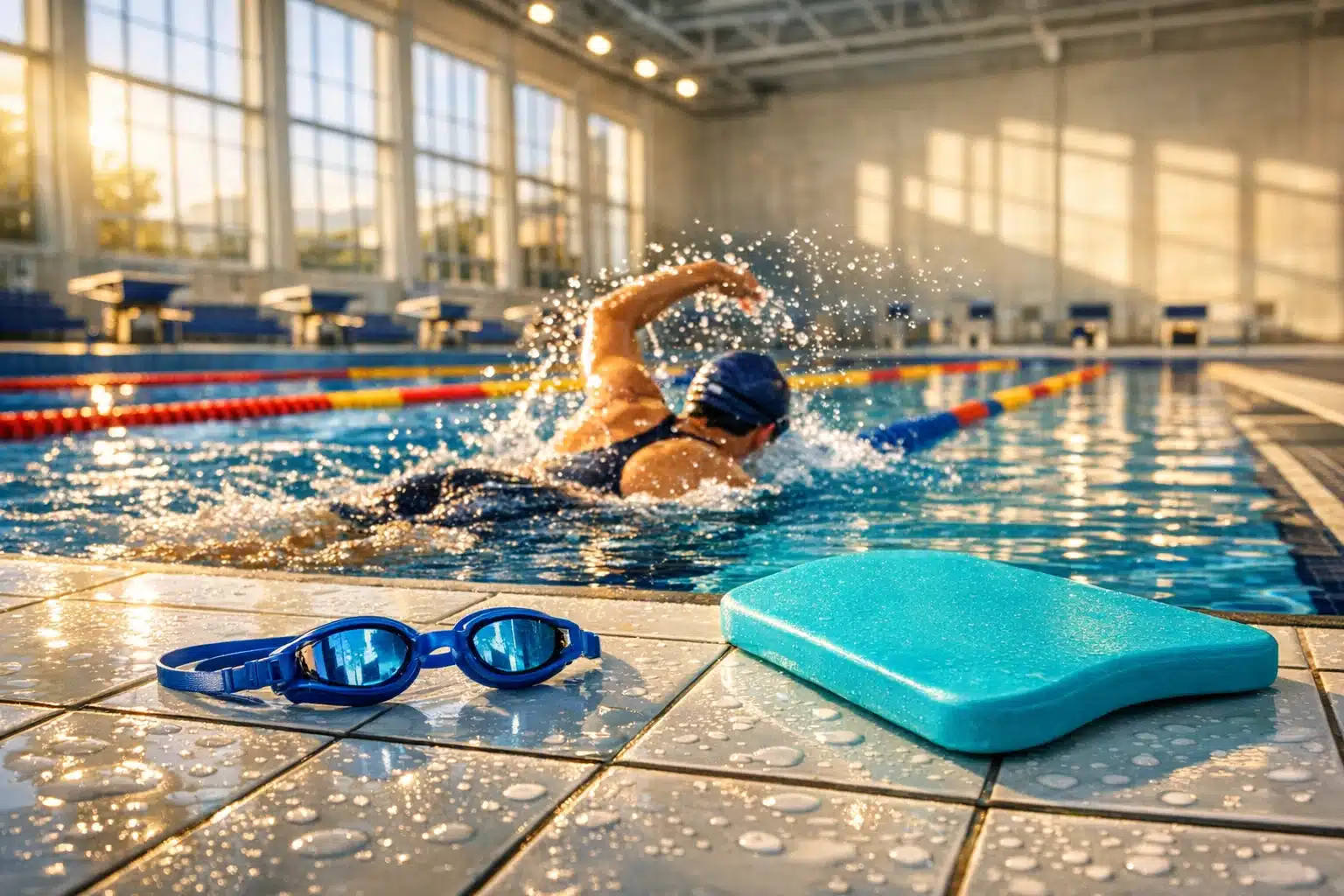
Explore the world of swimming
Step onto a pool deck and the atmosphere shifts at once: echoes bounce off tile, lanes shimmer under the lights, and every stroke writes a short story on the water. Swimming matters because it combines survival skill, athletic challenge, and steady exercise in one practice that can stay with a person for decades. It suits children learning confidence, adults seeking low-impact fitness, and competitors chasing fractions of a second. The sections below map out the essentials, from strokes and health benefits to training habits and safety.
Outline: this article first explains why swimming holds a unique place in sport and daily life, then compares the main strokes, explores the physical and mental benefits, and examines training methods and safety. It closes with a practical conclusion aimed at beginners, regular exercisers, parents, and anyone wondering how to make swimming part of a realistic routine.
Swimming’s Place in Sport and Everyday Life
Swimming is one of those rare activities that can be described in several truthful ways at once. It is a life skill, because knowing how to stay afloat and move safely through water can reduce the risk of drowning. It is a competitive sport, with races measured down to hundredths of a second. It is also a form of exercise that welcomes a remarkably wide range of people, from children in their first lessons to older adults managing joint pain. That broad usefulness helps explain why swimming has stayed relevant across cultures and centuries.
Humans have been swimming for thousands of years, and long before modern pools existed, people entered rivers, lakes, and seas for transport, fishing, military training, ritual, and recreation. In the modern Olympic era, swimming has been part of the Games since 1896 for men and since 1912 for women, and it has grown into one of the most watched events worldwide. Yet the heart of swimming is not only elite competition. Its enduring appeal comes from what water changes about movement. On land, gravity is constant and unforgiving. In water, buoyancy supports the body, resistance meets every motion, and balance becomes active rather than passive.
That creates a useful contrast with sports such as running or field games. Running can build endurance efficiently, but it also places repeated impact on the ankles, knees, and hips. Swimming usually reduces that pounding while still training the cardiovascular system. At the same time, water resistance means even a simple lap can engage the shoulders, back, core, hips, and legs together. In that sense, the pool is both softer and more demanding than it first appears.
Several factors make swimming especially attractive:
• it can be adapted for leisure, therapy, fitness, or competition
• it works indoors and outdoors depending on climate and access
• it allows gradual progression, from floating and kicking to structured workouts
• it can be social in lessons and clubs, or solitary during quiet lap sessions
There is also something difficult to measure but easy to recognize: water has a way of sharpening attention. A person cannot drift through a swim the way they might drift through a walk while checking a phone. Breathing must be timed. Movement must be coordinated. The senses stay engaged. That blend of focus and flow is part of swimming’s charm. It asks for presence, and in return it offers a form of motion that feels at once elemental and refined.
Understanding the Main Strokes and How They Differ
For many people, swimming first means freestyle, the familiar front crawl seen in lap lanes and races. But the sport is built on several strokes, each with its own rhythm, mechanics, and purpose. Understanding their differences helps beginners choose where to start and helps experienced swimmers train more intelligently. The four competitive strokes are freestyle, backstroke, breaststroke, and butterfly. They share the same medium, but they do not ask the body to move in the same way.
Freestyle is generally the fastest and most efficient stroke for covering distance. The body stays long and relatively streamlined, the arms alternate in a continuous pattern, and the flutter kick provides support and propulsion. Because swimmers can roll slightly from side to side and breathe intermittently, freestyle is often the first stroke used for endurance training. It rewards efficiency: a clean catch, steady body position, and relaxed recovery can make a major difference over time.
Backstroke resembles freestyle in its alternating arm pattern, but the swimmer faces upward. That changes orientation, breathing, and navigation. Since the mouth and nose are not regularly submerged, some swimmers find breathing easier. On the other hand, swimming on the back requires body awareness and trust in alignment, because the swimmer cannot see where they are going except by counting strokes or using visual markers above.
Breaststroke is slower for most swimmers but often easier to learn in basic form. Its pull and kick are symmetrical, and the head can rise forward more naturally during breathing. However, doing breaststroke efficiently is more technical than it appears. Timing matters enormously. A strong kick without a streamlined glide wastes energy, and poor knee position can reduce propulsion. Many recreational swimmers enjoy breaststroke because it feels controlled and less frantic than front crawl.
Butterfly is the most demanding stroke for many people. Both arms recover together, the body undulates through the water, and the dolphin kick drives momentum from the core and hips. When performed well, butterfly looks almost theatrical, as if the swimmer is briefly negotiating with gravity itself. When performed poorly, it becomes exhausting within a few lengths. That is not a flaw in the stroke; it simply means butterfly exposes technical inefficiency very quickly.
A simple comparison helps:
• freestyle: fastest, efficient, common for fitness and racing
• backstroke: strong for posture awareness and balanced shoulder work
• breaststroke: measured pace, distinct timing, popular in recreational swimming
• butterfly: powerful, technical, demanding on coordination and stamina
In training, swimmers often mix strokes to reduce monotony, develop different muscle patterns, and improve overall water feel. Medley events, which combine all four strokes, show that versatility matters. Even for casual swimmers, learning more than one stroke can make time in the pool more engaging and more complete.
Why Swimming Works for the Body and the Mind
Swimming is often praised as a full-body workout, and in practical terms that description is accurate. Few activities require the arms, shoulders, back, core, hips, and legs to work together so consistently while also demanding controlled breathing. Because the body is moving against the resistance of water, even moderate swimming can provide a substantial training effect. Depending on pace, stroke, and body size, an hour of lap swimming may burn hundreds of calories, often roughly in the 400 to 700 range or more. The exact number varies, but the broader point is clear: swimming can be both efficient and demanding without the repeated impact common in some land-based exercise.
That low-impact quality is one reason swimming is frequently recommended for people who want cardio exercise while being mindful of their joints. Buoyancy reduces the stress placed on the body during movement, which can make swimming appealing for older adults, people returning to exercise, and those managing certain injuries under professional guidance. It is not magically risk-free, since shoulders and knees can still be overused with poor technique or excessive volume, but it offers a different loading pattern than running, jumping, or contact sports.
The cardiovascular benefits are also significant. Swimming can help improve heart and lung efficiency, especially when practiced consistently. Public health guidance commonly recommends adults aim for at least 150 minutes of moderate-intensity aerobic activity per week, and swimming is one way to meet that target. Importantly, swimmers do not need to train like competitors to benefit. Short, steady sessions done regularly can build endurance over time.
Mental health is another part of the story. The repetitive rhythm of laps, the muffled sound underwater, and the structured breathing pattern can create a calming effect for many people. Some describe a pool session as moving meditation. That does not mean swimming replaces medical care for anxiety or depression, but it can support stress management, improve mood, and create routine. Exercise in general has well-established links to psychological well-being, and swimming adds a sensory environment that many find especially soothing.
Its benefits can be summarized this way:
• cardiovascular training without heavy impact
• broad muscular engagement instead of isolated effort
• opportunities for recovery, rehabilitation, and general fitness
• mental focus through breath control and repetitive movement
• adaptable intensity, from easy water walking to demanding interval sets
One important clarification is worth adding. Swimming improves breath control and respiratory efficiency, but claims that it dramatically enlarges lung capacity beyond normal biological limits are often overstated. The real advantage lies in using breath more effectively, coordinating movement with oxygen demands, and becoming more economical in the water. In that modest but meaningful sense, swimming teaches the body not just to work harder, but to work wiser.
Training Smarter: Technique, Safety, and Long-Term Progress
Swimming rewards effort, but it rewards precision even more. A beginner can work hard for twenty minutes and still feel stuck if technique is inefficient. An experienced swimmer can make one small adjustment to body position or hand entry and suddenly glide farther with less strain. That is one reason coaching matters so much in this sport. Water gives immediate feedback, but not always obvious feedback. If the hips drop, drag increases. If the head lifts too high, alignment suffers. If the pull slips instead of holding water, energy disappears without visible drama. Improvement often comes not from muscling through, but from learning how the water responds.
For newcomers, the smartest starting point is usually simple: build comfort first, then consistency, then speed. Floating, breathing, and relaxed kicking should come before hard sets. Adults sometimes feel embarrassed about taking lessons, but that hesitation often fades quickly. Good instruction can shorten the learning curve dramatically and make swimming safer and more enjoyable. For children, lessons are especially valuable because they combine skill development with water safety habits.
Useful training tools can support progress, though none replace fundamentals:
• goggles improve comfort and visibility
• kickboards isolate lower-body work
• pull buoys reduce kick demand and highlight arm technique
• fins can help body position and teach momentum
• pace clocks or waterproof watches make structured practice easier
Safety deserves equal attention. In pools, swimmers should respect lane etiquette, know their limits, and avoid breath-holding games that can be dangerous. In open water, the risk picture changes considerably. Conditions such as cold temperature, currents, waves, poor visibility, and sudden weather shifts can turn a pleasant swim into a serious situation. Bright swim buoys, designated areas, partners, and local knowledge all matter. Even strong pool swimmers should not assume that open water will feel the same; it rarely does.
Progress is usually best when training includes variety. A balanced week might combine easy aerobic swimming, technique drills, interval work, and recovery. Rest matters too. Shoulders in particular can become irritated when swimmers increase volume too fast or rely on poor mechanics. A practical improvement formula looks like this: swim regularly, focus on one technical cue at a time, track small gains, and stay patient. Water has a way of humbling impatience. The swimmer who learns to cooperate with it, rather than fight it, almost always moves forward.
Conclusion: What Swimming Can Offer Different Kinds of Readers
If you are a beginner, swimming can look more complicated than it really is. There are strokes to learn, breathing patterns to coordinate, and a whole set of unwritten pool habits that regular swimmers seem to understand automatically. Yet the first meaningful goal is not elegance. It is confidence. Learning to float calmly, move a short distance, and breathe without panic is already a strong foundation. From there, the sport opens up little by little. One lesson becomes a routine. One routine becomes a habit. Before long, the water that once felt unpredictable starts to feel familiar.
If you are already active in other sports, swimming offers a different kind of challenge. It exposes technical inefficiency, improves aerobic conditioning, and can provide a lower-impact option on recovery days. Runners, cyclists, and gym-goers often discover that being fit on land does not automatically make them efficient in water. That is not a setback; it is part of the appeal. Swimming asks the body to solve movement in a new environment, and that makes progress satisfying in a very specific way.
For parents, swimming stands out because it is both useful and enriching. Water competence is not merely a hobby skill. It can be a genuine safety asset, and it also teaches patience, listening, and resilience. For older adults or people easing back into exercise, swimming offers a route into regular movement that can feel manageable without being trivial. For busy workers, even a short session can create a strong mental reset because the pool demands attention and leaves little room for digital distraction.
The most practical takeaway is simple. You do not need to become a racer, buy every piece of gear, or memorize advanced terminology to benefit from swimming. You need access, a sensible starting point, and enough consistency to let the water teach you something. That lesson may be fitness, calm, skill, or discipline. Often it is a blend of all four. Swimming remains relevant because it meets people where they are and still gives them room to grow. For anyone curious enough to begin, the next step is refreshingly modest: get in, learn steadily, and keep going.