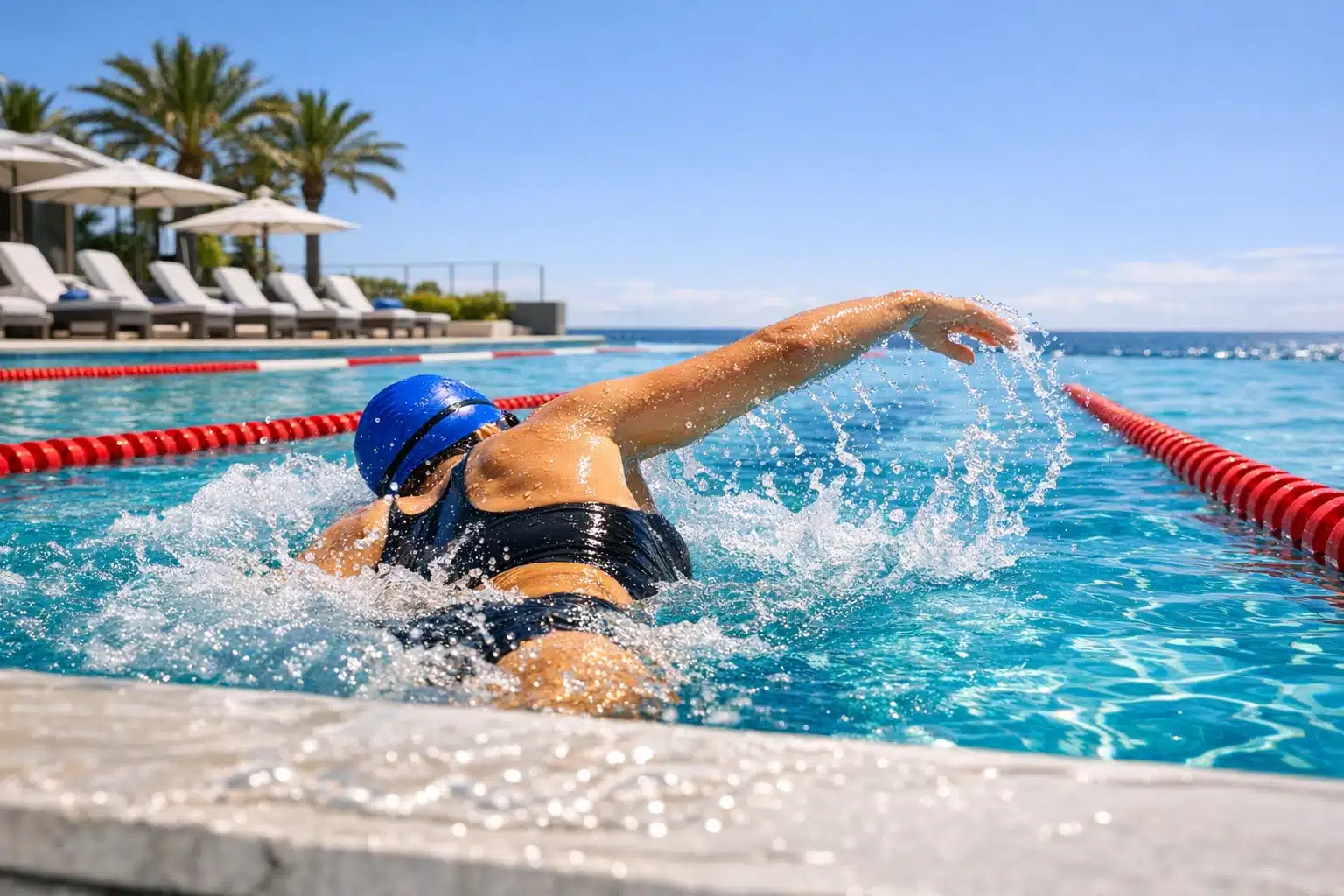
Explore the world of swimming
Swimming is one of those rare activities that feels playful on the surface yet demands real skill, patience, and body awareness underneath. It can function as exercise, sport, recovery-friendly movement, and an essential safety skill, which is why it remains relevant from childhood through older age. Whether you are interested in lane training, open-water adventure, or simply the calming rhythm of moving through water, understanding how swimming works makes the experience safer and more rewarding. This article explores its benefits, techniques, training methods, and practical value in everyday life.
Outline
1. Why swimming matters for health, safety, and lifelong fitness.
2. The main strokes and the technical habits that make swimmers efficient.
3. How training works, from beginner sessions to competitive preparation.
4. Safety, equipment, and the differences between pool and open-water swimming.
5. Conclusion and practical guidance for readers who want to build a lasting relationship with the water.
Why Swimming Matters for Health, Safety, and Lifelong Fitness
Swimming occupies a special place in physical activity because it is both practical and deeply versatile. Many forms of exercise improve endurance or strength, but swimming also teaches a survival skill that can reduce risk around water. That dual value gives it unusual relevance. In one setting, it is a school lesson, in another a competitive sport, and somewhere else a quiet personal ritual completed before sunrise while the pool lights still shimmer across the surface.
From a fitness perspective, swimming engages large muscle groups at the same time. The shoulders, back, core, hips, and legs all contribute to propulsion, while the heart and lungs work steadily to supply energy. Public health guidance commonly recommends at least 150 minutes of moderate aerobic activity each week for adults, and swimming can contribute meaningfully toward that target. Because water supports body weight, many people find it easier on the joints than high-impact activities such as running or jumping. That makes it appealing for older adults, people returning to exercise, and those who want a demanding workout without repeated pounding on the knees and ankles.
Swimming also trains coordination in a way that land exercise often does not. Breathing must match rhythm. Body position affects drag. Timing determines whether effort turns into speed or disappears into splash. In the water, technique matters more than bravado. A relaxed swimmer with sound mechanics often moves farther and faster than a stronger person who fights the water on every stroke.
Its mental effects deserve attention too. Many swimmers describe the pool as a place where outside noise fades. Repetition can create a steady, almost meditative focus, especially during longer sets. Even recreational swimmers often notice that a session leaves them physically worked yet mentally clearer. That combination helps explain why swimming remains popular among people with very different goals.
Some of the reasons swimming continues to matter are straightforward:
• It develops cardiovascular endurance.
• It builds muscular coordination across the whole body.
• It can be adapted for leisure, fitness, or competition.
• It teaches confidence and safety in aquatic environments.
• It remains accessible across many stages of life.
Unlike trends that rise quickly and disappear just as fast, swimming keeps its place because it answers several needs at once. It is exercise, skill, and self-reliance woven together. For a child, it may begin as a lesson in blowing bubbles and floating. For an adult, it may become stress relief or structured training. For many people, it becomes both useful and enjoyable, which is often the best reason of all for an activity to last.
The Main Strokes and the Technique Behind Efficient Movement
At first glance, swimming can look simple: arms pull, legs kick, body moves forward. In reality, the water is an exacting teacher. It rewards precision and exposes wasted motion immediately. Good technique is not about elegance for its own sake. It is about turning effort into progress while limiting drag, preserving energy, and maintaining control over breathing.
The four main competitive strokes are freestyle, backstroke, breaststroke, and butterfly, and each has a distinct character. Freestyle, usually swum as front crawl, is the fastest and most common stroke for fitness training. Its alternating arm action and flutter kick allow continuous momentum, especially when the swimmer keeps a long body line and rotates smoothly through the torso. Backstroke shares the alternating pattern of freestyle but places the swimmer face up, which removes the stress of timed side breathing while creating a new challenge: orientation. Without watching the wall continuously, swimmers must learn to count strokes or use ceiling markers to judge distance.
Breaststroke is slower but often feels more approachable to beginners because the head can rise more naturally during the breathing phase. The trade-off is timing. If the kick and arm pull fall out of sequence, speed drops quickly. Butterfly is the most demanding of the four, requiring coordinated arm recovery, a strong undulating body action, and excellent timing. It can look almost theatrical when done well, but it punishes rushed or uneven movement. In simple terms, freestyle favors sustained efficiency, backstroke emphasizes balance and rhythm, breaststroke relies on timing, and butterfly requires power married to control.
Several technical principles apply across nearly all swimming:
• A streamlined body position reduces resistance.
• Controlled breathing helps maintain rhythm rather than interrupt it.
• Propulsion comes from both catch and body alignment, not just force.
• Kicking supports balance as much as speed.
• Relaxation often improves efficiency more than muscular tension.
One of the most common mistakes among new swimmers is trying to overpower the water. Water is far denser than air, so rough movement rarely pays off. A dropped elbow in freestyle, a wide breaststroke kick, or a rushed butterfly recovery can waste a surprising amount of energy. Coaches frequently use drills to isolate these details. A kickboard can sharpen leg action. Single-arm drills can improve balance and timing. Sculling exercises help swimmers feel how the hands hold the water rather than slap at it.
The beauty of stroke technique is that improvement is measurable. A swimmer may take fewer strokes per length, breathe more calmly, or finish a set less exhausted than before. These are not glamorous milestones, but they are meaningful ones. Over time, swimming becomes less about surviving each length and more about shaping each movement with intention. That shift, from effort alone to intelligent effort, is where real progress begins.
Training, Conditioning, and the Difference Between Casual Swimming and Performance
Swimming training can be wonderfully flexible. One person enters the pool to loosen stiff muscles after work, while another follows a pace clock with near-military seriousness. Both are swimming, yet their sessions may look entirely different. Understanding how training is structured helps explain that difference and makes it easier for beginners to progress without feeling lost.
A well-designed swim session usually includes four parts: a warm-up, technical work, a main set, and a cooldown. The warm-up raises body temperature and prepares the shoulders, lungs, and nervous system for more purposeful effort. Technical work may involve drills that improve alignment, breathing, kick rhythm, or turns. The main set is the heart of the workout, where the swimmer targets endurance, speed, pacing, or stroke skill. A cooldown then lowers intensity and allows the body to recover more gradually. Even simple structure can make a session far more effective than swimming random lengths until fatigue appears.
Training also changes depending on the swimmer’s goal. A beginner may focus on comfort in the water, consistent breathing, and swimming short repeats with rest. An intermediate fitness swimmer might use interval sets such as 8 x 50 meters or 4 x 200 meters to build aerobic capacity and pacing awareness. Competitive swimmers usually train with much greater volume and sharper purpose. Sprint specialists work on explosive starts, turns, power, and short high-intensity efforts. Distance swimmers spend more time building sustainable pace, efficiency, and mental steadiness over longer sets.
Dryland conditioning matters as well. Strong shoulders and a stable core can support better posture in the water, while mobility work may improve range of motion during recovery and catch phases. Still, swimming has a technical barrier that separates it from many other sports: land fitness alone does not guarantee pool success. A very fit runner may become breathless in the water if timing and body position are poor. Swimming rewards specific adaptation.
Training environments create another useful comparison:
• Pool swimming offers measured distances, lane lines, and controlled conditions.
• Open-water training adds sighting, navigation, currents, and temperature changes.
• Group sessions provide pacing and motivation.
• Solo sessions encourage concentration and self-monitoring.
Competition introduces additional layers, including race strategy, split times, turns, and psychological management. A 50-meter sprint demands aggression and near-perfect execution, while a 1500-meter race asks for patience and discipline. Yet even recreational swimmers benefit from performance thinking. Tracking stroke count, rest intervals, or pace per length can turn a casual habit into intelligent training. In swimming, progress rarely arrives through chaos. It tends to emerge from consistent practice, honest feedback, and small technical gains repeated over time until they become second nature.
Safety, Equipment, and the Difference Between Pool Water and Open Water
Swimming is enjoyable, but it should never be approached casually in matters of safety. Confidence is valuable in the water; overconfidence is not. A controlled pool and a wide open lake may both invite a swimmer in, yet they demand different habits and levels of awareness. Learning that distinction is one of the most important parts of becoming a responsible swimmer.
Pools are predictable environments. The water is usually clear, lanes are marked, temperature is moderated, and many facilities have lifeguards on duty. That makes pools ideal for instruction, technical practice, and structured training. Lane etiquette still matters, though. Swimmers should enter carefully, respect pace differences, and understand whether a lane is for circle swimming or split use. Even in a supervised setting, fatigue, cramping, and collisions can happen when people ignore basic awareness.
Open water is another story. Lakes, rivers, and the sea bring beauty and freedom, but also introduce variables that cannot be controlled. Visibility may be poor. Wind can create chop. Currents may shift unexpectedly. Water temperature can sap energy faster than inexperienced swimmers expect. Distance is harder to judge when there is no black line on the pool floor quietly telling you where you are. For that reason, open-water swimmers rely on skills beyond stroke mechanics, including sighting, calm navigation, and environmental judgment.
Equipment supports both comfort and safety, though it should never be mistaken for a substitute for skill. Common items include:
• Goggles for visibility and eye comfort.
• Swim caps to reduce drag and keep hair contained.
• Kickboards, pull buoys, and fins for drills and targeted practice.
• Brightly colored caps or tow floats for open-water visibility.
• Well-fitted swimsuits that allow unrestricted movement.
Children require especially careful supervision. Floating toys and inflatable aids can create a false sense of security if adults treat them as replacements for attention. Formal swim lessons help, but active supervision remains essential. For adults, the biggest mistakes often involve swimming alone in unfamiliar conditions or underestimating weather, fatigue, or cold water.
Several safety habits are simple but powerful:
• Never assume one body of water behaves like another.
• Check local rules, depth, and entry points before swimming.
• Use a buddy system or choose supervised locations when possible.
• Exit the water early if conditions change or energy drops sharply.
• Respect personal limits, especially during long or open-water swims.
Good equipment can make swimming smoother, but judgment keeps it safe. The most experienced swimmers are often the least theatrical about risk. They read conditions, prepare carefully, and treat the water with respect. That attitude may not look dramatic from shore, but it is one of the clearest signs of true competence.
Conclusion: Building a Lasting Relationship with Swimming
For readers wondering whether swimming is worth the effort, the strongest answer is that it offers more than one kind of reward. It can improve fitness, sharpen coordination, build confidence around water, and create a reliable routine that feels both challenging and restorative. Few activities serve so many purposes at once. That makes swimming especially valuable for beginners searching for sustainable exercise, parents thinking about life skills, adults returning to movement, and athletes who want a demanding full-body option.
The best approach depends on who you are and what you want from the water. A beginner should prioritize comfort, breathing, and basic technique before chasing speed. A fitness-minded adult may benefit most from consistent sessions two or three times a week, with simple interval sets and attention to stroke quality. Parents often do well by choosing lessons that combine safety with gradual confidence-building rather than rushing children toward deep water too soon. Older swimmers or those seeking lower-impact exercise can focus on steady aerobic work and relaxed, efficient movement.
A practical path forward often looks like this:
• Start with a clear goal, such as learning freestyle, improving endurance, or becoming safer in open water.
• Invest early in technique, because efficient habits save effort later.
• Build consistency before intensity.
• Use equipment to support learning, not to mask weak fundamentals.
• Treat safety as part of progress, not as a separate topic.
It also helps to keep expectations realistic. Swimming can be humbling at first. Breathing may feel awkward. A single length might seem longer than expected. Progress sometimes arrives quietly, not dramatically. You notice that your shoulders stay relaxed, your turns become smoother, or your recovery between sets improves. These changes matter because they show that skill is taking root. In swimming, small advances accumulate like drops filling a lane line with light.
There is also something quietly distinctive about the culture of swimming. It teaches patience. It asks for attention to detail. It reminds people that rhythm can be more powerful than force. The pool can be a training ground, a classroom, and sometimes a refuge from crowded schedules and noisy screens. For some, swimming becomes a sport. For others, it becomes a lifelong habit that keeps the body active and the mind settled.
If you are the target reader for this guide, whether curious newcomer or returning swimmer, the most useful next step is simple: begin where you are, not where you think you should already be. Learn the basics well, build confidence gradually, and let technique, consistency, and respect for the water guide the process. Swimming does not need to start with a grand ambition. Often it begins with one careful push from the wall, followed by the discovery that the water has more to teach than you expected.