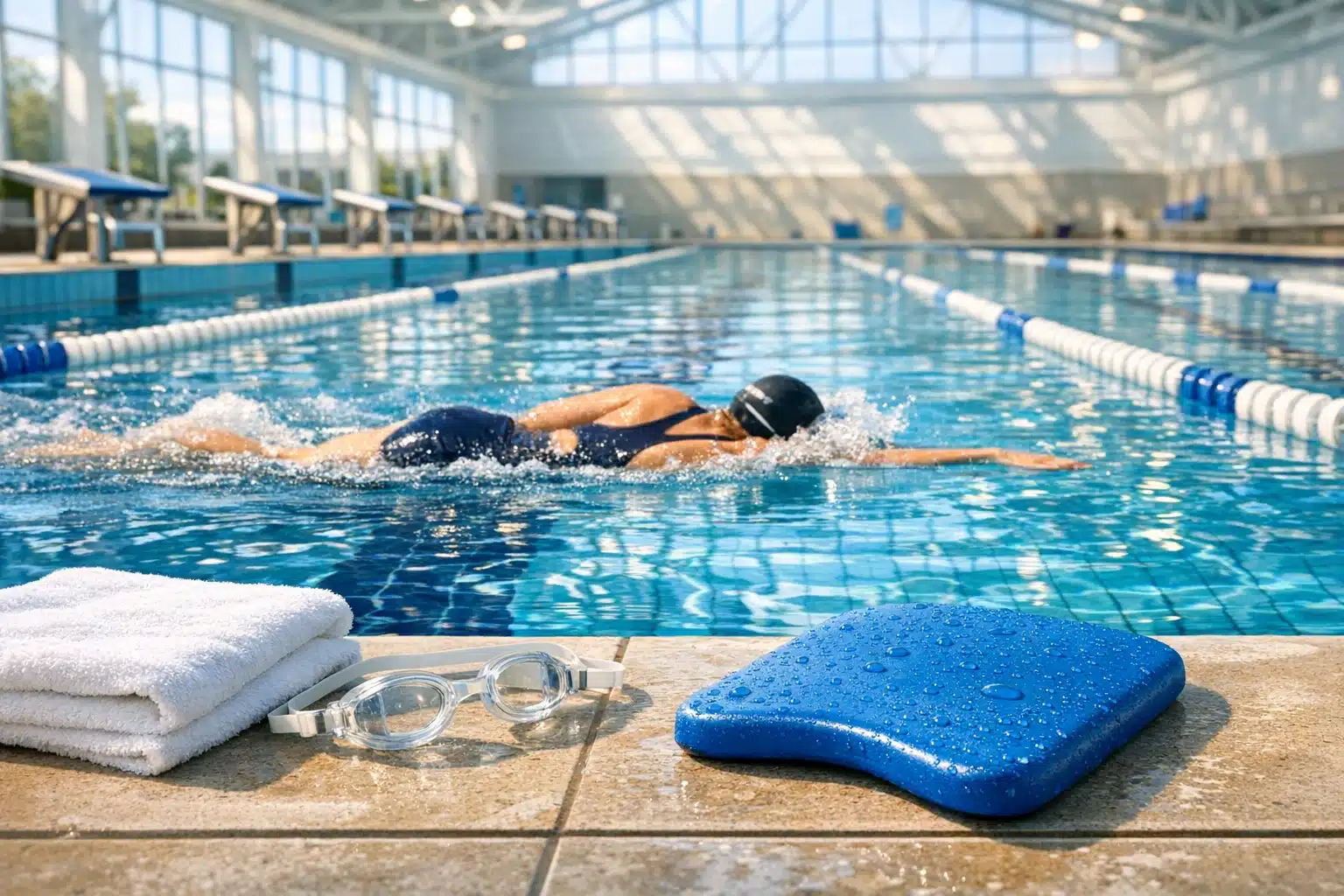
Explore the world of swimming
Swimming sits at a rare crossroads where sport, survival skill, and daily wellness meet. In one lane it can be a technical pursuit shaped by timing, breath, and efficiency; in another, it is a practical life skill that builds confidence around water. Because the body is supported by buoyancy, many people who struggle with high-impact exercise find the pool inviting rather than punishing. That mix of challenge and accessibility is exactly why swimming stays relevant from childhood lessons to masters competitions.
Outline: This article begins with why swimming matters, moves through the main strokes and how they compare, explains gear, safety, and beginner setup, then examines technique and training, and closes with practical guidance for readers who want to make swimming a lasting part of life.
Why Swimming Matters: Health, Confidence, and Everyday Relevance
Swimming is often described as a full-body workout, but that phrase only hints at its broader value. In the water, the heart and lungs work steadily, the arms and legs coordinate in rhythm, and the core stays active to maintain balance and alignment. Unlike many land-based activities, swimming places far less impact on the joints because the water supports much of the body’s weight. That is one reason it is commonly recommended for people who want cardiovascular exercise without the pounding that may come from running on pavement or jumping through high-impact classes. It can serve teenagers training for competition, office workers trying to move more, adults returning to exercise after a break, and older people looking for activity that feels sustainable.
The physical benefits are matched by psychological ones. Many swimmers talk about the pool as if it were part gym, part reset button. The regular sound of breathing, the repetition of strokes, and the feeling of gliding through water can create a calming effect that differs from noisier forms of exercise. Some research on exercise and mental well-being suggests that rhythmic aerobic activity can support mood, reduce stress, and improve sleep quality. Swimming is not a cure-all, but it often becomes a reliable part of a balanced routine that helps people feel more settled and energized.
Its practical importance should not be overlooked either. Swimming is connected to water safety, and water safety is a life skill. Knowing how to float, tread water, and move efficiently toward the side of a pool or shoreline can matter far beyond recreation. For families, this is a major reason lessons begin early. For adults who never learned, starting later is still worthwhile. Learning to swim is not only about exercise; it is about expanding where a person can go and what they can do with confidence.
In everyday terms, swimming offers several advantages:
• Low-impact movement that is often easier on knees, hips, and ankles
• A combination of strength, endurance, coordination, and breath control
• Flexible intensity, from gentle laps to demanding interval training
• A skill with recreational and safety value in pools, lakes, and coastal settings
Energy use varies by pace and body size, but lap swimming can burn several hundred calories per hour, especially at moderate to vigorous intensity. More importantly, it is scalable. A beginner may start with short lengths and rest often; an experienced swimmer may complete structured sets with precise timing. Both are swimming, and both are gaining something real from it. That ability to meet people where they are is one of the sport’s strongest qualities. Few activities are at once so technical, so practical, and so quietly inviting.
The Main Strokes and How They Compare
To many newcomers, swimming looks simple from the deck: people move up and down the lane, turn at the wall, and repeat. Once they get in the water, however, they discover that each stroke has its own logic. The four competitive strokes freestyle, backstroke, breaststroke, and butterfly are not just different ways to travel. They demand different body positions, breathing patterns, muscular emphasis, and levels of technical precision. Understanding those differences helps beginners choose a starting point and gives casual swimmers a clearer sense of how to build variety into training.
Freestyle, usually swum as front crawl, is the fastest and most common stroke for fitness and racing. The body stays long and horizontal, the arms alternate, and the flutter kick helps maintain momentum. Because the motion is continuous and relatively efficient, freestyle is often the first stroke people use for lap swimming. It rewards streamlined posture and controlled breathing. When done well, it feels less like fighting water and more like slipping through it. For that reason, freestyle tends to dominate long-distance events and routine pool workouts.
Backstroke is the only competitive stroke done on the back, which changes everything from breathing to spatial awareness. Since the face stays above water, some beginners find breathing easier than in freestyle. Yet the stroke introduces other challenges, especially swimming straight without seeing where one is going. It demands shoulder mobility, a stable core, and an effective flutter kick. Backstroke is often seen as gentler on breathing rhythm, though it can still be physically demanding over distance.
Breaststroke is slower for most swimmers, but it has a very distinct appeal. The pull and kick happen in a more symmetrical pattern, and the head can rise naturally for breath during each cycle. Many recreational swimmers gravitate toward it because it can feel intuitive and controlled. At the same time, breaststroke is technically precise. Timing matters greatly, and the whip kick requires hip and ankle coordination that some people find tricky. It is also the stroke where small inefficiencies can quickly reduce forward movement.
Butterfly is the most dramatic and, for many, the most demanding. Both arms move together, the body undulates, and the dolphin kick drives the rhythm. It requires strength, timing, and confidence with breath control. To watch a skilled butterfly swimmer is to see power organized into waves. To attempt it without technique is to discover how quickly water can feel heavy. That contrast makes butterfly fascinating: it is beautiful when efficient and exhausting when rushed.
A simple comparison helps:
• Freestyle: fastest for most swimmers, efficient, ideal for fitness and distance
• Backstroke: good for posture awareness and breathing ease, but requires directional control
• Breaststroke: slower and more upright in feel, often comfortable for casual swimmers
• Butterfly: highest technical and energy demand, powerful but less practical for long recreational sets
These strokes also come together in medley events, where swimmers must adapt quickly between styles. Even outside competition, learning more than one stroke reduces monotony and develops a more balanced skill set. A swimmer who only knows freestyle has one tool. A swimmer who understands the others has a toolkit.
Starting Strong: Equipment, Safety, and the Difference Between Pools and Open Water
Beginning swimming does not require an overflowing gear bag, but a few essentials make the experience far easier. A comfortable swimsuit that allows free movement is the obvious first step. Good goggles matter just as much. Poor goggles can fog, leak, or leave a swimmer squinting through chlorinated frustration, and that alone is enough to make a beginner tense. A swim cap is optional for some recreational swimmers, though many pools prefer it for people with longer hair. Beyond the basics, training tools such as kickboards, pull buoys, fins, and paddles can support practice, but they are helpers rather than requirements.
What matters more than gear is safety. A pool may look calm, but confidence in water should never be confused with carelessness. Beginners should choose supervised environments, preferably with lifeguards on duty and clear lane rules. Starting in a shallow area can reduce anxiety and allow time to practice floating, breathing, and body position without the extra stress of deep water. Adults who are learning from scratch often improve faster with instruction than with trial and error. A coach or qualified teacher can correct habits early, especially around breathing, which is one of the main barriers for new swimmers.
For someone starting out, a practical checklist looks like this:
• Choose a pool with beginner-friendly lanes or lesson times
• Bring goggles that fit snugly without causing pain
• Warm up gradually instead of launching straight into hard laps
• Practice exhaling in the water before worrying about speed
• Stop when technique breaks down, not only when fatigue arrives
The setting also changes the experience. Pool swimming is structured and measurable. Distances are marked, lane lines help with direction, and conditions remain relatively predictable. Most lap pools are 25 meters or 25 yards long, while competition pools may be 50 meters. This controlled environment is ideal for skill development. Open water, by contrast, introduces moving currents, changing temperatures, reduced visibility, and navigation challenges. A lake can feel peaceful from shore and surprisingly disorienting once a swimmer looks up and sees no lane line, no tiled bottom, and no wall arriving every half minute.
That does not mean open water is only for experts, but it does require respect and preparation. Swimmers should avoid going alone, check conditions carefully, use high-visibility equipment when appropriate, and understand local rules. Cold water deserves special caution because it can affect breathing and coordination quickly. In open water, efficiency is not the only skill that matters; awareness matters just as much.
A gentle beginner routine can be very simple: walk in, float, practice breathing, swim short lengths with rests, and leave before frustration sets in. The aim at first is not impressive distance. It is comfort, familiarity, and calm repetition. In swimming, progress often arrives quietly. One day a person clings to the wall. A few weeks later, they push off and realize the water no longer feels like an obstacle. It feels like a place they know.
Technique and Training: How Swimmers Improve Over Time
Swimming rewards effort, but it rewards technique even more. A runner with imperfect form can still power through a workout and cover ground. In the water, small errors are expensive. A dropped elbow during the pull, a head position that lifts too high, or a kick that splashes without driving backward can make a swimmer work much harder for very little gain. That is why experienced coaches often say that swimming is a sport of efficiency first and force second. The goal is not only to be strong enough to move; it is to move in a way that lets strength transfer cleanly into the water.
Body position sits at the center of this idea. A swimmer who stays long and balanced creates less drag. In freestyle, for example, the eyes should generally look downward rather than forward, helping the hips stay close to the surface. Breathing should rotate with the body instead of lifting the whole head. The arm catch should feel like holding firm water, not slapping at it. Kicking should stabilize and contribute propulsion, but it should not become frantic. When technique clicks, swimming changes character. The pool no longer feels like a conveyor belt moving in the wrong direction. It feels cooperative.
Training structure also matters. Many swimmers improve not by endlessly swimming the same pace, but by using sets with a purpose. A session may focus on endurance, speed, drills, or recovery. Intervals create useful pressure because they teach pacing and discipline. A simple fitness workout might include an easy warm-up, technique drills, several repeat swims with rest, and a gentle cooldown. Competitive swimmers often add more detail, tracking stroke count, split times, and perceived effort.
A balanced practice might include:
• Warm-up to raise heart rate gradually and loosen the shoulders
• Drill work to isolate skills such as body rotation or catch timing
• Main set for endurance or speed, depending on the day’s goal
• Cooldown to reduce intensity and reinforce relaxed movement
Different goals lead to different training choices. Someone swimming for general health may benefit most from consistency, perhaps two or three sessions a week that mix moderate laps with technique attention. A triathlete may prioritize freestyle efficiency and pacing over long distances. A sprinter may spend more time on starts, turns, and explosive sets. A masters swimmer returning after years away might rebuild aerobic fitness while protecting shoulder mobility. The best plan is not the one that looks hardest on paper; it is the one the swimmer can perform regularly with sound technique.
Improvement is rarely perfectly linear. Many swimmers experience periods where progress seems to stall, then suddenly notice they are covering the same distance with less effort. That is common because swimming depends on coordination as much as conditioning. A new pattern may take time to settle into the body. Video analysis, coaching feedback, and patient repetition can all help. So can humility. In few sports does the water give such honest feedback. If the stroke is rushed, the swimmer knows. If the rhythm is right, the lane seems to open like a zipper.
Conclusion: Making Swimming Part of Your Life
For readers wondering whether swimming is worth the effort, the most useful answer is also the simplest: it depends on what you need, and that is exactly why it remains so valuable. If you want exercise that challenges the heart and lungs without constant impact on the joints, swimming offers a strong option. If you want a practical life skill that increases confidence around pools, lakes, and the sea, it has obvious relevance. If you want variety, the sport can be technical, relaxing, social, competitive, meditative, or all of those at different times in life. Few activities adapt so well to changing goals.
Beginners do not need to aim for elegant turns or long continuous sets in the first weeks. The more realistic target is familiarity. Learn how to breathe without rushing. Learn how your body floats. Learn how a short, easy length feels when you stop fighting every movement. Adults who feel embarrassed about starting late should remember that the pool is full of private journeys. Some people are training for races. Others are rehabbing injuries. Others are simply trying to feel capable in water for the first time. Those paths do not compete with each other.
Parents may view swimming as both recreation and safety education. Busy professionals may appreciate the way a focused session clears mental clutter. Older adults may value the lower-impact nature of the sport and the way it encourages steady movement. Athletes from other disciplines may discover that swimming improves breath control, shoulder endurance, and overall conditioning. The audience is broad because the activity is broad.
If there is one sensible next step for most readers, it is this:
• Choose a realistic setting, such as a local pool with scheduled lap times
• Set a modest goal, such as two swims a week for a month
• Focus on comfort and technique before speed or distance
• Ask for instruction if breathing or form becomes a barrier
• Keep the process sustainable rather than dramatic
Swimming does not need flashy promises to prove its worth. It earns loyalty through experience. The first successful float, the first unbroken length, the first session that leaves the body tired but the mind clearer these moments accumulate. Over time, swimming becomes more than a workout. It becomes a skill you carry, a rhythm you return to, and for many people, a part of life that keeps opening new water ahead.