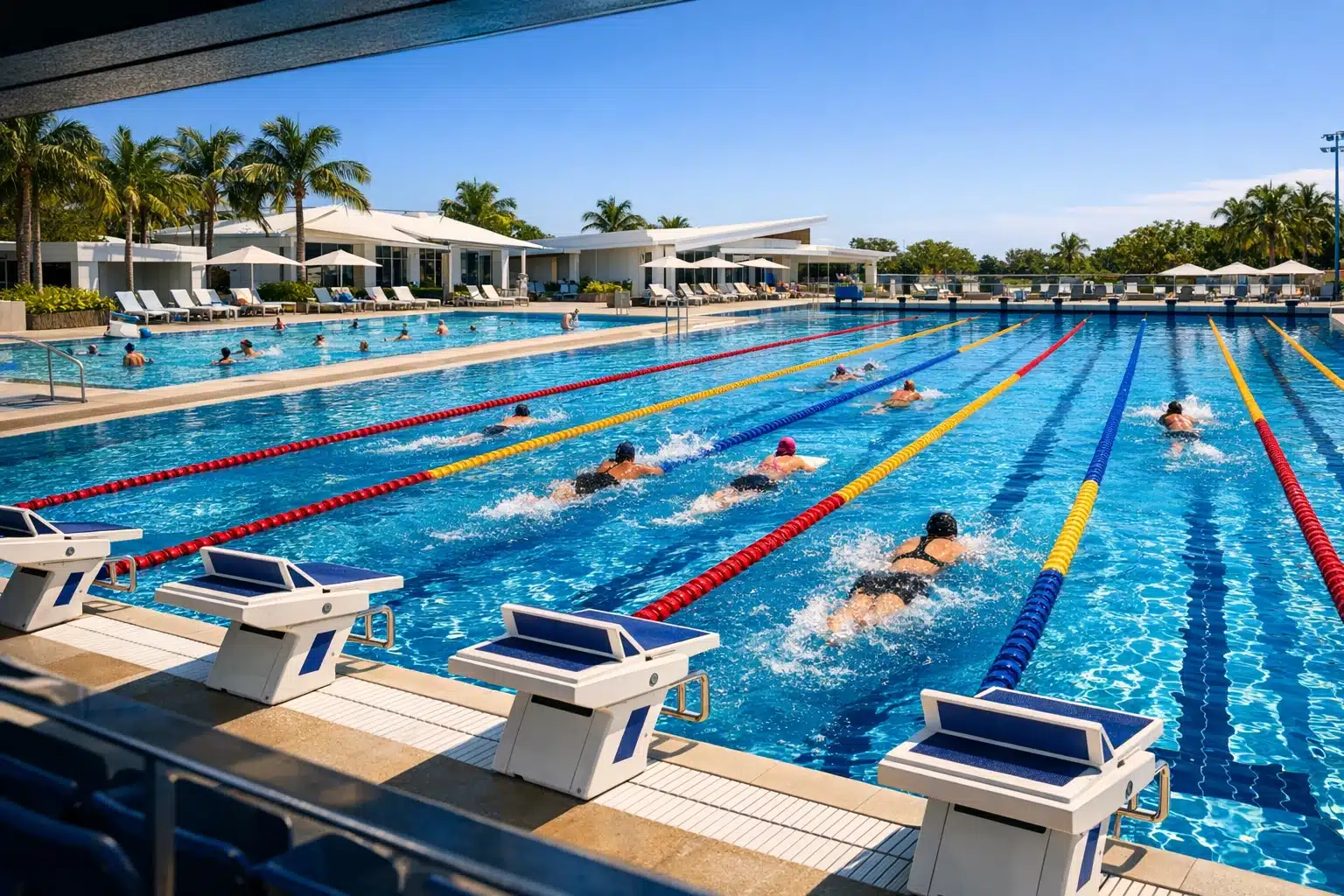
Explore the world of swimming
Swimming brings together fitness, safety, skill, and enjoyment in a way few activities can match. It strengthens the heart, trains the whole body, and offers relief from the pounding often linked with land-based exercise. At the same time, it teaches confidence in water, a skill that can matter in emergencies as much as in leisure. From quiet morning laps to lively lessons for children, swimming remains deeply relevant across ages, goals, and lifestyles.
Outline
- The physical and mental benefits of swimming
- Core techniques, strokes, and breathing fundamentals
- Swimming as fitness training and athletic development
- Water safety, learning pathways, and confidence building
- Swimming culture, lifelong participation, and practical ways to begin
1. Why Swimming Matters: Health, Access, and Everyday Value
Swimming occupies a special place among physical activities because it blends exercise with survival skill, relaxation, and recreation. Many sports demand a certain age, a particular body type, or access to expensive equipment, but swimming can adapt to a surprisingly wide range of people and goals. A child learning to float, an office worker easing joint strain, an older adult staying mobile, and an elite athlete chasing fractions of a second may all share the same pool, each working toward very different outcomes. That range is part of swimming’s quiet power.
From a physical perspective, swimming is widely valued as a low-impact aerobic activity. Water supports body weight, which reduces stress on joints compared with running or court sports. This makes swimming useful for people managing arthritis, recovering from some injuries, or returning to exercise after a long break. At the same time, the body still works hard. Water creates resistance in every direction, so even a smooth lap asks muscles in the shoulders, back, core, hips, and legs to cooperate. Because of this, swimming often feels graceful while remaining deceptively demanding.
Public health guidance commonly recommends at least 150 minutes of moderate aerobic activity per week for adults, and swimming can help meet that target. Depending on pace, stroke choice, and body size, an hour of swimming may burn roughly 400 to 700 calories or more. Beyond calories, the deeper value lies in cardiovascular conditioning, muscular endurance, posture, and movement quality. Unlike exercise that isolates one area, swimming encourages the body to act as a connected system.
Mental benefits matter too. Many swimmers describe the pool as a reset button. Repetitive strokes, measured breathing, and the muffled quiet of being in water can reduce stress and sharpen focus. There is something almost architectural about a lane line: it narrows the world to a manageable path. For some people, that simplicity is restorative.
- Low impact on joints
- Full-body muscular engagement
- Strong cardiovascular training potential
- Stress relief through rhythm and breathing
- Useful life skill tied to water safety
Swimming also has social and practical value. Lessons build confidence in children, community pools create meeting places, and aquatic programs can serve everyone from competitive teens to retirees in rehabilitation classes. In regions with lakes, rivers, or coastal activity, swimming ability becomes even more relevant. It is not just about sport; it is about participation in everyday life. To understand swimming fully, then, is to see it not as a narrow athletic pursuit but as a broad human skill that combines health, pleasure, and preparedness.
2. Understanding the Water: Strokes, Body Position, and Breathing
For beginners, swimming can seem mysterious. On deck, the strokes look fluid and almost effortless; in the water, they can feel awkward, breathless, and strangely technical. The difference lies in a few fundamentals that experienced swimmers learn to respect: body position, balance, timing, and breathing. Mastering these basics matters more than forcing speed early on.
World Aquatics recognizes four competitive strokes: freestyle, backstroke, breaststroke, and butterfly. Freestyle, usually swum as front crawl, is the fastest and most commonly taught for fitness. Its alternating arm action and flutter kick make it efficient over distance once technique settles in. Backstroke uses a similar alternating rhythm while allowing the face to remain above water, which can help some learners feel more comfortable. Breaststroke is often popular with recreational swimmers because the breathing pattern is easier to understand, though the timing of the kick and pull can be surprisingly complex. Butterfly is powerful and visually dramatic, but it demands strong coordination and is usually learned after the other strokes.
Body position is the hidden foundation beneath all of them. A swimmer who keeps the body long and close to the surface moves with less drag. Lift the head too high, bend at the waist, or let the legs sink, and the water suddenly feels heavier. That is one of swimming’s most useful lessons: tiny technical changes can produce major effects. Water gives immediate feedback. It does not negotiate.
Breathing is another make-or-break skill. New swimmers often hold their breath underwater and rush to inhale, which quickly creates tension. Efficient breathing works in a calmer sequence: exhale into the water, rotate or rise as the stroke allows, inhale briefly, and return to alignment. In freestyle, bilateral breathing, such as every three strokes, can help balance body rotation, although many swimmers use different patterns depending on speed and comfort. The goal is not rigid perfection but a sustainable rhythm.
- Freestyle rewards streamlined body alignment
- Backstroke helps build confidence while improving rotation
- Breaststroke emphasizes timing and glide
- Butterfly develops power but requires coordination
Tools can help, but they should support technique rather than replace it. Kickboards isolate kicking, pull buoys highlight arm work, and fins can improve body position and ankle mobility. Still, the best teacher is often patient repetition under informed guidance. A coach or instructor can spot dropped elbows, mistimed kicks, or shortened breathing patterns long before the swimmer notices them alone.
When technique begins to click, swimming changes character. The struggle gives way to connection; the water starts to feel less like resistance and more like partnership. That moment is why so many swimmers stay with the sport for years. Skill in swimming is not only about moving through water. It is about learning to work with a changing environment rather than against it.
3. Swimming for Fitness and Performance: Training Methods That Actually Work
Swimming can be gentle, but it can also be highly structured training. The same pool that welcomes relaxed recreational laps can become a laboratory for endurance, speed, technique, and recovery. What makes swimming especially effective for fitness is its flexibility. A session can be built around easy continuous movement, short intense intervals, skill drills, or mixed sets that challenge multiple energy systems in one workout.
For general fitness, consistency matters more than heroic effort. A beginner who swims two or three times per week for 20 to 40 minutes will usually progress more steadily than someone who overtrains once and disappears for ten days. Early workouts should focus on sustainable volume, clean form, and comfort in the water. For example, a simple session might include a warm-up, a short drill set, several moderate repeats with rest, and a relaxed cool-down. This structure introduces variety without overwhelming the swimmer.
Intermediate and advanced swimmers often use interval training. Instead of swimming nonstop, they complete repeated distances on set rest periods, such as 10 x 100 meters with 20 seconds rest. This method helps manage intensity and provides measurable progress. Shorter repeats can build speed and stroke quality, while longer repeats improve endurance and pacing. Coaches frequently track training using concepts such as stroke count, split times, perceived exertion, and heart rate trends.
Swimming is also valuable cross-training. Runners, cyclists, and team-sport athletes use it to maintain aerobic conditioning while reducing impact load. Because water is roughly 800 times denser than air, even moderate movements create meaningful resistance. That does not automatically make swimming easy on the cardiovascular system; in fact, many new lap swimmers are surprised by how quickly poor technique leads to fatigue. Efficiency and fitness grow together.
Typical fitness goals in swimming may include:
- Improving cardiovascular endurance through longer aerobic sets
- Building power with sprint repeats and resisted work
- Refining movement efficiency through drill-focused sessions
- Supporting recovery with easy technique-based swimming
- Increasing confidence to swim longer distances without stopping
Nutrition, hydration, and recovery still matter, even though the water can mask sweat loss. Competitive swimmers often train multiple times a day and require careful planning around sleep, fueling, and strength work. Recreational swimmers benefit from the same principles on a smaller scale. A light meal before a session, water nearby, and adequate recovery between harder workouts can noticeably improve performance.
The beauty of swimming training is that it accommodates both precision and pleasure. One person chases a personal best over 1,500 meters; another simply wants to leave the pool feeling stronger than when they arrived. Both are valid. In a sport ruled by clocks and lane lines, progress still comes down to something simple: regular practice, honest effort, and the patience to let good habits accumulate.
4. Learning Safely: Water Confidence, Risk Awareness, and Lifelong Skill Building
Swimming is enjoyable, but water deserves respect. One of the most important reasons to promote swimming is that it improves safety around pools, lakes, rivers, and coastal environments. Knowing how to move through water is useful; knowing how to judge risk is essential. These are related skills, but they are not identical, and strong programs teach both.
Water confidence starts with basics: entering safely, floating, kicking, submerging the face, turning to breathe, and reaching an exit point. For children, lessons often begin as playful exposure so fear does not become the dominant memory. For adults, the process may require patience, especially if there is a history of anxiety or a negative experience in water. Good instruction respects that emotional reality instead of dismissing it. Confidence is built through repeated success, not pressure.
Formal lessons matter because they add structure and safety. A qualified instructor can correct risky habits early, such as panicked vertical kicking, breath holding, or poor judgment near deeper water. Lessons also introduce practical skills that are often overlooked by casual swimmers, including treading water, floating to rest, understanding pool depth markings, and recognizing signs of fatigue. In open water, the skill set expands further. Currents, waves, changing temperatures, limited visibility, and uneven surfaces all demand caution beyond what a pool teaches.
Several core safety principles apply broadly:
- Never swim alone, especially in open water
- Supervise children closely and continuously around water
- Learn how to float and rest if tired
- Respect weather, current, and depth conditions
- Use lifeguarded areas whenever possible
Equipment can support safety, but it is not a substitute for ability or supervision. Life jackets are important in many boating and open-water situations. Goggles improve visibility and comfort. Bright swim caps increase visibility for open-water swimmers. Yet none of these remove the need for judgment. Overconfidence remains one of the more dangerous attitudes around water.
There is also a social dimension to learning safely. Communities with accessible swim lessons often improve both recreation and resilience. Public pools, school programs, and nonprofit initiatives can reduce barriers linked to cost, transport, or unequal access to instruction. This matters because drowning risk is shaped not only by individual choices but also by opportunity. If a person never had a safe chance to learn, the problem is larger than personal motivation.
At its best, swimming education creates capable, calm participants in aquatic spaces. It teaches that strength is useful, but composure is often more useful. The swimmer who can float, breathe, orient, and respond deliberately has something more durable than speed. They have competence. That is the kind of skill that stays relevant long after medals, mile counts, or training plans fade into the background.
5. Swimming as a Lifelong Practice: Culture, Enjoyment, and Getting Started Wisely
One reason swimming endures is that it can change with a person’s life without losing its appeal. For some, it begins as childhood lessons and grows into competition. For others, it appears later as rehabilitation, travel preparation, stress relief, or a way back into exercise after years away. Unlike sports that depend heavily on explosive impact or narrow physical windows, swimming often remains available across decades. The relationship evolves, but it rarely becomes irrelevant.
Swimming culture is broader than racing. Yes, there are competitive worlds built on early mornings, split times, relay exchanges, and championship meets. But there is also the culture of community pools, masters clubs, open-water groups, hotel swims during business trips, and family afternoons at the local aquatic center. In each setting, swimming means something slightly different. It can be meditative, social, technical, playful, or fiercely goal-oriented. That variety helps explain its staying power.
For someone starting out, the biggest mistake is often trying to do too much too soon. Swimming rewards gradual progress. A smart beginning usually includes a swim assessment or lesson, realistic weekly scheduling, and modest goals such as crossing the pool comfortably, improving breathing, or completing a few uninterrupted lengths. Gear can stay simple:
- A comfortable swimsuit suited to movement
- Goggles that seal well without pinching
- A swim cap if required or preferred
- A towel and water bottle
- Optional training aids used with guidance
Setting matters too. Some people thrive in lap lanes with clear structure; others find the environment intimidating at first. A quieter pool time, beginner-friendly class, or supportive friend can change the experience completely. The first goal is not elegance. It is familiarity. Once the pool stops feeling foreign, learning accelerates.
There is also joy in the sensory side of swimming that statistics cannot fully capture. The cool entry, the echo under a high ceiling, the brief hush between strokes, the line on the pool floor sliding beneath you like a rail into the distance: these details turn exercise into atmosphere. Even open-water swimmers, who face less predictable conditions, often describe a similar feeling of immersion and perspective. The body works, the mind narrows, and ordinary noise recedes.
For long-term progress, variety helps prevent boredom. A swimmer might alternate easy aerobic days with drill work, join a group once a week, track distance occasionally, or explore different strokes instead of repeating only freestyle. The point is sustainability. Fitness habits last when they fit real life and remain interesting enough to revisit.
Swimming does not ask for perfection before it offers rewards. It asks for willingness: to learn, to practice, to breathe through discomfort, and to return. In exchange, it offers a rare combination of skill, health, safety, and pleasure. Few activities carry all four with equal weight. That is why swimming is not merely something people do. For many, it becomes a reliable way of moving through life itself.
Conclusion for Readers: Why Swimming Is Worth Your Time
If you are considering swimming for fitness, skill, or enjoyment, the strongest argument in its favor is its versatility. It can support heart health, improve coordination, reduce joint stress, and build confidence in environments where safety matters. It also scales well, which means beginners can start small while experienced swimmers continue to find technical and physical challenges. Few activities offer such a practical mix of exercise and life skill.
For readers who feel uncertain, the best next step is simple: begin with comfort and instruction rather than speed or distance. Learn how to float, breathe, and move with control. Then let consistency do the heavy lifting. Over time, the pool becomes less intimidating and more familiar, and progress starts to feel less like struggle and more like rhythm.
Swimming rewards patience, not shortcuts. Whether your goal is better health, stress relief, open-water confidence, or a stronger training routine, the gains tend to arrive through steady practice and informed technique. If you give the water time, it often gives something valuable back: resilience, calm, and a form of strength that stays useful far beyond the edge of the pool.