Explore the world of swimming
Swimming is more than a summer pastime; it is a practical life skill, a demanding sport, and a reliable way to build fitness without punishing the joints. From children learning to float to adults chasing endurance, the water offers challenge and freedom at the same time. Understanding how swimming works, why it matters, and how to approach it safely can turn a casual dip into a lasting habit with real value.
Outline: This article begins with the broad value of swimming for health, movement, and everyday life. It then explains the main strokes and the technical ideas that make them efficient. The third section focuses on training, learning progress, and realistic improvement. The fourth section compares pools and open water while covering safety and gear. The final section brings the ideas together in a conclusion aimed at readers who want to make swimming part of their routine.
Why Swimming Matters: Health, Skill, and Everyday Relevance
Swimming holds a rare position among physical activities because it combines survival skill, cardiovascular training, muscular endurance, and mental focus in one setting. A person who learns to move calmly in water gains more than exercise. They gain confidence around pools, lakes, and beaches, and that confidence can shape family life, travel choices, and personal safety. In many places, swimming lessons are considered a basic part of childhood education for exactly this reason. Knowing how to float, tread water, and reach the side of a pool can be as practical as knowing how to ride a bicycle or cross a road safely.
From a fitness perspective, swimming is widely appreciated because it trains the heart and lungs while reducing impact on hips, knees, and ankles. Water supports body weight, which makes it attractive for older adults, people returning from injury, and anyone who finds running uncomfortable. At the same time, water creates steady resistance in every direction, so even smooth, controlled movements demand effort. That means swimming can be gentle on joints while still challenging the body. It is not magic, and it is not effortless, but it is efficient. A steady swim can contribute to the kind of weekly aerobic activity that health authorities commonly recommend for adults, and it can also improve coordination and body awareness.
There is also a mental dimension that is easy to overlook. Water has a way of stripping movement down to essentials: inhale, turn, reach, kick, exhale, repeat. Many swimmers describe a session as both work and reset. The lane line hums softly beside them, the ceiling tiles slide by, and thoughts that felt noisy on land begin to settle. This does not mean swimming erases stress, but it often provides structure when the mind feels scattered. That rhythmic quality is one reason swimmers stay loyal to the sport for decades.
Swimming serves different people in different ways:
• For children, it supports safety and comfort in aquatic settings.
• For recreational adults, it offers low-impact conditioning.
• For athletes, it develops endurance, discipline, and technical control.
• For older swimmers, it can help maintain mobility and routine.
Perhaps the strongest argument for swimming is its flexibility. It can be leisurely or competitive, social or solitary, technical or simply refreshing. Few activities meet beginners and experts in the same environment with so much room for growth. One person is learning to put their face in the water for three seconds; another is chasing split times down to the fraction. Both are swimming, and both are developing something meaningful.
The Main Strokes and the Technique Behind Efficient Movement
To an outside observer, swimming may look like a matter of moving arms quickly and kicking hard. In practice, technique decides far more than effort alone. Water rewards precision and exposes waste. A tense neck, a dropped elbow, or a poorly timed breath can make an easy pace feel strangely difficult. That is why learning the main strokes is less about memorizing motions and more about understanding balance, alignment, and timing.
Freestyle, often called front crawl, is the most common stroke for lap swimming and racing over many distances. It is usually the fastest because the body stays long and streamlined while the arms recover over the surface. Efficient freestyle depends on a few key principles: keeping the hips near the surface, rotating the torso rather than swimming flat, and breathing without lifting the head too high. When a swimmer turns the head gently to the side instead of craning upward, the body line stays smoother and drag is reduced. Good freestyle often looks almost casual, but beneath that appearance is careful coordination.
Backstroke shares some technical ideas with freestyle, especially body rotation, yet it feels very different because the swimmer remains face-up. This can make breathing easier for beginners, though straight-line control becomes trickier when the ceiling is the only reference point. Backstroke encourages shoulder mobility and posture awareness, and it teaches swimmers to trust the water behind them. There is something quietly dramatic about it: eyes upward, ears near the surface, kick flickering beneath a narrow wake.
Breaststroke is slower for most swimmers, but it is often easier to learn at a basic level because the breathing pattern is more obvious. The stroke uses a pull, breath, kick, and glide rhythm. Timing matters greatly. If the kick comes too early or the head lifts too much, momentum disappears. Many recreational swimmers enjoy breaststroke because it allows a clear view forward and a pace that feels controlled rather than frantic.
Butterfly is the most demanding of the four competitive strokes and is usually introduced after swimmers build strength and timing in simpler patterns. It requires coordinated arm recovery, two kicks per cycle, and strong undulation through the body. When performed well, butterfly looks like a wave taking human form. When performed poorly, it is exhausting very quickly. That contrast teaches an important lesson about swimming: efficiency is not decoration; it is the engine.
A helpful technical checklist for all strokes includes:
• A long body line that reduces drag
• Relaxed but purposeful breathing
• Kicks that support position rather than create chaos
• Arm actions that catch and press water instead of slapping at it
• Rhythm, because swimming falls apart when movements stop talking to each other
Comparing the strokes makes their value clearer. Freestyle is generally fastest and most practical for endurance. Backstroke is excellent for balance and shoulder control. Breaststroke suits a measured pace and is often comfortable for recreational swimming. Butterfly develops power and timing but demands the most energy. Learning all four creates versatility, yet even mastering one stroke well can transform the experience of being in the water.
Learning to Swim Better: Training, Progress, and Realistic Improvement
Many people assume improvement in swimming comes mainly from grinding through more laps. Distance matters, but unstructured repetition can simply harden poor habits. Better swimming usually comes from a mix of skill practice, consistent aerobic work, and patient correction. In other words, the swimmer who pauses to fix breathing, streamline, and timing often improves faster than the swimmer who powers through fatigue with sloppy form. Water is an honest coach. It tells the truth immediately, often by making inefficiency feel heavy.
For beginners, the first milestones are often humble and important: putting the face in the water comfortably, exhaling underwater, floating without panic, and moving a short distance with control. Lessons are valuable at this stage because a trained instructor can spot problems that are hard to notice from inside the experience. A novice may think they lack stamina when the real issue is breath-holding or body position. That distinction matters. Technique errors can waste energy so quickly that even a fit person feels outmatched after one length.
As swimmers gain confidence, training becomes more structured. A useful session often includes three parts. First comes an easy warm-up to raise body temperature and settle into the water. Next comes focused work such as drills, intervals, or stroke practice. Finally, a short cool-down helps the body come back to rest. This format is simple, but it provides variety and purpose. A recreational swimmer does not need elite mileage to improve. Two or three well-planned sessions each week can produce noticeable gains in breathing comfort, endurance, and control.
Common tools and methods can support progress:
• Drills such as catch-up freestyle or single-arm work to improve timing
• Kick sets with a board to build leg endurance and body awareness
• Pull sets with a buoy to isolate upper-body mechanics
• Short intervals with rest, which teach pacing better than one long struggle
• Occasional technique video or coaching feedback for honest assessment
There is also a psychological side to training. Pools make comparison easy because lanes create visible benchmarks. Someone always seems faster, smoother, or more confident. The smarter response is to compare present ability with past ability. Can you swim farther without stopping? Can you exhale more naturally? Can you hold form later in the session? Those are meaningful markers. Progress in swimming often arrives quietly. One day the water feels hostile; a few weeks later it feels familiar. One day the deep end seems intimidating; later it feels like part of the map.
A practical example helps. A beginner might start with 20 to 25 minutes built around short lengths and generous rest. An intermediate swimmer might complete a 40-minute workout combining drills, moderate intervals, and one longer steady set. A more advanced swimmer may track pace per 100 meters and organize sessions around speed, endurance, or race skills. Different levels need different structures, but all benefit from the same foundation: consistency, technique, and patience. Swimming improvement is rarely dramatic in a single day, yet over months it can be striking.
Safety, Gear, and the Difference Between Pools and Open Water
Swimming becomes far more enjoyable when safety is treated as part of the sport rather than a warning pasted onto the edge of it. Even strong swimmers can get into trouble when conditions change or attention drifts. Basic habits matter: never overestimate your ability, respect depth markers, understand local rules, and supervise children closely near any body of water. Skill reduces risk, but it does not erase it. Calm judgment is as important as strong technique.
Pools offer a controlled environment, which is one reason they are ideal for learning. Water temperature is usually regulated, lanes provide direction, and the bottom is visible. Distances are measurable too, especially in standard 25-meter, 25-yard, or 50-meter pools. This structure makes training clear and repeatable. If a swimmer improves from needing rest every length to holding a steady pace for several hundred meters, the evidence is right there in the lane. Pools also allow easy access to instructors, lifeguards, and organized programs.
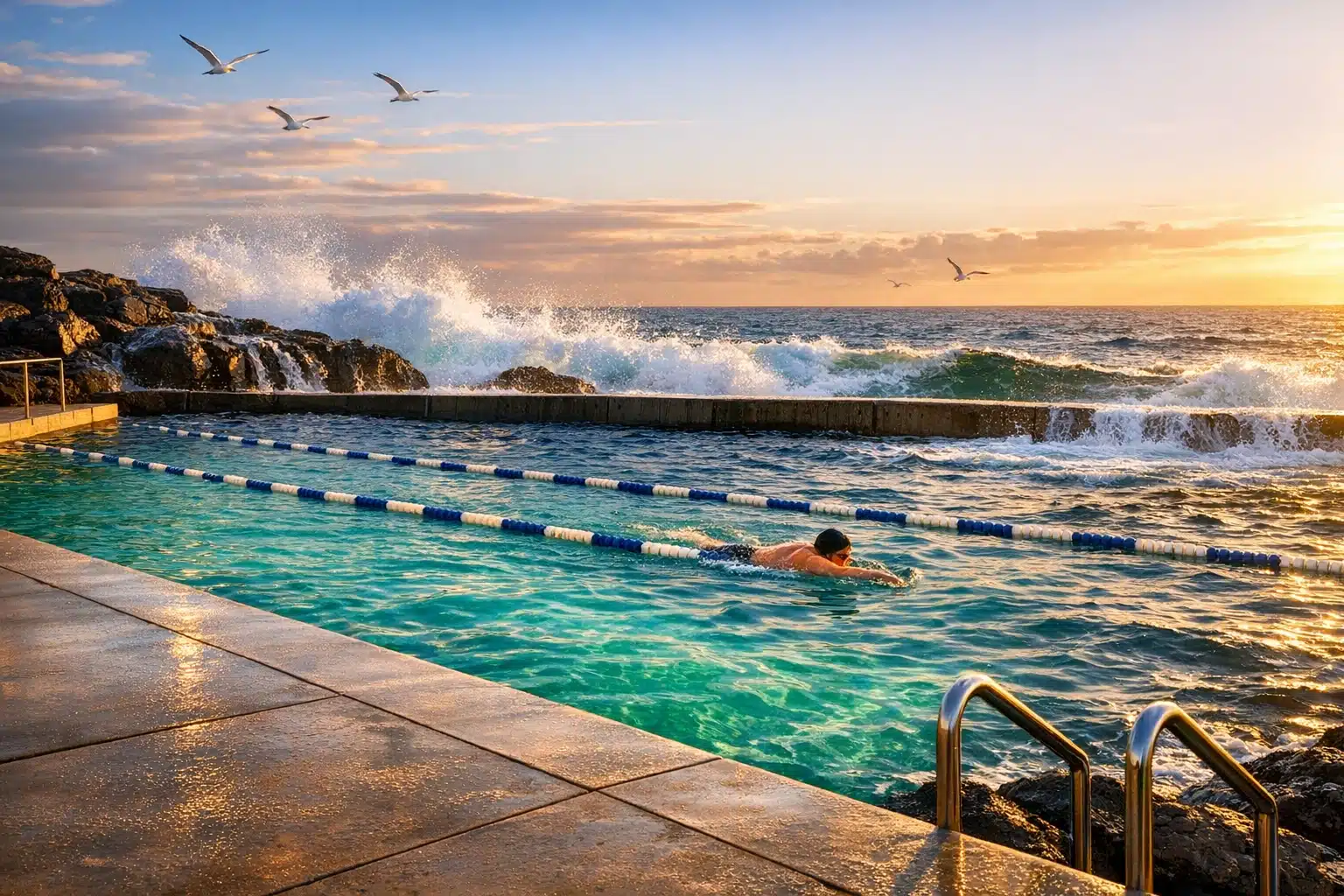
Open water is different in almost every respect. Lakes, rivers, and the sea introduce currents, waves, changing temperatures, low visibility, and navigation challenges. A swimmer in open water may need to sight forward regularly to stay on course, something that is unnecessary in a pool lane. Wetsuits can help in cold conditions by improving warmth and buoyancy, but they do not replace preparation. Anyone moving from pool swimming to open water should do so gradually and, ideally, with experienced company or a supervised event. Open water can feel magnificent, wide, and cinematic, yet it demands humility.
Gear matters, though not in a flashy way. Most swimmers need surprisingly little: a well-fitting swimsuit, goggles that seal comfortably, and a cap if required or preferred. Competitive swimmers may add training fins, paddles, kickboards, pull buoys, or pace devices, but none of these replaces skill. Good goggles are often the most important small purchase because constant leaking can spoil focus and create unnecessary frustration. For outdoor settings, visibility becomes part of safety, so brightly colored caps are common and useful.
Simple safety reminders are worth repeating in practical form:
• Learn how to float and tread water, not just how to move forward
• Avoid swimming alone in unfamiliar places
• Pay attention to weather, water quality, and posted warnings
• Enter cold water gradually when possible
• Tell someone your plan if swimming outside a supervised facility
Comparing pool and open-water swimming highlights their strengths. Pools are better for measured training, technical feedback, and beginner learning. Open water offers adventure, variety, and a sense of scale that no ceiling can provide. One is a laboratory; the other is a landscape. Both can be deeply rewarding when approached with the right equipment, realistic self-awareness, and respect for the environment.
Conclusion: Making Swimming Part of Your Life
If this article is speaking to you, there is a good chance you fit one of several groups: a beginner wondering where to start, a former swimmer thinking about returning, a parent considering lessons for a child, or a fitness-minded adult searching for training that feels sustainable. Swimming has room for all of them. That may be its most practical strength. It does not demand a single age, body type, or goal. It asks for willingness, repetition, and a bit of patience while the water becomes familiar.
The clearest takeaway is that swimming rewards smart learning. Start with comfort and safety. Build technique before chasing speed. Use structure rather than guesswork. Respect the difference between a pool session and an open-water outing. These ideas sound simple, yet they shape long-term success. People often quit not because swimming failed them, but because they rushed into it with unrealistic expectations. A few controlled lessons, manageable workouts, and well-chosen goals can change the entire experience.
For readers focused on health, swimming offers a strong combination of aerobic work, muscular endurance, and low-impact movement. For readers focused on confidence, it turns uncertainty into competence one length at a time. For readers drawn to sport, it provides endless depth through pacing, technique, and competition. Even those who never intend to race can appreciate how measurable swimming is. Progress can be felt in breath control, seen in smoother strokes, and tracked in distance or time.
A useful way to begin is to choose one immediate objective and one longer aim. For example:
• Immediate objective: swim two comfortable lengths with steady exhalation
• Longer aim: complete a 30-minute session twice a week for two months
Or:
• Immediate objective: relearn backstroke and improve confidence in deep water
• Longer aim: join a local masters group or train for a charity swim
Swimming can be quiet and personal, but it never feels empty. There is always another detail to refine, another fear to soften, another measure of endurance to build. Some days it feels like exercise; other days it feels like slipping into a separate kind of time where movement and breathing set the pace for everything else. For the reader standing at the edge, unsure whether to begin, the best conclusion is simple: start small, learn well, stay consistent, and let the water teach you gradually. Few activities give back so much over so many stages of life.