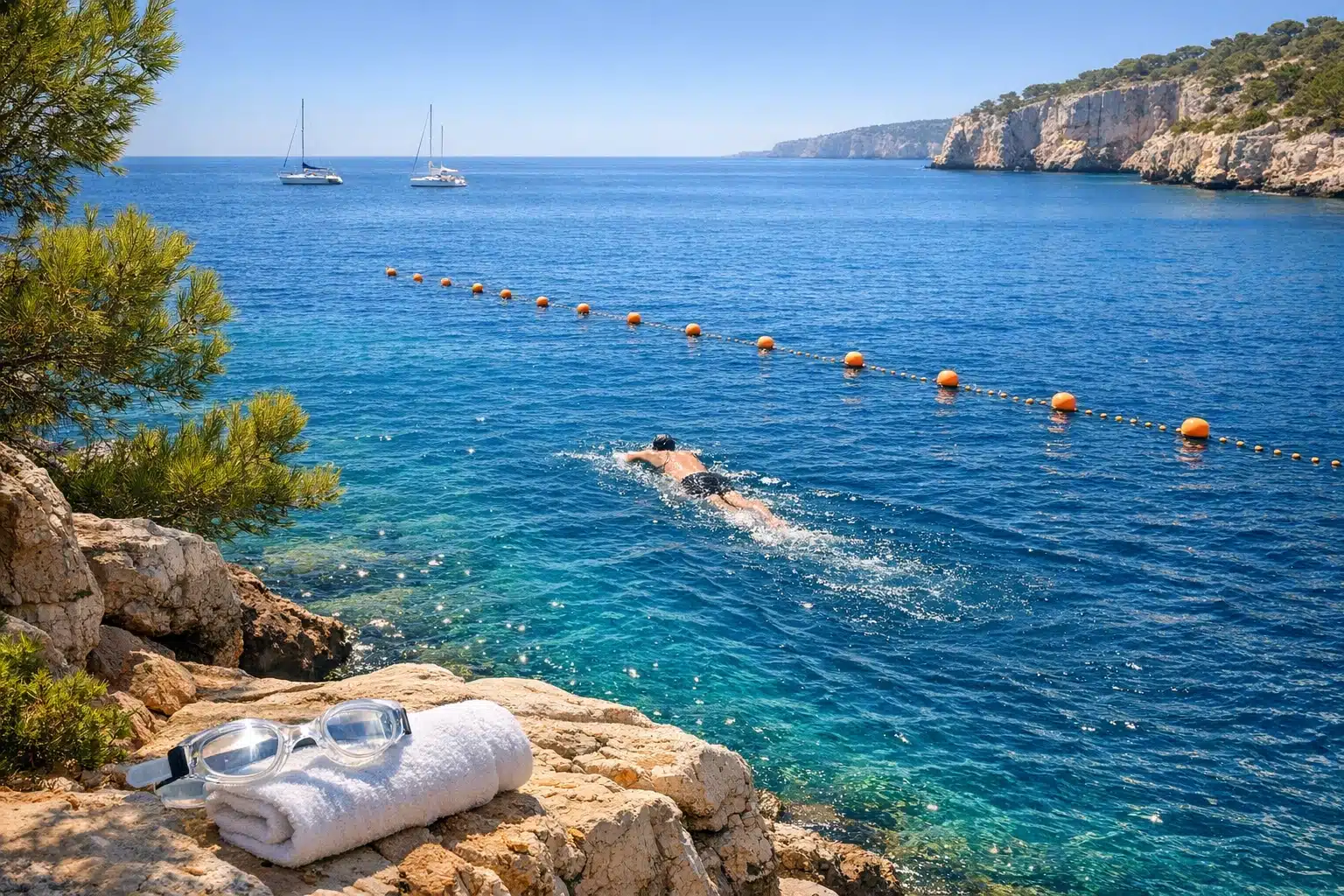
Explore the world of swimming
Swimming is one of the rare activities that can feel playful on the surface while quietly training nearly the whole body underneath. It matters because it combines movement, breath control, safety skills, and mental reset in a single practice that works for children, adults, athletes, and older people alike. Whether you enter the water for fitness, recovery, competition, or simple joy, swimming stays relevant because it is adaptable, efficient, and deeply human.
Outline: This article first looks at why swimming holds a special place among sports and daily life. It then examines the physical and mental benefits that make it more than just a leisure activity. Next, it compares the main strokes and core techniques that shape efficient movement in the water. After that, it covers safety, gear, and training habits that help swimmers progress with confidence. Finally, it closes with a practical conclusion for readers who want to make swimming part of their routine.
Swimming as a Universal Skill, Sport, and Source of Joy
Swimming occupies an unusual place in human life because it is both practical and expressive. On one level, it is a survival skill. Knowing how to float, tread water, and move toward safety can reduce risk in pools, lakes, rivers, and coastal areas. On another level, swimming is a sport with world records, elite coaching, strict technique, and finely measured performance. Yet it is also recreation: the easy back-and-forth in a community pool, the laughter of children learning to kick, the calm glide of an adult who uses the water to clear a crowded mind after work. Few activities stretch across so many purposes without losing their identity.
Part of swimming’s appeal comes from the environment itself. Water changes the rules. Movements feel slower, heavier, smoother, and more deliberate than they do on land. Because water is far denser than air, every action meets resistance. That means a small adjustment in hand position, head angle, or body alignment can noticeably change speed and effort. In that sense, swimming is a conversation with physics. The pool gives instant feedback, honest and cool.
Compared with many land-based sports, swimming is also unusually inclusive. A teenager training for competition, an older adult managing joint discomfort, and a person recovering after injury may all use the same lane at different times for very different goals. Running often places repeated impact on the hips, knees, and ankles. Swimming, by contrast, supports the body with buoyancy, which can reduce stress on weight-bearing joints while still demanding strong muscular effort and cardiovascular work. That does not make swimming easy; it simply makes the challenge different.
Its forms are equally varied. Some people love the predictable geometry of lap swimming. Others prefer open water, where every session feels a little more like a short expedition. A lake can seem like a sheet of glass at sunrise, while the sea introduces currents, waves, sighting, and a healthy respect for changing conditions. Competitive swimming adds another dimension through races, turns, pacing, and team culture.
Several factors explain why swimming remains relevant across generations:
• it teaches water competence and safety;
• it serves both health and performance goals;
• it can be social, solitary, playful, or highly disciplined;
• it adapts well to different ages and ability levels.
That range is rare. Many sports ask people to fit one narrow mold. Swimming does the opposite: it meets people where they are, then quietly invites them to go a little farther.
The Physical and Mental Benefits of Swimming
Swimming is often praised as “good exercise,” but that phrase can sound vague unless we unpack what it really means. At a physical level, swimming trains the cardiovascular system by asking the heart and lungs to supply oxygen during sustained effort. A steady lap session can improve endurance, while intervals and faster repeats can raise intensity and challenge aerobic capacity. Because the water supports body weight, swimmers can work hard without the same pounding that commonly comes with running or jumping-based sports. This is one reason aquatic exercise is often recommended as an option for people who want movement with less joint impact.
The body benefits are broad rather than isolated. Freestyle and backstroke recruit the shoulders, back, core, hips, and legs in coordinated patterns. Breaststroke emphasizes timing, glide, and leg drive in a different way. Butterfly is famously demanding because it requires rhythm, strength, and strong trunk control. Even easy swimming calls for posture, balance, and breath management. Water resistance turns the pool into a full-body training space without the need for machines. It is not the same as strength training with heavy loads, but it does build muscular endurance and movement control.
Swimming may also help people meet general activity goals. Health authorities such as the World Health Organization recommend regular moderate or vigorous physical activity for adults across the week. Swimming can contribute meaningfully to those targets while also keeping training varied and enjoyable. That matters because consistency usually matters more than any single “perfect” workout.
The mental side deserves equal attention. Many swimmers describe a shift in mood after entering the water. There are practical reasons for this. Rhythmic breathing, repeated motion, and sensory separation from everyday noise can create a calming effect. A lane line narrows the world in a useful way. The mind stops hopping from notification to notification and begins counting strokes, lengths, or breaths instead. For some people, that feels meditative. For others, it is simply the rare pleasure of being fully occupied.
Swimming can support well-being in several interconnected ways:
• it provides structured exercise that is easier on many joints;
• it develops endurance, coordination, and breath control;
• it offers routine, which can improve motivation and stress management;
• it can be scaled from gentle recovery sessions to demanding training sets.
There are limits, of course. Shoulder overuse can become an issue when technique is poor or volume rises too quickly. Pool access, cost, and confidence in the water can also affect participation. Still, the overall case for swimming is strong. It is one of the few activities that can help someone build fitness, reduce stress, and develop a practical life skill at the same time. That combination gives it unusual staying power.
Understanding the Main Strokes and the Technique Behind Efficient Movement
To watch skilled swimmers is to see economy in action. The body appears calm even when the effort is intense. That calm is not accidental. Swimming rewards technique so strongly that a less fit swimmer with better form can often move more efficiently than a stronger swimmer who fights the water. Before comparing strokes, it helps to understand the central idea behind all of them: reduce drag while producing purposeful propulsion. In simple terms, a swimmer moves better when the body stays long, balanced, and aligned, and when the hands, arms, and legs push water in useful directions rather than making frantic noise.
Freestyle, often called front crawl, is usually the fastest and most efficient stroke for distance in competition and fitness swimming. The flutter kick is continuous, the arm recovery happens over the water, and side breathing allows a rhythm that can be sustained for many lengths. Good freestyle depends on body rotation, a relaxed but high elbow catch, and a head position that does not lift unnecessarily. Beginners often kick too hard, lift the head too much, or rush the arms. The result is extra drag and early fatigue.
Backstroke shares some structural similarities with freestyle but changes orientation and breathing demands. Because the face stays above the water, breathing is less restrictive, yet alignment becomes tricky. Hips can sink if core tension fades. Backstroke is valuable for balance in training because it opens the chest and works the posterior chain differently from freestyle.
Breaststroke is slower but technically rich. It uses a pull, breath, kick, and glide sequence that relies heavily on timing. Many casual swimmers enjoy it because the forward view feels comfortable and the pace is manageable. However, efficient breaststroke is more complex than it looks. A wide or mistimed kick wastes energy quickly. When done well, it resembles a smooth compression and release, almost like folding and unfolding through the water.
Butterfly is the most dramatic of the four competitive strokes. It requires simultaneous arm action, a dolphin kick, strong trunk coordination, and carefully timed breathing. Butterfly is often the least economical for beginners because mistakes cost a lot of energy. Still, elements of butterfly can improve body wave awareness and power even for swimmers who do not race it often.
A few technique principles matter across all strokes:
• streamline off the wall reduces free speed loss;
• exhaling into the water makes breathing smoother;
• body balance matters as much as raw effort;
• stroke count can reveal efficiency better than speed alone in easy practice.
Swimming technique is humbling because the water exposes haste and rewards patience. A good session is not always the one with the fiercest effort. Sometimes it is the one where a swimmer finally feels the catch connect, the kick settle, and the body slide forward as if the pool has briefly agreed to cooperate.
Safety, Training Habits, and the Gear That Supports Progress
For all its beauty, water deserves respect. Swimming is safest and most rewarding when skill grows alongside awareness. This begins with basic water competence: knowing how to enter safely, float, recover breathing, tread water, and move to an exit. These may sound elementary, but they matter far beyond beginner lessons. Even confident swimmers can become vulnerable in unfamiliar settings, cold water, rough surf, or crowded open-water events. Pool ability does not automatically equal open-water readiness.
Safety also depends on context. In supervised pools, swimmers benefit from lifeguards, lane etiquette, clear depth markings, and predictable conditions. Open water introduces different variables: temperature shifts, visibility, currents, boat traffic, and navigation. A strong pool swimmer may be surprised by the mental demands of not seeing a black line under the body. Sighting ahead, staying calm when bumped by chop, and managing direction become part of the skill set. For that reason, beginners in open water should ideally swim with experienced partners, use visible safety equipment where appropriate, and choose managed locations.
Training habits matter just as much as courage. Many people improve faster by swimming with structure rather than simply accumulating random lengths. A balanced session might include a warm-up, a drill set, a main set, and an easy cool-down. For example, a swimmer could do easy laps to settle in, technique drills to refine body position, several moderate repeats with rest intervals, and a gentle finish. This approach builds skill and fitness together instead of treating them as separate goals.
Gear should support learning, not replace it. The basics are simple: a well-fitting swimsuit, goggles that seal comfortably, and a cap if desired or required. Beyond that, tools can be useful when used with intention:
• kickboards isolate lower-body work but should not dominate every session;
• pull buoys help focus on upper-body mechanics and body line;
• fins can improve body position and ankle feel, though overuse may hide technique flaws;
• pace clocks or waterproof watches help measure rest and consistency.
Another overlooked aspect of safe, sustainable progress is recovery. Shoulders, neck, and lower back can become irritated when swimmers add distance too quickly or repeat poor mechanics under fatigue. Short mobility work, gradual volume increases, and occasional technique feedback can prevent many common issues. Chlorinated pools may also affect skin, hair, or eyes for some people, making rinsing and basic post-swim care worthwhile.
Swimming rewards patience. The person who trains with awareness, respects conditions, and builds habits carefully often improves more steadily than the person who attacks every session as a test. In the water, control is not the opposite of ambition. It is usually the road that leads there.
Conclusion for New Swimmers, Returning Adults, and Curious Athletes
If you are reading this as a beginner, the most important message is simple: you do not need to look graceful on day one to belong in the water. Swimming has a steep learning curve for many adults because breathing, balance, and coordination must all develop together. That can feel awkward at first. The good news is that progress is often dramatic once the basics click. A small improvement in exhaling underwater, relaxing the neck, or holding a longer body line can make the next session feel completely different. In swimming, tiny technical gains often create big practical rewards.
If you are returning after years away, approach the pool with patience instead of nostalgia. Former swimmers are sometimes tempted to compare every lap with what they could do in school or during earlier training years. A better approach is to build from the present. Start with manageable sessions, emphasize comfort and rhythm, and let confidence return through repetition. Endurance comes back more reliably when you avoid turning every workout into a private argument with your past self.
If you already train in other sports, swimming can broaden your athletic range. Runners may appreciate its low-impact conditioning. Cyclists can use it for active recovery and breathing discipline. Team-sport athletes often benefit from the body awareness and shoulder endurance it develops. Even strength-focused exercisers can find value in the way swimming teaches coordinated movement under continuous resistance.
For most readers, the smartest path forward looks like this:
• learn or refresh essential water safety skills;
• choose a realistic schedule, even if it begins with one or two sessions a week;
• focus on technique before chasing distance or speed;
• use lessons, coaching, or video feedback if you feel stuck;
• keep the experience enjoyable enough that you want to return.
That last point matters more than it may seem. The best exercise plan is rarely the most intense one on paper. It is the one you can sustain in real life. Swimming offers several doors into that sustainability: health, stress relief, recreation, competition, family time, and simple curiosity. Some people arrive wanting a workout and discover calm. Others come for fun and end up building serious fitness. Either route is valid.
So the invitation is clear. Step toward the water with respect, openness, and a willingness to learn. Whether your goal is safety, strength, recovery, or the quiet pleasure of moving through a blue lane while the world briefly fades, swimming has room for you. And once it becomes part of your routine, it often feels less like a task and more like returning to a place your body understands.