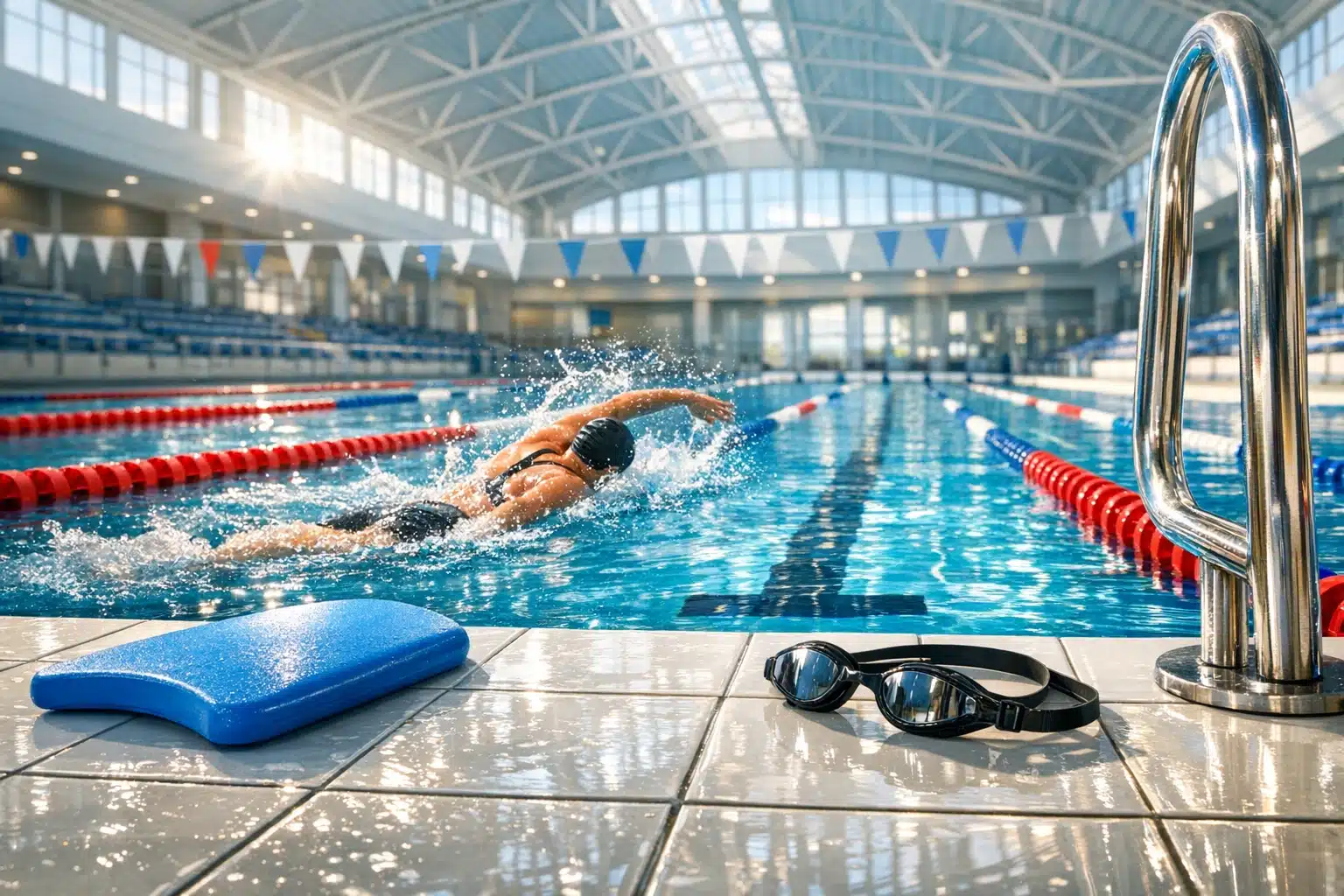
Explore the world of swimming
Swimming is one of those rare activities that feels playful and purposeful at the same time, welcoming beginners, athletes, children, and older adults into the same blue space. It builds endurance, strength, and confidence while placing less stress on joints than many land-based workouts. Beyond fitness, it teaches water safety, sharpens discipline, and opens doors to recreation, travel, and competition. That mix of health, skill, and simple joy makes swimming relevant far beyond the pool deck.
Outline
- Why swimming matters for health, safety, and everyday life
- The main strokes and how technique shapes efficiency
- How beginners and experienced swimmers can train effectively
- The differences between pool swimming, open water, and competitive formats
- A practical conclusion for readers who want to start or return to swimming
Why Swimming Matters for Health, Safety, and Everyday Life
Swimming stands out because it is both a form of exercise and a life skill. Many activities improve fitness, but relatively few can also increase personal safety in a meaningful way. Learning how to float, breathe calmly, and move through water can reduce panic and build confidence in pools, lakes, rivers, and coastal environments. For children, this can be an important part of early physical education. For adults, especially those who did not grow up around water, swimming lessons can open a door that once seemed closed.
From a health perspective, swimming contributes to the same broad goals recommended in public health guidance for regular physical activity. Adults are commonly advised to accumulate at least 150 minutes of moderate aerobic movement per week, and swimming can help meet that target while working large muscle groups across the body. Arms pull, legs kick, the core stabilizes, and the lungs adapt to controlled breathing patterns. Unlike some high-impact exercises, water supports the body and reduces strain on joints, which makes swimming attractive for people recovering from injury, older adults, and those seeking a lower-impact way to stay active.
The physical benefits are only part of the picture. Swimming can be mentally restorative. The steady rhythm of strokes, the sound of water, and the narrow focus on breathing often create a meditative effect. For some people, the pool is a training ground. For others, it is a quiet reset button at the end of a noisy day. Research on exercise and mental well-being consistently shows that movement can support mood and reduce stress, and swimming often adds an extra layer of calm because the environment feels separate from the rush of daily life.
Its versatility is another reason it matters. Swimming can be adapted to many goals:
- General fitness through lap swimming
- Rehabilitation and low-impact conditioning
- Skill development for water safety
- Recreation during holidays and family outings
- Serious competition from local meets to elite events
There is also a social side that should not be overlooked. Swim clubs, community pools, school programs, and masters groups create spaces where people train together across generations. A fast swimmer and a cautious beginner may share the same pool, each working toward different milestones. In that sense, swimming is less like a single doorway and more like a long shoreline, offering many points of entry. Whether the goal is better health, confidence in deep water, or simply the pleasure of moving smoothly from one end of the pool to the other, swimming remains one of the most useful and enduring activities a person can learn.
Understanding the Main Strokes and the Mechanics Behind Them
To an observer, swimming can look graceful and almost effortless, but efficiency in the water depends on technique more than brute force. Water is far denser than air, so small errors in body position create drag quickly. This is why skilled swimmers often appear calm even when moving fast. They are not fighting the water as much as working with it. Understanding the four main competitive strokes helps explain how swimming combines mechanics, timing, and rhythm.
Freestyle, usually swum as front crawl, is the fastest and most commonly used stroke for fitness training. The swimmer stays streamlined, rotates slightly through the torso, and combines alternating arm recovery with a flutter kick. Breathing happens to the side, ideally without lifting the head too high, because head movement can cause the hips to sink. Freestyle is efficient, adaptable, and often the first stroke people use for lap swimming.
Backstroke shares some of freestyle’s alternating rhythm, but the swimmer lies on the back and keeps the face above water. This makes breathing simpler for beginners, although orientation can be tricky because the swimmer cannot see the wall clearly while moving. Backstroke encourages good body alignment and shoulder mobility, and it can feel surprisingly freeing once a swimmer learns to trust the water beneath them.
Breaststroke is slower but highly distinctive. It uses a simultaneous arm pull and a whip-like kick, followed by a glide. Timing is everything. When the pull, breath, kick, and glide line up, breaststroke becomes economical and smooth. When they do not, the swimmer loses momentum quickly. Many recreational swimmers enjoy breaststroke because the head can rise forward more naturally, though strong technique still matters for comfort and efficiency.
Butterfly is often seen as the most demanding stroke. Both arms recover together, the body undulates, and the dolphin kick drives the motion. It requires power, coordination, and timing, but it is not simply a stronger version of the other strokes. Butterfly rewards rhythm. When done well, it looks like a wave moving with intention rather than a person forcing their way through water.
A useful way to compare the strokes is to think about their strengths:
- Freestyle: fastest, efficient, ideal for conditioning
- Backstroke: breathing ease, posture awareness, balanced rotation
- Breaststroke: controlled pace, distinct timing, approachable for many learners
- Butterfly: powerful, technical, highly demanding on coordination and stamina
Across all strokes, several fundamentals remain constant: a long body line, controlled breathing, purposeful kicks, and an understanding of when to relax. New swimmers often assume improvement comes mainly from trying harder. In reality, progress usually comes from reducing wasted motion. A better hand entry, a steadier exhale underwater, or a cleaner push off the wall can make a surprising difference. Swimming technique is a quiet teacher. It exposes impatience immediately, but it also rewards attention with speed, comfort, and confidence.
How to Learn, Train, and Improve in the Water
Learning to swim and training well are related, but they are not exactly the same. A beginner needs comfort, breath control, and trust in the water before worrying about pace. An experienced swimmer, on the other hand, may focus on split times, stroke count, or aerobic thresholds. Both stages matter, and both improve faster with structure than with random effort.
For true beginners, the first milestones are often simple but important: putting the face in the water, exhaling steadily, floating on front and back, and moving a short distance without panic. These are not minor steps. They are the foundation of water confidence. Many instructors begin with supported drills because confidence grows through repeated success. Once a swimmer can float, glide, and breathe with some control, stroke learning becomes far more manageable.
More experienced swimmers benefit from sessions built around specific goals rather than endless, unplanned lengths. A balanced workout often includes:
- A warm-up to raise body temperature and loosen movement
- Technique drills that sharpen mechanics
- Main sets for endurance, speed, or pacing
- Recovery swimming to lower intensity gradually
For example, a fitness-focused session might include easy freestyle, kick drills with a board, a moderate main set broken into intervals, and a short cool-down. A competitive swimmer may organize the same hour very differently, using stricter interval times, targeted stroke sets, and race-pace efforts. The principle is the same: training improves when each part has a job to do.
Equipment can help, but it should support skill rather than replace it. Goggles improve visibility and comfort. A kickboard isolates leg work. Pull buoys reduce leg involvement so swimmers can focus on the upper body and alignment. Fins can help develop ankle flexibility and body position, especially for some drills. Pace clocks or waterproof watches allow swimmers to monitor rest and effort. None of these tools creates technique on its own, but each can make practice more precise.
Improvement also depends on recovery and consistency. Swimming may feel gentle compared with some land sports, yet regular sessions still challenge muscles, shoulders, and the cardiovascular system. Gradual progression matters. Jumping from one casual swim per week to intense daily training can lead to fatigue or overuse discomfort. It is often smarter to build frequency first, then intensity, then complexity.
One of the most valuable habits in swimming is keeping a training mindset that mixes curiosity with patience. Progress rarely arrives in a straight line. One week your breathing feels easy; the next week your turns fall apart. That is normal. Water has a way of revealing small weaknesses, but it also rewards disciplined practice. A swimmer who pays attention to body position, breathing patterns, and repeatable routines will usually improve more steadily than someone who relies only on effort. In the pool, consistency is the quiet engine behind visible change.
Pool Swimming, Open Water, and the Many Faces of the Sport
When people hear the word swimming, they often picture a lane pool with black lines on the floor and a clock on the wall. That image is accurate, but it is only one part of a much broader world. Swimming includes structured lap sessions, school lessons, club training, open-water adventures, masters programs, and elite competitions viewed around the globe. The environment shapes the experience dramatically, and understanding those differences helps readers see why swimming appeals to such a wide range of personalities.
Pool swimming is predictable in the best possible way. Distances are known, walls provide natural rest points, and lane etiquette creates order. In a standard short-course pool, a lap is often measured at 25 meters or yards, while Olympic competition uses 50-meter pools. This controlled setting is ideal for learning technique, tracking fitness, and measuring improvement over time. A swimmer can count strokes, record interval times, and repeat sets under nearly identical conditions. For people who like routine and visible progress, the pool offers a clear framework.
Open-water swimming is almost the opposite. Lakes, rivers, and oceans introduce variables that pools remove: currents, waves, temperature shifts, visibility changes, and navigation challenges. That unpredictability is part of the appeal. Instead of following a line on the floor, the swimmer lifts the head periodically to sight landmarks or buoys. Instead of flip turns every few seconds, there is continuous motion and a stronger sense of journey. Many swimmers describe open water as expansive and humbling. The horizon feels wide, the pace becomes intuitive, and the experience is shaped by nature as much as by training.
These two settings demand different skills:
- Pool swimming emphasizes precision, pacing, and repeatable training
- Open water emphasizes adaptability, awareness, and navigation
- Pool sessions are easier to monitor closely
- Open-water swims require stricter safety planning and environmental judgment
Competitive swimming adds another layer. Races range from sprint events, where starts and turns are decisive, to longer distances that test pacing and efficiency. Relay events introduce teamwork, while medley races reward versatility across strokes. Beyond elite competition, community meets and masters events give adults the chance to pursue performance goals without needing to be professionals. This matters because sport often appears narrow from the outside, as if only the fastest participants belong. Swimming tells a different story. A lane can hold ambition, rehabilitation, stress relief, and simple enjoyment all in the same hour.
Safety remains essential in every format. Open water should never be treated casually, and even strong pool swimmers need to respect unfamiliar conditions. Checking weather, swimming with organized groups, using visible safety equipment when appropriate, and knowing personal limits are basic precautions, not optional details. In the end, the many forms of swimming all return to the same core idea: moving through water with awareness, skill, and purpose. Whether the setting is a bright indoor pool or a quiet lake at sunrise, swimming asks the body to adapt and the mind to stay present.
Conclusion for New and Returning Swimmers
If you are new to swimming, or if you are coming back after years away, the most useful idea to remember is that progress in water does not have to be dramatic to be meaningful. Your first win may be as small as exhaling without tension, floating without fear, or finishing a few lengths with steadier breathing. Those moments count. They are not side notes before the real achievement. They are the real achievement, because they build the trust and technique that make everything else possible.
Swimming offers unusual value for modern readers because it meets several needs at once. It can improve fitness, support joint-friendly movement, teach practical safety, and create space for mental reset. It can also grow with you. A child may start with splashy confidence-building games. A teenager may discover team training and competition. An adult may use the pool for stress relief after work. Later in life, swimming may remain one of the most comfortable ways to stay active. Very few activities travel with a person so well across different seasons of life.
For readers deciding where to begin, a simple approach is often best:
- Start with lessons if water confidence is limited
- Choose one or two sessions per week before adding more
- Focus on technique before chasing distance or speed
- Use comfortable gear such as well-fitted goggles and a suitable swimsuit
- Track small improvements to stay motivated
It also helps to set a purpose. You do not need an elite goal, but you do need a reason that feels real to you. Maybe you want better endurance, safer family holidays around water, a low-impact workout, or a new challenge that pulls you away from screens and schedules. Purpose creates consistency, and consistency is what turns awkward practice into natural movement.
There is something quietly compelling about swimming because water gives immediate feedback. Rush, and you feel resistance. Settle into rhythm, and the body begins to glide. That lesson extends beyond sport. It suggests that progress often comes not from forcing harder, but from learning better. For the target audience of this article, whether you are curious, cautious, or already enthusiastic, swimming is worth exploring because it combines utility with enjoyment in a rare way. Step into the water with patience, learn the basics well, and let improvement build length by length. The pool does not ask for perfection on day one. It asks only that you begin.