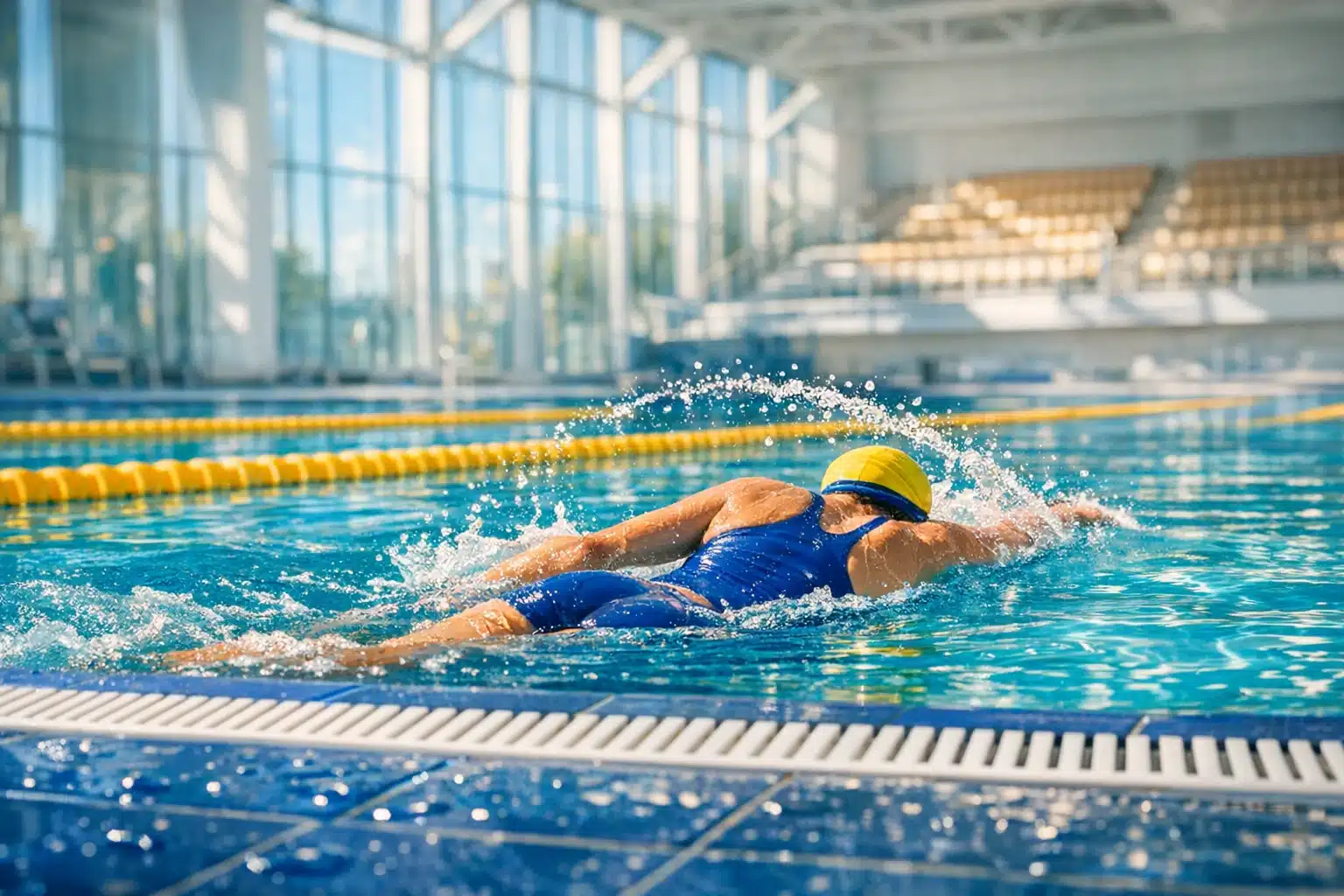
Explore the world of swimming
Swimming is one of those rare activities that feels playful on the surface yet trains almost every system in the body below it. It helps children build confidence, gives adults a low-impact way to stay active, and offers older swimmers movement with less pounding on the joints. Whether practiced in a neighborhood pool, a quiet lake, or a fast competition lane, it remains relevant because it combines fitness, safety, technique, and simple enjoyment.
Outline: This article explores swimming from five practical angles: its broader value as a life skill and sport, its physical and mental benefits, the differences between the main strokes, the essentials of training and safety, and finally how readers can make swimming a realistic long-term part of their lives.
Swimming as a Skill, Sport, and Everyday Lifesaver
Swimming occupies a special place among physical activities because it is not only a sport but also a life skill with direct real-world importance. A person can enjoy football without ever needing it outside the field, but the ability to move confidently in water can become useful in leisure settings, travel, emergency situations, and family life. This gives swimming a practical relevance that goes beyond medals, fitness goals, or weekend recreation. In many parts of the world, children are encouraged to learn to swim early because water is part of normal life, whether that means beaches, rivers, lakes, or public pools. Even when swimming is learned later, the skill often brings a new sense of freedom.
Historically, swimming has been part of human culture for thousands of years. Ancient civilizations used it for military training, survival, and exercise, and today it appears in schools, health clubs, rehabilitation centers, and elite sporting events. That wide range matters. Swimming can be taught in a highly structured way, but it can also remain simple: learning to float, tread water, breathe calmly, and travel from one side of a pool to the other. For some people, that first unbroken length feels as dramatic as crossing a small ocean. The blue tiles seem to stretch forever until, suddenly, they do not.
What makes swimming especially accessible is its flexibility. It can be competitive, social, therapeutic, or solitary depending on the setting and the swimmer’s goals. Someone may train for a triathlon, another may use aqua exercise for joint comfort, and another may simply want to feel safe taking their children to the seaside. Swimming also works across age groups in a way few sports do. Children can learn basic water skills, teenagers can build endurance, adults can use it for exercise, and older people often find it one of the most manageable forms of movement.
Its value can be understood through several practical roles:
• It builds water confidence and supports personal safety.
• It offers a full-body workout without the heavy impact of land sports.
• It creates opportunities for competition, recreation, and rehabilitation.
• It can be adapted for beginners, casual exercisers, and high-level athletes alike.
Because of this range, swimming remains relevant in schools, fitness culture, and public health conversations. It is one of the few activities that can be playful on a summer afternoon and deeply serious in an emergency. That combination is precisely why swimming deserves more attention than it sometimes receives. It is not just about moving through water; it is about learning control in an environment that demands respect, patience, and awareness.
The Physical and Mental Benefits of Swimming
Swimming is often described as a full-body workout, and that description is accurate for a simple reason: water resists movement in every direction. On land, gravity is the main force you constantly fight against. In water, resistance surrounds the body, so nearly every stroke asks muscles to pull, stabilize, rotate, and recover. The shoulders, back, chest, core, hips, and legs all contribute, while the heart and lungs work steadily to keep the motion going. For people who want exercise that feels demanding without being punishing, this balance is one of swimming’s strongest advantages.
From a cardiovascular perspective, swimming can help improve endurance and support heart health when practiced consistently. Public health guidance from organizations such as the World Health Organization recommends regular moderate or vigorous activity for adults, and swimming can contribute meaningfully to those targets. Depending on pace, stroke, and body size, an hour of swimming may burn several hundred calories, often somewhere in the broad range of about 400 to 700 calories. The exact number varies, but the larger point is more important: swimming can be scaled. Gentle laps can suit recovery or beginners, while interval sets can challenge highly trained athletes.
Its low-impact nature is another major benefit. Because buoyancy reduces the stress placed on joints, many people who struggle with running or high-impact classes find swimming more manageable. This is why swimming and water-based exercise are often recommended in rehabilitation settings, especially for people managing arthritis, post-injury rebuilding, or reduced mobility. That said, low impact does not mean low effort. A technically sound set of laps can leave even strong athletes pleasantly drained.
The mental side deserves equal attention. Many swimmers describe the sport as calming because the rhythm of breathing and movement narrows mental clutter. The soundscape is distinctive: splash, exhale, turn, glide, repeat. That repeated cycle can feel almost meditative. Research on exercise more broadly shows that regular physical activity is linked with improvements in mood, stress management, and sleep quality, and swimming fits naturally into that picture.
Some of the most meaningful benefits include:
• Cardiovascular conditioning without constant pounding on the body.
• Muscle engagement across the upper body, core, and lower body.
• Improved breath control and body awareness.
• A potentially calming routine that can reduce stress after a demanding day.
For beginners, the benefits may first appear as simple wins: climbing stairs without getting winded, feeling looser through the back and shoulders, or sleeping more soundly after an evening session. For experienced swimmers, the gains become more technical and performance-based. Either way, swimming offers something refreshingly honest: the water gives back exactly what you put into it, no more and no less.
Understanding the Main Strokes and the Mechanics Behind Them
To watch skilled swimmers is to see four distinct conversations with the water: freestyle, backstroke, breaststroke, and butterfly. Each stroke has its own rhythm, body position, and energy demand, and understanding the differences helps beginners choose where to start while giving more experienced swimmers a language for improvement. Although all four are used in competition, they also serve different practical purposes in training and recreation.
Freestyle, usually performed as the front crawl, is the fastest and most commonly taught stroke for lap swimming. The body stays as long and streamlined as possible while the arms alternate in a continuous pulling pattern and the legs maintain a flutter kick. Efficient freestyle depends less on thrashing effort than many new swimmers think. The real priorities are body alignment, rotation through the torso, a relaxed recovery, and controlled breathing. A swimmer who lifts the head too high to breathe often creates drag and sinks the hips, which makes the stroke harder than it needs to be.
Backstroke shares some similarities with freestyle, especially in the alternating arm action and flutter kick, but it is performed on the back. Because the face remains above water, many learners find breathing easier, though staying straight in the lane can be tricky. Backstroke encourages awareness of body position and is often useful for balancing training because it opens the chest and works the upper back differently.
Breaststroke is slower for most swimmers but highly recognizable. Its pull, breath, kick, and glide happen in a more deliberate sequence. Timing is crucial. Done well, breaststroke feels smooth and economical; done poorly, it can feel like constantly stopping and starting. Many recreational swimmers enjoy it because the forward view feels less intense than freestyle, though the kick can place stress on the knees if technique is weak.
Butterfly is the most demanding of the four for most people. It uses a simultaneous arm recovery and a dolphin kick driven by a wave-like motion through the body. When executed cleanly, it is beautiful and powerful. When rushed, it becomes exhausting almost instantly. Butterfly rewards coordination and strength but punishes tension.
A simple comparison helps clarify their roles:
• Freestyle: fastest, efficient, ideal for endurance and general lap swimming.
• Backstroke: useful for posture variety and easier face-up breathing.
• Breaststroke: measured pace, technical timing, popular in recreational settings.
• Butterfly: powerful and advanced, demanding on strength and rhythm.
Across all strokes, a few mechanics matter repeatedly: a stable body line, efficient kicking, controlled breathing, and a feel for the water. That last phrase may sound poetic, but it is practical. Good swimmers learn to sense pressure against the palms and forearms, to hold water rather than slap at it, and to move with less wasted motion. Technique turns swimming from struggle into flow, and that transformation is often what keeps people coming back.
Training, Equipment, and Water Safety for Beginners and Improvers
Swimming rewards structure. Many people start by jumping into a pool and trying to swim until they are tired, but progress usually comes faster when sessions have a purpose. A balanced practice might include a short warm-up, a technique-focused section, a main set for endurance or speed, and a cooldown. This approach helps swimmers develop skill as well as fitness. Technique matters especially in swimming because poor habits can waste energy quickly. A runner can sometimes push through messy form for a while; in water, small inefficiencies add up fast.
Beginners often benefit from drills that isolate specific actions such as kicking on a board, side breathing practice, or one-arm freestyle. More experienced swimmers may use interval training, timing sets, or stroke-count work to improve efficiency. A sample beginner session could be straightforward: 200 meters easy, 4 x 25 meters kick, 6 x 50 meters freestyle with rest, then 100 meters relaxed. A more advanced swimmer might build a session around threshold sets, sprint repeats, or mixed-stroke training. The principle is the same in both cases: swim with intention rather than drifting through random laps.
Equipment can help, but it should support learning rather than replace it. Common gear includes goggles, a comfortable swimsuit, and a swim cap where needed. Training tools such as pull buoys, kickboards, fins, paddles, and snorkels can be useful when applied thoughtfully. For example, fins can help beginners feel body position and kicking rhythm, while a pull buoy allows swimmers to focus on arm mechanics. Still, no tool can substitute for patient technical work.
Water safety is non-negotiable. Confidence is valuable, but overconfidence creates risk. Swimmers should understand the environment they are entering, especially outside the pool. Open water introduces variables such as current, waves, changing temperature, limited visibility, and fatigue that feels very different from pool exertion. A person who is comfortable swimming laps indoors may still be unprepared for a lake or sea swim.
Key safety habits include:
• Never assuming that basic swimming ability equals open-water readiness.
• Paying attention to lifeguard instructions, lane rules, and weather conditions.
• Avoiding solo swims in unfamiliar open water.
• Using bright caps, tow floats, or supervised settings when swimming outdoors.
• Stopping immediately if dizziness, cramping, or unusual breathlessness appears.
Pool etiquette matters too. Circle swimming, resting at the wall without blocking turns, and choosing a lane that fits your pace make the experience better for everyone. In the end, solid training and safety awareness belong together. One builds performance; the other protects the person doing the work. The smartest swimmers take both seriously.
Conclusion: How to Make Swimming a Lasting Part of Your Life
For readers wondering whether swimming is worth the time, the most useful answer is practical rather than dramatic: it offers a rare mix of exercise, skill, safety, and enjoyment that can stay relevant for decades. That makes it valuable for several audiences at once. Beginners can treat it as a fresh start in fitness. Parents can view it as a sensible life skill for their children. Busy adults can use it as efficient training. Older readers can see it as a sustainable form of movement that respects the joints while still asking the body to work.
The best way to make swimming stick is to remove unnecessary friction. Start with an achievable goal instead of an ambitious fantasy. One person may aim to swim twice a week for twenty minutes. Another may want to learn freestyle breathing without panic. Someone returning after years away might simply focus on comfort in the water. Small, clear goals create momentum because they let progress become visible. That first calm exhale underwater, that first uninterrupted set of laps, that first session where the body stops fighting the water and begins to travel through it with ease—those moments matter.
Consistency also grows when variety is built in. Not every session has to be a hard workout. A good long-term approach might include:
• One technique-focused swim each week.
• One endurance or fitness session.
• One lighter swim for recovery, enjoyment, or mixed strokes.
Tracking helps as well. Swimmers can note distance, time, rest intervals, or simply how the session felt. Patterns emerge quickly. You may discover that morning swims sharpen your day, or that a short evening session helps release stress better than another hour in front of a screen. Progress in swimming is not always loud. Sometimes it appears quietly in smoother breathing, better posture, deeper sleep, or greater confidence around water.
For the target audience of this article, the central takeaway is straightforward. You do not need to be fast, competitive, or technically polished to gain real value from swimming. You only need a safe setting, a willingness to learn, and enough patience to let skill develop. Swimming can begin as a practical lesson, become a health habit, and eventually turn into something many people come to cherish: a reliable space where effort, rhythm, and focus meet. In a noisy world, that is no small gift.