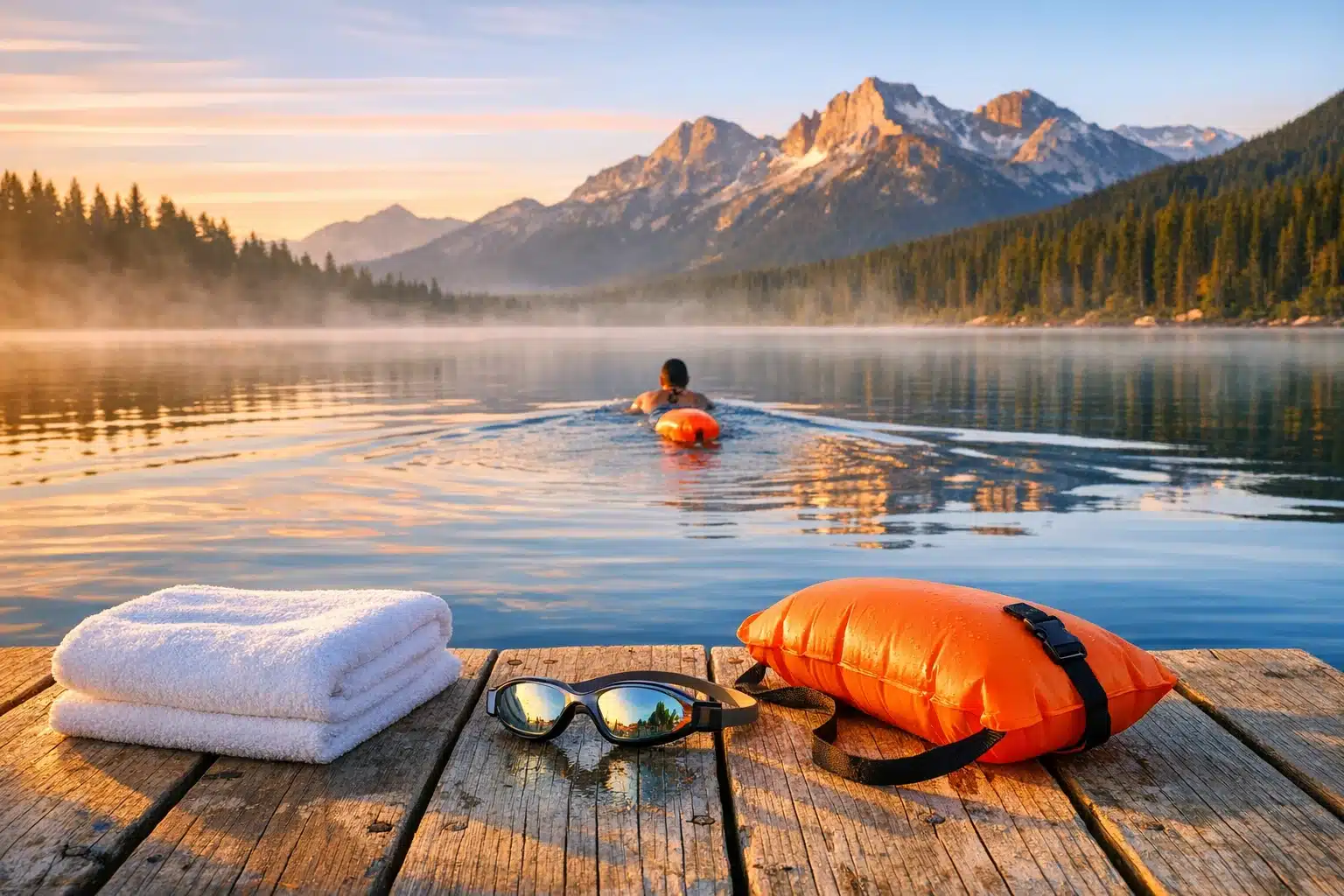
Explore the world of swimming
Swimming sits at a rare crossroads: it is a life skill, a sport, a form of exercise, and for many people a moving kind of quiet. Step into the water and ordinary motion changes; gravity softens, sound dulls, and every breath suddenly matters. That is why swimming stays relevant across ages and cultures, from children learning safety basics to adults seeking low-impact training and athletes chasing fractions of a second. This article explores how swimming works, why it benefits the body and mind, and how anyone can approach it with more confidence.
Outline
This article moves through five main areas to build a practical, well-rounded view of swimming.
- The value of swimming for health, safety, and everyday well-being
- The main strokes and the technique principles that shape efficient movement
- The differences between pools, lakes, and oceans, along with essential gear
- How swimmers learn, train, and stay safe while improving steadily
- The wider culture of swimming, from recreation and rehabilitation to competition and lifelong participation
Why Swimming Matters: Health, Safety, and Everyday Relevance
Swimming matters for a simple reason: it combines usefulness and enjoyment in a way few activities can match. At the most basic level, it is a safety skill. Knowing how to float, tread water, control breathing, and move toward an exit can reduce panic in an emergency and expand confidence around water. That practical value alone gives swimming a place in childhood education and adult learning. Yet swimming is far more than a protective skill tucked away for rare situations. It is also a form of exercise that can support cardiovascular health, muscular endurance, mobility, and stress relief without the repetitive impact that often comes with running or court sports.
Water changes the rules of movement. Because water is far denser than air, every pull, kick, and turn meets resistance. That means even smooth, elegant swimming is still work. At the same time, buoyancy supports body weight, which is why many people with joint discomfort, recovering injuries, or balance concerns find the water more forgiving than land-based workouts. A lap swimmer may leave the pool tired in the shoulders, legs, and lungs, but not beaten up by hard pavement. For adults trying to meet public health recommendations such as 150 minutes of moderate activity per week, swimming can be a realistic and sustainable option.
Its benefits also stretch into mental and emotional territory. The rhythm of stroke and breath can feel almost meditative. Many swimmers describe the pool as a place where outside noise fades and attention narrows to a black line, a wall, and the next inhale. That effect is not magic; it comes from repeated, controlled breathing, sensory change, and steady physical effort. Like walking, cycling, or rowing, swimming can improve mood, but it offers a distinct sensory environment that some people find unusually calming.
Swimming is especially valuable because it serves many goals at once:
- Fitness for the heart and lungs
- Resistance-based work for major muscle groups
- Low-impact movement for people who need joint-friendly exercise
- Water confidence and basic survival ability
- A recreational outlet that can be social, solitary, gentle, or demanding
It is also remarkably flexible across the lifespan. Children may begin with games and floating drills. Teenagers may discover team swimming, diving, water polo, or triathlon. Adults often return to the pool after years away because it fits changing schedules and changing bodies. Older swimmers may value it for mobility, consistency, and the pleasure of movement without harsh impact. Few activities travel so well across age, purpose, and ability. That breadth is what keeps swimming relevant in schools, fitness centers, rehabilitation settings, and sports clubs around the world.
The Language of the Water: Strokes, Technique, and Efficient Movement
To understand swimming, it helps to see each stroke as its own language. The four competitive strokes freestyle, backstroke, breaststroke, and butterfly share the same pool but speak in very different rhythms. Freestyle, usually performed as front crawl, is the fastest and most commonly taught for lap swimming. It relies on a long body line, alternating arm recovery, a steady flutter kick, and well-timed side breathing. When done efficiently, freestyle looks almost effortless, as if the swimmer is sliding downhill through liquid glass. In reality, that smoothness comes from technical precision.
Backstroke flips the body onto the back and changes the swimmer’s relationship with space. Breathing becomes easier because the face remains above water, but navigation becomes trickier because the swimmer cannot see the approaching wall directly. Good backstroke requires body rotation, a stable head position, and disciplined kick timing. Breaststroke is different again. It is slower than freestyle but often more approachable for beginners because the stroke cycle allows regular forward-facing breathing. Its whip kick and simultaneous arm pull demand coordination, however, and small timing errors can create a lot of drag. Butterfly, the most physically demanding of the four for many swimmers, combines a dolphin kick with symmetrical arm recovery and precise body undulation. Beautiful butterfly resembles a wave passing through the body; poor butterfly feels like wrestling the pool.
Across all strokes, technique matters because water punishes inefficiency. Lift the head too high and the hips drop. Cross the arms over the center line and the body snakes. Kick furiously without balance and energy disappears without much speed. That is why coaches spend so much time on body position, streamlining, catch mechanics, and breath control. A smaller, technically sound swimmer can often move better than a stronger but less efficient one.
A useful way to compare the strokes is this:
-
Freestyle: fastest, efficient for distance, widely used in fitness training
-
Backstroke: good for posture awareness and shoulder rhythm, but requires spatial awareness
-
Breaststroke: accessible pace, distinctive timing, often easier for casual swimmers
-
Butterfly: powerful and athletic, but demanding in strength and coordination
Beginners often focus too early on speed. A better approach is to build a foundation of balance, exhalation underwater, relaxed recovery, and consistent kick timing. Drills such as side kicking, single-arm freestyle, catch-up drill, or sculling can sharpen feel for the water. That phrase, “feel for the water,” sounds poetic, yet it describes a real skill: the ability to sense pressure and position well enough to turn effort into forward motion. Once that feeling develops, swimming becomes less like fighting and more like conversation.
Where Swimming Happens: Pools, Open Water, and the Gear That Supports the Experience
Swimming changes dramatically depending on where it happens. A heated indoor pool offers predictability. Lane lines reduce waves, distances are marked, lifeguards are often present, and temperature is usually controlled for comfort and training. For beginners, that consistency is a gift. It removes many variables and lets the swimmer focus on breathing, technique, and stamina. Pools also make progress easier to measure. A swimmer can count lengths, track interval times, and compare one workout with the next in a stable environment.
Open water is another world. Lakes, rivers, reservoirs, and oceans replace black lines with shifting color, wind, current, temperature changes, and less predictable visibility. Some swimmers love this immediately. Others need time to adapt. Open water asks for stronger navigation, greater calm, and more respect for conditions. Sighting becomes important because there are no lane ropes guiding direction. Water temperature can alter performance quickly, and waves can disrupt breathing patterns that feel reliable in a pool. Ocean swimming adds currents, tides, surf entry, and the need to understand local hazards such as rip currents. The reward, however, can be extraordinary. A sunrise swim in a calm bay or a long lake crossing can feel expansive in a way no indoor facility can imitate.
The equipment used in swimming also varies from essential to optional. A basic setup is refreshingly simple:
- A comfortable swimsuit that allows full movement
- Goggles with a reliable seal
- A cap, often helpful for comfort, hygiene, and reduced drag
- A towel and water bottle
Beyond that, tools can shape practice. Kickboards isolate the legs, pull buoys reduce kicking to emphasize upper-body work, fins help swimmers feel body position and speed, and hand paddles can build strength when used carefully. In open water, a brightly colored tow float can improve visibility and provide resting support. Wetsuits add warmth and buoyancy, which is why they are common in colder environments and triathlon settings. Technology has entered the pool as well. Waterproof watches and pace-tracking tools can estimate distance, lap counts, and heart rate, though they are more useful as guides than as perfect judges.
Choosing gear should follow need, not hype. Expensive accessories do not replace technique or safety. A newcomer usually benefits more from well-fitting goggles and a calm lesson schedule than from a bag full of equipment. The same applies to environments. A local pool with regular access often does more for improvement than a glamorous venue visited once in a while. Swimming can be elegant in its simplicity: water, space, breath, and repetition. The setting and the tools matter, but only when they support the swimmer rather than distract from the craft.
Learning to Swim and Training Well: Progress, Practice, and Safety
Learning to swim is often misunderstood as learning not to sink. In truth, it is a layered process that begins with comfort and ends, if a swimmer chooses, in highly refined technique and endurance. For children, early lessons may include blowing bubbles, floating, gliding, and entering the water safely. For adults, the first challenge is often psychological rather than physical. Water can feel unfamiliar, exposing, or chaotic. A good instructor understands this and builds trust before asking for polished movement. Comfort with submerging the face, exhaling underwater, and returning to a balanced float is frequently more important than covering distance on day one.
Once basic confidence is in place, skill development becomes more structured. A swimmer learns to streamline off the wall, kick without stiffness, coordinate arm patterns, and breathe without lifting the head excessively. Progress is rarely linear. Some sessions feel easy; others feel like the water has developed a personal grudge. That is normal. Motor learning often improves through repetition, rest, and small technical corrections rather than dramatic breakthroughs.
For fitness swimmers, training usually works best when it has shape. Instead of endless slow laps, many coaches recommend sets with a clear purpose. A simple session might include:
- A warm-up to loosen joints and raise heart rate gradually
- Technique drills focused on one skill, such as rotation or catch position
- Main sets using intervals for endurance, speed, or pacing
- A short cool-down to reset breathing and reduce tension
This structure keeps training purposeful and easier to track. It also prevents the common trap of swimming every lap at the same medium effort. Variety matters. Easy aerobic work builds base fitness, faster repeats improve power and pace control, and drills prevent technique from unraveling under fatigue. For many adults, two or three well-planned sessions per week can produce noticeable gains in comfort and stamina.
Safety remains essential at every level. New swimmers should learn in supervised settings whenever possible. Open-water swimmers should avoid going alone, check weather and water quality, and understand local conditions before entering. Fatigue, cold water, overconfidence, and panic can turn a pleasant swim into a serious risk. Basic habits make a real difference:
- Tell someone where you are swimming
- Respect lifeguard instructions and posted warnings
- Warm up before hard efforts
- Hydrate even if you do not feel sweaty in the water
- Stop when technique collapses or dizziness appears
The best training mindset blends patience with curiosity. Swimming rewards consistency more than bravado. A swimmer who learns clean breathing, body balance, and safe decision-making builds a foundation that can last for decades. In the pool, progress often arrives quietly. One day a length feels frantic; a month later it feels smooth. That is how swimming teaches people: one controlled breath at a time.
Beyond Laps: Swimming as Culture, Competition, Rehabilitation, and Lifelong Practice
Swimming is larger than the image many people first imagine. It is not only a lane sport measured by stopwatches, nor only a holiday activity by a hotel pool. It is a broad culture with many entry points: school lessons, community aquatics programs, summer clubs, open-water groups, masters teams, rehabilitation classes, triathlon training, and elite competition. Some people arrive for fitness and stay for friendship. Others begin with fear, learn to float, and discover a new relationship with their own body. In that sense, swimming is both personal and communal. It can be wonderfully solitary, yet it often grows best in shared spaces.
Competitive swimming gives the sport much of its public visibility. At high levels, races are decided by fractions of a second, and details that seem tiny to a casual observer start to matter enormously: starts, turns, underwater kicks, pacing, and stroke count. Olympic swimming showcases this precision, but local meets reveal something equally important: competition teaches preparation, resilience, and respect for process. A young swimmer may not remember every finishing time, but they often remember the discipline of showing up before dawn, the awkward joy of team chants, and the long lesson that improvement is earned in increments.
Swimming also has an important role in rehabilitation and adaptive sport. Because water reduces impact and supports movement, aquatic exercise is often used to help people returning from injury or managing mobility limitations. Para swimming demonstrates how adaptable the sport can be when instruction, equipment, and facilities are designed with inclusion in mind. This matters because access shapes participation. Communities with affordable lessons, safe pools, and trained instructors create more swimmers and, in turn, more confident families around water.
There are many ways people make swimming part of life:
- Lap swimming for regular exercise before or after work
- Open-water groups that mix endurance with adventure
- Masters programs for adults who enjoy coaching and community
- Water therapy and gentle movement classes
- Competitive pathways through schools, clubs, and regional events
Perhaps the most appealing thing about swimming is that it can keep changing with the swimmer. At one stage it may be about learning survival and comfort. Later it may become a performance goal, a social ritual, or a private reset after a crowded day. Early morning pools often hold this layered feeling well: steam above the water, muffled echoes, a clock on the wall, and people of different ages sharing lanes for entirely different reasons. One is training for a race, one is recovering from injury, one simply wants a calmer mind before breakfast. The water makes room for all of them, and that generosity is part of the sport’s enduring power.
Conclusion for Beginners, Fitness Seekers, and Lifelong Water Lovers
Swimming rewards almost every kind of reader this topic attracts. If you are a beginner, it offers confidence, safety, and a skill that can stay useful for life. If you want exercise, it gives you a full-body workout that can be intense without being punishing on the joints. If you are already comfortable in the water, there is always another layer to explore, from cleaner technique to longer distances or open-water challenges. What makes swimming special is not only speed or endurance, but its range: it can teach calm, discipline, awareness, and respect for the environment around you. Start small, stay consistent, learn the basics well, and the water will keep giving you new reasons to return.