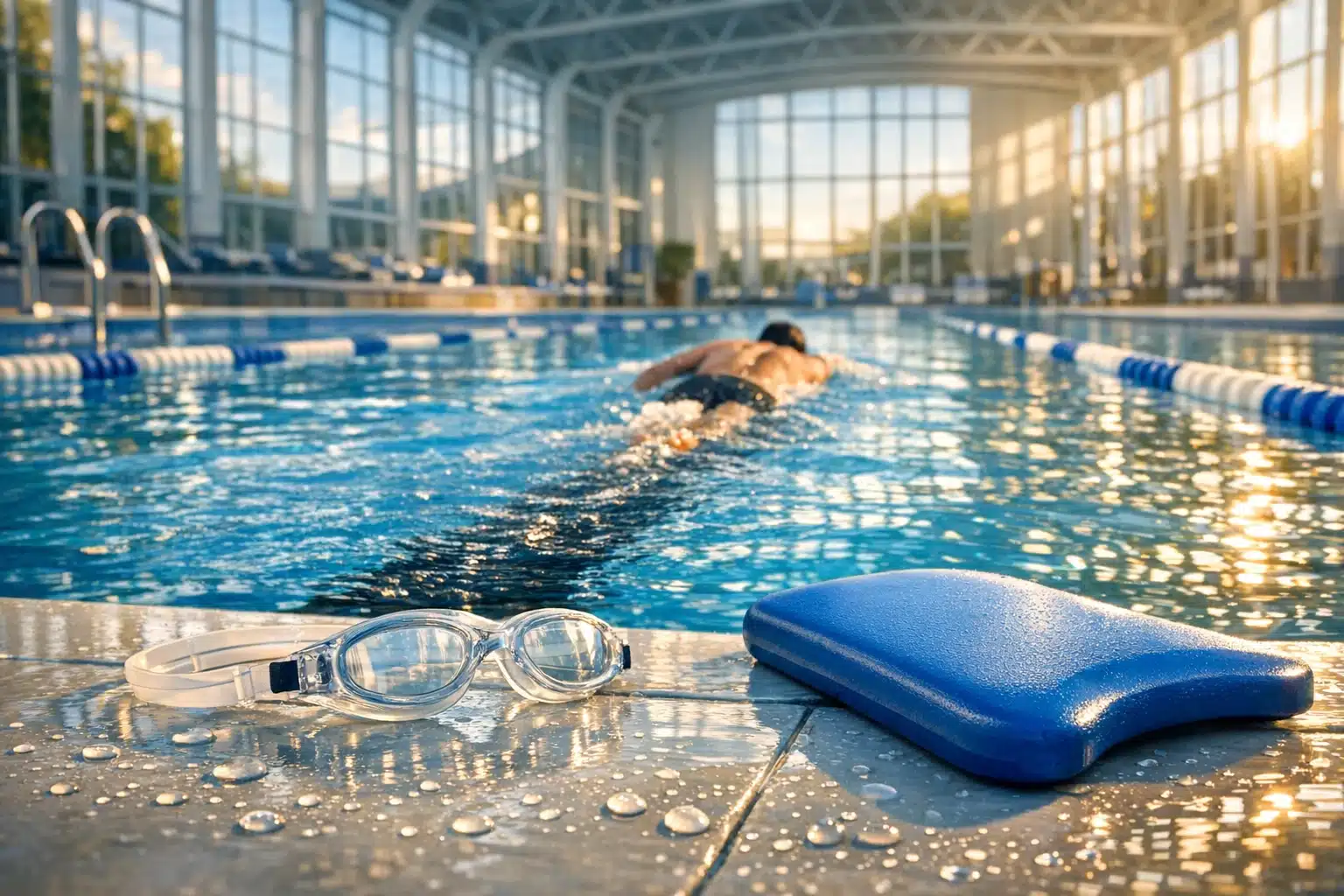
Explore the world of swimming
Swimming sits at the crossroads of sport, survival, and simple joy. A quiet pool lane can become a training ground, a therapy space, or the setting where a nervous beginner learns to trust the water one breath at a time. Because it challenges the heart, muscles, lungs, and mind without the repeated impact of many land-based activities, swimming stays relevant for children, adults, athletes, and older people alike. Understanding how it works makes every lap feel more purposeful.
Outline:
• Why swimming feels different from land sports and how water changes movement
• The physical and mental benefits that make it useful across ages
• A comparison of freestyle, backstroke, breaststroke, and butterfly
• Practical advice on learning, training, equipment, and safety
• A concluding guide for beginners, parents, and fitness-minded readers
Swimming as a Skill, a Sport, and a Different Physical World
Swimming is unusual because it is not just a sport people choose for exercise; it is also a life skill with direct safety value. A person who learns to move calmly through water gains more than fitness. They gain access to beaches, lakes, rivers, pools, and boating activities with greater confidence and awareness. That practical importance helps explain why swimming has been taught for generations in schools, clubs, military programs, and community centers. Long before it became an Olympic event, it mattered because human beings have always lived near water and needed ways to cross it, survive it, or enjoy it.
What makes swimming physically distinct is the environment itself. Water is far denser than air, so every stroke meets resistance from all directions. On land, momentum can carry a runner forward after each push. In the water, movement must be earned continuously through technique. That is why efficient swimmers often look almost effortless while beginners can work hard and still move slowly. Body position, timing, and breathing are not decorative details; they are the engine. A lifted head can sink the hips. A rushed inhale can break rhythm. A mistimed kick can waste energy instead of adding speed.
Swimming also changes the way the body experiences load. Buoyancy supports body weight, so joints usually take less pounding than they do in running or court sports. That makes the activity attractive to people who want demanding cardiovascular work without repeated impact. Yet lower impact does not mean lower challenge. Water asks the shoulders, back, core, hips, and legs to coordinate in one fluid chain. The sport is technical in a way that surprises many first-time swimmers. In a pool, the black line on the floor may look simple, but it quickly becomes a quiet teacher of patience and precision.
There is another layer as well: swimming changes perception. Sound softens, breathing becomes audible, and distance is measured not by scenery but by walls, strokes, and seconds. In that setting, a swimmer learns to pay attention to details most sports barely notice. A single length can reveal whether the hands are slipping, the kick is too wide, or the exhale is too late. That close feedback is part of the appeal. Swimming rewards awareness, and that is one reason many people stay with it for decades.
Why Swimming Matters for Health, Fitness, and Everyday Well-Being
Swimming earns its reputation as a whole-body activity because it combines aerobic work, muscular endurance, coordination, and breath control in one session. Public health guidance commonly encourages adults to aim for at least 150 minutes of moderate-intensity activity per week, and swimming can help meet that goal effectively. A person who swims for 30 minutes on five days is already in that range. Depending on body size, stroke choice, and pace, lap swimming can also use a substantial amount of energy, often in the rough range of 400 to 700 calories per hour. The exact number varies, but the wider point is clear: swimming can be gentle on the joints while still being demanding on the heart and lungs.
The fitness benefits reach beyond calorie use. Repeated strokes build endurance in the upper back, shoulders, trunk, glutes, and legs. Rotational movements in freestyle and backstroke improve coordination, while breaststroke and butterfly challenge timing in different ways. Many people also notice posture benefits because good swimming encourages a long spine, active core engagement, and better control of shoulder movement. For older adults or people returning after injury, the reduced impact of water can make exercise feel more accessible. For athletes in other sports, swimming is often valuable cross-training because it develops aerobic capacity without adding more pounding to already tired joints.
There is a mental side to the sport that deserves equal attention. Rhythm matters in swimming, and rhythm often settles the mind. Counting strokes, feeling the pull phase, and timing the breath can create a calm focus that resembles moving meditation. That does not make every session peaceful; some workouts are hard and sharp. Still, many swimmers describe the water as a place where stress becomes quieter and concentration becomes clearer.
Some of the most practical advantages can be summarized simply:
• It improves cardiovascular endurance.
• It builds muscular stamina across the whole body.
• It supports mobility and coordination.
• It can suit a wide range of ages and ability levels.
• It develops confidence in aquatic environments.
For families, swimming lessons add a safety benefit alongside recreation. For office workers, it provides relief from long hours of sitting and screen time. For people who dislike crowded gyms, the pool offers a different atmosphere entirely. It is hard to think of many activities that can serve rehabilitation, competition, leisure, and lifelong fitness all at once, yet swimming manages that range remarkably well.
Comparing the Main Strokes: Speed, Efficiency, and Difficulty
The four main competitive strokes are freestyle, backstroke, breaststroke, and butterfly, and each has a distinct character. Freestyle, usually swum as front crawl, is the fastest and most efficient for most people over distance. The body stays long and horizontal, the kick is relatively compact, and the alternating arm pattern creates steady propulsion. Because the face is in the water much of the time, breathing technique becomes central. Once a swimmer learns to exhale underwater and rotate smoothly to inhale, freestyle often becomes the stroke of choice for fitness laps, triathlon training, and endurance sets.
Backstroke shares some structural features with freestyle, but its personality is different. Because the swimmer faces upward, breathing is less restricted, which can make the stroke feel more comfortable to beginners who dislike putting the face down for long periods. At the same time, backstroke introduces navigation issues. In a pool, swimmers must judge distance from the wall without seeing straight ahead, and in open water the stroke is rarely practical for long navigation. Good backstroke also requires hip rotation, shoulder mobility, and a stable head position. When done well, it feels smooth and balanced, almost like sliding across the surface.
Breaststroke is often the most familiar stroke to casual swimmers because the head can rise forward more naturally and the pace is easier to control. However, it is not the easiest stroke to master technically. The timing of pull, breath, kick, and glide must be coordinated carefully. A strong breaststroke kick can generate excellent propulsion, but a poorly timed one creates drag instead. Compared with freestyle, breaststroke is usually slower, yet it can be more comfortable for people who want a controlled rhythm and frequent visual orientation. It is also common in learn-to-swim programs because it teaches balance, breath timing, and leg action in a very visible way.
Butterfly is the most demanding of the four for many swimmers. Both arms recover together, the body undulates, and the kick comes from a dolphin-like motion rather than alternating legs. It is powerful, dramatic, and technically unforgiving. Even experienced swimmers rarely use butterfly for long casual sets because it requires high strength, timing, and energy. Still, learning pieces of butterfly can improve core control and body awareness.
A simple comparison helps:
• Freestyle: fastest, efficient, ideal for fitness and distance
• Backstroke: easier breathing, excellent for balance and shoulder rhythm
• Breaststroke: controlled tempo, useful for orientation, technically subtle
• Butterfly: powerful and advanced, best used in shorter efforts for many swimmers
The best stroke depends on the goal. A beginner may prefer breaststroke or backstroke at first. A fitness swimmer may rely on freestyle for volume. A competitive athlete will train all four. In that sense, strokes are less like rivals and more like different languages spoken by the same body in water.
Learning to Swim Well: Technique, Training Structure, and Safety
Learning to swim is partly about courage and partly about method. For a beginner, the first victories are often small and deeply important: blowing bubbles without panic, floating on the back, gliding for a few seconds, or reaching the wall without rushing for air. These moments matter because swimming depends on trust. A tense body sinks and fights the water. A calmer body aligns, floats better, and learns faster. That is why good instruction starts with comfort and control before speed. Adults who begin late sometimes feel embarrassed, but in practice they often progress well because they listen carefully and understand instructions precisely.
Solid technique grows from a few basic principles. Keep the body as long as possible. Exhale steadily into the water rather than holding the breath. Let the kick support balance instead of turning it into frantic splashing. Use the hands to anchor and press water backward, not downward. These ideas sound simple, yet they separate efficient swimmers from exhausted ones. Video feedback, drills, and patient repetition help enormously. A swimmer may spend several sessions improving just one detail, such as head position or catch mechanics, and see the benefit across every lap afterward.
A practical training session usually has four parts:
• Warm-up to raise heart rate gradually and loosen the shoulders
• Drill work to isolate technique, such as kick sets or single-arm practice
• A main set built around distance, pace, or intervals
• A cool-down to lower effort and reinforce smooth form
Equipment can help, but it should support skill rather than replace it. Goggles improve comfort and visibility. A kickboard isolates leg work. A pull buoy shifts focus to the upper body. Fins can teach body position and add speed, though overuse may hide technical flaws. Paddles increase resistance and should be introduced carefully to avoid shoulder strain. The most useful tool, however, is consistency. Two or three thoughtful sessions a week often beat a single heroic workout followed by long gaps.
Safety deserves equal weight. In pools, swimmers should know lane etiquette, depth changes, and the rules of the facility. In open water, the demands increase sharply. Visibility, currents, temperature, weather, boats, and distance from shore all change the risk. That is why experienced swimmers often recommend a bright tow float, a swim partner, and local knowledge before venturing beyond supervised areas. Children need attentive supervision near any water, even when they have lessons. Confidence is valuable, but overconfidence is dangerous. The smartest swimmer is not the one who looks fearless; it is the one who respects the environment every single time.
Conclusion for Beginners, Parents, and Fitness Seekers
For readers wondering whether swimming is worth the effort, the short answer is yes, but for reasons broader than many people expect. It is a sport, a safety skill, a conditioning tool, and a lifelong form of recreation. If you are a beginner, swimming offers a measurable path forward: learn to breathe calmly, float with control, and cover short distances with better technique each week. If you are a parent, lessons can give a child not only enjoyment but also essential competence around water. If you are looking for fitness that challenges the heart and muscles without the jarring effect of repeated impact, the pool is one of the most versatile places to begin.
The beauty of swimming is that progress does not always arrive dramatically. Sometimes it appears as a quieter stroke, a longer glide, or a length completed without stopping. Those changes may look small from the deck, yet they transform the swimmer’s experience. Water stops feeling like an obstacle and starts feeling like a medium you can read, shape, and trust. That shift is powerful. It turns exercise into skill and effort into fluency.
A realistic way to start is simple:
• Choose one clear goal, such as learning freestyle breathing or swimming for 20 continuous minutes
• Practice regularly instead of waiting for perfect motivation
• Use instruction, feedback, or a structured plan if progress stalls
• Treat safety habits as part of the sport, not as an optional extra
Swimming does not ask everyone to race, count medals, or chase elite times. It asks for attention, patience, and respect for the water. In return, it offers endurance, confidence, resilience, and a form of movement that can remain useful for decades. Whether you enter the pool to train hard, recover gently, or simply feel lighter for an hour, swimming has a way of meeting you where you are and then carrying you a little farther than you expected.