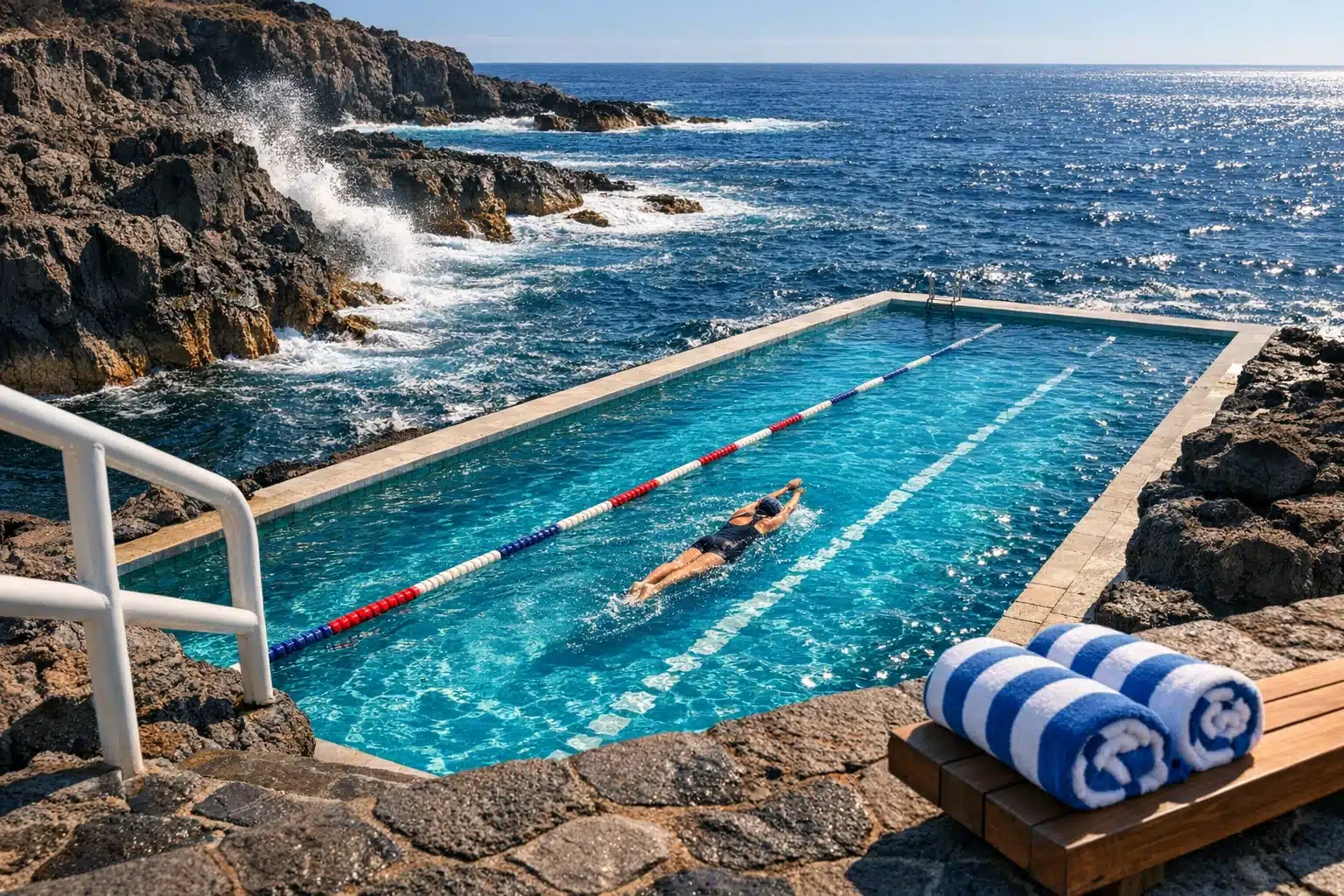
Explore the world of swimming
Swimming sits at an unusual crossroads: it is a lifesaving skill, a demanding sport, a gentle form of exercise, and for many people a way to reset the mind after a noisy day. From crowded public pools to quiet lakes at sunrise, it offers movement with less impact on the joints than many land-based activities. That mix of practicality and pleasure makes swimming relevant to children, adults, beginners, and athletes alike. Understanding how it works, why it helps, and how to approach it safely turns a simple dip into a lifelong asset.
Outline: This article begins by explaining why swimming matters in everyday life as much as in sport. It then compares the major strokes, looks at the physical and mental effects of regular practice, and covers the safety principles that should guide every session. The final section turns toward real-world action, showing different readers how to build a sustainable swimming habit and why this skill deserves a place in modern life.
Why Swimming Matters Beyond the Pool
Swimming is often introduced as a sport, but that description is too narrow. At its core, it is a form of water competence that can support health, safety, confidence, and independence across a person’s life. A child who learns to float, kick, and breathe calmly gains more than a recreational option; that child gains a practical response to an unpredictable environment. An adult who returns to the water after years away may discover a kind of exercise that feels challenging without punishing the knees, hips, or back. In that sense, swimming stands apart from many activities because it is both useful and enjoyable.
Part of its importance comes from the physics of water itself. Water is far denser than air, which means every stroke meets resistance. That resistance can help strengthen muscles in the shoulders, back, core, and legs without the hard impact associated with running on pavement or jumping in court sports. At the same time, buoyancy reduces how much body weight the joints must bear. For people recovering from injury, managing arthritis, or easing into exercise after a long break, that combination can make swimming feel less intimidating than many gym routines.
Swimming also matters because it works in different settings and for different goals. A person can swim for competition, recovery, mobility, relaxation, or social connection. A public pool may host school lessons in the morning, lap swimmers at midday, and families in the evening. Open water adds another dimension: lakes, rivers, and coastlines can turn swimming into an experience that feels part sport, part conversation with the landscape. On a still morning, when the water reflects the sky like polished metal, swimming can feel less like exercise and more like participation in the day.
Its relevance is also cultural and practical. Many communities build swimming into education because drowning prevention and basic survival skills matter. Travel, boating, beach visits, and water sports all become safer when people understand floating, treading water, and controlled breathing. In short, swimming is not just another item on a fitness menu. It is a rare activity with several layers of value:
• it develops physical ability
• it supports water safety
• it can be adapted for many ages and bodies
• it offers recreation without needing elaborate equipment
That broad usefulness explains why swimming remains important far beyond medals, lanes, and stopwatches.
Understanding the Main Strokes and What They Demand
To watch skilled swimmers move through water is to see four different solutions to the same problem: how to travel efficiently while balancing propulsion, breathing, rhythm, and body position. The four recognized competitive strokes, freestyle, backstroke, breaststroke, and butterfly, are not simply stylistic variations. Each has its own mechanics, energy cost, and learning curve, and those differences help explain why some swimmers take to one stroke quickly while struggling with another.
Freestyle, usually performed as front crawl, is often the first stroke taught for fitness and lap swimming. It is typically the fastest because the body stays relatively streamlined, the arms alternate continuously, and the flutter kick supports forward momentum without interrupting balance. Breathing to the side can be tricky for beginners, but once the timing improves, freestyle becomes efficient enough for long sets and endurance training. Backstroke shares the alternating arm pattern, yet changes the challenge completely. Because the face stays above water, breathing is easier, but swimmers must learn direction, timing, and body alignment without seeing where they are going. Good backstroke demands a stable hip position and a controlled kick rather than a frantic one.
Breaststroke is slower, but many recreational swimmers find it intuitive because the breathing pattern feels more natural. The arm pull and whip kick create a glide phase, giving the stroke a distinct stop-and-go rhythm. That rhythm is helpful for relaxed swimming, though the technique can become inefficient if the kick is too wide or the head rises too high. Butterfly sits at the opposite end of the spectrum. It is powerful, demanding, and technically unforgiving. Both arms recover over the water together, and the body moves with a wave-like undulation driven by the core and dolphin kick. Done well, butterfly looks smooth; done poorly, it feels like wrestling the water.
Here is a useful way to compare them:
• Freestyle: fastest, versatile, efficient for training and racing
• Backstroke: easier breathing, strong posture demands, useful for shoulder balance
• Breaststroke: approachable rhythm, slower pace, precise timing required
• Butterfly: highest technical and energy demand, rewarding but difficult to sustain
No single stroke is universally “best.” Freestyle suits distance and general fitness, breaststroke works for swimmers who want a calmer pace, backstroke offers variety and postural challenge, and butterfly develops power and coordination. Learning all four creates a more balanced swimmer because each stroke teaches different timing patterns, engages the body in distinct ways, and prevents training from becoming monotonous. The comparison also reveals an important truth: swimming is not one skill, but a family of related skills built on breathing control, body awareness, and repeated refinement.
Health, Fitness, and the Science of Moving Through Water
Swimming earns its reputation as a full-body activity because the water does not allow much passive movement. On land, gravity and momentum can sometimes hide weak links in technique. In water, inefficiency shows up quickly. If the head lifts too much, the hips sink. If the kick loses rhythm, the body line breaks. If the pull lacks direction, energy is spent without enough forward travel. That constant feedback is one reason swimming can improve coordination as well as fitness. The body must organize itself more carefully, and over time that organization becomes smoother and more economical.
From a cardiovascular perspective, swimming can be highly effective. Continuous laps, interval sets, and mixed-stroke sessions all raise heart rate while training the body to deliver oxygen to working muscles. The exact energy cost depends on pace, stroke, and body size, but vigorous lap swimming can burn several hundred calories per hour. Freestyle sets performed at moderate intensity often support aerobic endurance, while sprint work increases power and speed. Butterfly and fast breaststroke tend to demand more energy over shorter distances because their mechanics are less economical than relaxed front crawl.
The muscular benefits are equally broad. The shoulders, chest, lats, core, glutes, and legs all contribute to efficient swimming, though the emphasis changes by stroke. Unlike some weight-room exercises that isolate one movement pattern, swimming links upper and lower body action through timing. That makes it valuable for general conditioning, especially for people who want exercise that feels fluid rather than repetitive in a mechanical way.
Mental effects deserve attention too. Many swimmers describe a session as both work and relief. The repeated sound of water, the regularity of the breath, and the narrow focus on stroke count or pace can create a meditative quality. This is not magic, and it is not a cure-all, but the structure of swimming can reduce mental clutter for some people. A set of ten lengths offers immediate, manageable goals. The lane becomes a place where progress is measurable without needing dramatic results overnight.
Several practical advantages explain why swimming remains attractive:
• buoyancy can make exercise more accessible for people with joint discomfort
• resistance in all directions challenges many muscle groups at once
• training intensity can be scaled from gentle movement to elite performance
• water-based sessions can support recovery days when high-impact training feels too harsh
Still, balance matters. Swimming alone may not provide all the weight-bearing stimulus important for bone health, especially as people age, so many experts recommend pairing it with strength training or walking-based activity when appropriate. The strongest case for swimming is not that it replaces every other form of exercise. It is that it offers a distinctive, adaptable form of fitness that many people can maintain for years without burning out.
Safety, Learning Progressions, and Smarter Training Habits
Swimming looks graceful when done well, but water has a way of exposing overconfidence. That is why safety must come before speed, distance, or technical ambition. A capable swimmer is not simply someone who can complete a few lengths in a pool. True competence includes floating, treading water, controlled breathing, entering and exiting safely, recognizing fatigue, and adapting to different environments. Pool confidence does not automatically transfer to lakes or the sea, where visibility, temperature, currents, and depth can change the experience completely.
For beginners, lessons matter because early habits shape everything that follows. Many people try to learn by copying friends or watching videos, yet small technical errors can become stubborn patterns. A qualified instructor can correct breathing rhythm, streamline position, and kicking mechanics before frustration takes hold. Children benefit from structured water familiarization, but adults often gain just as much from formal instruction because they tend to carry more tension and self-consciousness into the water. Learning to exhale steadily underwater, for example, sounds simple until panic shortens every breath. Once that fear eases, progress often accelerates.
Training should also follow a progression instead of a random burst of enthusiasm. A sensible session typically includes a warm-up, focused main work, and an easier finish. Jumping straight into hard laps can leave technique falling apart within minutes. As fatigue rises, strokes shorten, breathing becomes ragged, and the risk of shoulder irritation increases. Better training is often quieter and more disciplined than people expect.
Useful habits include:
• start with short repeats and rest intervals instead of one exhausting continuous swim
• practice drills that improve body position and catch mechanics
• increase total distance gradually across weeks, not in a single session
• stop early if form collapses or dizziness appears
• use open-water safety gear such as a visible tow float when appropriate
Environment-specific awareness is essential. In pools, swimmers should know lane etiquette, wall spacing, and how to share space. In open water, they should check weather, entry points, water temperature, and local guidance. Cold water can impair breathing and coordination much faster than new swimmers expect. Strong currents can make a short route feel far longer on return. Supervision matters for children, and flotation devices such as properly fitted life jackets remain important around boats and unfamiliar water.
The strongest swimmers are rarely reckless. They respect conditions, train with intention, and understand that safety is not a beginner topic that disappears with experience. It is the framework that allows every other goal, fitness, fun, confidence, or competition, to happen with far less unnecessary risk.
Conclusion: Building a Lifelong Swimming Practice
If swimming is going to last in a person’s life, it cannot remain a vague good intention. It needs shape, context, and a reason strong enough to outlive early discomfort. For some readers, that reason will be practical: they want to feel safer around water with their children or while traveling. For others, it will be physical: they need exercise that is challenging yet kinder to the joints than pounding out miles on hard ground. Some will be drawn by competition, while others simply want one hour in the week when the phone stays in the locker and attention narrows to breath, reach, and rhythm.
The good news is that swimming scales well. A complete beginner can start with water confidence, floating, and short assisted lengths. A returning swimmer can rebuild with two or three modest sessions per week, focusing on technique before volume. A fitness-minded adult can combine steady aerobic work with interval training and occasional stroke variation. A young athlete can use structured coaching to develop starts, turns, pacing, and race strategy. The path changes, but the underlying principle stays the same: small, repeatable practice beats heroic inconsistency.
A simple framework helps:
• choose a realistic goal, such as swimming twice a week for one month
• match the environment to your level, whether that means lessons, lane swim, or supervised open water
• measure progress in more than distance, including confidence, efficiency, and recovery
• keep curiosity alive by learning new drills, strokes, or pacing methods
It also helps to redefine success. Not every swimmer needs a stopwatch and not every session must feel triumphant. Some days success means learning to relax the exhale. Some days it means finishing ten clean lengths with better posture than last week. Some days it means realizing that the water no longer feels like an argument. That quiet change matters. Confidence grows gradually, often without announcing itself.
For beginners, swimming offers a skill worth owning. For parents, it offers a layer of safety and an activity families can share. For adults seeking sustainable fitness, it offers resistance, rhythm, and variety in one setting. For ambitious athletes, it offers endless refinement because technique can always become sharper. In the end, swimming is valuable not because it promises instant transformation, but because it gives people a durable way to move, learn, and stay connected to a skill that can serve them for life.