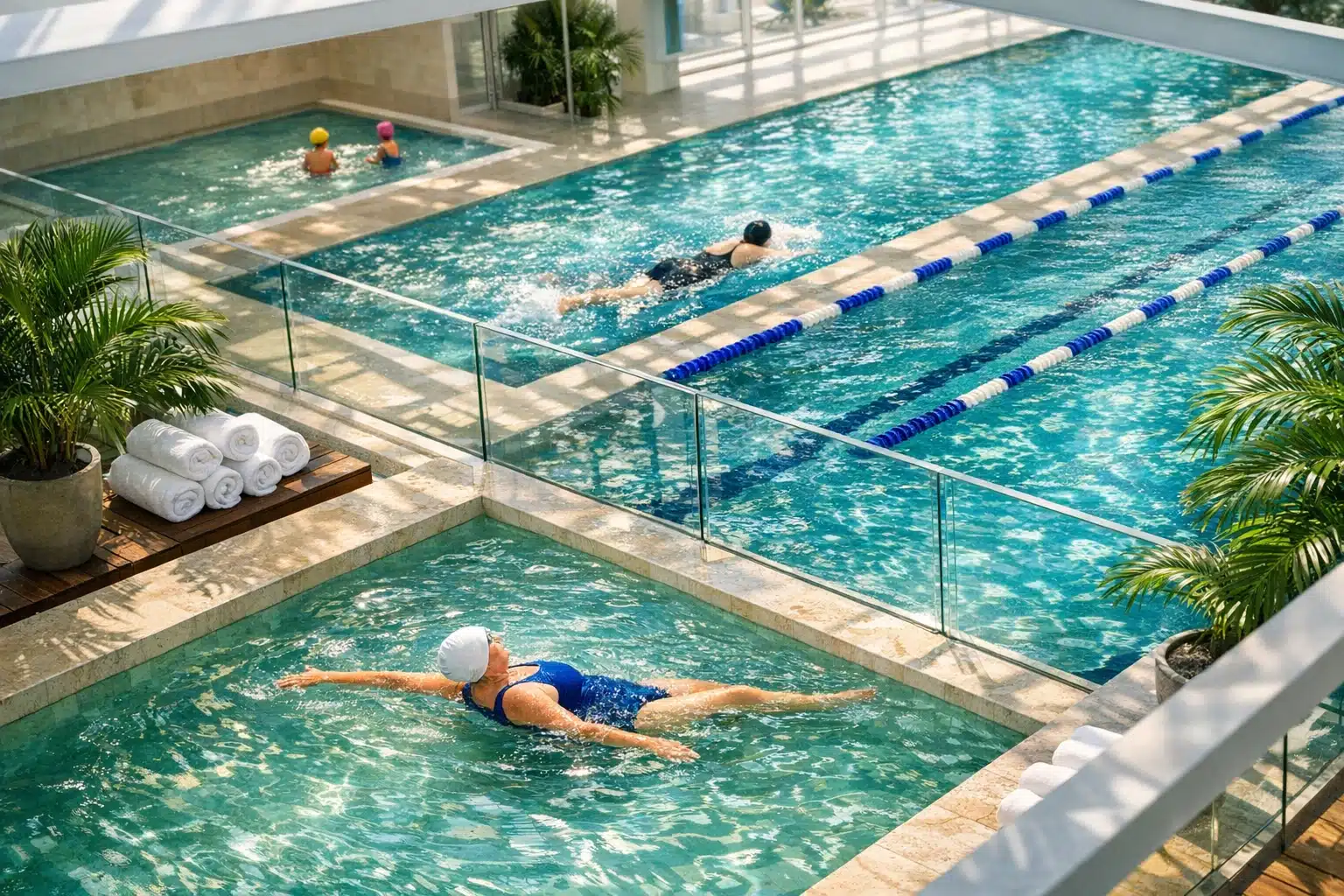
Explore the world of swimming
Swimming is one of those rare activities that feels timeless: part sport, part survival skill, part moving meditation. It can challenge elite athletes, welcome nervous beginners, and offer gentle exercise to people who want less impact on their joints. From crowded public pools to open water at dawn, swimming matters because it builds fitness, sharpens confidence, and connects people to water in a practical, memorable way.
Article Outline
This article begins with the broad meaning of swimming and then moves into the practical details that make it useful, enjoyable, and sustainable over time.
-
Swimming as a life skill, a sport, and a cultural practice
-
The physical and mental benefits of regular swimming
-
The main strokes, core technique, and common mistakes
-
Training methods, safety principles, and essential equipment
-
How swimming fits into modern life, community, and lifelong health
Swimming as a Life Skill, a Sport, and a Human Tradition
Swimming sits in a special category because it is useful long before it becomes competitive. A person can learn to swim for safety, for exercise, for recreation, or for the simple thrill of moving through water with less resistance than walking through air. That range gives the activity unusual depth. For one person, swimming means learning how to float and breathe without panic. For another, it means chasing split times in a racing lane. For someone else, it means the quiet comfort of a few steady laps before work, when the world still feels half asleep.
Humans have been swimming for thousands of years, and evidence from ancient cultures shows that it was valued both practically and socially. Civilizations near rivers, lakes, and coastlines treated swimming as a survival skill and a sign of physical competence. In the modern era, swimming developed into an organized sport with standardized strokes, timed races, and international competition. It has been part of the modern Olympic program since 1896, and today competitive swimmers race in pools that are typically 25 or 50 meters long. That formal side of swimming matters, but it does not define the whole experience.
What makes swimming especially relevant now is its versatility. It can happen in different settings, each with its own character:
-
Pool swimming offers structure, lane markings, lifeguard presence, and controlled conditions.
-
Open-water swimming adds currents, temperature changes, sighting challenges, and a stronger sense of adventure.
-
Rehabilitation and therapy pools use warm water and buoyancy to support recovery and lower-impact movement.
Swimming also crosses age groups more naturally than many sports. Young children can begin with supervised water familiarization, teenagers may discover competitive training, adults often return to the pool for health, and older swimmers may continue because water reduces stress on joints. Few activities remain this adaptable across the lifespan.
In that sense, swimming is not just about propulsion. It is about trust in the body, respect for the environment, and a gradual conversation with water. The more a swimmer learns, the more that conversation becomes fluent. At first the water feels like something to fight. Later, it feels like something to understand. That shift is one of the reasons swimming stays meaningful long after the first lesson ends.
The Physical and Mental Benefits of Swimming
Swimming is often recommended because it combines cardiovascular work, muscular engagement, and lower impact in a single activity. Water is far denser than air, so even simple movements require effort. At the same time, buoyancy supports body weight, which can reduce the pounding that people often feel in land-based activities such as running. That combination is a major reason swimming appeals to beginners, older adults, people returning from injury, and serious athletes looking for cross-training.
From a physical perspective, regular swimming can help improve heart and lung function, muscular endurance, coordination, and general fitness. Different strokes emphasize different muscle groups, but most swimming sessions involve the shoulders, back, core, hips, and legs working together. Because swimmers must manage breathing rhythm while moving, the sport also teaches breath control in a practical way. Public health guidelines commonly suggest that adults aim for at least 150 minutes of moderate aerobic activity per week, and swimming can contribute meaningfully to that goal.
Its benefits are not limited to fitness metrics. Many swimmers describe a clear mental shift once they settle into a steady pace. The repeated sound of breathing, the pressure of water, and the visual simplicity of lane lines can create a focused state that feels calmer than a crowded gym. That does not mean swimming is magically stress-free, but it often helps people disconnect from noise and return to a more deliberate rhythm.
Compared with other popular forms of exercise, swimming has distinct advantages and trade-offs:
-
Compared with running, swimming usually places less impact on the knees and ankles.
-
Compared with cycling, it trains the upper body more directly and demands more total-body coordination.
-
Compared with walking, it can be technically harder to learn, but it often provides stronger whole-body resistance.
Swimming is also widely used in rehabilitation and active recovery. Warm water settings can make movement more manageable for people with stiffness or limited mobility. Athletes in other sports often use easy swims between harder training days because the body can keep moving without the same mechanical stress of road running or jumping.
There are practical cautions, of course. Poor technique can strain the shoulders, and not everyone feels immediately comfortable in deep water. Still, when taught progressively and practiced with good habits, swimming offers one of the broadest benefit profiles in exercise. It strengthens without always punishing, challenges without always overwhelming, and rewards consistency in a way that feels steady rather than dramatic. For many people, that balance is exactly what makes it sustainable.
Understanding the Main Strokes and the Technique Behind Them
Swimming looks smooth from the deck when experienced athletes do it well, but that smoothness is built from small technical choices. Body position, breathing timing, hand entry, kick rhythm, and head alignment all matter. A beginner may assume that effort is the main ingredient, yet technique often determines whether the water feels supportive or stubborn. In swimming, brute force alone usually creates extra drag. Efficiency is the real prize.
The four competitive strokes each teach something different. Freestyle, usually swum with the front crawl, is the fastest and most common stroke for training and fitness. It rewards a long body line, steady flutter kick, body rotation, and side breathing that does not lift the head too high. Backstroke flips the swimmer onto the back, making breathing easier but turning direction and alignment into larger challenges. Breaststroke is often seen as gentler and more approachable, but its timing is technical: the pull, breath, kick, and glide must work in sequence. Butterfly is the most demanding for many people, requiring coordinated dolphin kicks, powerful upper-body movement, and strong rhythm.
A useful way to think about these strokes is through comparison:
-
Freestyle is usually the most efficient choice for distance and general conditioning.
-
Backstroke can improve posture awareness and shoulder mobility when done correctly.
-
Breaststroke allows more forward visibility but can be slower and highly sensitive to timing errors.
-
Butterfly builds power and coordination, though it is rarely the first stroke beginners master.
Several technical principles apply across all strokes. A balanced body position reduces drag. Controlled breathing prevents panic and wasted motion. A well-timed kick supports, rather than fights, the pull. Good swimmers also understand the idea of “feel for the water,” a phrase coaches use to describe the ability to sense pressure and hold water effectively with the hands and forearms. That feel is difficult to explain but easy to recognize once it develops.
Common beginner mistakes tend to repeat. Swimmers often hold their breath underwater instead of exhaling steadily, which makes breathing feel rushed. Many kick from the knees instead of the hips, creating splash without much propulsion. Others lift the head forward to breathe, causing the hips and legs to sink. These are fixable problems, and simple drills can help. Side-kick drills teach alignment, single-arm work improves focus, and short, relaxed repeats make it easier to practice form before fatigue takes over.
If the pool were a page, technique would be the handwriting. Two swimmers may cover the same distance, but the one with better mechanics writes more clearly across the water. That is why improvement in swimming often feels subtle at first. The pace change may be modest, yet the effort drops, the breathing settles, and the whole stroke begins to feel less like struggle and more like travel.
Training, Safety, and the Equipment That Actually Matters
A good swimming routine balances ambition with realism. Many newcomers enter the pool expecting to swim continuously for long distances, then discover that even a few laps can feel demanding. That is normal. Swimming combines breathing control and coordination in a way that can expose inefficiency quickly. The smart approach is progressive training: short repeats, clear rest intervals, and enough patience to let technique improve before volume climbs.
A basic session often includes three parts: a warm-up, skill or main work, and a cool-down. The warm-up prepares the shoulders, lungs, and nervous system for movement. The main set may focus on endurance, speed, or drills. The cool-down helps the body settle and gives swimmers time to reflect on how the stroke felt. Even a 30-minute session can be productive when it has structure.
For example, a beginner-friendly pool workout might look like this:
-
Easy warm-up of 4 short lengths with plenty of rest
-
Technique set using kickboard drills or single-arm freestyle
-
Main set of 6 to 10 short repeats at a manageable pace
-
Cool-down with relaxed backstroke or easy freestyle
Safety deserves equal attention. In pools, swimmers should respect lane direction, start only when space is available, and avoid diving into shallow water unless it is clearly designated for that purpose. Open water adds a very different layer of risk. Visibility can be poor, temperatures may change rapidly, and currents can shift effort from manageable to exhausting. A calm-looking lake can be more deceptive than a busy pool because the danger is less visible. Anyone swimming outside a controlled setting should understand local conditions, wear a bright cap for visibility, and avoid swimming alone.
Essential equipment is simpler than marketing sometimes suggests. The basics are usually enough:
-
Swimsuit that allows comfortable movement
-
Goggles that fit well and seal properly
-
Swim cap for comfort, visibility, or hair control
-
Towel, water bottle, and sandals for practical pool use
Optional tools such as kickboards, pull buoys, fins, and paddles can be useful when chosen for a purpose rather than bought out of excitement. A kickboard isolates the legs, a pull buoy supports the hips during arm-focused work, and fins can help body position and ankle flexibility. Paddles increase resistance, but they should be used carefully because they can overload the shoulders if technique is poor.
Ultimately, the best swimming plan is not the most impressive one on paper. It is the one a person can repeat safely and consistently. Progress in the water comes from accumulated practice, not heroic one-off sessions. Show up, warm up well, respect the environment, and let skill grow alongside fitness. That approach may sound modest, but in swimming modest habits often lead to the biggest long-term gains.
Swimming for Life: Community, Access, and Long-Term Enjoyment
One reason swimming remains so valuable is that it can stay with a person for decades. Unlike some sports that narrow sharply with age or physical wear, swimming often changes shape rather than disappearing. A child may begin with lessons and games, a teenager may join a school team, an adult may use lap swimming to manage stress, and an older swimmer may continue because the water still feels welcoming when other activities feel harsher. That adaptability makes swimming less like a phase and more like a lifelong resource.
Swimming also has a strong community dimension. Local pools, clubs, masters groups, and open-water circles give people a reason to train beyond private fitness goals. Some swimmers chase personal bests, while others simply want accountability and company. The social aspect matters more than it is sometimes given credit for. Exercise habits tend to last longer when people feel connected to a place and a group. In that setting, swimming becomes a shared language of sets, strokes, rest intervals, and small victories.
At the same time, access is not equal everywhere. Pools require funding, maintenance, trained staff, and safe public infrastructure. Lessons can be expensive, and not every community has reliable facilities. That matters because water competence is not a luxury. It has public safety value. Expanding access to swim education can reduce risk, improve confidence, and create healthier relationships with water from an early age.
Inclusive swimming spaces are equally important. Good programs recognize that swimmers arrive with different needs, body types, cultural backgrounds, and confidence levels. Adaptive and para-swimming programs show how the sport can be modified without losing challenge or dignity. Adult beginner lessons are another important example. Many adults never had the chance to learn as children, and respectful instruction can change their relationship with water completely.
For long-term enjoyment, swimmers often benefit from keeping their goals flexible. Not every season needs a race or a dramatic milestone. A swimmer might aim to improve breathing rhythm, add one extra session each week, or simply feel more relaxed in deep water. Those are meaningful goals. They reflect the truth that swimming is not only about numbers on a pace clock.
There is also something quietly beautiful about returning to the water again and again. The lane may look the same, but the swimmer does not. Skill deepens, fear softens, endurance grows, and the body learns to cooperate with an environment that once felt unfamiliar. In that way, swimming offers more than exercise. It offers continuity. It gives people a practice they can carry through different stages of life, adapting the pace while keeping the essential movement alive.
Conclusion for Readers Considering Swimming
For readers who are curious about swimming, the most important point is simple: this activity rewards patience more than bravado. You do not need to begin as a fast swimmer, a fearless swimmer, or even a particularly graceful one. You only need a safe environment, sound instruction, and enough consistency to let the water become familiar. Over time, swimming can improve fitness, strengthen confidence, and provide a form of movement that feels both disciplined and refreshing.
If you already swim, there is still room to gain more from it by refining technique, training with purpose, and taking safety seriously. If you are new, start small and let progress be measured in comfort as much as distance. The world of swimming is wide enough for competitors, casual lap swimmers, families, and late starters alike. That is part of its lasting appeal: it meets people where they are, then invites them to move a little farther.