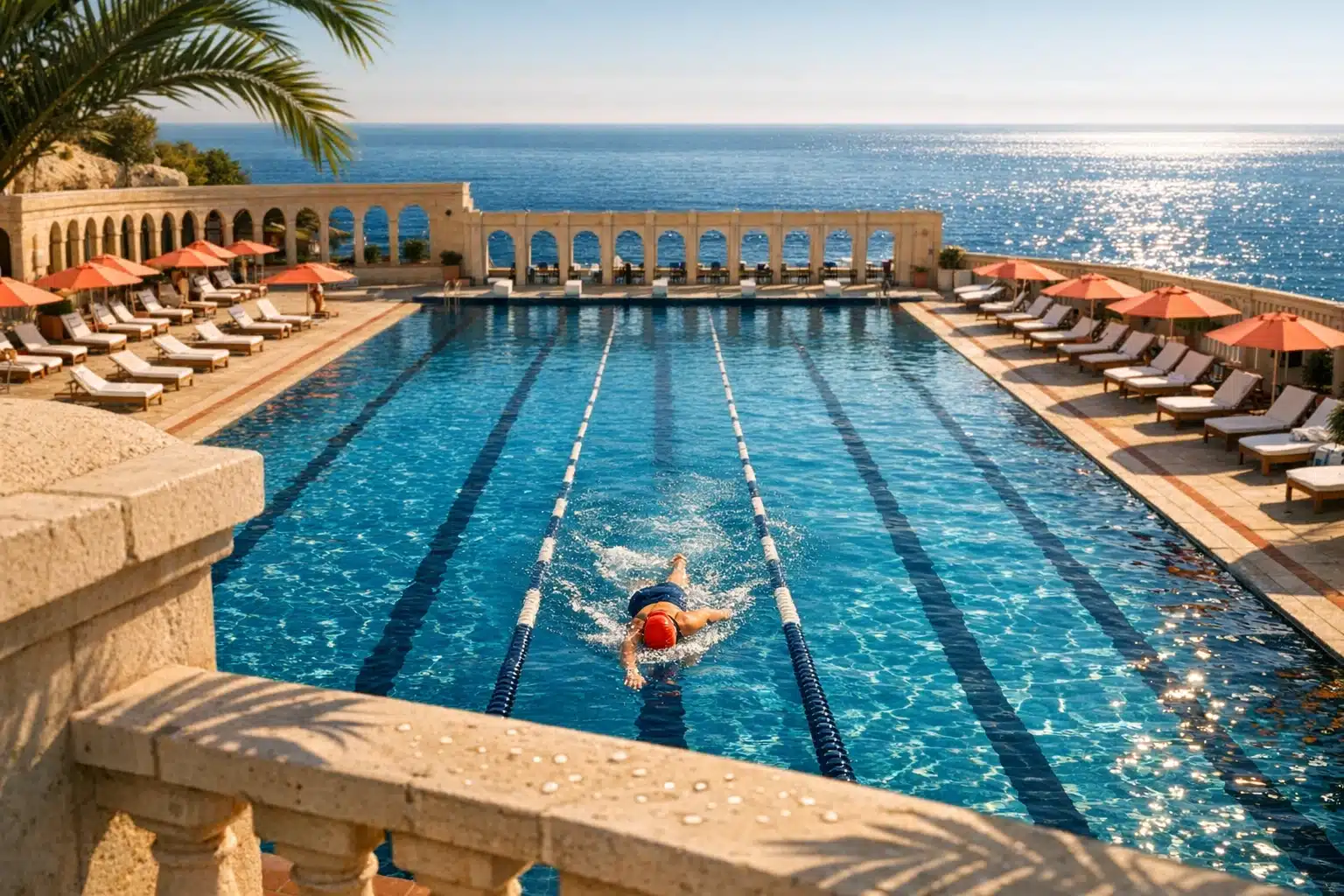
Explore the world of swimming
Swimming sits at a rare crossroads where survival skill, sport, and quiet personal ritual meet. A lane line can frame serious training, yet the same water can welcome a nervous beginner taking a first unsteady breath. Because it challenges the heart, muscles, lungs, and mind without the constant impact of land exercise, it remains relevant to children, older adults, and elite competitors alike. Understanding swimming means looking beyond strokes to technique, safety, access, and the curious calm that often arrives between one breath and the next.
Outline:
• Swimming as a human skill and global sport
• Why swimming is effective for health and fitness
• The main strokes and the basics of efficient technique
• How to learn, train, and improve at any level
• Safety, etiquette, and the lifelong value of time in the water
Swimming as a Human Skill and Global Sport
Swimming is older than organized sport and more fundamental than many people realize. Long before timers, lane ropes, and medal ceremonies, humans entered water out of necessity. Rivers had to be crossed, coastlines explored, and fishing grounds reached. Over time, swimming became more than a practical skill; it also turned into recreation, military training, therapy, and eventually a highly structured competitive discipline. That broad history helps explain why swimming occupies such a distinctive place today. It is at once a life skill, a public health tool, a leisure activity, and a serious sport governed internationally by World Aquatics, the body that oversees Olympic swimming, diving, water polo, artistic swimming, and open-water competition.
What makes swimming especially fascinating is the variety of environments in which it happens. A beginner may first learn in a warm, shallow pool with a teacher standing nearby. A club athlete may train in a 25-meter or 50-meter pool, counting splits and refining turns. An open-water swimmer faces lakes, rivers, or the sea, where sighting, weather, and changing currents become part of the challenge. Competitive race formats range from explosive 50-meter sprints to 1500-meter pool events and 10-kilometer open-water contests. That range means the sport can reward very different strengths: speed, technical efficiency, endurance, tactical patience, and mental steadiness.
Swimming also differs from land sports because water changes the rules of movement. Water is far denser than air, so even small technical errors create noticeable resistance. A dropped elbow, a mistimed breath, or a sinking hip can slow a swimmer more than many beginners expect. Yet that same resistance is part of the appeal. Every stroke is a negotiation with the water, almost like writing a sentence on a surface that keeps moving. The swimmer who learns to reduce drag and apply force cleanly does not simply work harder; they move smarter.
In many communities, swimming lessons are treated as an essential stage of childhood because the ability to float, breathe, and travel through water can improve safety around pools, beaches, and lakes. At the same time, adults increasingly return to swimming after years away, often drawn by its lower impact and mental clarity. That wide appeal is one reason swimming remains globally relevant: few activities connect survival, skill, fitness, competition, and simple enjoyment in such a direct way.
Why Swimming Is So Effective for Health and Fitness
Swimming earns its reputation as a powerful form of exercise because it combines cardiovascular work, muscular effort, and joint-friendly movement in one activity. When a swimmer moves steadily through the water, the heart and lungs must supply oxygen efficiently, while the shoulders, back, core, hips, and legs coordinate to maintain balance and propulsion. Unlike some gym exercises that isolate a single area, swimming asks the body to act as a system. That full-body demand is one reason many people feel pleasantly worked over after a session, even when the workout looked smooth from the outside.
For general health, swimming fits well within widely accepted activity guidelines. Public health authorities such as the World Health Organization recommend that adults accumulate at least 150 minutes of moderate aerobic activity per week, or 75 minutes of vigorous activity, along with muscle-strengthening work. Swimming can help meet those aerobic goals, and depending on stroke, intensity, and body size, it may burn roughly 400 to 700 calories per hour. Freestyle and butterfly often demand more energy than easy breaststroke, but even gentle lap swimming can improve cardiorespiratory fitness over time. Because the body is supported by water, many people who find running uncomfortable due to impact can tolerate swimming more comfortably.
Its benefits are not only physical. The rhythm of strokes and breaths can create a meditative effect that many swimmers describe with almost poetic loyalty. In a noisy week, the pool can feel like a place where the mind finally lowers its voice. Research on exercise more broadly shows that regular physical activity can support mood, reduce stress, and improve sleep, and swimming often adds an extra sensory calm because the body is immersed, cooled, and partially insulated from everyday distractions.
Some of the most commonly cited advantages include:
• Low-impact movement that is easier on many joints
• Full-body muscular engagement
• Aerobic conditioning for heart and lung health
• Flexible intensity, from rehabilitation to hard interval training
• Useful cross-training for runners, cyclists, and team-sport athletes
That said, swimming is not magic, and it is not automatically easy. Beginners may tire quickly because breathing in water feels unfamiliar. Technique matters far more than many first-timers expect, so poor mechanics can make a short distance feel surprisingly difficult. But that learning curve is also part of the reward. As efficiency improves, so does confidence. The person who once fought the water may gradually learn to travel through it with control, economy, and maybe even delight.
The Main Strokes and the Basics of Efficient Technique
Competitive swimming is built around four primary strokes: freestyle, backstroke, breaststroke, and butterfly. Each has its own rhythm, strengths, and technical demands, and comparing them is one of the quickest ways to understand the sport more deeply. Freestyle, usually swum as front crawl, is generally the fastest and most efficient stroke for most people. Its alternating arm action and flutter kick allow continuous forward momentum, and body rotation helps the swimmer use the large muscles of the back and torso rather than only the shoulders. Backstroke uses a similar alternating pattern but places the swimmer face-up, which makes breathing simpler while introducing other challenges, such as holding a straight line without seeing where one is going.
Breaststroke is often the stroke casual swimmers know best because the head can come forward regularly and the pace can feel controlled. Yet it is not a “lazy” stroke when done well. Efficient breaststroke requires sharp timing between the pull, breath, kick, and glide. If the sequence breaks down, momentum disappears quickly. Butterfly is the most visually dramatic of the four. It uses a simultaneous arm recovery and a dolphin kick powered through the core and hips. When executed well, it looks almost theatrical, as though the swimmer is rising and falling with the water rather than merely moving through it. When executed poorly, it can feel brutally demanding within a single length.
Across all strokes, several technical principles matter again and again. A streamlined body position reduces drag. The head should stay relatively neutral rather than lifting excessively. Effective propulsion comes from holding water with the hands and forearms, not from splashing harder. Breathing should be timed so it supports rhythm instead of interrupting it. Beginners often hold their breath underwater and then rush the inhale; experienced swimmers usually exhale into the water and take a quicker, calmer breath when the body position allows it.
Common errors often include:
• Looking too far forward, which can drop the hips
• Crossing the hands over the center line during entry
• Kicking mainly from the knees instead of the hips
• Rushing the stroke rate without enough control of the catch
• Forgetting to glide or reset posture after each breath
One of swimming’s most interesting truths is that brute force does not guarantee speed. The water rewards patience, alignment, and feel. A smaller swimmer with clean mechanics can move more effectively than a stronger swimmer who creates excess drag. That is why drills matter so much. Simple exercises such as kick sets, sculling, single-arm work, and side-balance drills help swimmers notice where the body sits in the water and how pressure feels against the hand. Technique may seem subtle at first, but it is the quiet engine behind nearly every meaningful improvement.
How to Learn, Train, and Improve at Any Level
Swimming development rarely happens in one dramatic leap. It is usually built through small, repeatable gains: a smoother exhale, a straighter kick, a turn that wastes less time, or a set completed with steadier pacing. For beginners, the first goals should be confidence and comfort rather than speed. Learning to float, submerge the face, exhale underwater, glide, and recover calmly after a breath lays the groundwork for everything that follows. Adult learners in particular often benefit from patient instruction because fear, stiffness, or old misconceptions can interfere more than physical ability. A good teacher breaks the skill into manageable pieces and helps the swimmer feel successful early.
Once basic comfort is established, structured practice becomes important. Many effective sessions follow a simple pattern: warm-up, skill work, main set, and easy recovery. A new swimmer might complete short repeats with generous rest, while a more experienced athlete may train with interval sets that target aerobic endurance, threshold pace, or sprint power. Improvement comes not only from doing more meters but from knowing why a set exists. A drill set may sharpen body position; a pull set may emphasize upper-body mechanics; a kick set can build leg endurance and balance. Random laps can still be enjoyable, but purposeful practice usually produces faster progress.
Useful equipment can support training without replacing good fundamentals:
• Goggles for clear vision and comfort
• A well-fitted swimsuit that allows full movement
• A kickboard for isolating kick work
• A pull buoy to focus on body line and arm mechanics
• Fins for certain drills and controlled speed assistance
• A pace clock or waterproof watch for interval awareness
For intermediate and advanced swimmers, progression often depends on consistency, technique under fatigue, and thoughtful planning. Swimmers may track weekly distance, stroke counts, split times, and perceived effort. Some also add dryland work such as mobility, shoulder stability, core training, and strength exercises to support better posture in the water. Competitive athletes typically organize training into phases, balancing heavier aerobic blocks with race-specific sharpening. Even recreational swimmers can borrow that logic by varying sessions across the week instead of repeating the same workout every time.
A simple example of a balanced pool session might look like this:
• 300 meters easy swim
• 4 x 50 meters drill work
• 6 x 100 meters at steady effort with rest between repeats
• 4 x 25 meters faster swimming
• 200 meters easy cooldown
The beauty of swimming improvement is that it remains available for a long time. A person may begin by celebrating one uninterrupted length, later build toward a kilometer, and eventually find pleasure in pacing, stroke nuance, or even masters competition. Progress in the pool is often quiet and cumulative, but it is very real. One day the water feels hostile; a month later it feels teachable.
Safety, Etiquette, and the Lifelong Value of Swimming
No discussion of swimming is complete without safety. The water can be generous, but it does not forgive carelessness. In pools, good habits begin with supervision, awareness, and respect for posted rules. New swimmers should use suitable depth, avoid training alone if they are not confident, and rest immediately if they feel dizzy, cramped, or unusually short of breath. Children need close, active supervision around water rather than passive observation from a distance. It also helps to remember that real distress in the water is often fast and quiet, not dramatic in the way films sometimes suggest.
Open water introduces a different level of complexity. A lake or ocean swim may look inviting from shore, yet temperature, visibility, wind, waves, currents, and boat traffic can change the risk profile quickly. Even strong pool swimmers can be surprised by cold water, reduced orientation, or the stress of not seeing the bottom. Sensible precautions matter: swim with others, choose designated areas when possible, wear a bright cap, check conditions beforehand, and use equipment such as a tow float if appropriate. For longer outings, a wetsuit may improve warmth and buoyancy, though it also changes body position and should be practiced with in advance.
Pool etiquette matters too because swimming is often a shared activity. Smooth sessions depend on small courtesies:
• Choose a lane that matches your pace
• Circle swim if the pool requires it
• Leave space at the wall during turns and push-offs
• Let faster swimmers pass at an appropriate moment
• Keep equipment organized and avoid blocking access
Beyond safety and manners, swimming has unusual longevity. Many sports become harder to continue as joints protest or schedules tighten, but swimming can adapt across decades. A child may start with lessons, a teenager may race, an adult may use it for fitness, and an older swimmer may value it for mobility, circulation, and routine. Aquatic exercise is also commonly used in rehabilitation settings because water support can make movement more manageable for people returning from injury or living with certain physical limitations.
That lifelong quality may be the sport’s strongest argument. Swimming can be social or solitary, disciplined or playful, competitive or reflective. Some people chase podiums; others chase a cleaner stroke or a clearer head after work. The surface of the water never asks for the same story from everyone. It simply asks for attention. In return, it offers skill, health, perspective, and a reliable reminder that progress is sometimes measured not in noise, but in steadier breaths and smoother lengths.
Conclusion for New and Returning Swimmers
If you are curious about swimming, the most useful starting point is not perfection but familiarity. Learn the basics well, respect safety, and give yourself time to understand how the water behaves around your body. Readers who want fitness can find a demanding full-body workout here, while those seeking stress relief may discover a rhythm that feels almost restorative. For parents, adult beginners, recreational lap swimmers, and serious athletes alike, swimming remains relevant because it combines practical skill with long-term health value. The world of swimming is wide enough for ambition and gentle enjoyment at the same time, and that is exactly why so many people keep returning to the pool, the lake, or the sea.