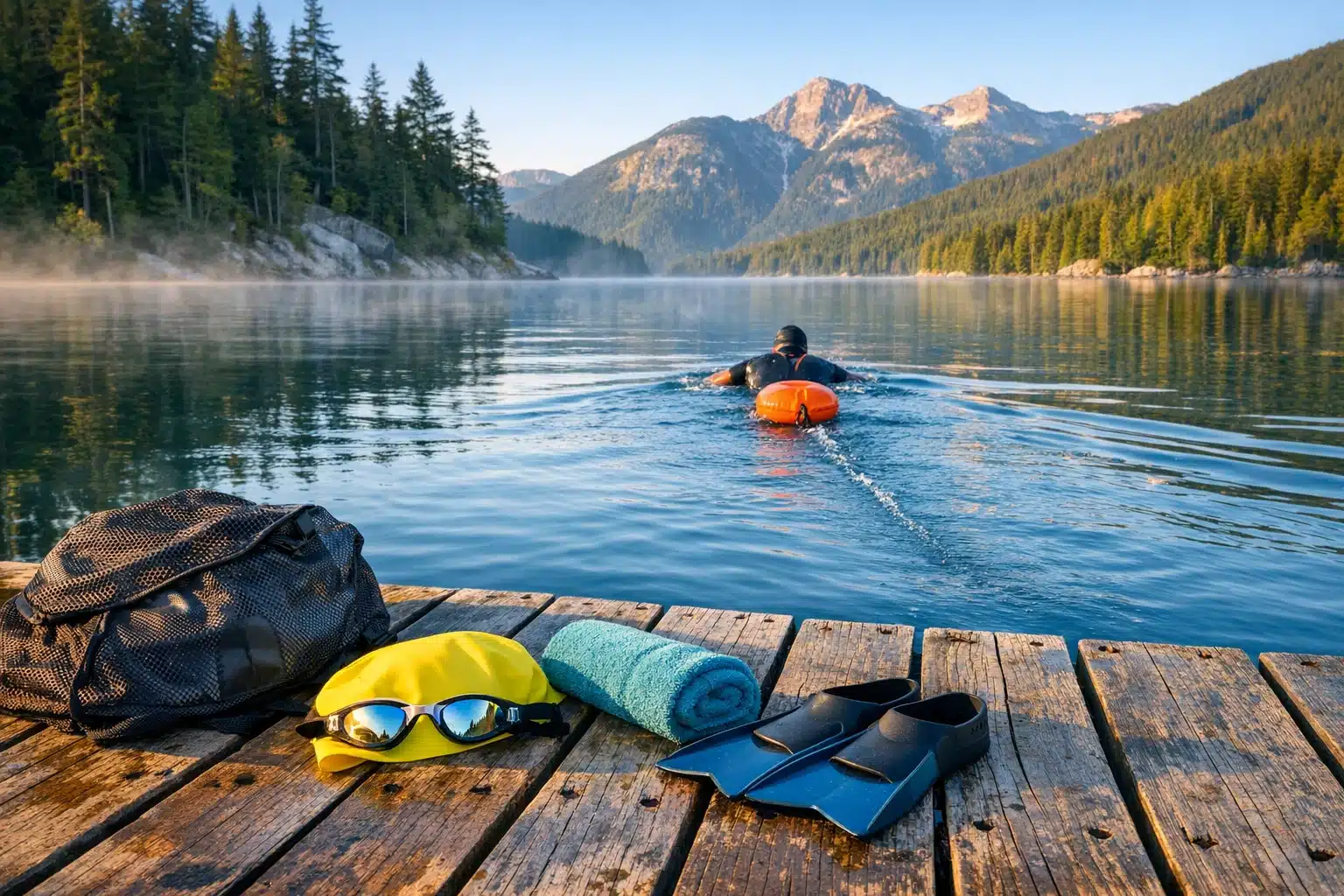
Explore the world of swimming
Swimming is one of those rare activities that feels both ancient and strikingly current: a survival skill, a competitive sport, and a welcome break from crowded routines. It asks the heart to work, invites the lungs to expand, and trains the body without the repeated pounding that many land exercises create. Because water supports body weight, beginners, athletes, older adults, and people rebuilding fitness after time away can often use the same environment for very different goals. That broad usefulness makes swimming important far beyond the edge of the pool.
Outline:
1. Why swimming matters in modern life
2. The main strokes and the mechanics of efficient movement
3. Physical and mental benefits of regular swimming
4. Training methods, safety habits, and essential equipment
5. A practical conclusion for beginners, fitness seekers, families, and lifelong swimmers
Why Swimming Matters in Modern Life
Swimming matters because it sits at the intersection of health, skill, safety, and enjoyment. Few activities can claim that range. A person may first enter the water to learn a basic life-saving ability, then stay for fitness, social connection, recreation, or competition. In that sense, swimming is not just another workout option. It is a form of physical literacy, a skill that can expand confidence in pools, lakes, rivers, and coastal environments. For children, it can reduce fear and build body awareness. For adults, it can become a realistic way to stay active when joints protest at harder impact sports. For older people, it often offers movement that feels possible on days when running or court sports do not.
The modern appeal of swimming also comes from how adaptable it is. Water creates resistance in every direction, which means even simple movements demand coordinated effort. Unlike some gym routines that isolate one area at a time, swimming recruits the shoulders, back, core, hips, and legs together. At the same time, buoyancy reduces the load placed on knees and ankles. That makes swimming different from running, which is excellent for cardiovascular fitness but can be difficult for people managing impact-related discomfort. Cycling is another useful comparison: it can build endurance well, yet it does not usually involve the same range of upper-body engagement that swimming naturally requires.
Health organizations commonly recommend at least 150 minutes of moderate aerobic activity each week for adults, and swimming can contribute meaningfully to that target. Depending on stroke choice, body size, and intensity, a vigorous swim session can burn several hundred calories per hour while improving endurance and muscular control. Beyond numbers, the experience has a texture all its own. Water changes sound, pace, and perception. The world grows quieter, breathing becomes intentional, and movement takes on a steady rhythm that many people find deeply satisfying.
Swimming also carries social and cultural value. It appears in school programs, local clubs, elite sport, rehabilitation settings, and holiday routines. A lane in a public pool might hold a teenager training for competition, a parent learning late in life, and an older swimmer maintaining mobility. That diversity is part of its strength. Useful, demanding, and surprisingly calming, swimming earns its place as one of the most relevant physical activities available today.
The Main Strokes and the Mechanics of Efficient Movement
To understand swimming, it helps to see it not as random motion in water but as a craft built on technique. The four competitive strokes are front crawl, backstroke, breaststroke, and butterfly, and each one asks the body to solve the same puzzle in a different way: how to move forward with power while minimizing drag. In pools, swimmers quickly learn that speed is not only about effort. A person who thrashes with determination may move more slowly than someone who glides with clean alignment. Water is roughly 800 times denser than air, so small technical errors become large brakes.
Front crawl is usually the fastest and most commonly taught stroke for fitness swimming. It relies on a long body line, alternating arm recovery, a steady flutter kick, and controlled breathing to the side. When done well, it feels less like fighting the water and more like slipping through it. Backstroke uses a similar alternating arm pattern but places the swimmer face-up, which changes balance and breathing demands. Many beginners enjoy the easier access to air, though keeping a straight line without visual reference can be tricky. Breaststroke is slower but popular because its timing is more deliberate. The pull, breath, kick, and glide create a repeating rhythm that some swimmers find intuitive. Butterfly is the most demanding of the four. It requires strong timing, upper-body coordination, and a wave-like undulation through the trunk and hips.
Several technical principles apply across strokes:
– body position should stay as horizontal and streamlined as possible
– the head should remain calm rather than lifting excessively
– breathing must support rhythm instead of interrupting it
– kicks should assist balance and propulsion, not create unnecessary splash
– efficient pulls depend on feeling pressure against the water, not merely spinning the arms
For new swimmers, drills can make these ideas easier to learn. Kicking with a board teaches balance and leg action. Single-arm practice highlights stroke timing. Sculling develops awareness of how the hands catch water. Even pool structure helps learning: many training pools are 25 meters or 25 yards long, while international competition often uses 50-meter pools, giving swimmers clear markers for pacing and progress.
Technique is where swimming becomes quietly fascinating. Improvement often arrives not through brute force but through refinement. One adjusted breath, one calmer head position, one better push off the wall, and suddenly the lane feels shorter. That is part of the charm: swimming rewards patience, attention, and the willingness to learn how water wants the body to move.
Physical and Mental Benefits of Regular Swimming
Swimming offers one of the broadest benefit profiles in exercise because it challenges multiple systems at once. Cardiovascularly, it asks the heart and lungs to supply oxygen during sustained, rhythmic work. Muscularly, it requires repeated force production from the back, shoulders, core, hips, and legs. Mechanically, it often places less stress on joints than impact-heavy activities because water supports a large portion of body weight. That combination explains why swimming is frequently recommended as part of general fitness, cross-training, and active recovery plans.
For physical health, the advantages are practical and measurable. Regular swimming can help improve aerobic capacity, muscular endurance, and movement coordination. It can also support weight management when paired with appropriate nutrition and overall activity levels. A moderate session may feel deceptively smooth, but the body is still working against constant resistance. The resistance comes from the water itself, not from external weights, which gives swimming a unique whole-body quality. Compared with walking, swimming usually demands more upper-body involvement. Compared with heavy lifting, it emphasizes sustained motion and breathing control over maximal force. For people with arthritis, deconditioning, or past impact-related discomfort, that difference can make exercise more accessible.
The mental benefits matter just as much. Repetitive lap swimming often creates a focused state that feels halfway between training and meditation. The breath sets the tempo. The lane provides structure. The water dulls outside noise. Many swimmers describe leaving a session feeling clearer, lighter, and less mentally cluttered. Exercise in general is associated with improved mood, better sleep, and reduced stress, and swimming can contribute strongly to those outcomes. It also builds confidence in a special way. Learning to stay calm, float, breathe, and move efficiently in water teaches control under unusual conditions, which can translate into greater self-trust.
Common benefits reported by regular swimmers include:
– improved stamina for daily activities
– better posture through stronger back and trunk muscles
– increased mobility from moving through a wide range of motion
– reduced exercise monotony because workouts can vary by stroke and intensity
– a sense of routine that supports long-term well-being
Of course, swimming is not magic, and it is not automatically ideal for every goal. Someone seeking maximal bone-loading benefits may need land-based exercise too. A person aiming for high-level sprint power may complement pool work with strength training. Still, as a sustainable, full-body, low-impact activity that can support both body and mind, swimming remains unusually complete.
Training, Safety, and Equipment: What Smart Swimmers Know
A good swim session is more than jumping in and hoping for the best. Training works better when it has structure, and safety works better when it becomes habit rather than afterthought. For most swimmers, a session should include a warm-up, a main set, and a short cooldown. The warm-up prepares the shoulders, breathing rhythm, and feel for the water. The main set targets a goal such as endurance, speed, technique, or recovery. The cooldown lowers intensity and helps the body finish in a controlled state. Even a simple plan brings order to the lane. For example, a beginner session might include 200 meters of easy swimming, four short technique drills, six moderate lengths with rest, and 100 meters easy to finish.
Progress in swimming often comes from consistency more than heroic effort. Two or three sessions per week can produce noticeable improvements in comfort and endurance. Interval training is especially useful because it gives swimmers a clear work-rest pattern. Instead of swimming one long, tiring block, they can complete repeat distances with short recovery periods. This helps maintain technique while building fitness. Training tools may support that process, but they should be used with purpose. Kickboards isolate leg work, pull buoys reduce leg involvement so swimmers can focus on the upper body, fins can improve body position and speed, and paddles increase resistance for experienced swimmers who already have sound form.
Safety deserves equal attention. Pools are controlled environments, but caution still matters, especially for children and inexperienced swimmers. Open water adds more variables, including temperature, currents, waves, weeds, low visibility, and changing weather. A strong pool swimmer is not automatically a strong open-water swimmer. Smart habits include:
– never assuming skill removes all risk
– respecting lifeguard instructions and posted rules
– avoiding solo open-water swims when conditions are uncertain
– checking water temperature and local hazards
– using visible gear such as bright caps or tow floats outdoors
– stopping immediately if dizziness, chest pain, or unusual distress appears
Equipment can be simple. A well-fitting swimsuit, goggles, and a towel are enough to begin. Some swimmers also use a cap to reduce drag or protect hair, a mesh bag for gear, and flip-flops for poolside hygiene. More specialized items, such as tempo trainers or training watches, are helpful later, not essential at the start. The important point is this: the smartest swimmers are rarely the ones with the most gear. They are the ones who combine preparation, patience, and respect for the water every time they enter it.
Swimming for Real Life: A Practical Conclusion for New and Returning Swimmers
If swimming has a target audience, it is almost unfairly broad. It includes children learning confidence, adults trying to rebuild fitness without punishing their joints, athletes seeking cross-training, parents wanting a family activity, and older people protecting mobility and endurance. That is why swimming deserves serious attention from ordinary readers, not just sports fans. It meets people where they are. A beginner can start by learning to float, exhale underwater, and move a short distance with control. A busy professional can use 30-minute sessions to break up sedentary weeks. A former athlete can return to training without needing to sprint on day one. The water does not ask for a perfect background story. It asks for patience and regular practice.
For readers wondering how to begin, the best strategy is modest and realistic. Choose access before ambition. A nearby public pool used consistently is more valuable than an ideal facility visited twice a year. If technique feels intimidating, a few lessons can save months of frustration. Start with manageable goals: attend twice a week, swim a set number of lengths, or spend 20 minutes moving continuously with rest as needed. Track progress in ways that matter to your life, not only in speed. Feeling calmer, breathing easier on stairs, sleeping better, and finishing a session with energy left over are all meaningful signs of improvement.
A practical starting plan could look like this:
– week 1 to 2: focus on comfort, breathing, and short easy lengths
– week 3 to 4: add structure with simple intervals and one technique drill
– week 5 onward: build total distance gradually or vary strokes for balance
– throughout: keep recovery, hydration, and safety habits in place
The deeper appeal of swimming is that it combines discipline with relief. It is demanding, yet it can feel freeing. It teaches technique, yet it welcomes play. On some days, it is a workout clocked to the second. On others, it is just the clean pleasure of moving through cool water while the rest of the world fades to a muted blur. For beginners, fitness seekers, families, and lifelong learners alike, swimming is worth exploring not because it promises perfection, but because it offers a durable, flexible, and deeply useful way to stay active for years to come.