Explore the world of swimming
Explore the world of swimming
Swimming is one of those rare activities that feels playful, practical, and profoundly useful all at once. It can be a competitive sport, a survival skill, a low-impact workout, and a quiet form of stress relief depending on who steps into the water. From children learning to float to adults rebuilding fitness after injury, swimming meets people where they are and gives them room to grow. That broad relevance is exactly why it deserves a closer look.
Outline
- Why swimming matters as a skill, sport, and lifelong activity
- The main swimming strokes and the technique behind efficient movement
- The physical and mental health benefits of regular swimming
- Safety, learning strategies, and equipment for pools and open water
- How to start swimming at any age and build a routine that lasts
Why Swimming Matters: Skill, Sport, and Lifelong Utility
Swimming matters for a simple reason: it sits at the crossroads of enjoyment and necessity. Many activities can improve fitness, and many sports can sharpen discipline, but swimming also teaches water competence, which can be genuinely life-protecting. That practical value makes it different from a treadmill session or a weekend bike ride. Learning how to float, tread water, control breathing, and move with purpose in the water gives people confidence in pools, lakes, beaches, and rivers. For families, that confidence can change how vacations are experienced. For athletes, it opens the door to competition and cross-training. For older adults, it often provides a form of movement that feels possible when high-impact exercise does not.
Swimming also has remarkable historical depth. Human beings have been swimming for thousands of years, and depictions of swimmers appear in ancient art and writing. In the modern era, swimming became one of the foundational Olympic sports, appearing in the first modern Games in 1896 for men and later expanding to include women in 1912. That history matters because it shows how broad the activity really is. Swimming is not a niche hobby. It is a global practice with recreational, educational, and competitive forms.
From a physical perspective, water changes the rules of movement. Water is far denser than air, which means even basic actions such as kicking and pulling create resistance. At the same time, buoyancy supports body weight, reducing the pounding that joints absorb during land-based exercise. This combination is one of swimming’s greatest strengths. Running can build endurance, but it can also be hard on knees, hips, and ankles for some people. Weight training can build strength, but it may feel intimidating to beginners. Swimming offers resistance and support at once, which is a rare pairing.
It helps to think of swimming in four overlapping roles:
- A life skill that improves safety around water
- A sport with clear rules, measurable times, and structured training
- A fitness activity that develops endurance and muscular control
- A leisure practice that can be social, meditative, or simply fun
That versatility is what keeps swimming relevant. One person enters the pool to race the clock. Another comes to ease stiff joints. A child splashes toward a first independent lap. An adult finds, to their surprise, that water makes movement feel lighter and more inviting. Same pool, different stories. Few activities are that adaptable, and that is exactly why swimming continues to matter across cultures and generations.
Understanding the Main Strokes: Technique, Rhythm, and Efficiency
If swimming is the broader world, then technique is the language that helps you move through it well. Many beginners assume swimming is mostly about effort, but the water quickly corrects that idea. In the pool, brute force often creates more splash than speed. Good technique matters because efficient swimmers travel farther with less strain, conserve energy, and reduce the chance of overuse problems. That is why coaches devote so much time to drills, body position, and timing. The water is an honest teacher: it rewards balance, rhythm, and patience.
Competitive swimming revolves around four primary strokes, and each has a distinct personality. Front crawl, commonly called freestyle, is generally the fastest. Swimmers stay face down, rotate through the torso, and coordinate a flutter kick with alternating arm pulls. Because it allows a streamlined body line and continuous propulsion, freestyle is usually the first choice for fitness laps and racing. Backstroke shares the alternating arm pattern but is performed on the back, which keeps the face out of the water and makes breathing easier for some learners. It can feel less intuitive at first because there is no visual line on the water ahead, but many people enjoy its smoother breathing pattern.
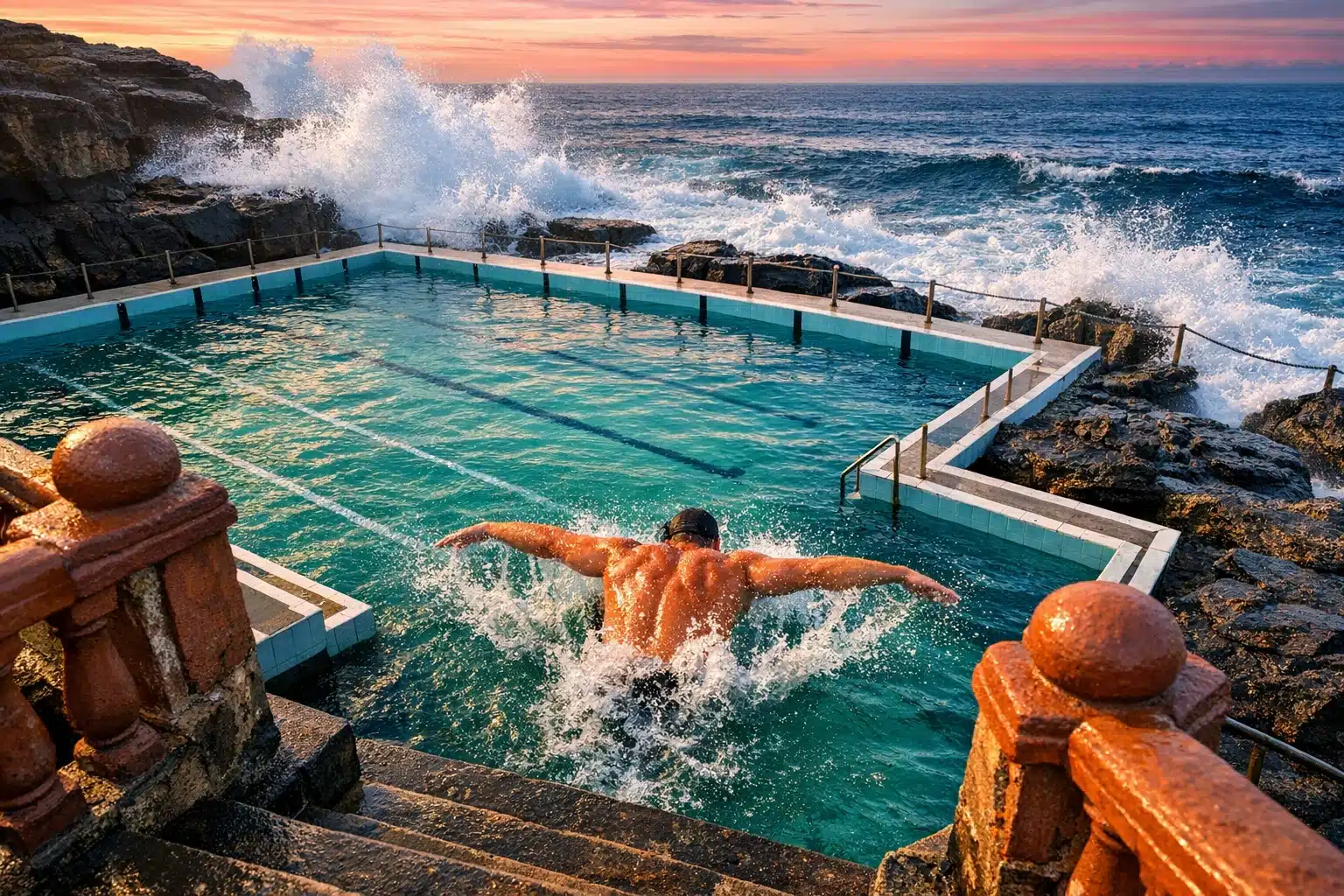
Breaststroke is slower than freestyle in most settings, yet it is often considered one of the most approachable strokes for recreational swimmers. The arm pull and whip kick happen in a coordinated cycle, and the stroke allows clear forward visibility. Timing is essential, however; if the pull, breath, kick, and glide fall out of order, efficiency disappears quickly. Butterfly is the most technically demanding of the four. Both arms recover together, the body undulates through the stroke, and the dolphin kick requires strength, timing, and flexibility. It is beautiful to watch when done well and exhausting when done poorly.
A simple comparison makes the differences clearer:
-
Freestyle: fastest, efficient, ideal for endurance and general fitness
-
Backstroke: good for breathing comfort and body awareness, but harder to steer
-
Breaststroke: slower, easier to look forward, strongly dependent on timing
-
Butterfly: powerful and dramatic, but physically demanding and usually learned later
Across all strokes, a few technical basics matter again and again. Body position should be long and balanced rather than rigid. Breathing should fit the stroke instead of disrupting it. Kicking supports movement, but it should not become frantic. Arm pulls need direction and purpose rather than sheer speed. Turns and push-offs matter too; in lap swimming, streamlined walls can make a noticeable difference in pacing.
For beginners, lessons and drills can accelerate progress. Common examples include kickboard work for leg rhythm, side-glide drills for balance, and short repeats that focus on form rather than fatigue. A swimmer who learns to move cleanly through the water often improves faster than one who simply tries harder. That is one of swimming’s quiet lessons: efficiency is not laziness, it is mastery.
Health Benefits of Swimming: Cardio, Strength, Recovery, and Mental Reset
Swimming is often described as a full-body workout, and that label is accurate when understood properly. Unlike some exercises that isolate a few muscle groups, swimming asks the body to coordinate the arms, legs, core, back, and breathing system all at once. Every stroke creates resistance in water, and because water pushes back from every direction, even controlled movement requires effort. That makes swimming useful for cardiovascular conditioning and muscular endurance at the same time. A steady swim set can elevate heart rate much like brisk cycling or jogging, while repeated pulling and kicking build strength in a more distributed way.
One of swimming’s most appreciated benefits is that it is low impact. Buoyancy reduces the amount of stress placed on joints, which is why swimming and water-based exercise are often recommended in rehabilitation settings or for people managing joint discomfort. This does not mean swimming is effortless or risk-free; shoulders, neck, and lower back can still become irritated with poor form or excessive volume. Still, for many people who cannot comfortably tolerate repeated impact on land, the pool offers a realistic way to stay active.
Swimming can also improve body awareness and breathing control. Because breaths must be timed with movement, swimmers learn to manage air more consciously than they might during a walk or casual gym session. That pattern can feel challenging at first, but over time it often leads to smoother pacing and better control under moderate exertion. Structured swim workouts can be tailored to very different goals, including:
- Longer easy sets for aerobic endurance
- Short intervals for speed and power
- Technique sessions for efficiency and coordination
- Recovery swims for gentle movement after harder training
There is also a strong mental side to swimming. The repeated sound of water, the rhythm of laps, and the focus required for breathing can create a kind of moving quiet. Many swimmers describe the pool as a place where mental clutter fades for a while. That does not mean swimming replaces professional support for stress, anxiety, or other mental health concerns, but it can be a helpful part of a wider wellbeing routine. In a noisy week, twenty or thirty minutes of focused swimming can feel like stepping into a calmer channel.
Energy expenditure in swimming varies widely. Stroke choice, body size, water temperature, pace, and skill level all affect how demanding a session becomes. Butterfly and fast freestyle generally require more energy than easy breaststroke or gentle backstroke, but even relaxed swimming can accumulate meaningful activity over time. The key is consistency. Three moderate swims each week can be more beneficial than one heroic session followed by long gaps.
It is also worth noting that swimming has social and developmental benefits. Masters groups, community pools, school teams, and local clubs create structure and accountability. For children, swimming lessons can build confidence and respect for the water. For adults, joining a lane group can turn exercise from a chore into a shared routine. Health, in other words, is not only about heart and muscle. Sometimes it is also about finding a habit you can actually keep.
Swimming Safely: Lessons, Gear, Pool Skills, and Open-Water Awareness
Swimming becomes far more enjoyable when safety is treated as part of the skill, not as an afterthought. People often imagine safety as a list of warnings, but in practice it is better understood as preparation. A confident swimmer knows how to enter water sensibly, how to gauge fatigue, how to read an environment, and when to stop. That matters in every setting, from a neighborhood pool to a beach with waves and changing currents.
For beginners, formal instruction is one of the best investments possible. A good lesson sequence usually starts with comfort in the water, then moves through breath control, floating, kicking, basic arm actions, and safe recovery to the wall. Treading water and learning how to rest without panic are especially important. Strong swimmers do not just know how to move fast; they know how to manage themselves when conditions are imperfect.
Pool swimming and open-water swimming may look similar from a distance, but they are very different experiences. Pools are controlled spaces with lane lines, known depth, clearer visibility, and often lifeguard supervision. Open water introduces temperature changes, reduced visibility, waves, currents, wildlife, and navigation challenges. A swimmer who feels comfortable in a pool should not automatically assume the same comfort in a lake or ocean. Open-water swimmers often train with additional precautions, such as using bright caps, swim buoys, and partners rather than swimming alone.
Basic safety habits are straightforward and effective:
- Children should be actively supervised around water at all times
- Beginners benefit from lessons and from swimming where help is available
- Open-water swimmers should check weather, water conditions, and local guidance
- It is wise to avoid overestimating endurance, especially in cold water
- Rest, hydration, and pacing matter more than ego
Equipment can also support learning and safety when used properly. The essentials are simple: a comfortable swimsuit, goggles, and sometimes a cap. Training tools such as kickboards, pull buoys, fins, and paddles can help isolate parts of the stroke, though they are most useful when paired with instruction. For open water or colder conditions, swimmers may use wetsuits for buoyancy and thermal protection. None of this gear replaces skill, but it can make practice more effective and more comfortable.
Pool etiquette deserves a brief mention as well, because safe spaces depend on shared behavior. Lane swimmers should choose an appropriate speed lane, allow faster swimmers to pass when needed, and avoid pushing off directly in front of someone. Circle swimming, resting at the lane corner, and communicating clearly with lane partners reduce collisions and frustration. In a way, etiquette is just social safety.
The best approach is humble and steady. Learn fundamentals, respect the environment, and build experience gradually. Water can be welcoming, but it is never trivial. The swimmers who enjoy it most over the long term are usually the ones who pair confidence with caution.
Swimming for Every Stage of Life: Building a Habit and a Practical Conclusion
One of swimming’s strongest qualities is that it does not belong to a single age group or personality type. Children can approach it through play and skill-building. Teenagers may discover competition, teamwork, and measurable progress. Adults often return to the water for fitness, stress management, or a fresh start after years away from organized exercise. Older adults may appreciate the support water provides for mobility and joint comfort. In each case, swimming changes shape without losing its value.
For children, the early goal is not elegant technique but familiarity, safety, and confidence. Games, floating exercises, and short skill tasks tend to work better than long technical lectures. For adults, especially those who feel self-conscious, the most important step is simply beginning. Many adult beginners assume everyone in the pool is watching them. In reality, most swimmers are focused on their own sets, their own breathing, and their own clock. That realization can be liberating. Starting with one or two short sessions per week is often enough to build comfort without creating dread.
A sustainable beginner routine might look like this:
- One session focused on lessons or technique drills
- One session of easy continuous swimming with generous rest
- Optional light dryland work for mobility and shoulder stability
- A simple goal, such as swimming for twenty minutes without rushing
Progress in swimming is not always dramatic from week to week, and that is normal. Early improvement often shows up as smoother breathing, calmer body position, and less fatigue over the same distance. Those are meaningful gains. Unlike some sports that reward aggression first, swimming often rewards patience first. If the pool initially feels awkward, that is not a sign of failure. It is simply part of learning a new environment.
Swimming also fits well alongside other lifestyles. Runners use it for active recovery. Team-sport athletes use it for conditioning. Busy professionals use it as structured time away from screens. Some people come to love the precision of interval sets; others prefer the gentle rhythm of unhurried lengths. There is room for both. The same water can host a race pace set at dawn and a relaxed rehabilitation session in the afternoon.
Conclusion for readers: If you are curious about swimming, you do not need to begin with grand ambitions. Start with comfort, good instruction, and realistic sessions. Learn the basics well, respect safety, and let technique grow over time. Swimming can become exercise, recreation, confidence, and calm in one habit. For readers looking for a practical activity that supports health while teaching a genuinely useful skill, the water is a very good place to begin.