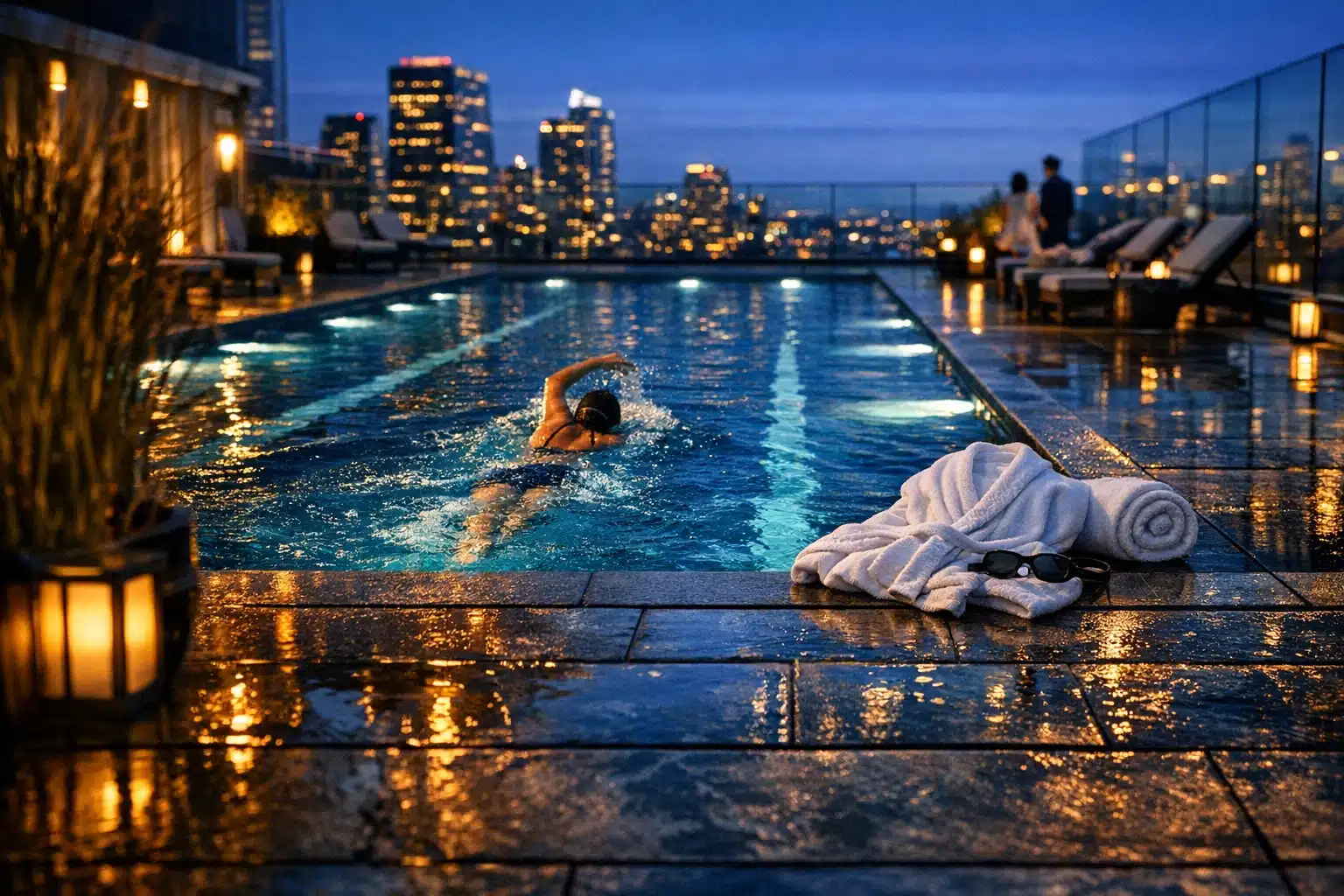
Explore the world of swimming
Swimming is one of the rare activities that can feel playful, practical, and demanding at the same time. It teaches survival, builds fitness, and opens the door to recreation, competition, and quiet reflection in equal measure. From busy public pools to calm lakes at sunrise, it matters to children learning confidence, adults pursuing health, and athletes sharpening performance. This article maps that broad world and explains why time in the water continues to reward so many people.
Outline
- The role of swimming in history, culture, and modern sport
- The physical and mental benefits that make it valuable across age groups
- The main strokes, core techniques, and differences in efficiency
- Training environments, equipment choices, and essential safety practices
- A practical conclusion for beginners, fitness swimmers, parents, and committed athletes
Swimming as a Skill, Sport, and Shared Human Practice
Swimming occupies a special place in human life because it is not only a pastime or a competitive event. At its most basic level, it is a survival skill. At the same time, it is also a method of transport, a source of joy, a test of endurance, and a highly technical sport. Few activities move so comfortably between these roles. A child splashing in a lesson pool, a lifeguard scanning the surf, and an Olympian diving from the blocks are all participating in the same broad tradition, even though their goals are entirely different.
Human beings have swum for thousands of years. Historical evidence shows that ancient civilizations knew how to move through water for fishing, travel, military preparation, and bathing. Over time, swimming evolved from necessity into organized recreation and then into formal competition. It has been part of the modern Olympic Games since 1896 for men and since 1912 for women, and today it includes multiple disciplines such as pool racing, open-water events, artistic swimming, diving, and water polo. That range helps explain why the sport attracts such a wide audience.
Swimming also differs from many land-based activities because water changes everything. Water is far denser than air, so even a small movement creates noticeable resistance. That means technique matters enormously. A runner can get away with some inefficiency for a while; a swimmer often feels it within a single length. The water gives feedback instantly. Poor alignment slows you down. Calm breathing steadies you. A precise hand entry can make a stroke feel almost effortless, while a rushed movement can turn progress into struggle.
Its forms are equally varied:
- Learn-to-swim programs focus on water confidence and safety.
- Lap swimming emphasizes fitness, pacing, and technique.
- Competitive swimming rewards speed, efficiency, and race strategy.
- Open-water swimming adds navigation, weather, and endurance.
- Therapeutic swimming supports mobility and low-impact exercise.
This variety is one reason swimming remains relevant in modern life. It can be social or solitary, gentle or intense, structured or spontaneous. In one setting, the pool is a classroom. In another, it is a training ground with stopwatches and split times. In still another, a lake becomes a place where silence deepens and every stroke feels like a conversation with the landscape. Swimming is not one narrow activity. It is a whole world with many entry points.
Why Swimming Matters for Health, Fitness, and Mental Well-Being
Swimming is widely respected because it challenges the body without asking it to absorb the repeated impact common in some other sports. That simple fact makes it attractive to an unusually broad group of people. Teenagers can use it to build conditioning. Office workers can use it to break sedentary routines. Older adults often appreciate the way water reduces stress on joints while still demanding coordinated effort. For many people, it is one of the most sustainable forms of exercise they can practice over a lifetime.
From a physical standpoint, swimming trains the cardiovascular system effectively. Sustained laps can raise the heart rate and improve aerobic capacity, while interval sets can push intensity higher. Health organizations commonly recommend at least 150 minutes of moderate aerobic activity per week for adults, and swimming can contribute meaningfully to that target. Unlike some activities that emphasize only one region of the body, swimming recruits the shoulders, back, core, hips, and legs in a connected pattern. Water resists movement in every direction, so even controlled drills can build useful muscular endurance.
Its low-impact nature deserves special attention. When a body is immersed in water, buoyancy reduces load on joints and can make exercise feel more accessible, especially for people managing stiffness or returning from inactivity. That does not mean swimming is easy. It means the challenge arrives differently. Instead of pounding the knees or ankles, the water asks for control, posture, breath timing, and repeated effort. Compare that with running, which develops bone-loading and straightforward cardiovascular strain, or cycling, which can be excellent for endurance but often leaves the upper body less engaged. Swimming offers another kind of balance.
Mental benefits are often just as important. Many swimmers describe the sport as meditative, and the description is not accidental. Repeated strokes, steady exhalation, and the muffled soundscape of water can create a strong sense of focus. A session may begin with distraction and end with mental clarity. There is also the confidence that comes from learning competence in an environment that once felt uncertain or even intimidating.
- It can improve endurance and general fitness.
- It supports coordination and body awareness.
- It offers a lower-impact option for many adults.
- It can reduce stress through rhythm and concentration.
- It helps build practical water safety skills alongside exercise.
That combination is rare. Swimming strengthens the body while often quieting the mind, and for busy people that dual value is hard to ignore.
The Craft of Swimming: Strokes, Breathing, and Efficient Movement
To watch a skilled swimmer is to see how much of the sport depends on precision rather than brute force. Fast swimming does involve strength, but strength alone rarely solves the puzzle. The water rewards streamlining, timing, and balance. That is why a smaller, technically polished swimmer can often move more effectively than someone who is simply powerful. Learning that lesson is one of the most satisfying parts of the sport. Improvement arrives not only when you work harder, but when you begin to work cleaner.
The four main competitive strokes each have their own character. Freestyle, usually swum as front crawl, is the fastest for most people because it combines continuous propulsion with relatively efficient body position. Backstroke uses a similar alternating arm pattern while the swimmer remains face-up, which can make breathing easier but orientation trickier. Breaststroke is often perceived as approachable because the face comes out of the water regularly, yet the stroke depends on careful timing between arm pull, breath, kick, and glide. Butterfly is the most explosive of the four, powerful and dramatic, but technically demanding and physically taxing.
Regardless of stroke, certain fundamentals matter almost everywhere. A stable body line reduces drag. A relaxed but organized kick supports rhythm. Controlled breathing prevents panic and preserves momentum. New swimmers often hold tension in the neck and shoulders, which makes them sink or rush. More experienced swimmers learn to trust the water, keep the head aligned, and exhale underwater so the next breath feels natural rather than desperate.
Useful technical ideas include:
- Keep the head neutral instead of lifting it forward.
- Rotate the body smoothly in freestyle and backstroke.
- Press the chest slightly to help the hips stay near the surface.
- Think about holding the water during the pull rather than slapping at it.
- Finish each length with awareness, not with a scramble for the wall.
Technique work can feel repetitive, but it is where swimmers discover the hidden elegance of the sport. One day the water feels heavy and stubborn. Another day, after a small correction in timing or posture, the lane seems to open. The black line at the bottom of the pool stretches ahead like a narrow road, and each stroke clicks into place with a quiet satisfaction. That sensation is part of why swimmers return so faithfully. Progress is measurable, yet it also feels deeply personal.
For beginners, lessons and drills are far more valuable than random mileage. For experienced athletes, video analysis, pacing sets, and stroke-specific training can reveal even finer improvements. In every case, swimming technique is less about fighting the water and more about learning to move with intelligence through resistance.
Pools, Open Water, Gear, Training Structure, and Safety
Where a person swims shapes the entire experience. A standard pool offers predictability. Lane markings, controlled temperature, measured distances, and lifeguard presence make it the easiest place to learn and track progress. A 25-meter or 25-yard pool encourages structured training because every repeat can be timed and compared. For people who enjoy clear feedback, that environment is ideal. You know where the wall is, how far you have gone, and whether your pace is rising or fading.
Open water creates a different kind of relationship with swimming. Lakes, rivers, and the sea replace tiled certainty with depth, current, visibility changes, and weather. The appeal is obvious: freedom, scenery, and a sense of adventure that no indoor lane can fully replicate. But the demands are also higher. In open water, swimmers must think about navigation, water temperature, boat traffic, entry and exit points, and the reality that distance often feels longer without walls to interrupt it. A calm pool teaches rhythm; open water tests judgment.
Equipment can be simple, and that simplicity is part of swimming’s charm. Essentials are usually limited to a swimsuit, goggles, and a cap where required. Beyond that, tools become situational rather than mandatory. Kickboards isolate leg work. Pull buoys emphasize upper-body mechanics. Fins can help with body position and ankle mobility. Paddles increase resistance, though they should be used thoughtfully to avoid shoulder strain. The best gear is not the flashiest item in a swim bag; it is the equipment that serves a clear purpose.
A basic training session often follows a reliable pattern:
- Warm-up to raise body temperature and settle breathing
- Technique drills to sharpen form
- Main set for endurance, speed, or pacing goals
- Cool-down to bring effort back under control
Safety should never be treated as an afterthought. Children need close, undistracted supervision around water, even when they seem confident. New swimmers should practice in supervised settings and build skill gradually. In open water, a buddy system is strongly advised, along with visible swim gear and awareness of local conditions. Cold water can impair breathing and coordination more quickly than many people expect. Fatigue can arrive quietly. Pride is not a rescue plan.
Good swimmers respect the environment they enter. They learn lane etiquette, follow facility rules, and make conservative choices when conditions look uncertain. That mindset does not reduce enjoyment. It protects it. The most rewarding swim is the one that ends safely, with enough energy and judgment left to come back another day.
Conclusion: Finding Your Own Place in the Water
If you are new to swimming, the sport can seem deceptively simple from the deck. People move up and down the lane, turn at the wall, and disappear into a rhythm that looks almost automatic. Then you get in, try a few lengths, and realize there is much more happening beneath the surface. That discovery should be encouraging, not discouraging. Swimming has layers, and that is precisely why it stays interesting. You can begin with the basic goal of feeling safe and later grow into fitness, technique, endurance, or competition.
For beginners, the smartest first step is usually formal instruction. A few good lessons can replace anxiety with understanding and correct habits before they become stubborn. For adults focused on health, swimming offers a practical route to consistent exercise, especially when joints or impact tolerance make other routines less appealing. For parents, water competence is not just an extracurricular option; it is a meaningful safety investment. For older adults, recreational swimmers, and people returning to activity, the pool can be a place where movement feels possible again instead of punishing.
Competitive athletes and ambitious amateurs have their own reasons to stay engaged. Swimming rewards discipline, split-second refinement, and patience. Improvements may come in fractions of a second or in a smoother feel for the water, but both matter. The sport teaches humility because the clock is honest and the water never flatters sloppy technique. Yet it also teaches resilience. A difficult set, a failed race, or a frustrating plateau can become the material from which better habits are built.
If you are wondering how to begin, keep the approach simple:
- Choose a safe, supervised place to practice.
- Start with short sessions rather than heroic distances.
- Prioritize breathing and body position before speed.
- Use structure, even if it is modest, so progress is visible.
- Stay curious enough to keep learning.
Swimming meets people where they are. It welcomes the cautious learner, the busy professional, the weekend adventurer, and the athlete chasing tiny gains. That is its enduring strength. Whether your goal is confidence, fitness, calm, or performance, the water offers a demanding but generous teacher. Step in with respect, return with consistency, and the world of swimming gradually opens around you.