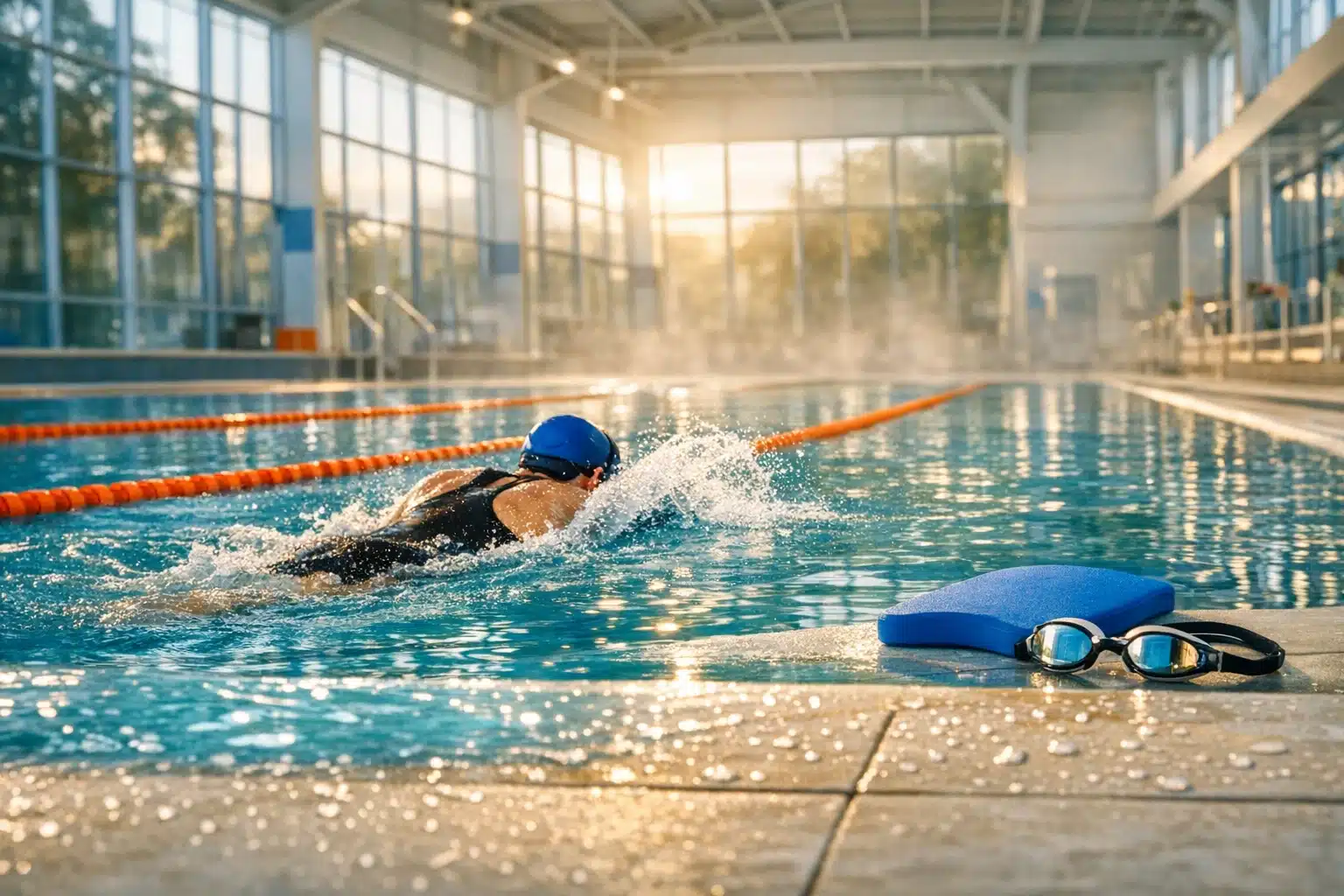
Explore the world of swimming
Introduction and Outline: Why Swimming Still Matters
Swimming is one of those rare activities that feels playful on the surface and deeply practical underneath. It builds endurance, sharpens coordination, and gives people of different ages a way to move without the heavy joint stress common in many land-based workouts. Someone may enter the pool to learn a survival skill, prepare for a race, recover from an injury, or simply wash away the noise of the day. In every case, water changes the body’s relationship with effort, turning movement into rhythm while demanding focus, patience, and control.
The importance of swimming reaches beyond exercise. It is widely recognized as a valuable life skill because comfort in water can improve confidence and safety in real-world settings such as beaches, lakes, rivers, and pools. At the same time, it remains one of the most accessible forms of cardiovascular activity for people who want a low-impact option. The World Health Organization recommends regular aerobic activity for adults, and swimming can help meet those goals while engaging the arms, legs, back, core, and respiratory system. It is not magic, and it is not effortless, but it combines practicality and fitness in a way few activities can match.
This article follows a clear path so the subject feels easy to navigate. Outline:
• First, it explains how swimming works as a physical skill, including buoyancy, breathing, body position, and the major strokes.
• Next, it looks at the health and fitness benefits, from heart and lung function to mobility and mental well-being.
• Then, it explores training methods, learning strategies, and safety habits that matter for beginners and experienced swimmers alike.
• Finally, it considers swimming as a lifelong activity, from recreational laps to competitive racing, open water challenges, and everyday personal goals.
There is also a quieter reason swimming stays relevant. Water has a way of stripping movement down to basics. You cannot argue with it, bluff through it, or rush it for long. If your breathing is off, the water tells you. If your body line is sloppy, the water tells you. That honesty makes swimming humbling, but it also makes progress deeply satisfying. One improved turn, one smoother exhale, one calmer length of the pool can feel like a small victory earned rather than borrowed.
For readers who are curious, cautious, returning after years away, or trying to train with more purpose, swimming offers more than a lane and a stopwatch. It offers a method of learning patience through motion. Understanding that world starts with the basic mechanics of how the body behaves in water and why swimming feels so different from walking, running, or lifting on land.
How Swimming Works: Water, Breathing, and the Four Main Strokes
To understand swimming, it helps to begin with a simple truth: water changes the rules. On land, gravity dominates almost every movement, and the body pushes against a stable surface. In water, buoyancy lifts, resistance surrounds, and balance becomes dynamic rather than fixed. That is why even strong runners or cyclists can feel surprisingly awkward in a pool at first. Swimming is not only about strength. It is about organizing the body so that motion travels forward instead of scattering sideways.
Water is much denser than air, which means even small technical errors cost energy. A dropped elbow, a lifted head, or stiff ankles can create drag and slow a swimmer down. This is why coaches often describe swimming as a game of reducing resistance as much as producing power. The body line matters. Breathing matters. Timing matters. In a well-executed stroke, the swimmer is not thrashing through water but shaping movement around it. The image is almost architectural: the body becomes a vessel designed to slip forward with the least wasted effort.
Breathing is one of the first technical hurdles. New swimmers often hold their breath too long or lift the head too high to inhale, which causes the hips and legs to sink. Efficient swimming usually relies on a calmer pattern: exhale into the water, turn or lift just enough to inhale, then return to a stable position. This rhythm matters because swimming asks the body to coordinate respiration with arm pulls, kicks, and rotation. Once breathing becomes smoother, everything else tends to improve.
The four competitive strokes each have their own logic and personality:
• Freestyle, usually swum as front crawl, is the fastest and most efficient for many distances because it allows continuous propulsion and a relatively streamlined body line.
• Backstroke uses similar alternating arm action but places the swimmer face-up, which changes orientation and can feel freeing or disorienting depending on experience.
• Breaststroke is often easier for casual swimmers to learn because the head can come higher and the pace is more deliberate, though technically it is difficult to master well.
• Butterfly is the most physically demanding of the four, requiring coordinated undulation, timing, and upper-body power.
Comparing the strokes reveals how varied swimming can be. Freestyle often suits distance work and fitness laps because it rewards rhythm and efficiency. Breaststroke may feel more approachable to beginners, yet it demands precise timing between the pull, breath, kick, and glide. Backstroke builds body awareness and shoulder control while removing the stress of face-down breathing. Butterfly, dramatic and demanding, exposes every weakness in timing but also shows how graceful raw effort can look when technique is solid.
Even beyond named strokes, swimming depends on foundational skills: floating, kicking, sculling, turning, pushing off the wall, and maintaining alignment. A swimmer who understands these basics usually improves faster than someone who only tries to muscle through laps. That is one reason technique work never really ends. At every level, swimming keeps asking the same question in a different tone: can you move with the water rather than against it?
Health and Fitness Benefits: What Swimming Does for the Body and Mind
Swimming has earned its reputation as a full-body workout for good reason. A typical session recruits the shoulders, chest, back, core, hips, and legs while also challenging the heart and lungs. Unlike many forms of exercise that load the joints with repeated impact, swimming takes place in a supported environment where buoyancy reduces stress on knees, ankles, and hips. That makes it especially appealing to people managing joint discomfort, returning from certain injuries under professional guidance, or looking for a long-term exercise habit they can sustain.
From a cardiovascular standpoint, swimming can be adapted to many intensities. A gentle continuous swim may function as moderate aerobic exercise, while fast intervals can push the body into vigorous territory. This flexibility matters because not everyone needs or wants the same training load. Someone recovering general fitness may benefit from relaxed sets with frequent rests, while a trained athlete might use sprint repeats, pull sets, and kick drills to target speed or endurance. In both cases, the heart is being asked to work efficiently, and the lungs are learning to operate under controlled breathing demands.
Energy expenditure in swimming varies widely. Stroke choice, pace, body size, water temperature, and technical efficiency all affect how much effort a session requires. For many people, a 30-minute swim can burn several hundred calories, but the number is less important than the overall training effect. Swimming builds work capacity while often feeling mentally different from machine-based cardio. There is no road noise, no pounding footstrike, and no need to stare at the same wall if the mind settles into rhythm. That sensory shift is part of the appeal.
The mental benefits are equally worth noting. Many swimmers describe the pool as a place where thinking becomes clearer. The repetitive nature of lap swimming, the sound of exhaled bubbles, and the short moments of silence between breaths can create a meditative quality. That does not mean every session is peaceful. Some are hard, frustrating, or technically messy. Still, even difficult swims often provide a rare kind of concentration, one that narrows attention to immediate tasks: the next wall, the next breath, the next streamlined push.
Swimming can also support mobility and posture when practiced with good form. Reaching through the water encourages length and controlled rotation, especially in freestyle and backstroke. Kicking patterns engage the hips and legs, while body alignment challenges the deep stabilizing muscles of the trunk. Of course, technique matters. Poor mechanics or excessive volume can irritate shoulders and necks, which is why balanced training and skill development are important. Swimming is beneficial, but not immune to misuse.
For families, older adults, recreational exercisers, and athletes cross-training for other sports, the advantages are broad:
• low-impact conditioning
• scalable intensity
• whole-body muscular involvement
• structured breathing practice
• potential support for stress management
• year-round usability in many indoor facilities
In plain terms, swimming works because it asks a lot of the body without always feeling punishing. It can challenge strength, endurance, technique, and concentration in the same hour. That blend explains why it remains a favored option for both health-focused exercise and serious performance training.
Learning, Training, and Safety: Building Skill Without Losing Confidence
Swimming rewards patience more than bravado. People often assume that improvement comes mainly from doing more laps, but progress usually depends on a better balance between technique, conditioning, and consistency. For beginners, the first goal is not speed. It is comfort: learning to float, exhale into the water, recover from minor mistakes, and move short distances with control. Once those basics are reliable, endurance and stroke quality can grow on a much more stable foundation.
One of the smartest ways to learn is to break swimming into small pieces. A full stroke can feel overwhelming because it combines breathing, kicking, arm action, rotation, and timing. Drills simplify the picture. Kickboard work can isolate leg action. Side-glide drills can teach balance. Single-arm practice can reveal what each pull is actually doing. Sculling can sharpen feel for the water. These exercises may look simple from the deck, but they solve real problems by slowing the movement down enough for the swimmer to notice what is happening.
Training structure matters as much as drill choice. A productive session usually includes a warm-up, a technical focus, a main set, and a short cool-down. That basic pattern helps swimmers prepare the body, rehearse skill, complete meaningful work, and finish without stopping abruptly. It also prevents the common mistake of turning every session into a sloppy race against fatigue. Not every day should feel epic. Some days are for aerobic rhythm. Some are for speed. Some are for form. Good training respects the difference.
For example, a recreational swimmer building fitness might use a week like this:
• one easy technique-oriented session with drills and short repeats
• one moderate endurance swim built around steady, comfortable lengths
• one mixed session using brief faster intervals with generous rest
This kind of variety reduces monotony and allows adaptation without unnecessary overload. Competitive swimmers, of course, may train far more often and add dryland strength work, mobility sessions, pace tracking, and race-specific planning.
Safety deserves equal attention because swimming takes place in an environment where small errors can become serious. The basics are familiar but important: swim where supervision is present when possible, respect posted pool rules, avoid overestimating your open-water ability, and learn how temperature, currents, and visibility can change risk outdoors. New swimmers should not confuse shallow-water comfort with true swimming competence. Being able to stand up is not the same as being able to manage fatigue, panic, or unexpected depth.
Open water adds another layer of complexity. Lakes, rivers, and oceans do not behave like pools. There may be waves, cold shock, changing weather, limited sight lines, and no lane rope to guide direction. Bright swim caps, tow floats, partner swimming, and knowledge of local conditions can make a major difference. Even experienced pool swimmers often find that open water exposes gaps in navigation and confidence.
The emotional side of learning should not be ignored either. Many adults carry embarrassment about starting late or restarting after years away. That feeling is common and unnecessary. Progress in swimming is rarely linear. One week the breath clicks; the next week the timing feels clumsy again. The key is to treat setbacks as information rather than failure. Water gives honest feedback, and honest feedback, while occasionally annoying, is one of the fastest teachers a swimmer can have.
Swimming for Life: Recreation, Competition, and a Practical Conclusion for Readers
Swimming lives many lives at once. In one lane, a teenager trains for a meet, counting splits and turns with fierce concentration. In another, an office worker swims easy laps before sunrise just to feel awake and less burdened by screens. Across town, a child learns to float for the first time, while an older adult joins an aqua fitness class to stay mobile and social. These scenes are different, yet they share the same medium and the same quiet lesson: swimming adapts to the person without losing its essential demands.
As a sport, swimming is rich in discipline and precision. Competitive formats range from short sprint events to distance races, from pool medleys to open-water competitions that test navigation and endurance as much as raw pace. Times are measured to fractions of a second, but improvement is built through thousands of repeated details: the angle of a hand entry, the sharpness of a turn, the discipline of pacing the first half of a race. That seriousness gives swimming a technical beauty. It is not only about who is strongest, but who can combine efficiency, control, and resilience under pressure.
As recreation, swimming offers a different reward. It can be social without being loud, solitary without feeling isolating, and structured without becoming rigid. A public pool, hotel lane, neighborhood lake, or calm sea can each provide a distinct experience. Some people love the predictability of counted lengths. Others prefer the open-water feeling of moving without walls. In both settings, swimming can become a ritual that marks time in a useful way: a morning reset, a weekend challenge, a seasonal tradition, or a practical form of exercise that stays doable when other activities feel too harsh.
For readers deciding whether swimming deserves a place in their routine, the strongest argument is its range. It can support general fitness, build skill, improve confidence around water, and provide a low-impact option during different stages of life. It does demand learning. Technique matters. Breathing takes practice. Early sessions can feel awkward. Yet those very challenges are part of what makes improvement meaningful. Few activities make progress so noticeable in such tangible ways.
Here is the clearest takeaway:
• If you are a beginner, start with comfort and safety before speed.
• If you already swim, refine technique so effort translates into smoother movement.
• If you want exercise that can grow with you over years, swimming is a strong candidate.
• If you need variety, the sport offers strokes, drills, distances, and environments that keep training fresh.
In the end, swimming is not only about crossing water. It is about learning to cooperate with a demanding element until struggle becomes skill. For the curious reader, the hesitant starter, the returning swimmer, or the athlete looking for depth in training, that is the invitation: step in, respect the water, and let steady practice turn uncertainty into fluency.