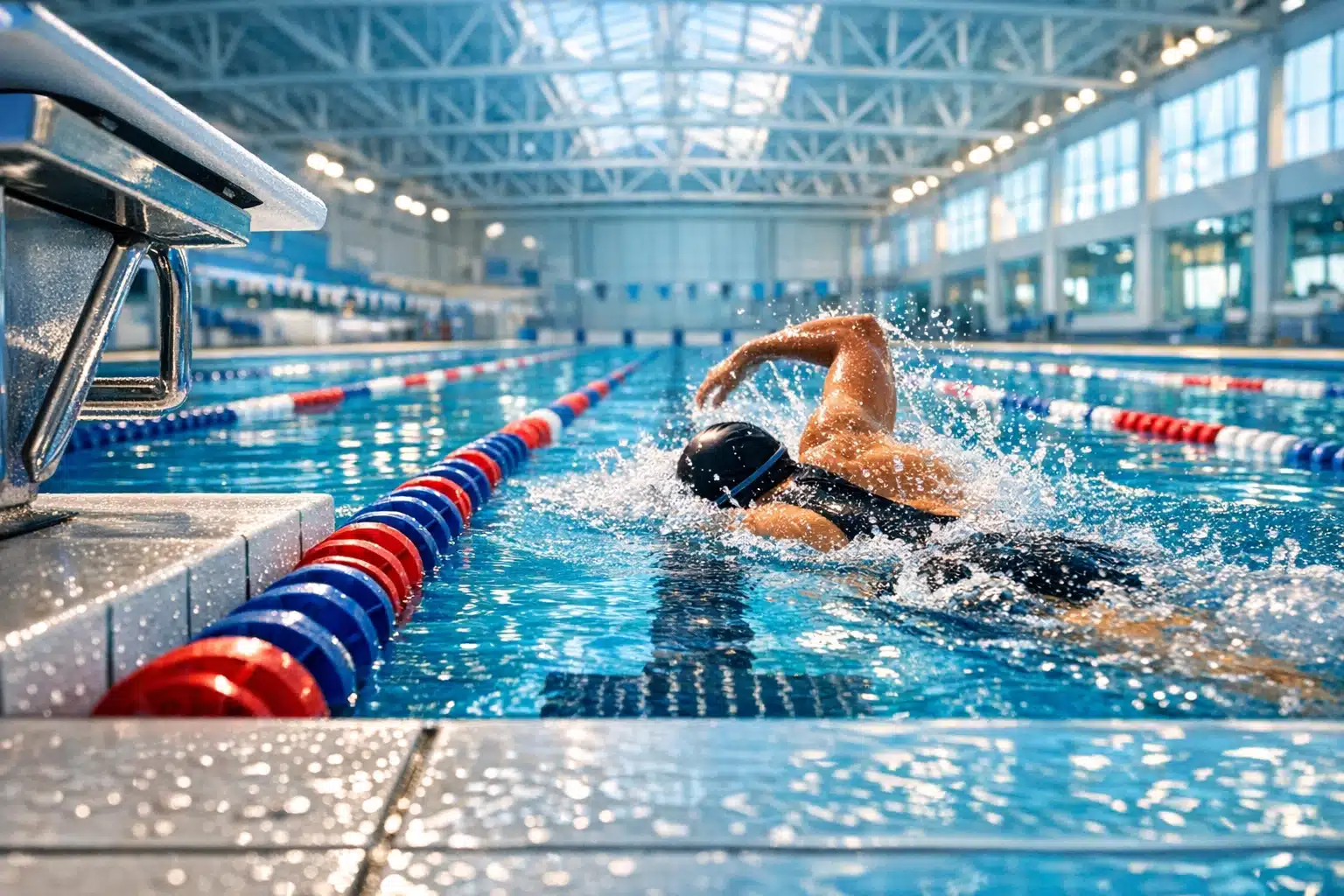
Explore the world of swimming
Swimming is one of the few activities that can feel playful and disciplined at the same time, which helps explain its lasting appeal. It builds endurance, strengthens major muscle groups, and allows many people to exercise with less joint stress than running or court sports. From learn-to-swim lessons to lifelong fitness, it also carries practical value because confidence in water improves safety. That blend of health, skill, and everyday relevance makes swimming worth understanding well.
Outline
- Why swimming remains important for health, mobility, and water safety
- How the main strokes work and what makes each one distinct
- How beginners and improving swimmers can train safely and effectively
- Where swimming fits into recreation, competition, and lifelong fitness
- What practical next steps make sense for new, returning, and goal-focused swimmers
Why Swimming Stands Out as a Lifelong Skill and Sport
Swimming occupies a rare space in the world of physical activity because it is both a survival skill and a form of exercise. That alone makes it different from many other sports. A person can enjoy swimming for recreation, use it for structured training, compete in it, or simply rely on it for confidence in water during travel and everyday life. Few activities cover so many needs at once.
From a fitness perspective, swimming offers a full-body challenge. Water is far denser than air, so every pull, kick, and body rotation meets steady resistance. That means the shoulders, back, chest, core, hips, and legs all contribute. At the same time, buoyancy reduces the impact placed on joints, which is one reason swimming is often recommended for older adults, people returning from certain injuries, and those who find high-impact exercise uncomfortable. It is not effortless, but it can be gentler on knees and ankles than activities that involve repeated pounding on hard surfaces.
Swimming also supports cardiovascular health. A steady session of lap swimming can raise the heart rate, improve stamina, and help people work toward public health exercise guidelines such as the widely cited target of at least 150 minutes of moderate activity per week. The exact intensity depends on stroke choice, pacing, and rest periods, but even moderate swimming can challenge the lungs in a distinctive way because breathing must be timed rather than taken whenever convenient. That rhythm teaches control as well as endurance.
Another important reason swimming matters is safety. Learning to float, tread water, and move efficiently through water can reduce risk in real-life situations. Global health agencies have long treated drowning as a serious public health issue, especially for children and in communities with frequent exposure to open water. While swim lessons are not a complete safety guarantee, they can build awareness, confidence, and better decision-making.
Compared with other common activities, swimming has a broad reach:
- Running often develops endurance efficiently, but it can be hard on joints for some people.
- Cycling is excellent for aerobic fitness, yet it does not teach water confidence or full-body coordination in the same way.
- Gym training builds strength well, but swimming blends resistance and endurance in one moving environment.
There is also a mental side that keeps people coming back. Pools can be noisy with whistles and splashes, yet once a swimmer finds a rhythm, the experience becomes strangely quiet. The face dips below the surface, sound softens, and movement turns repetitive in a calming way. For many people, that combination of focus and flow is part of the attraction. Swimming is exercise, certainly, but it can also feel like a reset button.
Understanding the Main Strokes and the Technique Behind Efficient Movement
At first glance, swimming can look simple: jump in, move your arms, kick your legs, and go forward. In practice, technique shapes almost everything. Good form helps a swimmer travel farther with less wasted effort, while poor form can leave even a strong athlete feeling slow and exhausted. Before comparing strokes, it helps to understand one basic idea: water rewards streamlining. The more balanced and aligned the body is, the less resistance it creates.
Freestyle, often called front crawl, is the fastest and most commonly taught stroke for fitness swimming. It uses alternating arm recovery, a flutter kick, and side breathing. Because it can be efficient over long distances, it dominates lap swimming, distance races, and triathlon. A swimmer with good freestyle technique keeps the hips high, rotates the body smoothly, and breathes without lifting the head too far. When beginners struggle, it is often because they hold tension in the neck, kick from the knees instead of the hips, or wait too long to exhale underwater.
Backstroke shares the alternating rhythm of freestyle but flips the swimmer onto the back. Many people find it easier because the face stays out of the water, though maintaining a straight line can be tricky. It encourages shoulder mobility, body awareness, and a steady kick. The main challenge is navigation; in a pool, swimmers must learn to count strokes or watch lane markings so they do not drift or collide with the wall.
Breaststroke is slower for most swimmers, but it is highly popular because its timing feels intuitive once learned. The arms sweep outward and inward, the legs perform a whip kick, and the head rises naturally during the breathing phase. Unlike freestyle, where momentum stays more continuous, breaststroke has a glide phase. When done well, it looks almost economical, like the swimmer is sliding through a narrow channel. When done poorly, it can become stop-and-go and waste large amounts of energy.
Butterfly is the most physically demanding of the four competitive strokes for many swimmers. Both arms recover together, the legs perform a dolphin kick, and the whole body undulates in a coordinated wave. It requires strength, timing, and rhythm. Butterfly can be beautiful to watch, but it is also unforgiving if the swimmer fights the water instead of moving with it.
Across all strokes, several technical habits matter:
- Keep the head position calm and controlled.
- Exhale steadily in the water instead of holding the breath too long.
- Use the core to support body alignment.
- Think about pulling water backward rather than slapping at the surface.
- Match speed with form rather than trying to muscle through every length.
In a quiet lane, technique becomes the difference between thrashing and traveling. Two swimmers may look equally determined, yet the one who understands balance, timing, and breath control often moves with less noise and more speed. That is one of swimming’s enduring lessons: power matters, but precision matters more than people expect.
Learning to Swim Better: Training Methods, Equipment, and Safety Basics
Improvement in swimming usually comes from consistency and structure rather than dramatic effort. Many beginners assume they need to swim long distances nonstop to build fitness, but that approach can be discouraging. A more effective method is to combine short repeats, technical drills, and manageable rest intervals. For example, a swimmer might alternate easy 50-meter lengths with kick practice, breathing drills, or backstroke recovery lengths. This keeps sessions varied while allowing technique to stay intact.
One reason progress can feel slow at first is that swimming exposes inefficiency quickly. If the body sits too low in the water, if the kick is rushed, or if breathing interrupts balance, fatigue arrives fast. That is not a sign that improvement is impossible; it simply means that efficiency should come before volume. Many coaches would rather see a new swimmer complete a short session with good alignment than struggle through twice the distance with poor habits.
A practical training session often includes a simple structure:
- Warm-up to loosen the shoulders, back, and legs
- Skill work such as kick drills, sculling, or breathing patterns
- Main set focused on endurance, speed, or pacing
- Cool-down to recover and reinforce relaxed movement
Equipment can help when used with purpose. Goggles improve visibility and comfort, making it easier to maintain head position. A swim cap keeps hair more controlled and can reduce drag slightly. Kickboards isolate the legs, while pull buoys support the hips and place more emphasis on the upper body. Fins can help swimmers feel better body position and ankle movement, though they should not replace proper technique. Pace clocks, waterproof watches, and simple training logs are useful for tracking progress over time.
Safety deserves equal attention. In pools, that means understanding depth, lane etiquette, lifeguard instructions, and basic rules about diving. In open water, the list becomes longer: weather changes, currents, visibility, water temperature, and the presence of boats all matter. Bright swim buoys, wetsuits where appropriate, and swimming with a partner or organized group are sensible precautions. Even confident pool swimmers should respect the differences between a lane and a lake. Open water removes the black line on the pool floor, the fixed wall at the end of each length, and the predictability many swimmers rely on.
For people just starting or returning after years away, a realistic progression works best:
- Begin with shorter sessions two or three times per week
- Focus on comfort in the water before chasing speed
- Add distance gradually as breathing and form improve
- Consider lessons or coached sessions to fix issues early
Swimming rewards patience. A runner can often grit through bad form for a while, but water is less forgiving. It asks for timing, control, and repetition. The good news is that every technical improvement tends to make the entire experience more enjoyable, which is why even modest progress can feel surprisingly satisfying.
Swimming in Different Contexts: Fitness, Recreation, Open Water, and Competition
Swimming is not one single experience. It changes dramatically depending on where, why, and how a person swims. For some, it is an early-morning lane session before work. For others, it is family time at a community pool, ocean swimming on holiday, rehabilitation after injury, or a serious competitive pursuit measured down to fractions of a second. This variety is one reason the sport continues to attract such a wide audience.
Recreational swimming is often where people first discover the pleasure of being in water. It may not involve strict sets or stroke analysis, but it still offers real benefits. Playing in a pool, practicing floating, or swimming casually at the beach can build comfort and movement awareness. For children, this stage is especially valuable because positive early experiences often shape long-term confidence. Enjoyment matters. A person who associates water with curiosity rather than fear is more likely to keep learning.
Fitness swimming usually adds structure. Swimmers count lengths, monitor rest, and select sets based on endurance, technique, or speed. Compared with many gym routines, lap swimming has a strong rhythm that can feel almost meditative. Each wall creates a mini checkpoint. Each length offers feedback. If the stroke falls apart, the swimmer notices immediately. This makes swimming both physically demanding and mentally engaging.
Competitive swimming takes precision further. Starts, turns, underwater phases, stroke legality, and race strategy all matter. In a short race, a powerful dive and streamlined breakout can shape the result almost instantly. In longer events, pacing and energy management become critical. Competitive environments also develop discipline: regular training, recovery habits, and close attention to detail. Whether the level is school competition, club racing, college sport, or masters meets, swimmers learn that small gains accumulate.
Open-water swimming adds another layer altogether. The environment is less controlled, which changes the skills required. Swimmers must sight ahead, adapt to chop or current, and manage anxiety without the boundaries of lane ropes. Pool swimmers often discover that open water feels mentally bigger than its distance suggests. Yet many grow to love exactly that quality. Lakes, rivers, and oceans can turn a workout into an adventure.
These settings each offer something different:
- Pool lanes provide consistency and measurable training.
- Leisure swimming encourages confidence and enjoyment.
- Open water develops awareness, adaptability, and resilience.
- Competition sharpens discipline and technical efficiency.
The most interesting part is that a swimmer does not need to choose only one identity. Someone can train for fitness, join an occasional race, and still enjoy a slow summer swim with friends. Swimming can be serious without becoming rigid, and playful without losing value. That flexibility gives it unusual staying power across decades of life.
Conclusion: A Practical Path for New, Returning, and Goal-Focused Swimmers
If you are new to swimming, coming back after a long break, or trying to move from casual lengths to purposeful training, the encouraging truth is that progress does not require a dramatic overhaul. It usually begins with a small, steady plan. One or two consistent sessions each week can build comfort. A few technique adjustments can make breathing easier. A modest increase in distance can improve stamina faster than many people expect. Swimming may look complex from the deck, but it becomes manageable once broken into clear steps.
For beginners, the first goal should not be speed. It should be control: floating calmly, exhaling in the water, finding a sustainable stroke, and learning how to rest without panic. For adults using swimming as exercise, the main opportunity is consistency. Because the activity is low impact for many people, it can fit into long-term routines more easily than sports that leave the body sore after every session. For parents, one of the most meaningful investments may be swim education, because it supports both enjoyment and safety. For athletes from other sports, swimming offers a demanding cross-training option that develops aerobic fitness and body awareness in a very different environment.
A useful next-step checklist looks like this:
- Pick a realistic goal, such as swimming twice a week for a month
- Choose one stroke to improve rather than trying to master everything at once
- Track simple markers like total distance, comfort level, or number of lengths without stopping
- Use lessons, clubs, or coached sessions if technique feels stuck
- Keep safety habits non-negotiable, especially outside the pool
What makes swimming especially worthwhile is that its benefits overlap. Better technique can improve fitness. Better fitness can build confidence. More confidence can lead to safer choices in and around water. Over time, the swimmer who once focused only on finishing a length may start noticing smoother turns, steadier breathing, or a calmer mind after training. Those changes are easy to underestimate, yet they are often what keep people in the sport.
For the target audience of this article, whether you want health, skill, recreation, or a new challenge, swimming offers a practical and lasting route forward. Start where you are, respect the learning curve, and let progress come one length at a time. The water rewards patience, and for many people, that is exactly why it becomes more than exercise. It becomes a habit with value far beyond the pool.