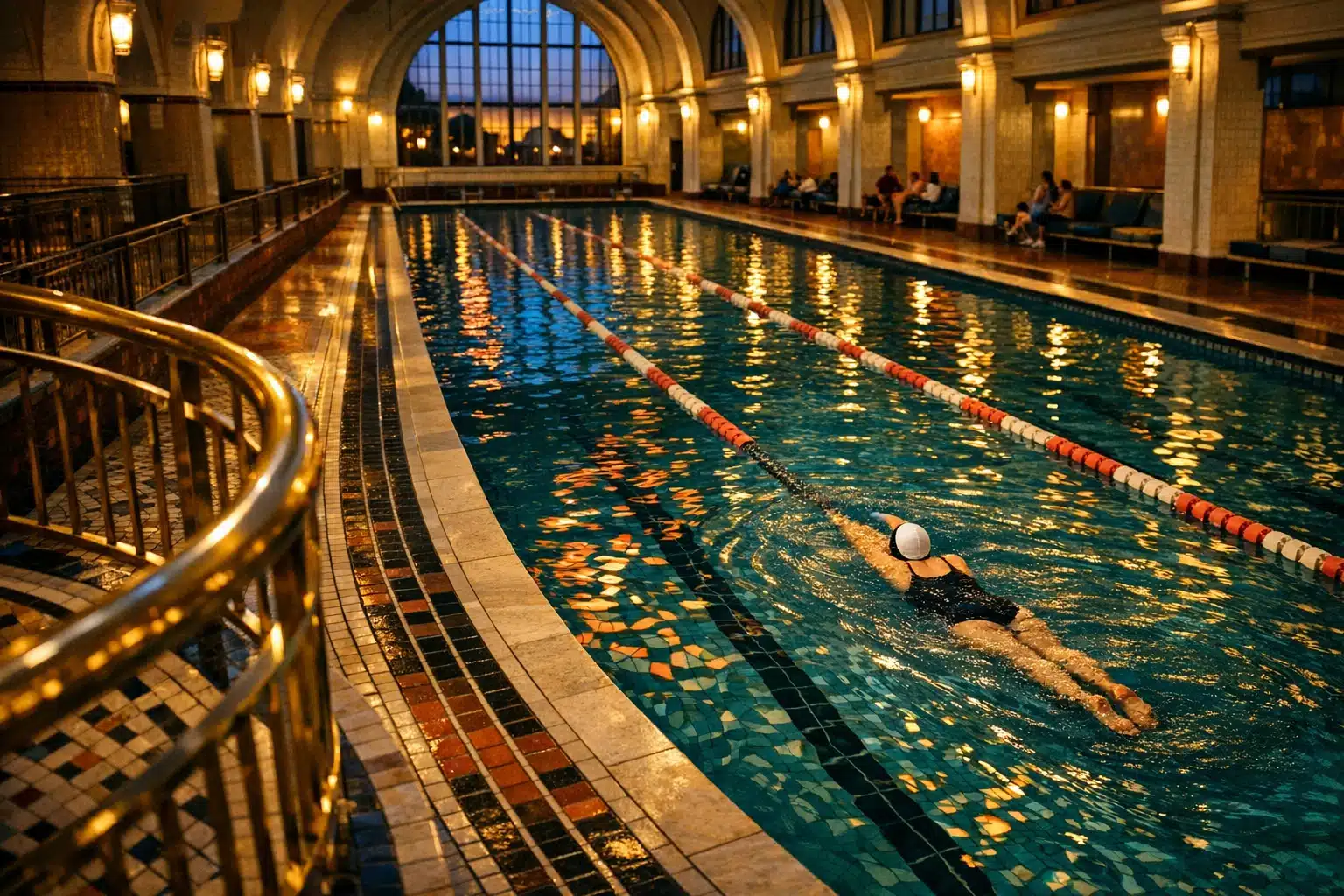
Explore the world of swimming
Swimming sits at a fascinating crossroads of sport, survival, recreation, and health. It can be a child’s first taste of independence, an athlete’s engine for endurance, and an adult’s gentle path back to movement. From busy public pools to still lakes at sunrise, moving through water offers both practical value and quiet satisfaction. Understanding swimming matters because it is not merely a competitive event; it is a lifelong skill that strengthens fitness, confidence, and personal safety.
Outline
- Why swimming matters in human history, daily life, and modern sport
- The four main strokes and how they differ in technique, rhythm, and energy use
- The physical and mental benefits of swimming, from cardiovascular fitness to stress relief
- Training basics, safety habits, and equipment choices for beginners and improving swimmers
- How swimming fits into competition, community life, open water adventure, and long-term wellness
Why Swimming Matters: History, Purpose, and Lasting Appeal
Swimming is older than organized sport itself. Long before lanes, stopwatches, and podiums existed, people entered water out of necessity. Rivers had to be crossed, coastlines explored, fish caught, and lives saved. Over time, what began as a practical skill also became a cultural practice, a military exercise, a leisure activity, and eventually a formal sport. Today, swimming still carries traces of all those roles. It is useful, enjoyable, technical, and deeply human at the same time.
Part of swimming’s appeal comes from the environment in which it happens. Water changes the rules. Movement becomes smoother but more demanding because water is far denser than air, creating resistance in every direction. That resistance is one reason even steady lap swimming can challenge the heart, lungs, shoulders, core, and legs. Yet the same water also supports the body. Buoyancy reduces impact on joints, which is why swimming is often recommended for people recovering from injury, older adults, or anyone looking for exercise that feels kinder than constant pounding on pavement.
Swimming also matters because it is closely tied to safety. In many countries, public health authorities continue to stress the importance of basic water competency, especially for children. Knowing how to float, tread water, control breathing, and move to safety can be as important as any fitness benefit. A person does not need to become fast to become capable, and that distinction is valuable. Confidence in water is not about performance alone; it is about reducing panic and building control.
There is also an emotional side to swimming that statistics cannot fully capture. Pools can sound loud with whistles, splashes, and echoing voices, but the moment the face slips under the surface, the world changes. Noise softens. Breathing becomes deliberate. Attention narrows to body position, timing, and the line ahead. For many people, this creates a rare blend of focus and calm.
- It can be recreational, competitive, therapeutic, or life-saving
- It suits many age groups and fitness levels
- It develops both physical skill and mental composure
That combination gives swimming unusual range. A child learns it for safety, a teenager may pursue it for competition, an adult may use it for stress management, and an older swimmer may value it for mobility and routine. Few activities remain relevant across so many stages of life. Swimming does, and that is a large part of its lasting appeal.
Understanding the Strokes: Technique, Comparison, and Efficiency
To an untrained eye, swimming can look simple: arms pull, legs kick, body moves forward. In reality, each stroke is a carefully timed pattern of balance, propulsion, and breathing. The four main competitive strokes freestyle, backstroke, breaststroke, and butterfly differ not only in appearance but also in rhythm, muscular demand, and efficiency. Learning their contrasts helps swimmers understand why one stroke feels smooth while another feels like wrestling the water itself.
Freestyle, usually performed as front crawl, is the fastest and most commonly taught stroke for distance and fitness swimming. It uses alternating arm recovery, a flutter kick, and side breathing. When done well, freestyle rewards streamlined body position and relaxed rotation through the torso. It is often considered the most efficient stroke for covering ground, which is why beginners and elite swimmers alike spend so much time refining it. Small adjustments, such as keeping the head still or entering the hand cleanly, can have an outsized effect on speed and energy use.
Backstroke shares some structural similarities with freestyle, but the face stays above water and the swimmer moves on the back. That can make breathing easier, although body alignment becomes more difficult because the swimmer cannot see where they are going. Backstroke is excellent for developing balance, shoulder coordination, and awareness of hip position. It also offers variety for swimmers who need a break from repeated face-down breathing patterns.
Breaststroke is slower than freestyle but highly technical. Its pull and kick are symmetrical, and timing matters almost more than strength. Many recreational swimmers find breaststroke approachable because the head rises regularly and the pace feels more controlled. However, swimming it efficiently is surprisingly difficult. A mistimed kick or wide arm sweep creates drag very quickly. Good breaststroke is less about force and more about glide, precision, and patience.
Butterfly is the most dramatic of the four strokes and often the most feared by beginners. Two arms recover together, the body undulates, and the dolphin kick drives the rhythm. Butterfly demands coordination, timing, shoulder strength, and a strong core. Done poorly, it feels exhausting within seconds. Done well, it has a striking, wave-like beauty, as if the swimmer is briefly borrowing the motion of a marine animal.
-
Freestyle: fastest, efficient, ideal for endurance and general training
-
Backstroke: useful for posture, balance, and easier breathing
-
Breaststroke: slower, technical, often comfortable for steady recreational swimming
-
Butterfly: powerful, demanding, best for advanced coordination and strength
Stroke choice also depends on goals. A triathlete may prioritize freestyle efficiency. A learner may use breaststroke to build confidence. A competitive swimmer trains all four to improve versatility. In every case, technique matters more than brute effort. Water punishes wasted movement with unusual honesty. The swimmer who learns to reduce drag, control breathing, and apply force at the right moment usually outperforms the one who simply tries harder. That is what makes swimming both humbling and endlessly interesting.
The Benefits of Swimming: Fitness, Recovery, and Mental Well-Being
Swimming has earned its reputation as a full-body exercise for good reason. Few activities ask the heart, lungs, arms, shoulders, back, core, and legs to work together so consistently. Because water provides continuous resistance, even moderate swimming can raise cardiovascular demand while also training muscular endurance. At the same time, the support of the water reduces impact on joints, making swimming especially valuable for people who want hard work without harsh land-based stress.
From a cardiovascular perspective, swimming helps people move toward the widely cited public health goal of at least 150 minutes of moderate aerobic activity per week. The exact training load varies by stroke, pace, and fitness level, but regular swimming can improve stamina, circulation, and exercise capacity. Many swimmers also notice improved breathing control over time. Unlike some activities where breathing happens almost automatically, swimming forces rhythm and awareness. Every few strokes becomes a decision. That pattern can improve respiratory efficiency and build tolerance for sustained effort.
Muscularly, swimming is deceptive. A lap may look fluid and graceful, yet the body is working against resistance from head to toe. Freestyle and butterfly challenge the shoulders, lats, and core. Breaststroke places a distinct demand on hip mobility and leg timing. Backstroke develops posterior chain coordination and trunk control. Because these demands are spread across multiple muscle groups, swimmers often build balanced endurance rather than relying too heavily on one area.
Swimming is also widely used in recovery and rehabilitation settings. Immersion can reduce load on painful joints, and controlled movement in water may help people rebuild confidence after injury. Neck-deep water can substantially reduce body weight bearing, which explains why aquatic exercise is often recommended after certain orthopedic issues. Of course, rehabilitation plans should still be guided by qualified professionals, but water remains one of the most adaptable exercise environments available.
The mental benefits deserve equal attention. Swimming can be social when done in classes, clubs, or team practices, yet it can also be meditative when done alone. Repetitive laps, steady breathing, and sensory separation from the rush of daily life often create a calming effect. Many swimmers describe the pool as a place where mental clutter settles. That does not mean every session feels peaceful; hard intervals can be brutally demanding. Still, even demanding workouts can leave behind the satisfying clarity that follows focused effort.
- Low-impact movement for many age groups
- Useful for cardiovascular health and endurance
- Supports flexibility, coordination, and posture
- Can reduce stress and improve mood through structured physical activity
Perhaps the greatest strength of swimming is that it meets people where they are. One person uses it to return from injury. Another uses it to train for a triathlon. A third uses it to escape a noisy day and find twenty quiet minutes. The setting is the same, but the benefits adapt to the swimmer. That flexibility is a rare advantage in the world of exercise.
How to Start or Improve: Training Principles, Safety, and Equipment
Beginning to swim, or returning after a long break, can feel intimidating. Pools often seem full of invisible rules: which lane to use, how to pass, what gear matters, how often to breathe, how not to look lost. The good news is that improvement in swimming usually comes from patient consistency rather than dramatic talent. A few sound principles can take a newcomer from uncertainty to steady progress.
The first priority is not speed but comfort in the water. Before chasing distance, swimmers should learn to exhale underwater, float on front and back, streamline the body, and recover calmly after stopping. These simple skills reduce anxiety and create a foundation for every stroke. Once comfort improves, short repeats work better than exhausting nonstop efforts. For example, a beginner may gain more from ten manageable lengths with rest than from one long struggle that destroys technique.
Technique should come early, because swimming rewards efficiency more than force. A new swimmer who lifts the head too high, kicks wildly, or crosses the arms over the center line will tire quickly. Drills can help isolate these issues. Kicking with a board, one-arm freestyle, side balance drills, and pull sets all teach specific pieces of movement. Video feedback or a trained coach can also accelerate progress, since many errors feel normal until they are seen clearly.
Safety is equally important. Pools are controlled environments, but they still demand respect. Open water adds even more variables, including currents, temperature, visibility, and navigation. No swimmer should assume fitness alone guarantees safety.
- Never swim alone in open water
- Learn local rules, depth changes, and rescue procedures
- Use bright caps or visible markers where appropriate
- Stop immediately if dizziness, chest pain, or severe cramping appears
- Supervise children closely, even when lifeguards are present
Equipment can help, but it should support skill rather than replace it. A well-fitted swimsuit and comfortable goggles matter most. A swim cap can reduce drag and keep hair manageable, though it is not mandatory for every casual swimmer. Kickboards, pull buoys, fins, and paddles each have a place in training, but using them without understanding their purpose can hide weaknesses rather than fix them. Fins may improve body position for a learner, while paddles can build strength for an advanced swimmer, yet neither is a substitute for timing and balance.
A useful weekly structure often includes easy aerobic swimming, short technique sets, and occasional faster efforts. Rest also matters. Shoulders, in particular, can become irritated when volume rises faster than control improves. For that reason, swimmers should increase distance gradually and pay attention to signs of fatigue. Progress in the pool is often quiet at first. One day breathing feels easier. Another day turns become cleaner. Then, without much drama, a distance that once felt impossible becomes routine. That quiet accumulation is how many strong swimmers are made.
Swimming for Life: Competition, Community, and Final Takeaways
Swimming can be many things at once. For some, it is a stopwatch-driven sport built on split times, race plans, and relentless technical refinement. For others, it is a social hobby shaped by local pools, masters groups, family outings, or open water meetups. The beauty of swimming is that these worlds often overlap. A recreational swimmer may sign up for a charity mile. A former competitor may rediscover the water years later, not to win, but simply to feel capable again.
The competitive side of swimming teaches discipline in a very clear language. Improvement is measurable. A tenth of a second matters. Starts, turns, underwater phases, and pacing all become meaningful. This precision attracts people who enjoy process as much as outcome. Yet competition also reveals a broader truth: even elite performance depends on basics. Streamline, breathing control, body position, and efficient catch never stop mattering. In that sense, the beginner and the champion are connected by the same principles, just expressed at different speeds.
Beyond pools, open water swimming adds another dimension. Lakes, rivers, and oceans replace black lane lines with changing light, shifting temperature, and natural uncertainty. Some swimmers find this freedom exhilarating. Others prefer the predictability of a pool. Neither preference is more valid; they simply ask for different skills. Pool swimmers train precision and pacing with consistency. Open water swimmers develop navigation, adaptability, and comfort with variables that cannot be fully controlled.
Swimming also contributes to community in quiet but important ways. Parents bring children to lessons. Older adults gather for morning lap sessions. Teams create friendships through early practice hours and shared fatigue. Lifeguards, coaches, and instructors pass along knowledge that blends technique with trust. Water has a way of turning strangers into familiar faces, especially in places where people return week after week.
For readers considering swimming, the key message is simple: you do not need to approach it as an expert to benefit from it. Start with safety, basic skills, and realistic goals. If your aim is fitness, build consistency before intensity. If your aim is confidence, practice calm breathing and body control. If your aim is performance, respect technique as much as effort. Swimming rewards patience with a rare combination of strength, mobility, resilience, and composure. It can challenge you fiercely, but it can also meet you gently. That balance is why so many people stay with it for years, and why it remains one of the most worthwhile activities to learn, revisit, and share.