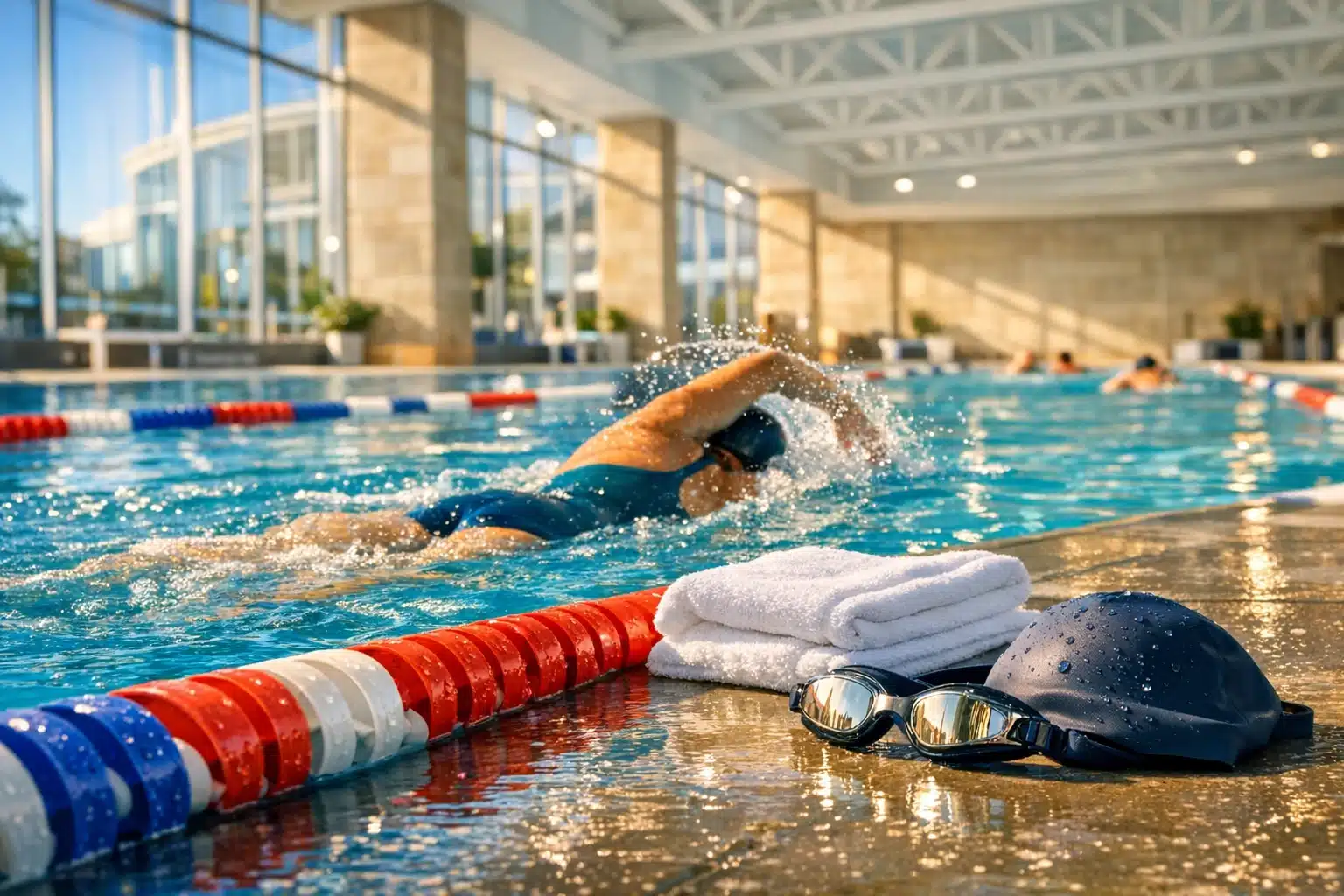
Explore the world of swimming
Swimming has a rare kind of versatility: it can challenge an Olympian, welcome a nervous beginner, and support someone recovering from injury, all within the same lane. It builds endurance, strengthens major muscle groups, and offers relief from the constant impact that often comes with land-based exercise. In a time when many people want movement that feels sustainable rather than punishing, swimming remains both practical and surprisingly joyful.
Outline
- Why swimming matters for health, confidence, and daily life
- The main strokes and the technique principles behind efficient movement
- Training methods, endurance building, and essential safety practices
- How swimming serves different ages, goals, and lifestyles
- A reader-focused conclusion on building a lasting swimming habit
Why Swimming Matters: Health, Confidence, and Everyday Value
A good swim feels almost contradictory in the best possible way. It is demanding without always feeling harsh, calming while still physically intense, and highly technical even when it looks graceful and effortless from the deck. That unusual mix explains why swimming has stayed relevant across generations. It is a sport, a survival skill, a rehabilitation tool, and for many people, a reliable way to stay active when other forms of exercise become uncomfortable.
From a fitness perspective, swimming offers three major benefits at once: cardiovascular training, muscular engagement, and low-impact movement. Because water is far denser than air, every stroke creates resistance. Your shoulders, back, chest, core, hips, and legs all contribute, even during a relaxed session. At the same time, buoyancy supports body weight, which reduces stress on joints. In chest-deep water, the load placed on the body can drop dramatically compared with standing on land, which is one reason aquatic exercise is often recommended for people managing arthritis, excess body weight, or recovery from certain injuries.
Swimming also helps adults work toward the physical activity levels commonly recommended by public health organizations, including at least 150 minutes of moderate aerobic activity each week. Depending on stroke, pace, and body size, a session can burn a meaningful amount of energy, often somewhere in the broad range of roughly 200 to 700 calories per hour. More importantly, it builds stamina in a way that many people can maintain over time. That matters because the best exercise plan is rarely the most dramatic one; it is usually the one a person can return to next week.
The value of swimming is not limited to fitness charts. Learning to move safely in water is also a practical life skill. For families living near pools, lakes, beaches, or rivers, basic swimming ability can improve confidence and support safer recreation. The psychological side matters too. Repeated laps create rhythm, and rhythm has a way of quieting mental noise. Many swimmers describe the lane as a place where the day becomes simpler: breathe, reach, pull, kick, turn, repeat.
- It trains the heart and lungs without repeated pounding on the body.
- It develops whole-body coordination rather than isolating one region at a time.
- It supports both recreation and safety around water.
- It can be adjusted for beginners, fitness swimmers, and elite athletes.
Compared with running, swimming usually places less impact on knees and ankles. Compared with cycling, it challenges the upper body more directly. Compared with many gym routines, it asks for timing, breath control, and body awareness in a single package. That combination gives swimming unusual staying power. It is not just exercise you do in water; it is a different relationship with movement altogether.
Understanding the Main Strokes and the Mechanics Behind Them
Swimming becomes more rewarding once the strokes stop feeling like random effort and start making mechanical sense. Water rewards efficiency more than brute force. A swimmer who is aligned, balanced, and patient in the catch often moves better than someone who attacks the lane with frantic energy. That is why technique is not an optional extra; it is the foundation.
The most common stroke for fitness and recreation is freestyle, also called front crawl. It is usually the fastest and most energy-efficient for distance. The body stays long and relatively flat, the arms alternate in a continuous pulling pattern, and the flutter kick helps maintain balance and momentum. The key challenge is breathing. Beginners often lift the head too high, which drops the hips and creates drag. A better habit is to rotate the body slightly and turn the face just enough to inhale while one goggle remains close to the surface.
Backstroke uses a similar alternating arm pattern, but the swimmer is face-up. That makes breathing easier for many people, though body alignment becomes tricky because there is no visual reference line in the water. A steady flutter kick and stable hips help keep the body high. Backstroke is often a useful counterbalance to freestyle because it opens the chest and encourages shoulder control in a different way.
Breaststroke is slower for many swimmers, yet it is widely loved because the breathing pattern feels more natural. The stroke combines a circular arm pull with a whip kick and a short glide. Timing matters immensely. If the arms, breath, and kick are out of sequence, the stroke turns into stop-and-go effort. Done well, it feels measured and almost conversational, like the swimmer is negotiating with the water rather than fighting it.
Butterfly is the most demanding of the four competitive strokes. Both arms recover together over the water, while the body uses a wave-like motion powered by the core and a dolphin kick. It is spectacular to watch and exhausting to perform. For beginners, butterfly often teaches an important lesson: power without timing leads nowhere fast.
-
Freestyle: best for speed, fitness, and distance
-
Backstroke: useful for posture, balance, and easier breathing
-
Breaststroke: approachable for many learners, but highly timing-dependent
-
Butterfly: advanced, powerful, and technically unforgiving
Across all strokes, the same principles appear again and again: streamline the body, reduce unnecessary drag, hold a controlled head position, and use the core as a link between arms and legs. Common mistakes include kicking too hard from the knees, crossing the hands over the centerline, breathing late, and rushing the stroke rate. Good coaching often focuses on simple corrections: lengthen the spine, soften the neck, press the chest slightly, finish each pull, and let the water support you. Once those ideas click, swimming starts to feel less like survival and more like skilled travel.
Training, Endurance, and Safety in Pools and Open Water
Many people think swimming improvement comes only from doing more laps, but volume alone is rarely the full answer. Effective swimming training usually combines structure, technique, pacing, and recovery. A thoughtful session gives the body a reason to adapt instead of merely endure. That is true for beginners who want to complete a few lengths without stopping and for experienced swimmers aiming to sharpen race speed.
A balanced practice often includes four parts: a warm-up, drills, a main set, and a cool-down. The warm-up raises body temperature and prepares the shoulders, lungs, and nervous system for harder work. Drills isolate specific skills such as body rotation, catch mechanics, or kick timing. The main set targets an outcome, which may be endurance, speed, threshold work, or stroke technique under fatigue. The cool-down brings effort back down gradually and gives the swimmer a final chance to reset form.
Here is a simple example of a recreational workout structure:
- 200 meters easy swim
- 4 x 50 meters drills with rest between repetitions
- 6 x 100 meters at a steady, manageable pace
- 4 x 25 meters faster efforts with full focus on form
- 100 to 200 meters easy recovery
This kind of session teaches more than distance. It teaches control. Swimming endurance is not just about strong lungs; it is about holding technique as fatigue builds. A swimmer who starts sleek and finishes sloppy is spending energy inefficiently. That is why moderate intervals with short rest are so valuable. They develop conditioning while preserving enough quality to make the practice meaningful.
Safety deserves equal attention. In the pool, risks may seem small, yet they still matter. Wet decks, fatigue, poor lane etiquette, and overestimating one’s ability can create preventable problems. Open water adds more variables: currents, changing temperature, reduced visibility, weather shifts, waves, and the absence of walls for rest. The water can look peaceful and still behave unpredictably.
Useful safety habits include the following:
- Never swim alone in open water.
- Choose supervised pools or monitored beaches when possible.
- Use a brightly colored cap or swim buoy outdoors for visibility.
- Check water temperature, conditions, and local guidance before entering.
- Build distance gradually instead of making sudden jumps in workload.
- Hydrate and protect skin from sun exposure during longer sessions.
Pool swimming and open-water swimming are related but not identical. Pools offer measured distances, lane lines, predictable temperatures, and turn intervals that break up effort. Open water removes those markers, which can feel liberating or unsettling depending on experience. Some swimmers love the meditative line of a black stripe on the pool floor; others prefer the horizon and the sense of moving through a landscape. Both settings can be deeply rewarding, but both demand respect. Confidence in water should always be paired with humility, because water does not negotiate with carelessness.
Swimming for Different Ages, Goals, and Lifestyles
One of swimming’s greatest strengths is how widely it applies. The same environment can host a child learning to float, a triathlete training for endurance, an older adult staying mobile, and a person using water exercise as part of recovery. Few activities serve such different needs without losing their essential character.
For children, swimming can build confidence, coordination, and water awareness. Lessons often begin with basics that look simple from the side: blowing bubbles, floating on the back, kicking with support, and learning how to return to the wall. These early steps matter because they create familiarity instead of panic. A child who respects the water and understands simple skills is better equipped for future recreation and sport. Just as important, structured lessons can teach listening, patience, and body control in a playful setting.
Teenagers and young adults may approach swimming through school teams, club programs, or general fitness. At this stage, the sport can teach discipline very clearly. Progress is measurable in times, splits, turns, and stroke counts. Improvement is rarely hidden. If technique slips, the clock notices. That honesty can be frustrating, but it also gives swimming strong educational value. The athlete learns that consistency, sleep, nutrition, and pacing all shape performance.
For adults, swimming often becomes a practical answer to busy lives. A 30- or 40-minute session can deliver meaningful cardiovascular work without the joint strain some people experience with high-impact exercise. Adults returning to sport after years away frequently appreciate the pool because it allows a fresh start. Nobody cares what your mile time was in college when you are relearning breathing patterns at 7 a.m. beside retirees, shift workers, and dedicated lane regulars.
Older adults may find swimming and other aquatic activities especially useful because of the reduced impact on hips, knees, and back. Water walking, gentle lap swimming, and guided aqua fitness sessions can all support mobility and balance. Likewise, people recovering from certain injuries often benefit from the water’s support, although medical guidance is important when pain, surgery, or chronic conditions are involved.
Swimming also adapts well to different motivations:
- Fitness swimmers may focus on endurance, stress relief, and regular activity.
- Competitive swimmers prioritize times, technique refinement, and race strategy.
- Cross-training athletes use swimming to develop aerobic capacity with less impact.
- Social swimmers enjoy masters groups, lessons, or community sessions for accountability.
- Adaptive swimmers and para-athletes show how the sport can be modified without losing challenge or beauty.
There is also a lifestyle dimension that should not be overlooked. Some people want quiet solo laps before work. Others want coached sessions, open-water groups, or family time at a local pool. Swimming can be solitary, social, meditative, technical, playful, or fiercely competitive. That flexibility is part of its appeal. It does not demand that everyone pursue the same version of success. It simply offers the water, and then asks what kind of swimmer you want to become.
Conclusion for Readers: How to Build a Lasting Swimming Habit
If you are reading this as a beginner, a returning swimmer, or someone simply looking for exercise that feels kinder to the body, swimming is worth serious consideration. It combines fitness, skill, and mental refreshment in a way few activities can match. It can meet you at almost any starting point, which is exactly why it remains so relevant. You do not need elite speed, expensive gear, or a dramatic backstory to benefit from time in the water.
The most effective way to begin is to make the process small, specific, and repeatable. Instead of aiming for perfection, aim for rhythm. Schedule two or three manageable sessions each week. Focus first on comfort in the water, then on breathing, then on technique, and only after that on distance or speed. Progress in swimming is often quiet before it becomes obvious. One day you stop clinging to the wall between lengths. Another day your breathing settles. Eventually the lane that once felt endless starts to feel familiar.
A simple action plan can help:
- Choose a realistic starting frequency, such as two sessions per week.
- Use short repeats with rest instead of forcing one long, exhausting swim.
- Take a lesson or join a coached group if technique feels confusing.
- Track practical markers like comfort, consistency, and stroke control, not just speed.
- Respect recovery, especially in the shoulders, neck, and lower back.
For recreational readers, the message is encouraging: swimming does not have to become a serious sport to become a meaningful part of life. For fitness-focused readers, it offers durable aerobic work and whole-body resistance. For parents, it is a valuable skill to introduce early. For older adults and those managing impact sensitivity, it can open a door back into regular movement. For competitive personalities, it provides endless room for refinement.
In the end, swimming teaches a useful lesson that extends beyond the pool. Force is not always the answer. Sometimes progress comes from alignment, patience, and learning how to work with the environment rather than against it. That is true in water, and it is not a bad principle for the rest of life either. So if the world feels noisy and your routine feels stale, a lane, a cap, and a steady set of breaths may be a very good place to begin again.