Explore the world of swimming
Introduction
Swimming has a rare kind of relevance: it is a lifesaving skill, a competitive sport, a form of therapy, and a lifelong source of enjoyment all at once. In one lane, people chase medals; in another, they rebuild strength after injury or simply learn to trust the water for the first time. Few activities serve children, older adults, and elite athletes so well, which is why swimming deserves a closer, more practical look.
Outline
1. Why swimming matters in daily life, public health, and sport.
2. The main strokes and how they differ in rhythm, speed, and difficulty.
3. Physical and mental benefits, with comparisons to land-based exercise.
4. Training methods, essential equipment, and safety habits for pools and open water.
5. A practical conclusion on how different readers can use swimming to meet their own goals.
Why Swimming Matters: More Than a Pool Activity
Swimming occupies a special place among physical activities because it blends utility with enjoyment. A person can swim to compete, to relax, to rehabilitate, to cross-train, or simply to stay safe around water. That broad value explains why swimming appears in school programs, military training, community recreation, and elite international sport. Few activities move so easily between survival skill and personal passion.
Part of swimming’s uniqueness comes from the environment itself. Water is roughly 800 times denser than air, so every movement meets resistance. That means even controlled, smooth swimming can challenge the muscles and cardiovascular system. At the same time, buoyancy supports body weight, reducing impact on joints. This combination is unusual. Running can build endurance effectively, but it places repeated force on knees, hips, and ankles. Cycling is gentler on the joints, yet it does not engage the upper body in the same balanced way. Swimming sits in a useful middle ground: demanding, but often kinder to the body.
Its importance also extends beyond fitness. In many regions, the ability to swim is closely tied to water safety. Beaches, lakes, rivers, hotel pools, and backyard pools all present risk when people overestimate their comfort in the water. Learning to float, tread water, breathe calmly, and move efficiently can make the difference between panic and control. This is one reason swimming lessons for children are often treated not just as an extracurricular activity, but as a practical life skill.
Swimming is also remarkably adaptable. It can be practiced in:
– indoor pools for technique and year-round training
– outdoor pools for recreation and competition
– lakes and seas for open-water challenges
– therapy pools for rehabilitation and gentle movement
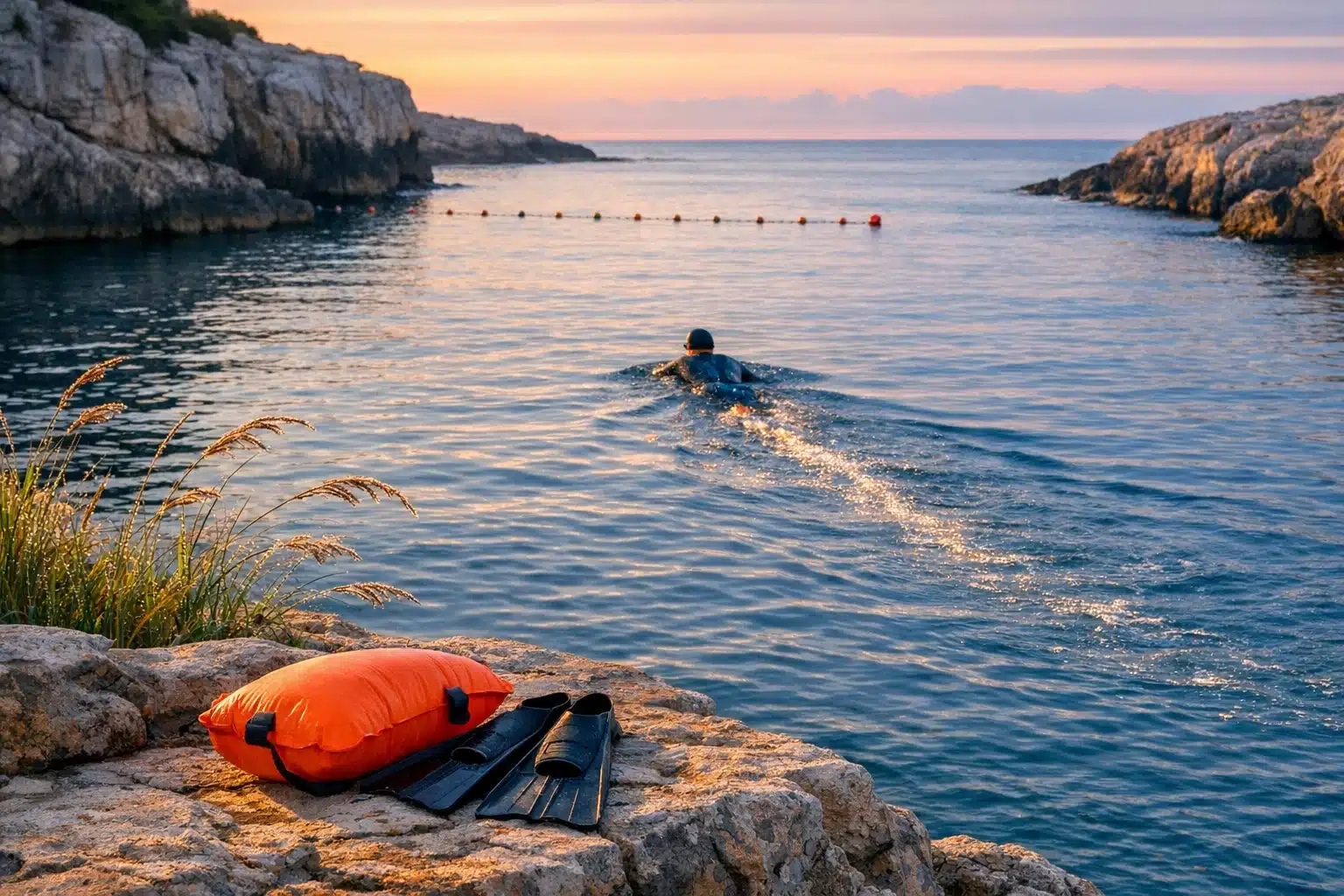
Culturally, swimming has an unusually wide reach. Some people meet it through neighborhood lessons, others through Olympic broadcasts, triathlon events, or family holidays. The image changes with the setting: a child holding the pool wall, a masters athlete counting intervals, an open-water swimmer moving through dawn light like a quiet metronome. Yet the core appeal remains consistent. Swimming asks for coordination, patience, breath control, and respect for the water. It rewards those qualities with confidence, endurance, and freedom of movement.
That is why swimming matters so much. It is not merely exercise done in a different place. It is a skill that supports safety, a sport that develops discipline, and a leisure activity that many people can continue across decades. In a world full of short-lived fitness trends, swimming feels refreshingly solid. It teaches people how to move well, how to stay calm, and how to keep learning every time they enter the water.
The Four Main Strokes and What They Teach the Swimmer
To someone watching from the pool deck, swimming may look simple: arms pull, legs kick, the body moves forward. In practice, technique shapes everything. The four competitive strokes—freestyle, backstroke, breaststroke, and butterfly—each demand a different relationship with timing, body position, and breathing. Learning them is not just about variety; it teaches how water responds to force, balance, and rhythm.
Freestyle, usually swum with the front crawl, is the fastest and most efficient stroke for most people. The body stays long and horizontal, the legs produce a steady flutter kick, and the arms alternate in a continuous pulling pattern. Good freestyle depends on streamlining and rotation. Swimmers who lift their head too much or let their hips sink create drag and lose speed. This is why coaches emphasize “swimming downhill” with the chest slightly pressed and the spine aligned. Freestyle is often the first stroke taught for fitness because it adapts well to lap swimming and interval training.
Backstroke is sometimes described as freestyle’s mirror image, but the experience is very different. Because the face stays out of the water, breathing is easier for beginners who feel anxious about inhaling during strokes. However, the stroke brings a new challenge: direction. Without looking forward continuously, swimmers must rely on lane markings, flags, and spatial awareness. Backstroke also rewards a stable core and relaxed shoulder rotation, making it a useful stroke for posture and body control.
Breaststroke is often the most familiar stroke among casual swimmers, yet technically it can be deceptive. The kick is whip-like rather than fluttering, and the pull and breathing pattern must be timed carefully. Many beginners feel comfortable with breaststroke because the head rises naturally and the pace can be slower. Still, efficient breaststroke requires patience. If the swimmer rushes the stroke, the body never glides properly. When done well, it feels less like a struggle and more like a quiet reset between surges.
Butterfly is the most physically demanding of the four for most swimmers. Both arms recover together, the body moves in a wave-like motion, and the kick usually comes from a dolphin action. It punishes poor timing immediately. Yet butterfly also teaches something valuable: power only works when it is organized. Thrashing wastes energy; rhythm creates flight across the surface.
A simple comparison helps:
– Freestyle: fastest, efficient, common for fitness and racing
– Backstroke: good for balance and controlled breathing
– Breaststroke: accessible pace, highly technical timing
– Butterfly: powerful, demanding, rhythm dependent
Understanding these strokes gives swimmers more than mechanical options. It builds awareness. Each stroke reveals a different lesson about the water: slice through it, roll with it, pause and glide, or rise and drive. Together, they form the language of swimming. A person may specialize in one stroke, but learning all four creates a more complete athlete and a more confident swimmer.
Swimming for Health, Fitness, and Mental Well-Being
Swimming is often praised as a full-body workout, and that description is accurate, but it is also incomplete. What makes swimming especially valuable is the way it develops several areas of health at once. It can improve cardiovascular endurance, muscular stamina, mobility, and coordination while remaining accessible to people who cannot tolerate repeated impact. For that reason, swimming serves not only athletes chasing performance, but also adults returning to exercise, older people managing joint stress, and individuals rebuilding strength after physical setbacks.
From a fitness perspective, swimming challenges both the heart and the muscles. Moving through water requires sustained effort because resistance is present in every direction. The shoulders, chest, back, core, hips, and legs all contribute, although the emphasis changes by stroke. Freestyle tends to reward shoulder endurance and trunk rotation, breaststroke uses a distinct leg action, and butterfly demands strong coordination through the whole body. Unlike some gym exercises that isolate one region at a time, swimming naturally trains the body as a connected system.
Its low-impact character is another major advantage. When people run, jump, or perform court sports, joints absorb repeated force from landing and direction changes. Swimming reduces that load because buoyancy supports a large portion of body weight. This does not make swimming easy; it simply changes the kind of stress involved. The body still works hard, but the impact profile is lower. That is why swimming is commonly recommended as one option for people who want aerobic exercise without the pounding associated with many land-based activities.
Public health guidance often recommends at least 150 minutes of moderate aerobic activity per week for adults. Swimming can contribute directly to that goal. A steady lap session, water aerobics class, or structured interval set can all count, depending on intensity. Calorie expenditure varies widely by body size, stroke choice, and pace, so it is better to think of swimming as an adaptable tool rather than a magic formula. A relaxed breaststroke session and a fast butterfly workout do not place the same demand on the body.
The mental benefits are just as important. Water has a way of narrowing attention. The outside world fades into smaller sounds: splashes, bubbles, breath, the soft slap of turns at the wall. For many swimmers, that creates a meditative effect. Counting laps, matching stroke to breath, and settling into rhythm can lower stress and improve mood. This does not mean every session feels serene; some workouts are brutal and leave the lungs bargaining for peace. Even so, the focused nature of swimming often provides relief from mental clutter.
Swimming can also support confidence and independence. Progress is measurable:
– a first unassisted float
– a smoother breathing pattern
– ten continuous laps instead of two
– greater comfort in deeper water
Compared with exercise modes that depend heavily on speed or appearance, swimming often rewards patience more visibly. Small technical improvements can produce meaningful gains in ease and efficiency. That makes it especially encouraging for people who want sustainable progress. In the end, swimming strengthens more than muscles. It can build resilience, routine, and the rare pleasure of feeling both worked and refreshed at the same time.
Training Smarter: Technique, Equipment, and Safety
Many people assume swimming improvement comes mainly from doing more laps. Volume matters, but smart training matters more. A swimmer who repeats poor mechanics for an hour may simply become very efficient at being inefficient. The best progress usually comes from combining technique work, structured conditioning, and reliable safety habits. In the water, details are not decoration; they are the difference between struggling and moving well.
A useful swim session often includes four parts: warm-up, drills, main set, and cooldown. The warm-up prepares the shoulders, lungs, and nervous system for harder effort. Drills isolate specific skills, such as high-elbow recovery in freestyle or timing in breaststroke. The main set provides the session’s central challenge, whether that means endurance, speed, pacing, or stroke control. The cooldown then lowers effort gradually and allows technique to settle again. This structure is common from beginner programs to competitive squads because it balances learning with workload.
Technique deserves constant attention. Common errors include holding the breath too long, kicking from the knees rather than the hips, crossing the hands over the center line, or swimming with a tense neck. Small adjustments can change the entire feel of a stroke. For example, exhaling steadily underwater often makes breathing more relaxed on the surface. Similarly, better body alignment can reduce drag enough that a swimmer feels faster without getting stronger overnight.
Equipment can help, provided it is used with purpose. Basic items include a comfortable swimsuit, goggles that seal well, and a cap if needed for hair control or competition. Training tools may add variety:
– kickboard for leg-focused work
– pull buoy for upper-body emphasis and body position awareness
– fins for propulsion and ankle flexibility
– paddles for strength and feel of the catch
– pace clock or waterproof watch for timing intervals
Still, tools do not replace skill. A swimmer who depends on fins for every set may feel powerful, yet lose the chance to develop natural propulsion. Equipment works best when it highlights a specific lesson instead of acting like a shortcut.
Safety is equally important, especially because confidence can slip into carelessness. In pools, swimmers should know lane etiquette, avoid diving into unknown depth, and respect fatigue. In open water, the risk profile changes sharply. Currents, temperature, visibility, weather, and boat traffic all matter. Even strong pool swimmers can feel unsettled in a lake or sea because there are no lane lines, no walls every 25 or 50 meters, and no guarantee of calm conditions. That is why open-water swimming should be approached with preparation, local knowledge, and ideally a partner or supervised event.
For children, supervision is non-negotiable. For adults, realism is essential. Being able to swim a few lengths indoors does not automatically translate into safety everywhere. The wisest swimmers combine ambition with humility. They learn the environment, respect limits, and build skills step by step. Training smarter means more than swimming harder. It means choosing methods that improve performance while protecting health, confidence, and long-term enjoyment.
Choosing Swimming for Your Life: A Practical Conclusion
Swimming becomes most meaningful when it is matched to the person doing it. A child may need basic water confidence and playful skill-building. A busy office worker may want an efficient, low-impact workout before the day begins. An older adult may value mobility, circulation, and movement that feels supportive rather than punishing. A competitive athlete may care about split times, stroke count, and race strategy. The water can meet all of these people, but not in exactly the same way.
For beginners, the smartest goal is not speed. It is comfort paired with control. Learning how to float, breathe steadily, kick efficiently, and recover calmly after swallowing a little water creates the foundation for everything else. For these swimmers, short sessions with clear objectives are usually better than exhausting marathons. Success might mean finishing a lesson without panic, swimming one extra length, or leaving the pool eager to return. That kind of progress matters because consistency grows from positive experience.
For fitness-focused adults, swimming can become a practical long-term habit. It works particularly well for people who want cardiovascular training without repeated pounding on the joints. A simple weekly plan might include one technique session, one steady endurance swim, and one interval-based workout. That mix keeps training interesting and useful. It also prevents the common trap of turning every swim into the same medium-paced effort, which often feels tiring without producing much improvement.
Parents looking at swimming for their children should think beyond sport specialization. Even if a child never races, swimming lessons can improve safety, confidence, and body awareness. If a child does become competitive, the sport also teaches punctuality, discipline, patience, and the ability to work through slow, incremental gains. In a culture obsessed with instant results, swimming offers a quieter lesson: meaningful development is often measured in seconds, centimeters, and habits.
Older adults and people returning from injury may find swimming especially rewarding because the water supports movement that might feel uncomfortable on land. Gentle laps, walking in water, or supervised aquatic exercise can help maintain mobility and general fitness. The key is choosing intensity that matches current ability rather than chasing someone else’s standard.
If there is one broad message for readers, it is this:
– learn the basics well
– respect safety at every stage
– improve technique before chasing speed
– choose goals that fit your body, schedule, and motivation
Swimming does not ask everyone to become a racer. It simply offers a rare package: skill, exercise, recreation, and resilience in one practice. Whether you want to protect your family around water, strengthen your body, clear your mind, or explore a sport that can last for decades, swimming is worth the effort. Step in patiently, learn deliberately, and let the water teach you what efficient movement really feels like.