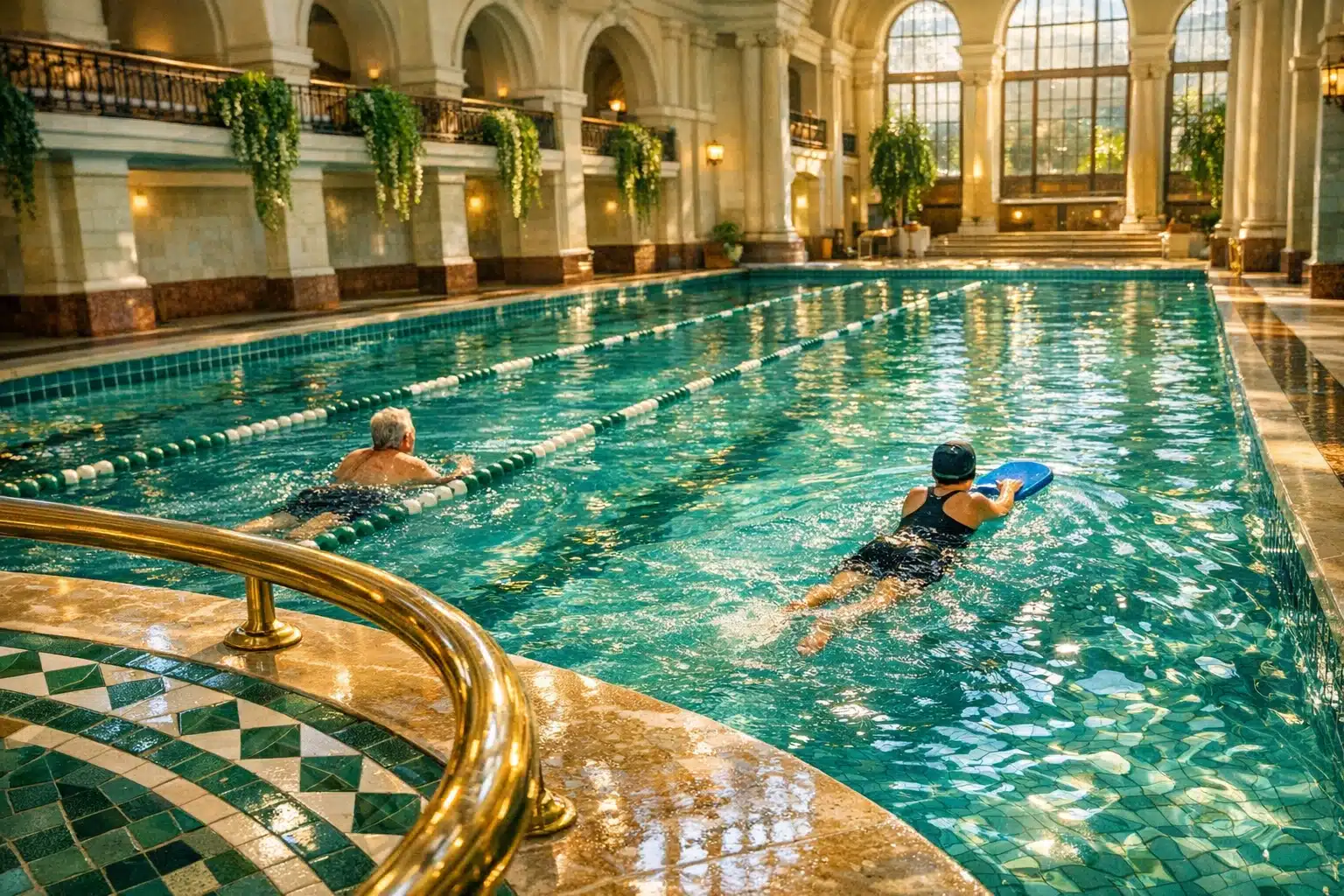
Explore the world of swimming
Swimming is one of those rare activities that feels playful and demanding at the same time, inviting children, fitness beginners, competitive athletes, and older adults into the same lane with very different goals. It improves endurance, coordination, and confidence while placing far less impact on joints than many land-based workouts. Whether the aim is health, skill, relaxation, or speed, understanding how swimming works makes every minute in the water more meaningful.
Outline
- The unique qualities that make swimming different from many other forms of exercise
- The physical and mental benefits that explain its lasting popularity
- The major strokes, key techniques, and smart ways to build training sessions
- Safety principles, useful equipment, and the differences between pool and open-water swimming
- A practical conclusion for beginners, parents, fitness seekers, and lifelong swimmers
Swimming as a Distinctive Form of Movement
Swimming stands apart because the water changes almost every rule the body is used to on land. Gravity still matters, of course, but buoyancy reduces the load carried by joints and bones. That is one reason swimming is often recommended as an appealing option for people who want exercise without the pounding that can come from running on pavement or jumping through high-impact workouts. A person recovering from a strain, an older adult managing stiffness, and a teenager training for competition can all share the same pool, yet the water will meet each of them differently.
Another striking difference is resistance. Water is far denser than air, so every pull, kick, turn, and breath happens against a constant physical challenge. Unlike lifting a weight through a single arc, swimming asks the body to move through resistance in every direction. That means even relaxed lap swimming can engage shoulders, back, core, hips, and legs at once. Freestyle may look smooth from the deck, but beneath the surface the swimmer is making hundreds of small decisions about balance, timing, and pressure. In that sense, the pool is a quiet teacher: it rewards efficiency and exposes wasted effort immediately.
Compared with cycling or brisk walking, swimming also demands a higher level of coordination. Breathing has to fit the stroke rhythm. Body position affects drag. Head movement alters alignment. A rushed kick can create turbulence without producing useful speed. This technical side is part of what makes swimming so satisfying over time. Improvement is not only about getting stronger; it is about becoming more economical. Two swimmers may work equally hard, yet the one with cleaner mechanics often moves farther with less visible strain.
- Low-impact movement supports a wide range of ages and fitness levels
- Natural resistance turns the water into both the environment and the training tool
- Technique plays a larger role than many beginners expect
- Swimming can be recreational, competitive, therapeutic, or social at the same time
There is also a sensory element that few other activities can match. Sound softens, vision changes, and attention narrows to breath and rhythm. For some people, that feels meditative. For others, it feels like a private contest against fatigue and time. Either way, swimming is unusual because it combines athletic demand with an almost reflective atmosphere. That blend helps explain why people return to it for so many different reasons and why it remains relevant far beyond the world of organized sport.
Physical and Mental Benefits of Time in the Water
Swimming earns its reputation as a full-body workout because it develops several areas of fitness at once. Regular sessions can improve cardiovascular endurance, muscular stamina, coordination, and mobility. Since large muscle groups are working together, the heart and lungs have to supply oxygen efficiently, which makes swimming a strong form of aerobic exercise. Public health guidance commonly recommends at least 150 minutes of moderate activity per week for adults, and swimming can help people meet that target in a way that feels varied rather than monotonous.
The physical advantages are broad. Freestyle and backstroke often build sustained endurance. Breaststroke uses a different rhythm and can feel more controlled for recreational swimmers. Butterfly is demanding and powerful, usually practiced in shorter repeats because of its intensity. Across all strokes, the core helps maintain position, the shoulders and back contribute to propulsion, and the legs stabilize or drive momentum depending on technique. Energy expenditure varies according to stroke, pace, body size, and experience, but vigorous swimming can burn a substantial number of calories while strengthening major muscle groups.
Swimming can also be especially valuable for people who need movement with less joint stress. Water supports body weight, which may make exercise more comfortable for individuals with arthritis, excess body weight, or a gradual return to training after time away. That does not mean swimming is effortless; it simply distributes strain differently. Someone who finishes a challenging set of laps often discovers that the muscles are tired while the knees and ankles feel comparatively spared.
The mental benefits deserve equal attention. The repetitive rhythm of strokes and breathing can lower stress for many swimmers. A structured session provides a clear task, and clear tasks are often good for unsettled minds. Counting lengths, focusing on technique, or aiming for a steady pace can shift attention away from background worry. Many people also report a noticeable lift in mood after a swim, partly because exercise supports mental well-being and partly because the water creates a sense of separation from crowded schedules.
- Supports heart and lung function through sustained aerobic work
- Builds muscular endurance without the same level of impact found in some land sports
- Encourages mobility, posture awareness, and coordinated breathing
- Can reduce stress and create a focused, calming training environment
For children, the benefits often include confidence and body awareness. For adults, swimming may offer consistency when other workouts become uncomfortable or dull. For older swimmers, it can remain a practical way to stay active long after high-impact sport loses its appeal. That flexibility is one of swimming’s greatest strengths: it meets people where they are and still leaves room for progress.
Understanding the Main Strokes and Training Basics
Swimming looks simple from a distance, yet each stroke has its own mechanics, rhythm, and learning curve. Freestyle, often called front crawl, is the fastest and most common stroke in lap swimming. It relies on a long body line, alternating arm recovery, and steady flutter kicking. Efficient freestyle is less about thrashing and more about reducing drag. The head stays relatively still, the hips remain near the surface, and the hands enter the water in a controlled path rather than slapping down in front of the shoulders. Breathing to the side without lifting the head too high is one of the first major skill milestones.
Backstroke shares some features with freestyle, but the body position changes the entire experience. Because the face stays above water, breathing is easier, yet alignment becomes tricky. Swimmers need a stable core and a balanced kick to avoid sinking hips or sideways wobbling. It is often a good stroke for learning rhythm, although some beginners feel disoriented when moving without seeing where they are headed. Breaststroke is different again: its glide phase, frog kick, and more symmetrical arm action make it feel deliberate and technical. Many casual swimmers like it because the pace can be comfortable, but proper breaststroke timing is not as easy as it appears. Butterfly, meanwhile, is the most explosive of the four competitive strokes. It combines a wave-like body motion, a simultaneous arm pull, and strong dolphin kicks, demanding power and timing in equal measure.
Good training does not begin with endless hard laps. It begins with structure. A smart swim session usually includes:
- A warm-up to raise heart rate gradually and loosen movement
- Drills that isolate technique, such as catch-up freestyle or kick-focused sets
- A main set built around endurance, speed, or pacing goals
- A short cool-down to bring effort back under control
Pool length matters as well. Standard competitive pools are commonly 50 meters for long course and 25 meters or 25 yards for short course, depending on the facility. Shorter pools create more turns, which can break up effort and make intervals feel manageable. Longer pools test continuous rhythm and stroke efficiency. Beginners do not need to master every stroke immediately. In fact, progress is usually faster when swimmers focus on body position, breathing, and relaxed propulsion before chasing speed. A swimmer who moves cleanly through the water often outlasts one who starts fast but wastes energy. Technique is not decoration in swimming; it is the engine.
Safety, Equipment, and the Difference Between Pools and Open Water
Swimming is enjoyable and deeply useful, but the water always deserves respect. Safety is not a gloomy side topic; it is part of what makes progress possible. In a pool, hazards may seem limited because lane lines, shallow ends, and lifeguards create a controlled setting. Even there, however, poor judgment can cause trouble. Overestimating stamina, diving where depth is uncertain, or ignoring lane etiquette can turn an ordinary session into a dangerous one. New swimmers should learn not only strokes but also how to float, tread water, rest without panic, and recognize fatigue before it becomes an emergency.
Open water adds another layer of complexity. Lakes, rivers, and the sea can be beautiful, but they introduce currents, waves, visibility issues, shifting temperatures, and less predictable distances. A calm shoreline can disguise strong movement underneath, and water that looks inviting may be colder than expected. For that reason, open-water swimming should be approached with preparation rather than impulse. Swimming with a partner, wearing a brightly visible cap, checking conditions in advance, and choosing supervised areas are all practical measures, not signs of inexperience.
Equipment also shapes the swimming experience. Some gear is essential, while other items are useful training aids. Goggles protect the eyes and improve visibility. A well-fitted suit allows comfortable movement. Swim caps can reduce drag slightly, keep hair more contained, and improve visibility in open settings when bright colors are used. Tools such as kickboards, pull buoys, fins, and paddles help isolate parts of the stroke, though they work best when used thoughtfully rather than as shortcuts.
- Learn floating, treading water, and safe breathing before worrying about speed
- Choose supervised environments whenever possible, especially during early learning
- Check depth, water temperature, weather, and current conditions before entering open water
- Use lane etiquette in pools by matching your speed to the correct lane and passing carefully
- Stop the session if dizziness, cramping, or sharp fatigue appears
Pools and open water each offer distinct rewards. Pools provide structure, measurable distances, and consistency. Open water offers freedom, changing scenery, and a different kind of mental challenge. One is like practicing music in a studio; the other is like performing outdoors where the wind also has a say. Both can be rewarding, but they ask for different habits. The safest swimmers are rarely the boldest-looking ones. More often, they are the people who combine skill with patience, awareness, and respect for conditions.
Conclusion: Turning Swimming into a Lifelong Habit
For beginners, the best way to start swimming is to keep the first goal modest and concrete. That goal might be learning to exhale underwater without tension, swimming one relaxed length of the pool, or attending two sessions each week for a month. Small goals work because they create momentum without turning the water into a test. For parents, the priority is slightly different: swimming lessons are not only about exercise or future medals, but about safety, confidence, and comfort in an environment children may encounter for the rest of their lives. For fitness-minded adults, swimming can become a reliable training option that complements walking, strength work, cycling, or recovery days.
The long-term appeal of swimming lies in its adaptability. A person can swim for competition in youth, return for stress relief during busy working years, and keep going later for mobility and general health. Few activities travel so well across life stages. It is equally at home in school programs, rehabilitation plans, community centers, holiday routines, and serious athletic training blocks. That range matters. An activity that can remain useful for decades is far more valuable than one that burns brightly and disappears after a season.
Consistency usually comes from making swimming easy to repeat. Choose a realistic schedule. Pack gear the night before. Track sessions in a simple way, whether by time, distance, or how the swim felt. Join a class or local club if structure helps. If solitude is the attraction, protect that lane time as a regular appointment with yourself. Improvement often arrives quietly. One day breathing feels calmer. Another day the wall comes sooner than expected because the stroke has become more efficient. Then, without much drama, the swimmer realizes that the water has become familiar rather than intimidating.
- If you are new, focus on comfort and safe technique before pace
- If you are returning, build gradually and let skill support fitness
- If you are training seriously, use structured sets and recovery wisely
- If you are guiding a child, treat water confidence as a life skill worth investing in
Swimming does not promise instant transformation, and that is part of its honesty. It asks for attention, repetition, and respect, then gives back endurance, resilience, and a rare sense of lightness. For readers wondering whether the pool is worth their time, the answer is practical as much as inspiring: it can improve health, teach a meaningful skill, and remain useful through nearly every chapter of life. That makes swimming not just a sport to admire, but a habit worth keeping.