Explore the world of swimming
Swimming sits at a rare crossroads where survival skill, sport, therapy, and pure recreation meet. A quiet pool lap, a busy learn-to-swim class, and an open-water race may look different, yet each shows how water can test the body while settling the mind. For children, adults, and older swimmers alike, it offers meaningful exercise with less impact than many land-based activities. That blend of practicality, health value, and simple enjoyment makes swimming a subject worth understanding.
Outline: This article begins with the broad value of swimming, then moves into strokes and technique, training and equipment, safety and environment, and finally the long-term role swimming can play in everyday life. Each section builds from basics to practical insight so readers can understand both the appeal and the discipline behind time spent in the water.
Why Swimming Matters: Fitness, Function, and Everyday Relevance
Swimming matters because it answers several needs at once. It is exercise, a life skill, a sport, and in many settings a form of relaxation. Few activities can claim that range. A person may first enter the water to learn basic safety, then stay for fitness, and later discover community through classes, clubs, or local events. That layered value helps explain why swimming remains important in schools, recreation centers, rehabilitation programs, and elite sport.
From a physical perspective, swimming is often described as a full-body workout, and that label is well earned. Water provides resistance in every direction, so the arms, legs, core, and back all contribute. At the same time, buoyancy reduces the impact placed on joints compared with activities such as running on pavement. That does not make swimming easy; it simply changes the type of challenge. On land, gravity is the obvious opponent. In the pool, resistance is constant, quiet, and surprisingly honest. Every unnecessary movement wastes energy, which is why good technique matters so much.
Health professionals often encourage adults to aim for at least 150 minutes of moderate aerobic activity each week, and swimming can help meet that target. A steady lap session can raise heart rate, build endurance, and improve breathing efficiency. For people who find high-impact exercise uncomfortable, the water can feel like a more welcoming training ground. Key advantages often include:
• lower joint stress than many land-based workouts
• whole-body muscular engagement
• aerobic conditioning through sustained movement
• improved coordination through breathing and rhythm
Swimming also compares favorably with other forms of exercise in terms of variety. Walking is accessible, cycling can cover distance efficiently, and strength training develops power in focused patterns. Swimming, however, combines endurance, mobility, timing, and breath control in one setting. Even recreational swimmers quickly notice that a few laps can reveal weak posture, shallow breathing habits, or uneven movement from one side of the body to the other. The water acts like a patient but demanding teacher.
Beyond fitness, swimming has strong practical relevance. Basic water competence can reduce fear and increase safety around pools, lakes, rivers, and beaches. Families benefit when children learn how to float, tread water, and move calmly rather than panic. Adults who never learned to swim often describe their first successful lessons as liberating. There is a quiet confidence in realizing that water is no longer unfamiliar territory. In that sense, swimming is not only about exercise; it is about capability, resilience, and freedom.
Understanding the Main Strokes and the Mechanics Behind Efficient Movement
Swimming may look graceful from the pool deck, but that smooth appearance is the result of timing, body position, and repetition. The four competitive strokes are freestyle, backstroke, breaststroke, and butterfly. Each has its own rhythm, muscular demands, and technical challenges. For beginners, freestyle is usually the first stroke taught for distance because it is efficient and adaptable. Backstroke offers a useful contrast because the swimmer remains face up, making breathing easier for some learners. Breaststroke is often the most intuitive at first, though it can be slower and more dependent on timing. Butterfly is the most physically demanding of the four and is typically learned after a strong technical foundation has been built.
Freestyle, often swum with the front crawl, is driven by a long body line, alternating arm recovery, a flutter kick, and side breathing. The goal is not frantic motion but streamlined travel. Many new swimmers kick too hard, lift the head too high, or cross the hands over the center line, all of which increase drag. A better approach is to keep the head neutral, rotate through the hips and shoulders, and let the hands enter in line with the shoulders. When swimmers say the water feels heavy, it is often a sign that technique is creating unnecessary resistance.
Backstroke shares some of freestyle’s rotational qualities but changes orientation and timing. Because the face remains above water, swimmers can focus on body balance and arm rhythm without worrying about inhaling between splashes. Still, the stroke has its own pitfalls. Sinking hips, bent knees during the kick, and wandering arm entry can all disrupt momentum. Breaststroke, by contrast, relies on a pull, breath, kick, and glide sequence. It rewards patience and punishes rushing. Butterfly compresses the challenge even further, demanding coordinated arm recovery, dolphin kick timing, and strong trunk control.
A useful way to compare the strokes is this:
• Freestyle is typically the fastest and most efficient for covering distance.
• Backstroke encourages body awareness and rotational balance.
• Breaststroke is highly technical and often comfortable for recreational swimmers.
• Butterfly develops power and rhythm but requires more strength and precision.
No matter the stroke, efficient swimming depends on reducing drag and preserving momentum. Water is far denser than air, so small errors matter. A dropped elbow, a mistimed breath, or an overly wide kick can cost more energy than many people expect. That is why drills are so effective. Catch-up freestyle, kick-on-side drills, sculling, and single-arm practice help swimmers break down complex movement into manageable parts. Technique is not decoration in swimming; it is the engine room. Once that idea clicks, even a casual swimmer begins to appreciate the craft behind every lap.
Training Smarter: Building Endurance, Speed, and Confidence in the Water
Good swim training is less about simply surviving more laps and more about using structure to improve specific skills. Many people start by swimming until tired, resting at the wall, and repeating without a clear plan. That approach can still provide exercise, but progress tends to be slower. A more effective session has purpose. One part may target technique, another endurance, and another pace control. Over time, structured practice helps swimmers move from effortful splashing to sustainable performance.
A balanced swim session often includes four parts: a warm-up, skill work, a main set, and a cool-down. The warm-up raises body temperature and prepares breathing. Skill work might include drills for body position or stroke timing. The main set carries the primary training goal, such as aerobic endurance, sprint speed, or pacing. The cool-down brings effort down gradually and can reinforce relaxed, efficient movement. Even 30 to 45 minutes can be productive when the session is organized.
Different goals call for different training styles. A recreational swimmer seeking general fitness may benefit from steady intervals, such as repeated lengths with short rests. A triathlete may focus on continuous freestyle and sighting skills. A competitive swimmer usually trains across a wider range of intensities, combining aerobic work, speed sets, starts, turns, and race-pace practice. Equipment can support these goals when used thoughtfully. Common tools include:
• kickboards for isolating leg work
• pull buoys for emphasizing upper-body mechanics
• fins for body position and kick awareness
• paddles for feel of the water and strength, used carefully
• pace clocks or waterproof watches for interval control
Beginners often ask how often they should swim. The answer depends on schedule, recovery, and goals, but consistency usually matters more than heroic single sessions. Two or three swims per week can produce clear improvement. A simple weekly pattern might include one easy technique day, one moderate endurance day, and one shorter but sharper interval day. That spread gives the body time to adapt while keeping learning fresh. The water is a demanding classroom; frequent short lessons often work better than rare marathons.
There is also a mental side to training. Swimming can be repetitive, and that is not always a drawback. The black line at the bottom of the pool becomes a quiet metronome, asking only for attention and rhythm. Counting strokes, holding pace, and noticing the feel of the catch can create a form of moving concentration. Still, plateaus happen. When progress slows, swimmers often benefit from video feedback, coaching cues, or a small technical focus rather than simply adding volume. In swimming, smarter almost always beats harder when technique is the limiting factor.
Safety, Pool Etiquette, and the Big Difference Between Pool and Open Water
Swimming is rewarding, but it is never a sport that should be separated from safety. Water can be inviting and unforgiving at the same time, which is why skill and judgment matter as much as enthusiasm. In a controlled pool environment, risks are lower, yet not absent. Slippery decks, fatigue, poor supervision, overconfidence, and ignored lane etiquette can all create problems. In natural settings such as lakes, rivers, and oceans, the variables multiply quickly. Temperature, visibility, currents, waves, weather, and distance from help all become part of the equation.
For beginners and families, pool safety starts with simple habits. Children should be supervised closely, even when lifeguards are present. Adults learning to swim benefit from staying in appropriate depths and practicing with a qualified instructor when possible. Swimmers should also understand lane patterns and pool rules. Crashing head-on into another swimmer is not just awkward; it can be dangerous. Basic etiquette usually includes:
• choose a lane that matches your pace
• circle swim when sharing unless the pool directs otherwise
• rest at the corner rather than blocking the wall
• pass only when there is clear room
• avoid diving in shallow water unless it is designated safe
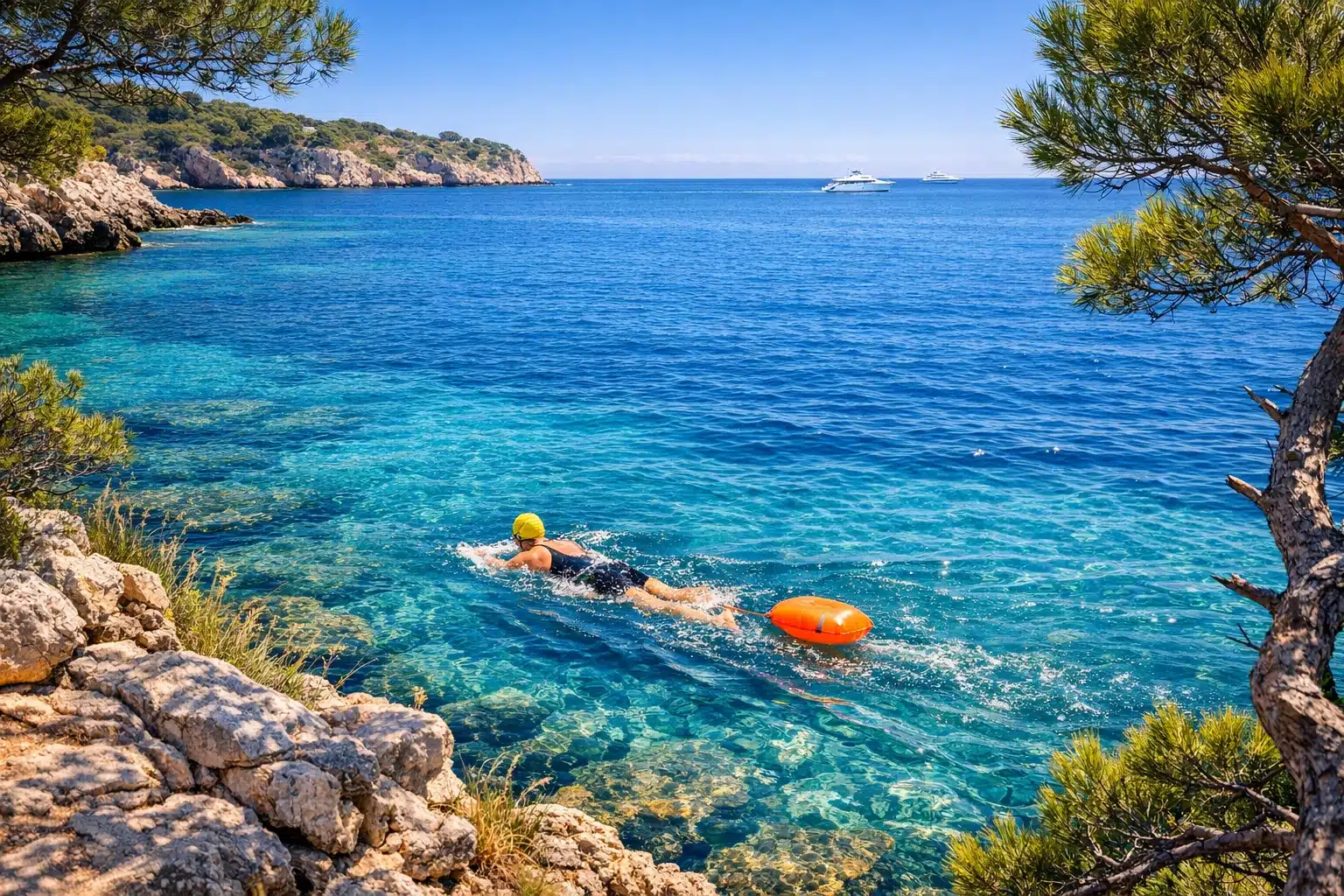
Open water swimming changes the experience completely. In a pool, lines guide direction, walls provide regular rest points, and water conditions remain fairly predictable. In open water, the horizon can feel wide and beautiful, but it can also distort judgment. Distances often seem shorter from shore than they truly are. Cold water can reduce coordination and breathing control. Waves may disrupt rhythm, and currents can turn a manageable swim into a strenuous one. That is why experienced open-water swimmers emphasize preparation over bravado. Swimming with a partner, checking conditions in advance, using a bright cap or tow float, and knowing entry and exit points are sensible precautions, not signs of weakness.
Another key safety issue is honesty about ability. Many incidents occur when people assume that being comfortable in shallow water equals being prepared for deeper or less controlled environments. Real competence includes floating, controlled breathing, turning onto the back to rest, treading water, and exiting safely when tired. Fitness also matters. A swimmer who can complete a few easy lengths in a pool may still struggle in choppy water or under stress. Respect for water is not fear; it is mature awareness.
When safety and etiquette are taken seriously, swimming becomes more enjoyable for everyone. The best swimmers are not only fast or technically polished. They are attentive, calm, and considerate of the environment and the people around them. That mindset belongs in every lane and every shoreline.
Swimming for Life: Mental Well-Being, Community, and a Practical Conclusion
One of swimming’s greatest strengths is that it can stay relevant across a lifetime. A child may begin with floating and playful confidence games. A teenager may join a school team and discover discipline. An adult may return to the pool after years away, using swimming as a manageable way to rebuild fitness. Older adults often appreciate the reduced impact and rhythmic nature of aquatic exercise. The form changes, but the value remains. Few activities can move so comfortably between lessons, leisure, rehabilitation, competition, and social connection.
Swimming also offers a mental dimension that many regular participants describe with surprising warmth. The pool can be noisy, but the act itself often feels private in a healthy way. Repeated strokes, measured breathing, and the muffled sound of water can create a calm focus that differs from more crowded gym environments. Some people use swimming to decompress after work. Others enjoy the clear structure of sets and times. There is a simple satisfaction in touching the wall after a hard repeat and knowing the result came from technique, pacing, and patience rather than showmanship.
Community is another reason many swimmers stay involved. Local pools support learn-to-swim classes, masters programs, disability sport, youth teams, and casual lane swimming. That range makes the activity more accessible than many people assume. Not everyone wants to race, and not everyone needs the same intensity. Some swimmers thrive on competition and race strategy. Others are happiest completing steady laps before sunrise, when the water looks like polished glass waiting for the first ripple. Both approaches are valid, and both can lead to long-term commitment.
For readers considering where to start or how to improve, a practical summary may help:
• learn or refresh essential water safety before chasing speed
• focus on technique early because efficiency shapes endurance
• train consistently, even if sessions are short
• use equipment as a tool, not a shortcut
• choose environments that match your skill and confidence
• let progress be gradual, because swimming rewards patience
Conclusion for Readers Interested in Swimming
If you are curious about swimming, the best next step is not to imagine perfection but to enter the water with a clear purpose. You might want better fitness, more confidence around water, a low-impact workout, or a new sport to learn. Swimming can serve all of those goals, provided you build skill steadily and respect the environment you swim in. Start where you are, stay consistent, and allow technique to grow over time. In the end, swimming is not only about moving through water; it is about learning how breath, balance, and effort can work together in a way that is both useful and deeply rewarding.