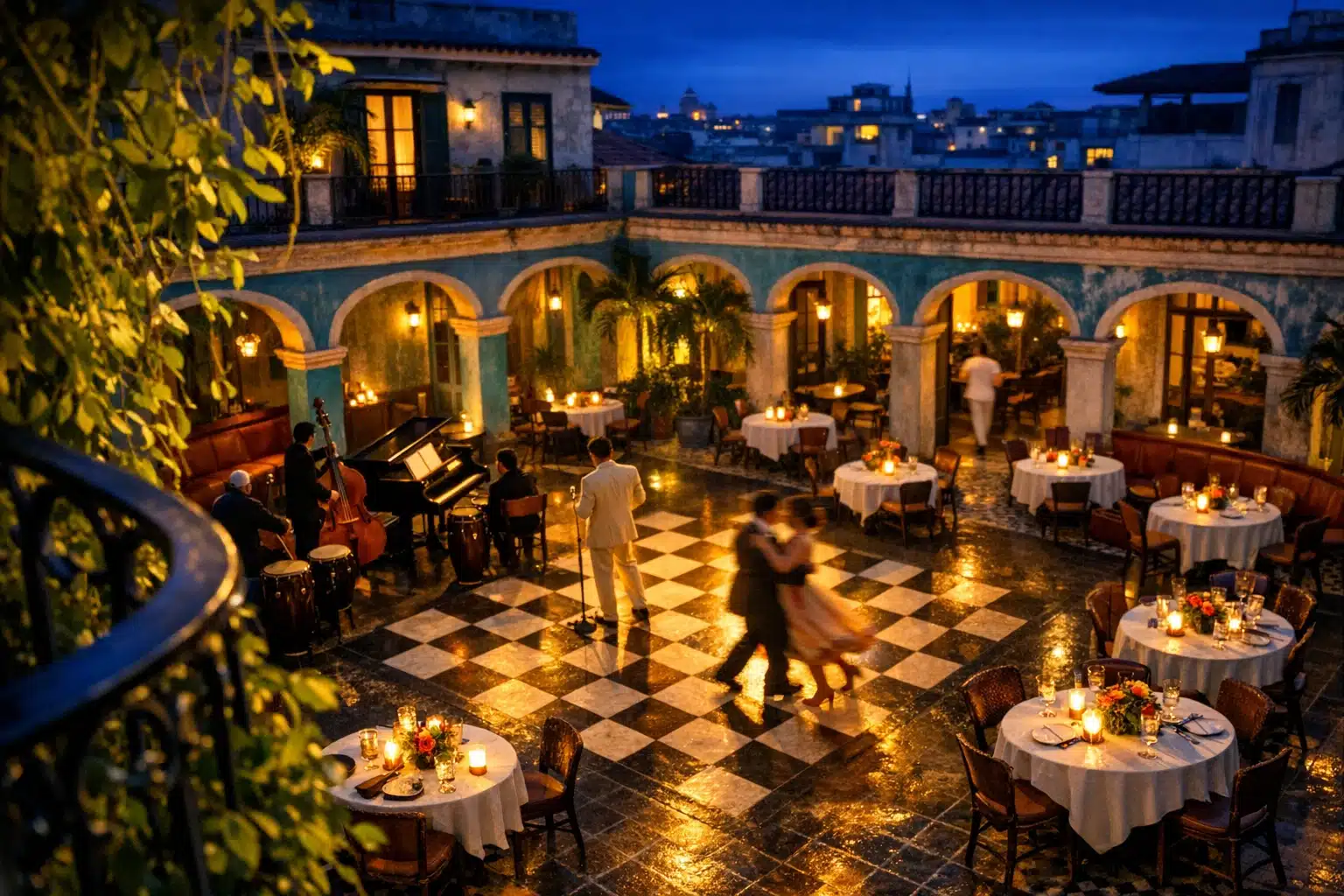
About Buena Vista Social Club
Buena Vista Social Club is more than the title of a famous album; it opens a path into Cuba’s layered musical memory, where son, bolero, danzón, and lived experience move together in the same breath. For many listeners, it was the first meeting with older musicians whose craft had never vanished, only waited for a larger stage. Learning its story reveals how local traditions can travel the world without losing character, detail, or soul.
Outline: The Five Angles That Explain Buena Vista Social Club
Before diving into dates, names, and recordings, it helps to map the terrain. Buena Vista Social Club is one of those cultural subjects that seems simple from a distance and richer the closer you get. Some people know it as a Grammy-winning album. Others remember the 1999 documentary by Wim Wenders. Many listeners know the opening glide of the music without knowing much about the musicians behind it. This article is designed to connect those points in a clear order, so the story unfolds like the album itself: gently at first, then with growing emotional weight.
Here is the route the article follows, and why each stop matters. • First, it looks at the historical roots behind the name, including the real social club in Havana and the broader world of Cuban popular music from which the idea emerged. • Second, it explains the 1996 recording sessions that brought together legendary performers such as Compay Segundo, Ibrahim Ferrer, Omara Portuondo, Rubén González, Eliades Ochoa, Barbarito Torres, and Orlando Cachaíto López. • Third, it explores what makes the music so distinctive, especially for listeners who may be more familiar with salsa, pop, jazz, or Latin fusion than with son cubano and bolero. • Fourth, it examines how the project became an international phenomenon through recordings, touring, and film. • Fifth, it considers the legacy, the debates around nostalgia and representation, and the reasons new audiences still keep finding their way to it.
This structure matters because Buena Vista Social Club can be misunderstood when reduced to a single headline. It was not merely a retro marketing idea, nor was it a complete summary of Cuban music as a whole. It was a particular meeting of artists, memories, timing, and sound. By the end of the article, the goal is not only to tell you what happened, but to make the achievement easier to hear. Once you know the background, the songs no longer sound like pleasant old recordings from somewhere far away. They begin to feel like close conversation: patient guitar lines, weathered voices, elegant piano figures, and rhythm sections that move with the confidence of musicians who do not need to prove anything.
From a Havana Gathering Place to a Cultural Symbol
The phrase Buena Vista Social Club did not begin as a brand created for export. It referred to a real social club associated with Havana’s Buena Vista district, one of several community spaces where music, dancing, and social life overlapped in mid-20th-century Cuba. To understand why that matters, it helps to remember that clubs of this kind were not only places of entertainment. They were also places of belonging. In a society shaped by class lines and racial histories, many Afro-Cuban social clubs offered room for local expression, cultural pride, and shared celebration. Music there was not decoration in the background; it was part of the architecture of everyday life.
That original world was tied to genres that remain central to Cuban musical identity. Son cubano, in particular, blended Spanish lyrical traditions with African-derived rhythms and became one of the foundations of modern Cuban popular music. Bolero added intimacy and emotional directness. Danzón carried refinement and social ceremony. Later forms, from mambo to salsa, would grow from related roots, but the older styles kept their own grammar: a lighter touch, a conversational swing, and a way of leaving space for phrasing rather than filling every second with force.
The historical club itself did not survive as a continuously active public institution into the global spotlight years. What endured was the memory of a musical environment. When the 1996 project adopted the name Buena Vista Social Club, it was not recreating one exact night from the past. Instead, it summoned a wider atmosphere: neighborhood life, veteran artistry, dance-floor elegance, and the social pulse of a Havana that lived in the musicians’ bodies even when the city around them had changed.
That distinction is important. The project’s power came partly from its symbolic function. The name worked like an old photograph that somehow still sings. It suggested place, history, and community in two rhythms and four words. For listeners outside Cuba, it offered an entry point into a culture that had often been simplified by politics or tourism. For Cubans and for students of Latin music, it raised more complicated questions about memory, loss, and representation. Yet even those debates confirm the project’s depth. Names do not carry that much meaning unless they touch something real.
The 1996 Sessions and the Artists Who Turned History Into Sound
The recording of Buena Vista Social Club in 1996 has become one of modern music’s great stories, partly because it feels both accidental and inevitable. The project was initiated through the efforts of World Circuit producer Nick Gold, Cuban bandleader Juan de Marcos González, and American guitarist Ry Cooder. An earlier plan involving musicians from Cuba and Mali fell apart because the African players were unable to travel, and what might have become a very different album instead turned into a focused Cuban session in Havana’s EGREM Studios. Recorded over a matter of days, often described as six remarkable days in March 1996, the album captured veteran musicians with an immediacy that polished studio concepts sometimes lose.
The lineup was extraordinary not because it assembled celebrities in their commercial prime, but because it brought together masters whose reputations had often remained regional, interrupted, or under-recognized abroad. Compay Segundo contributed a dry, playful, unmistakable presence and a deep connection to son traditions. Ibrahim Ferrer sang with tenderness that could sound conversational one moment and quietly devastating the next. Omara Portuondo added elegance and expressive control shaped by decades of performance. Pianist Rubén González seemed to pour melody into every available space without crowding the song. Eliades Ochoa brought the guitar-led, rural-inflected son style many listeners now instantly associate with the project. Barbarito Torres enriched the texture with the laúd, and Orlando Cachaíto López anchored the ensemble with bass lines that were steady, supple, and alert.
The music they made did not depend on dramatic effects. That is one reason it has aged so well. Listen closely and the arrangement logic becomes clear. A track like Chan Chan unfolds through repetition, but not empty repetition; each return allows a slight shift in emphasis, phrasing, or instrumental color. Songs such as Dos Gardenias reveal the emotional reach of bolero, where restraint can cut deeper than theatrical display. The ensemble balance is another key feature. Instead of spotlighting one star at all times, the album often behaves like a circle of trusted voices.
There is also a lesson here about recording practice. The sessions favored human timing, room feel, and shared listening over digital perfection. You can hear air around the instruments. You can sense age not as weakness, but as authority. In an era increasingly shaped by synthetic precision, these performances offered something less common: music that sounded inhabited.
Why the Music Traveled So Far: Style, Emotion, and Global Reception
Buena Vista Social Club became a global success for reasons that go beyond novelty. The album reportedly sold millions of copies worldwide, won a Grammy Award in 1998, and reached listeners well outside the usual audience for archival or roots-oriented releases. On paper, that outcome might seem unlikely. These were older musicians performing styles that many mainstream international audiences did not already know in depth. There was no pop crossover formula, no glossy trend-chasing image, and no pressure to modernize the music beyond recognition. Yet the project connected, and it connected deeply.
Part of the answer lies in musical clarity. The songs are rhythmically grounded but never aggressive. The grooves invite movement without demanding spectacle. Compared with some forms of commercial salsa, which often foreground brass power and dance-floor intensity, much of Buena Vista Social Club moves with a more unhurried pulse. Compared with radio pop, the harmonic and vocal choices feel less standardized. Compared with some jazz recordings, the improvisation is often more song-centered and communal. That combination makes the album accessible while still preserving distinct identity.
Another reason is emotional readability. Even listeners who do not understand every word can hear humor, longing, flirtation, weariness, and joy in the phrasing. A great singer does not simply pronounce lyrics; a great singer makes breath itself part of meaning. Ibrahim Ferrer’s voice offers an excellent example. It can sound worn at the edges and luminous at the center, like an old letter read under a warm lamp. Omara Portuondo, meanwhile, carries phrasing with a blend of control and intimacy that draws the ear closer instead of pushing it away.
The Wim Wenders documentary amplified this emotional access. By placing faces, streets, rehearsals, and concert footage alongside the music, the film turned songs into lived biographies. Audiences saw not abstract “tradition,” but artists with bodies, histories, jokes, routines, and dignity. For many viewers, that changed everything. The music stopped being exotic atmosphere and became encounter. • It showed elders not as relics, but as active interpreters. • It placed Cuban music within the modern world instead of sealing it in a museum case. • It reminded audiences that late recognition is still recognition, and sometimes it arrives with unusual force.
Legacy, Debate, and a Conclusion for Today’s Listeners
No major cultural phenomenon arrives without debate, and Buena Vista Social Club is no exception. Admirers celebrate it for bringing veteran Cuban musicians long-overdue international recognition. Critics sometimes argue that the project encouraged a selective image of Cuba, one tilted toward nostalgia, faded grandeur, and a romantic past that appealed strongly to foreign audiences. Both responses contain elements worth considering. The album and film did not present the full map of Cuban music, which also includes later developments such as timba, nueva trova, jazz innovation, and many hybrid contemporary forms. But expecting one project to contain an entire national tradition would be unfair. Buena Vista Social Club offered a specific window, not the whole house.
Its continuing legacy rests on several achievements that are easier to measure. It revived global attention to classic Cuban repertoire. It led many listeners to explore artists they might otherwise never have found. It demonstrated that older performers could headline international stages and move audiences without being repackaged into caricatures of youth. It also gave music education, journalism, and documentary film a vivid case study in how context shapes listening. For students of arrangement and performance, the record remains a lesson in ensemble discipline. For historians, it reveals how memory can be marketed, preserved, and contested all at once.
For the average listener, though, the simplest truth may be the strongest one: the music still works. Put on Chan Chan, El Cuarto de Tula, or Dos Gardenias and the room changes temperature. The songs do not rush to impress. They settle in, make themselves at home, and gradually redraw your sense of time. That is rare in any decade. It is even rarer in a global market built around constant replacement.
Conclusion for curious listeners, music fans, and cultural explorers: Buena Vista Social Club rewards patience. If you come to it expecting a history lesson, you will get one, but you will also get wit, groove, tenderness, and masterful interplay. If you come to it through the film, the album deepens the faces you remember; if you come to it through the songs, the history adds texture without flattening the pleasure. Start with the famous tracks, then follow the individual artists into their own catalogs. That is where the project reveals its finest secret: it was never only one album, but a doorway into an entire musical world.