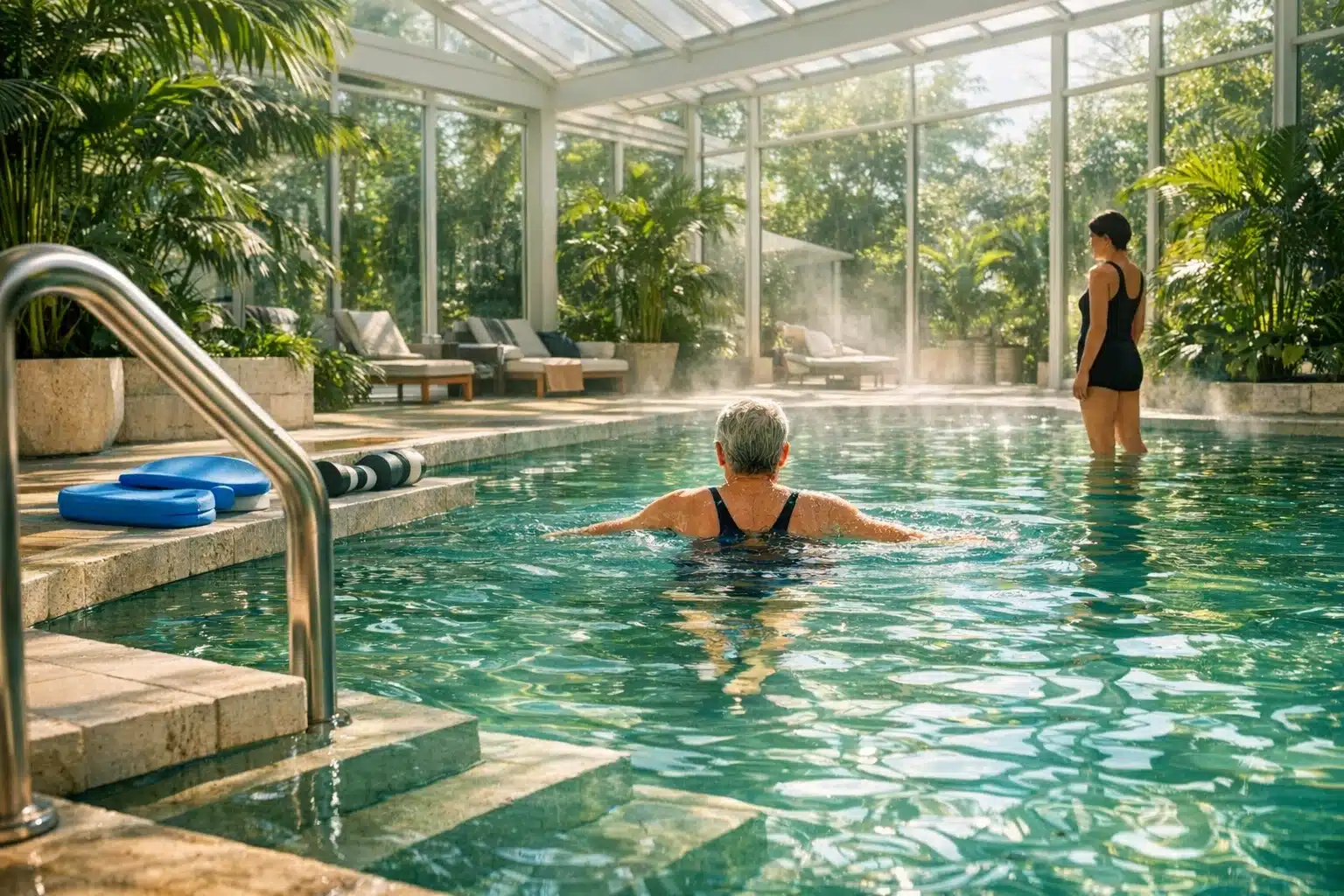
Explore the world of swimming
Swimming is one of those rare activities that can feel playful on day one and endlessly challenging years later. It matters because it combines fitness, safety, sport, and leisure in a single skill. From a child learning to float to an older adult protecting sore joints, the water can welcome very different bodies and goals. This article explores what swimming offers, how it works, and why it remains relevant far beyond the pool deck.
Article Outline
- The value of swimming as a life skill and full-body exercise
- The main strokes and how they differ in technique, speed, and difficulty
- How beginners and regular swimmers can train safely and effectively
- The wider world of swimming, from rehabilitation to competition and community
- A practical conclusion for readers who want to make swimming part of their lives
Swimming as a life skill and a full-body form of exercise
Swimming earns its place in health discussions for a simple reason: it does many jobs at once. It is exercise, but it is also a safety skill. It can be leisurely, yet it can also be intensely demanding. Unlike many popular workouts, swimming asks the body to move through water, a medium far denser than air. That natural resistance means muscles must work steadily with every stroke, kick, and turn. At the same time, buoyancy reduces impact on the joints, which is why swimming is often recommended for people who want cardiovascular training without the repetitive pounding of running.
From a fitness standpoint, swimming can improve heart and lung function, muscular endurance, coordination, and mobility. Public health guidance from organizations such as the World Health Organization recommends at least 150 minutes of moderate aerobic activity per week for adults, and swimming can contribute directly to that goal. A steady session in the pool raises heart rate, challenges breathing control, and engages the upper body, core, hips, and legs. Depending on pace, stroke, and body size, an hour of swimming may use roughly 400 to 700 calories, although exact numbers vary widely. What matters more than the number on a tracker is the quality of effort and the consistency of practice.
Swimming also offers mental benefits that are easy to underestimate. The rhythm of breathing and the repetitive sound of water can feel almost meditative. Many swimmers describe a session as a reset button after a crowded day. There is logic behind that feeling. Aerobic exercise can support mood regulation, reduce stress, and improve sleep quality, and swimming adds the sensory quietness of being partially submerged. In a noisy world, a lane line can feel like a temporary border around your attention.
- Low-impact movement for many age groups
- Strong cardiovascular and muscular benefits
- Useful support for mobility, recovery, and stress relief
- An important safety skill with lifelong value
Perhaps the strongest argument in swimming’s favor is its adaptability. A competitive teenager, a parent returning to exercise, and a retiree managing stiffness may all use the same pool in different ways. Few activities stretch across so many stages of life with such practical usefulness. That broad relevance is what keeps swimming from being just another workout trend. It is a skill that can stay useful for decades.
Understanding the main strokes: technique, efficiency, and difficulty
To watch experienced swimmers is to see four distinct conversations with the water: freestyle, backstroke, breaststroke, and butterfly. Each stroke has its own tempo, mechanics, and purpose. Learning these differences does more than satisfy curiosity; it helps swimmers choose the style that fits their goals, comfort level, and physical capacity. Some strokes emphasize speed, some reward timing, and some ask for patience before they begin to feel natural.
Freestyle, often used interchangeably with front crawl, is generally the fastest and most efficient stroke for covering distance. Its alternating arm action, flutter kick, and rotating body position allow for a continuous forward line. Competitive swimmers rely on it heavily because it converts effort into speed well. For beginners, however, freestyle can feel awkward at first because breathing must be timed with body rotation instead of a simple lift of the head. A common mistake is looking forward too much, which causes the hips and legs to sink. When posture improves and the swimmer exhales calmly into the water, the stroke suddenly becomes less like a struggle and more like a glide.
Backstroke is often more approachable for people who dislike putting their face in the water continuously. Because the swimmer lies on the back, breathing is unrestricted, but the challenge shifts to balance and direction. Without a ceiling line or lane awareness, new swimmers may drift off course. Backstroke also demands good shoulder mobility and a stable kick. It can feel elegant, almost as if the swimmer is writing across the surface with alternating arms.
Breaststroke is usually slower, yet it is popular because the head can rise more naturally and the stroke has a clear rhythm. The pull, breath, kick, and glide create a pattern that many recreational swimmers enjoy. Still, breaststroke is technically tricky. The whip kick requires coordination and hip mobility, and poor timing can waste energy quickly. Butterfly, by contrast, is the power stroke. It is visually dramatic and physically demanding, driven by a dolphin kick and simultaneous arm recovery. It rewards strength and timing, but it is rarely the first stroke a new swimmer masters.
- Freestyle: fastest, efficient, strong for endurance and speed
- Backstroke: easier breathing, useful for posture and balance
- Breaststroke: slower, rhythmic, popular in recreational swimming
- Butterfly: most demanding, powerful, highly technical
Comparing the strokes reveals an important truth: there is no single “best” stroke for everyone. Freestyle may dominate races, but breaststroke may suit a casual swimmer better. Backstroke can build confidence, while butterfly can sharpen body awareness and power. The right approach is not to chase all four at once, but to understand what each stroke teaches. Swimming technique is less about forcing the water aside and more about learning to move with less wasted effort.
Learning to swim well: training habits, gear, and safety fundamentals
Many people assume swimming improves automatically with time, but time in the water is only part of the story. Good swimming grows from deliberate practice, manageable progression, and attention to safety. A beginner who swims short, focused sets with rest and feedback will usually improve more than someone who repeatedly charges through the same tiring routine. Water has a way of exposing inefficiency. If technique slips, the body notices quickly through fatigue, shortness of breath, or a sense of fighting the pool instead of moving through it.
For beginners, the first goals should be comfort, breathing control, and body position. Before speed matters, confidence matters. Floating, exhaling underwater, kicking with support, and learning how to recover from a pause at the wall are foundational skills. Adult learners sometimes feel self-conscious, but structured lessons can dramatically shorten the learning curve. A coach or instructor can spot issues that are difficult to feel from inside the stroke, such as dropped elbows, overkicking, or a rushed breath. Small corrections often unlock major progress.
Basic equipment can help when used properly. Goggles improve visibility and reduce irritation from chlorine. A well-fitted swimsuit supports unrestricted movement. Kickboards, pull buoys, and fins can isolate parts of the stroke for practice, though they should not replace sound technique. Lap swimmers also benefit from simple planning. Instead of endless lengths at one pace, a balanced workout might include:
- A short warm-up to loosen shoulders and raise heart rate gradually
- Drills that focus on breathing, rotation, or kick timing
- Main sets for endurance, speed, or stroke practice
- A cool-down to lower intensity and reinforce smooth movement
Safety deserves equal attention. Knowing how to swim is not the same as being safe in every environment. Pools are controlled spaces, while lakes, rivers, and oceans introduce currents, temperature changes, waves, and limited visibility. Even strong pool swimmers can be caught off guard outdoors. That is why supervision, local knowledge, and appropriate flotation rules remain important. For children, layered protection matters: swim lessons, close adult supervision, barriers around home pools, and clear rules near water. According to global public health data, drowning remains a major preventable cause of death, especially among children, which underlines why swimming education carries real social value.
The best training habit is consistency without recklessness. Two or three thoughtful sessions a week can build skill steadily. Chasing exhaustion every time usually backfires. Swimming rewards patience. Improvement often arrives quietly, like noticing one day that the far wall no longer seems so distant.
Swimming beyond the lane: competition, rehabilitation, and community
Swimming has a public image shaped by Olympic finals and black lines on the bottom of pristine pools, yet the sport’s real world is much wider. Competitive swimming is only one branch of a much larger tree. For some people, swimming is rehabilitation after injury. For others, it is social connection through masters clubs, school teams, or local aquatic centers. It can also overlap with other disciplines such as triathlon, water polo, artistic swimming, and open-water racing. The versatility of the activity helps explain why it remains culturally durable even when fitness trends come and go.
In rehabilitation settings, swimming and water-based exercise can be especially useful because buoyancy reduces load on painful joints and recovering limbs. People managing arthritis, post-injury stiffness, or limited mobility often find that movements impossible on land become achievable in chest-deep water. Aquatic therapy is not magic, and it should not replace professional medical guidance, but it can create a bridge back to movement when impact is a barrier. The pool becomes less a place of performance and more a place of possibility.
Competitive swimming, by contrast, adds structure, measurable goals, and a strong emphasis on technique under pressure. It teaches pacing, discipline, and race strategy. Pool racing tests speed and precision over fixed distances, while open-water events add navigation, drafting, temperature management, and psychological resilience. A 50-meter sprint is explosive and unforgiving. A 1500-meter race or a long open-water swim is more like a conversation between effort and restraint. The comparison reveals how broad the word swimming really is.
There is also a social side that deserves more credit. Many swimmers start alone but stay because of community. Local pools create spaces where generations mix naturally: school athletes sharing deck space with retirees, parents with children, and casual lap swimmers with triathletes. This variety can make aquatic environments more welcoming than highly specialized gyms. Swimming is one of the few sports where serious training and gentle exercise can happen side by side without contradiction.
- Competition builds discipline, pacing, and measurable progress
- Rehabilitation settings use water to reduce impact and support movement
- Community programs make swimming accessible across age groups
- Open-water swimming introduces adventure, risk management, and endurance
Seen from this wider angle, swimming is not simply a workout or a spectator sport. It is a network of practices that can improve health, teach resilience, and connect people who might otherwise never share a routine. That breadth is part of its quiet power.
Conclusion for readers: how to make swimming a realistic part of your life
If you are reading as a beginner, the most useful takeaway is that swimming does not demand perfection before it becomes worthwhile. You do not need to master every stroke, own advanced gear, or train like an athlete to benefit from the water. Start with comfort and consistency. Learn to breathe calmly, float with trust, and move short distances with control. Those basics build a foundation that supports every later goal, whether that goal is fitness, safety, or simple enjoyment on vacation.
If you already swim occasionally, this is a good moment to become more intentional. Instead of counting only distance, pay attention to technique and purpose. One session might focus on easier endurance, another on drills, and another on a different stroke to improve body awareness. Modest structure can make swimming more engaging and more effective. The difference between drifting through laps and training with intention is often the difference between plateau and progress.
For parents, teachers, and caregivers, swimming carries special relevance because it is both a life skill and a confidence builder. Formal lessons, supervised practice, and clear water safety habits can have lasting value. For older adults or anyone returning from a long break, swimming offers a practical route back into movement with less joint stress than many other activities. Its flexibility is one of its greatest strengths. The same body of water can host playful learning, serious conditioning, and quiet recovery in the span of an afternoon.
What makes swimming memorable is not only the fitness result. It is the feeling of becoming less tense in a place that once seemed uncertain. It is the small surprise of moving farther with less effort than before. It is the way a noisy day can narrow to bubbles, breath, and the next clean stroke. For readers deciding whether swimming deserves a place in their routine, the answer is often yes, not because it solves everything, but because it offers so many useful things at once. Begin simply, stay patient, and let the water teach you a little at a time.