Explore the world of swimming
Swimming is one of those rare activities that feels playful at first glance yet delivers serious value for health, safety, and everyday confidence. It trains the heart, recruits nearly every major muscle group, and gives relief to people who find high-impact exercise uncomfortable. From a child learning to float to an adult chasing lap times, the water meets people where they are and asks for rhythm, control, and patience rather than noise and force.
Outline of the article: • Why swimming remains relevant for fitness, wellbeing, and life skills • How the main strokes work and what makes each one distinct • What smart training looks like for beginners and improving swimmers • Why safety, confidence, and environment matter in pools and open water • A practical conclusion for readers who want to build a lasting relationship with swimming
Why Swimming Matters: Health, Access, and Lifelong Value
Swimming holds a special place among physical activities because it combines exercise, survival skill, recreation, and mental reset in a single practice. Many sports ask the body to absorb repeated impact. Swimming does the opposite. Water supports body weight, which reduces stress on joints while still creating resistance in every direction. That makes it useful for children developing coordination, adults building fitness, older people staying active, and many individuals returning to movement after injury. It is not effortless, but it is forgiving in a way pavement rarely is.
From a health perspective, swimming contributes to cardiovascular fitness, muscular endurance, mobility, and energy expenditure. Public health guidance often recommends at least 150 minutes of moderate aerobic activity each week for adults, and swimming can fill that role effectively. Depending on pace, stroke, and body size, a 30-minute session may burn roughly 200 to 400 calories, sometimes more during vigorous efforts. The exact number matters less than the broader point: swimming can be both sustainable and demanding. Because water is far denser than air, the body works against steady resistance even during smooth, graceful movement.
Its relevance also extends beyond fitness metrics. Swimming teaches practical water competence, which can reduce risk in everyday life around pools, lakes, rivers, or beaches. Knowing how to float, breathe calmly, tread water, and move efficiently is not merely athletic knowledge. It is a meaningful life skill. For parents, that alone makes swimming instruction valuable. For adults who never learned, starting late is still worthwhile; the pool does not check birth certificates at the door.
There is also a mental side that keeps swimmers coming back. The sound of splashing, the measured cycle of breathing, and the visual simplicity of a lane can create a meditative effect. Some people leave the pool feeling sharpened and awake. Others leave lighter, as if the water took away the static of the day. That is not magic. It is what structured breathing, repetitive movement, and focused attention often do to a stressed mind.
Several features explain swimming’s broad appeal:
• Low-impact movement for many body types and ages
• Whole-body effort without heavy equipment
• Useful crossover for rehabilitation and general fitness
• A practical skill for water safety and confidence
• A flexible activity that can be leisurely, social, or competitive
In short, swimming matters because it serves more than one purpose. It can improve health, sharpen discipline, build safety awareness, and offer simple joy. Few activities cover so much ground while asking people to move through something as elemental as water.
Understanding the Main Strokes: Technique, Efficiency, and Feel
To an untrained eye, swimming can look like little more than arms windmilling and legs kicking below the surface. In reality, technique shapes everything. A swimmer with modest strength and good mechanics often travels farther and faster than someone who tries to overpower the water. Unlike land sports, where force sometimes hides flaws, water exposes inefficiency almost immediately. A poorly timed breath, dropped elbow, sinking hips, or rushed kick can turn a smooth length into a noisy struggle.
The four competitive strokes each develop different qualities. Freestyle, usually swum with a front crawl, is the fastest and most common. It rewards streamlined body position, relaxed rotation, and well-timed breathing. Many beginners assume the arms do most of the work, yet effective freestyle relies on the whole body working as a coordinated chain. Backstroke flips the swimmer onto the back and adds a different challenge: direction and balance. Because the face stays above water, breathing is simpler, but maintaining alignment becomes more important. Backstroke often helps swimmers improve posture and body awareness.
Breaststroke has a distinct rhythm and is frequently chosen by recreational swimmers because it allows forward vision and shorter bursts between breaths. It is not necessarily easy, though. The timing of pull, breath, kick, and glide is precise, and poor knee or foot mechanics can waste large amounts of energy. Butterfly is the most dramatic stroke to watch and, for many, the hardest to sustain. It demands powerful timing, core control, and a wave-like body motion that is elegant when correct and exhausting when rushed. Butterfly teaches respect quickly.
A useful comparison looks like this:
• Freestyle: fastest, efficient for fitness and distance, technical breathing pattern
• Backstroke: good for balance and shoulder rhythm, easier breathing, harder navigation
• Breaststroke: slower but accessible for many recreational swimmers, highly dependent on timing
• Butterfly: most physically demanding, excellent for power and coordination, difficult for beginners
Beyond stroke names, core principles apply to all of them. Body position should stay long and stable. The head should not fight the spine. Breathing should fit the stroke rather than interrupt it. Kicking should support balance and propulsion without becoming frantic. Swimmers often improve when they stop trying to win against the water and start learning how to cooperate with it. That may sound poetic, but it is surprisingly practical.
Good technique is built through drills, repetition, and feedback. A coach may use catch-up freestyle, single-arm backstroke, kick sets, or sculling patterns to sharpen awareness of how the body moves. Progress can feel slow because small adjustments matter. Yet those small adjustments create the satisfying moment every swimmer remembers: when a length suddenly feels quiet, smooth, and almost effortless, as if the water has agreed to let you pass.
Training in the Water: Building Endurance, Speed, and Confidence
Swimming training works best when it is intentional. Many people enter a pool, complete a few lengths, and assume that any movement in water is enough. While that is better than inactivity, structured sessions produce clearer progress. A smart plan balances technique, aerobic work, speed development, and recovery. It does not need to look like an elite athlete’s schedule. In fact, the best routine is often the one a busy person can repeat consistently without dread.
For beginners, the first goal is usually efficiency rather than volume. A new swimmer who forces 1,000 meters with poor breathing and tension may gain less than one who swims 400 meters with rest, drills, and attention to form. Early sessions should emphasize comfort in the water, exhaling fully, and maintaining alignment. Once movement becomes smoother, distance and intensity can grow. Intermediate swimmers often benefit from interval training, such as repeating 50-meter or 100-meter efforts with set rest periods. This builds pacing skills and turns vague effort into measurable work.
Training usually includes several building blocks:
• Warm-up to prepare shoulders, back, lungs, and focus
• Drill work to improve stroke mechanics
• Main sets for endurance, threshold work, or speed
• Kicking and pulling segments for targeted development
• Cool-down to lower effort and reset breathing
A sample session for general fitness might include 200 meters easy, 4 x 50 meters drill, 6 x 100 meters at moderate pace with 20 seconds rest, 4 x 25 meters faster swimming, and 100 meters easy to finish. Competitive swimmers may add heartier sets, turns, starts, and race-pace repetitions. Open-water swimmers often train sighting, longer continuous efforts, and changes in pace that mimic waves or crowded starts. Different goals create different blueprints, which is why copying someone else’s workout without context can be disappointing.
Equipment can help, but it should support learning rather than replace it. Kickboards isolate leg work. Pull buoys reduce kicking to focus on the upper body. Fins can highlight body position and rhythm. Paddles increase resistance and should be used carefully, especially by swimmers with shoulder sensitivity. Even a simple pace clock can become a powerful teacher, showing whether effort is improving or whether a swimmer is just getting tired in a more organized way.
Another overlooked part of swimming development happens outside the pool. Shoulder stability, core strength, ankle mobility, and general recovery all matter. Dryland training, stretching, and sleep often separate steady improvement from stubborn plateaus. Nutrition and hydration also deserve attention, even though swimmers do not always feel as sweaty as runners or cyclists. Water can disguise exertion, but the body still pays the bill.
At its best, training makes swimming less random and more rewarding. It turns the pool from a place of vague effort into a laboratory of movement, where patience builds endurance, precision creates speed, and confidence grows one repeat at a time.
Safety, Learning, and the Different Worlds of Pool and Open Water
Swimming is enjoyable precisely because water is powerful, but that same power demands respect. Safety is not a gloomy footnote to the sport; it is part of real competence. A person who can sprint one fast length but panics when breathing becomes irregular is not truly comfortable in the water. Likewise, someone who swims beautifully in a heated pool may feel unsettled in a cold lake with waves, low visibility, and no black line on the floor. Confidence must be matched with judgment.
Learning safely starts with fundamentals. Beginners should practice floating, controlled exhalation, rolling from front to back, and basic treading water before chasing distance. Children benefit from qualified instruction and close, active supervision around any body of water. Adults often arrive with a different challenge: embarrassment. Many delayed swimmers worry they are too old or too inexperienced. In reality, adult lessons are common, and mature learners often progress well because they can process technique clearly once fear begins to fade.
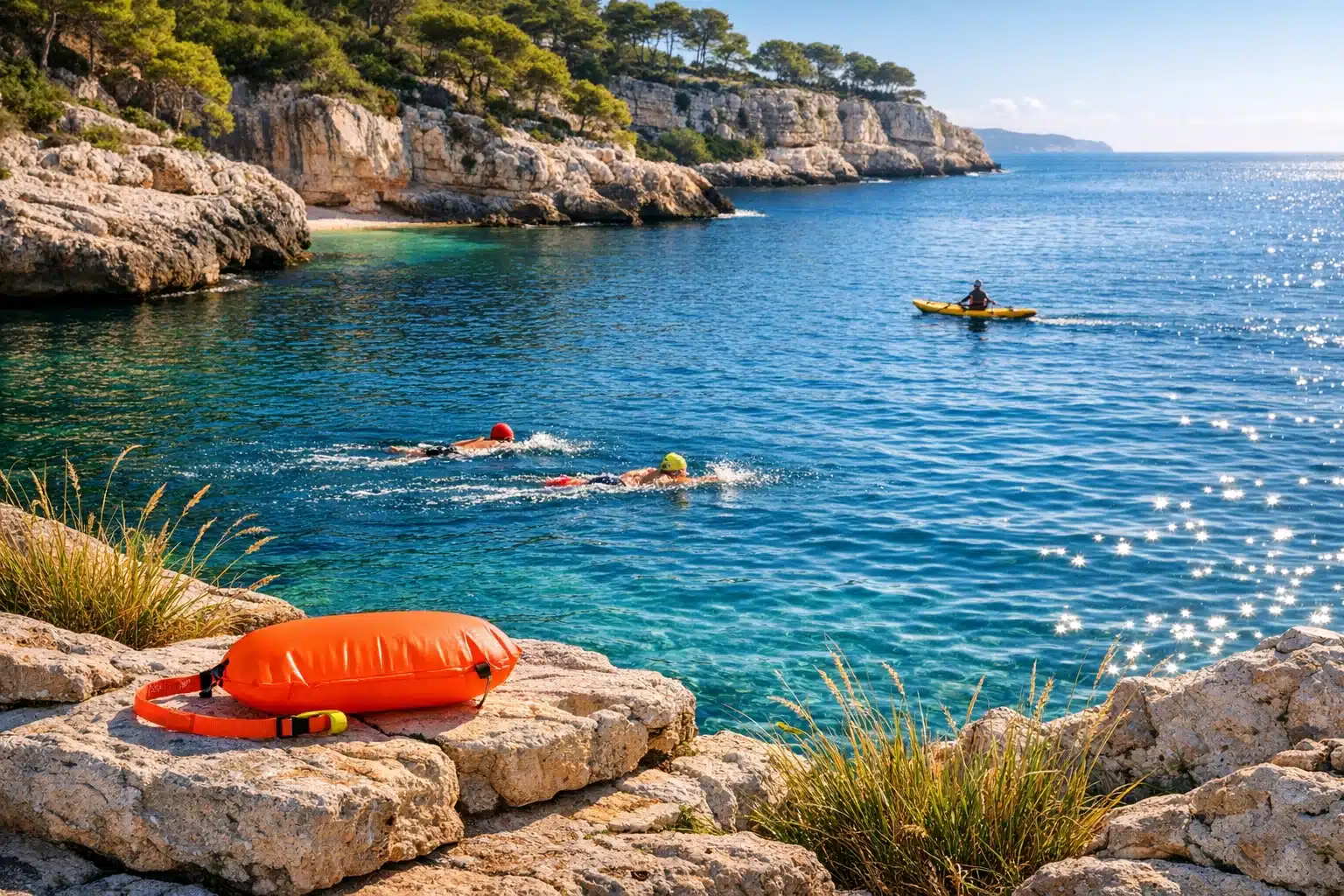
Pool swimming and open-water swimming overlap, but they are not the same experience. Pools offer lanes, known depth, wall breaks, and often lifeguards. Open water introduces currents, chop, temperature shifts, weather, and uncertain footing. In a pool, a bad turn may cost time. In a lake or sea, poor planning can create real danger. That is why open-water swimmers are advised to use visible caps, choose safe locations, swim with partners or organized groups, and understand local conditions before entering. A calm shoreline can hide a complicated environment just beyond it.
Important safety habits include:
• Never overestimate ability, especially in unfamiliar water
• Enter gradually when the temperature is low
• Rest if breathing becomes strained or movement turns sloppy
• Learn basic rescue principles, but avoid impulsive heroics
• Follow lane etiquette in pools and visibility rules outdoors
Common problems are often preventable. Goggles that leak, a rushed warm-up, poor hydration, cramped calves, or ignoring signs of fatigue can unravel a session. So can simple ego. Many swimming mistakes begin with the thought, “I’ll be fine.” Good swimmers replace that sentence with, “What are today’s conditions, and what is the smart choice?”
There is a beautiful honesty to water. It rewards preparation and punishes carelessness without personal malice. For that reason, becoming a safer swimmer is not about becoming fearful. It is about becoming observant, calm, and capable. The more a swimmer understands environment, energy, and limits, the more freedom the sport offers in return.
Conclusion for Readers: How to Make Swimming Part of Your Life
If you are reading this as a beginner, a parent, a fitness-minded adult, or someone returning to exercise after a long pause, the most useful message is simple: swimming does not ask for perfection on day one. It asks for consistency, curiosity, and enough patience to let skill develop. That is good news, because almost everyone can start from somewhere sensible. You do not need an expensive setup, a dramatic backstory, or instant speed. A swimsuit, a safe place to practice, and a willingness to learn are enough to begin.
For complete beginners, the first targets should be comfort and control. Learn to float. Practice breathing out underwater. Become familiar with pushing off gently, gliding, and recovering calmly if a movement feels awkward. For recreational exercisers, a few structured sessions each week can steadily improve stamina without pounding the joints. For former athletes, swimming can offer a refreshing reset: demanding enough to satisfy ambition, yet different enough to sharpen humility. For parents, lessons are valuable not only because children may enjoy them, but because water competence can become a lifelong layer of safety.
As you move forward, keep your expectations realistic and your attention specific. Progress in swimming often arrives quietly. One week you stop lifting your head so high. Another week your kick becomes less wasteful. Eventually a distance that once felt impossible becomes your warm-up. That is how the sport works. It rarely hands out breakthroughs like fireworks. More often, it gives them like sunrise: gradually, then all at once.
A practical way to stay engaged is to choose one short-term focus:
• Improve breathing comfort over two weeks
• Learn one stroke with better form instead of four poorly
• Build from a few lengths to a timed continuous swim
• Take a lesson or ask for technique feedback
• Try a new setting, such as a masters group or supervised open water session
Swimming can be a workout, a discipline, a social habit, and a personal refuge. Some people love the numbers on the pace clock. Others love the silence between breaths. Either path is valid. What matters is that the activity remains useful to your life. If it helps you feel stronger, safer, steadier, or more alive, it has already done meaningful work.
For the target audience of this article, the best next step is not to admire swimming from the deck. It is to enter the water with purpose, start at your real level, and build skill one session at a time. The pool has room for the hesitant, the ambitious, the tired, and the curious. All of them can learn something there.