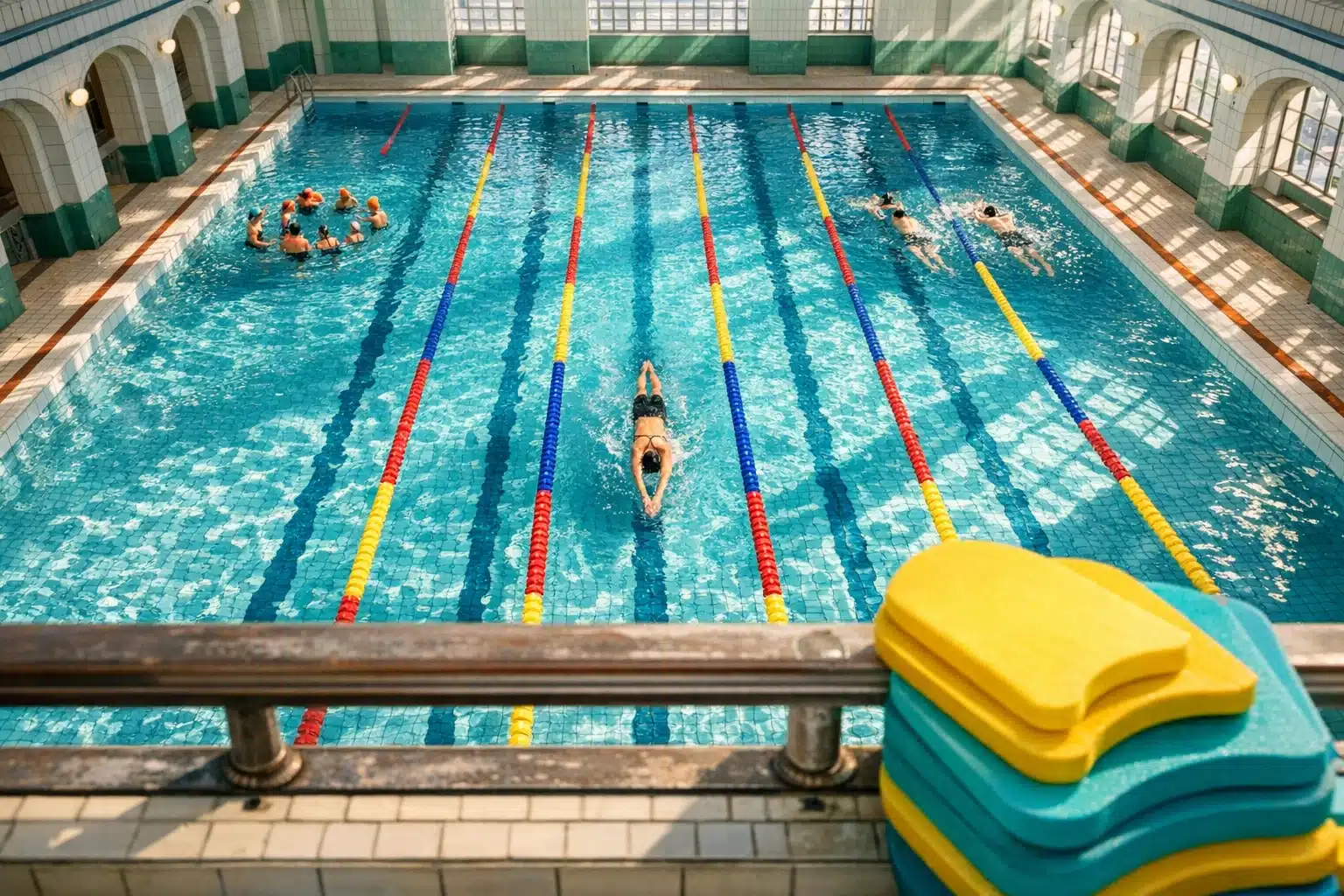
Explore the world of swimming
Swimming sits at the crossroads of sport, survival, and simple joy, making it one of the few activities that can challenge elite athletes and welcome complete beginners on the same day. It strengthens the heart, trains coordination, and offers a low-impact way to move that many people can sustain for years. Beyond fitness, it builds water confidence, which can become a vital life skill. This article explores how swimming works, why technique matters, and how different goals shape the experience in the pool.
Outline: This article first explains why swimming remains relevant for health, safety, and lifelong movement. It then breaks down the main strokes and the technical ideas that make them efficient. After that, it covers training structure, equipment choices, and practical safety habits. A later section looks at swimming as a sport, a social activity, and a recreational pursuit. The final section offers a reader-focused conclusion with realistic ways to begin, improve, or return to the water.
Why Swimming Matters: Health, Safety, and Lifelong Access
Swimming matters for a reason that goes beyond medals, neat lane lines, or the polished image of athletic discipline. It combines physical conditioning with a practical life skill, and that combination is rare. A person can swim for fitness, for recovery, for competition, for fun, or for safety, and often those reasons overlap. Someone who begins with a simple goal like easing back pain may later discover a love for lap training. Another person may start lessons only to feel safer during family beach trips. Water has a way of widening the purpose of the activity.
From a health perspective, swimming is often praised because it is easier on the joints than many impact-heavy exercises. Running can be excellent for cardiovascular endurance, yet it may feel harsh for people with knee discomfort, excess body weight, or a history of overuse injuries. In water, buoyancy reduces the stress placed on the body while still creating resistance in every direction. That means a swimmer works against the water without pounding against the ground. The result is a workout that can challenge the heart and lungs while also recruiting the shoulders, back, core, hips, and legs.
Public health guidelines commonly recommend at least 150 minutes of moderate aerobic activity each week for adults, and swimming can fit that target well. Depending on pace, body size, and stroke choice, a 30-minute session can also use a meaningful amount of energy, often roughly comparable to brisk cycling or other steady endurance work. Yet numbers only tell part of the story. Many swimmers stick with the activity because it feels mentally refreshing. The cool water, repeated rhythm, and brief underwater silence can turn exercise into something closer to moving meditation.
Safety gives swimming even greater relevance. Learning to float, breathe calmly, and move through water is not just a leisure skill. It can reduce panic in unexpected situations around pools, lakes, or coastlines. In many countries, drownings remain a serious public health concern, especially for children, which is why swim education is often treated as a foundation rather than a luxury. Basic water competence includes more than swimming one length; it also involves entering the water safely, treading water, turning onto the back, and understanding limits.
Swimming is also unusually flexible across the lifespan. Children can learn it early, teenagers can train seriously, adults can use it for fitness, and older individuals often continue because it feels sustainable. That breadth is part of its quiet power. The water does not ask for a particular age, shape, or background. It simply asks for patience, respect, and the willingness to learn its language.
Understanding the Four Main Strokes and the Logic of Technique
To an unfamiliar eye, swimming can look like a simple contest of effort: kick harder, pull faster, get to the wall. In reality, technique often decides whether a swimmer moves smoothly or struggles against the water. Because water is far denser than air, small errors in body position create noticeable drag. That is why experienced swimmers can appear calm even at speed. They are not wasting energy fighting the medium around them. They are shaping their movement to cooperate with it.
The four main competitive strokes are freestyle, backstroke, breaststroke, and butterfly, and each has a distinct rhythm. Freestyle, usually performed as front crawl, is typically the fastest and most efficient over distance. Swimmers rotate through the torso, recover one arm at a time above the water, and coordinate side breathing with a flutter kick. Backstroke uses a similar alternating pattern but places the swimmer face-up, which makes breathing simpler while introducing a new challenge: holding a straight line without seeing where one is going. Breaststroke is more cyclical and glide-based, with a simultaneous arm pull and a whip kick. Many beginners appreciate that it allows the face to come out of the water regularly, though the timing can be surprisingly technical. Butterfly is the most demanding for many people, pairing simultaneous arm recovery with a dolphin kick and a wave-like body action that rewards timing more than brute strength.
Good technique rests on a few core ideas that apply across strokes. A swimmer generally wants a long body line, a stable head position, and controlled breathing. Frequent mistakes include lifting the head too high, bending the knees excessively during kicking, or rushing the arms without establishing a strong catch in the water. Efficient swimmers often look almost economical, as if they are spending energy carefully instead of throwing it around. That is not laziness. It is craft.
Several simple principles help beginners improve quickly:
• Keep the head neutral rather than craning forward.
• Exhale into the water instead of holding the breath until the last second.
• Let the hips stay near the surface to reduce drag.
• Focus on distance per stroke, not just stroke rate.
Comparisons between strokes can also clarify learning. Freestyle suits fitness training because it is efficient and scalable. Backstroke can improve posture awareness and shoulder coordination when done well. Breaststroke often feels more relaxed in recreational settings but can place more demand on the knees if technique is poor. Butterfly builds power and rhythm, yet it is usually introduced after foundational control is established. For most learners, progress comes not from copying a fast swimmer’s intensity, but from understanding why the water rewards balance, timing, and patience.
Training Smart: Workouts, Equipment, and Poolside Safety
A smart swimming plan does not begin with heroic distance or dramatic exhaustion. It begins with structure. New swimmers often improve faster when they divide a session into manageable parts instead of trying to survive a long, continuous effort. A useful workout usually includes a warm-up, a skill-focused middle portion, a main set that matches the swimmer’s goal, and a short cooldown. That format creates clarity, and clarity tends to reduce frustration.
For example, a beginner session might look like this:
• Warm-up: 4 easy lengths, resting as needed.
• Drill set: 4 lengths focused on breathing or kicking.
• Main set: 6 to 10 shorter repeats at steady effort with planned rest.
• Cooldown: 2 relaxed lengths using any comfortable stroke.
This approach teaches pacing and lets technique survive the workout. Without rest intervals, form often falls apart, and the swimmer ends up rehearsing mistakes instead of building skill.
Training goals vary widely. Someone pursuing general fitness may benefit from consistent moderate sessions two or three times each week. A triathlete may prioritize freestyle endurance, sighting practice, and efficient turns. A competitive pool swimmer may track splits, stroke counts, and heart rate response. An adult returning after years away might simply aim to regain comfort in the water and gradually expand time spent moving. None of these paths is inherently superior. The right plan is the one that fits the swimmer’s body, schedule, and reason for showing up.
Equipment can help when used with purpose. Goggles improve visibility and comfort. A well-fitted suit reduces distraction. A kickboard isolates the legs, though overusing it can encourage an awkward head position. A pull buoy lifts the hips and allows focus on arm mechanics, but it should not become a shortcut that replaces learning balance. Fins can highlight body alignment and add propulsion, while hand paddles increase resistance and are usually better introduced once the catch is technically sound. Useful gear supports awareness; it does not substitute for skill.
Safety deserves equal attention. Pool rules may feel ordinary, yet they matter. Swimmers should know depth changes, respect lane direction, avoid diving into unknown water, and stay aware of others during turns and push-offs. Hydration is easy to overlook because the body is surrounded by water, but fluid loss still occurs. In open water, caution rises another level. Conditions change, visibility drops, and distance can be deceptive. Sensible habits include swimming with a partner, using a bright tow float where appropriate, checking local guidance, and staying within realistic limits. The smartest swimmer is not the boldest person in the water. It is the person who combines preparation with judgment.
Beyond Laps: Competition, Recreation, and the Social Side of Swimming
Swimming is often introduced through lessons or fitness advice, but its world is much larger than a row of people counting lengths. It can be fiercely competitive, deeply recreational, socially connective, or quietly personal depending on the setting. That range helps explain why the activity stays relevant across cultures and age groups. The same pool may host children learning to float in the afternoon, club athletes chasing race times in the evening, and adults unwinding after work at night.
Competitive swimming has its own language of starts, turns, splits, pacing, and race strategy. Short-course pools, typically 25 meters or 25 yards, reward strong turns because walls arrive more often. Long-course pools, measured at 50 meters, place greater emphasis on sustained rhythm and speed between walls. Events range from explosive sprints to long-distance races, and there is also open-water competition where navigation, temperature, currents, and pack dynamics reshape the challenge entirely. Masters swimming gives adults a structured but welcoming way to train and race, while para swimming highlights how adaptable the sport can be when talent meets thoughtful classification and support.
Recreational swimming offers a different reward. It can turn exercise into play. A family pool day, a calm lake swim, or a holiday morning in a hotel pool may not look athletic in the formal sense, yet such experiences often create the emotional bond that keeps people connected to the water. Children learn confidence through games. Adults rediscover movement without staring at a treadmill console. Some people use swimming to break up desk-heavy routines, while others treat it as a mental reset when life feels loud. The soundscape alone can be therapeutic: the splash at the wall, the brief hush underwater, the steady echo of effort.
There is also a community dimension that deserves more attention. Swim clubs, public facilities, school teams, and local lessons bring together people who might never meet elsewhere. The shared structure of lanes and sets creates a polite form of teamwork, even when each person is technically following an individual workout. A stronger swimmer may model good etiquette. A coach may translate a difficult skill into one cue that finally makes sense. A parent may watch a nervous child grow brave over the course of a few weeks. Those moments are not side notes. They are part of the value.
Access remains an important issue, of course. Not every neighborhood has affordable pool time, and not every family has equal exposure to swim education. That makes community programs, school-based instruction, and safe public facilities especially important. Swimming flourishes best when it is treated not only as a sport for the talented, but also as a shared resource for health, confidence, and belonging.
Conclusion: Finding Your Own Lane in the Water
If you are curious about swimming, the good news is that you do not need to approach it with a champion’s résumé or a dramatic transformation plan. You only need a clear reason to begin. Maybe you want a lower-impact workout. Maybe you want to feel safer near water with your children. Maybe you once loved the pool and would like to return without pressure. Each of those reasons is valid, and each can lead to steady progress when paired with patience and basic guidance.
For beginners, the most effective first step is usually simple instruction. A few lessons can prevent months of repeating awkward habits, especially with breathing and body position. For returning swimmers, consistency often matters more than intensity. Two thoughtful sessions per week can do more than one punishing workout followed by long gaps. For fitness-focused readers, swimming works best when goals are specific and measurable: complete 20 continuous minutes, learn bilateral breathing, reduce rest time between repeats, or become comfortable in deep water. Clear goals turn vague intention into visible improvement.
A practical starting roadmap might look like this:
• Choose a pool or safe supervised setting that feels accessible.
• Get basic gear that fits well rather than buying every training tool at once.
• Set a modest schedule you can actually keep.
• Track one or two markers, such as total distance or confidence with breathing.
• Ask for feedback before frustration becomes a habit.
It also helps to remember that progress in swimming can feel different from progress in other activities. Some improvements are visible in speed, but others appear as calmer breathing, smoother balance, cleaner turns, or less fear in deeper water. Those gains matter. In fact, for many people they matter most. The person who once clung to the wall and now crosses the pool with control has achieved something significant, even if no stopwatch is involved.
Swimming rewards humility, attention, and repetition, yet it also gives something rare in return: a sense of ease in a place that first seemed unfamiliar. That is why the sport stays with people. It can challenge the ambitious, support the cautious, and refresh the tired. Whether you want exercise, skill, confidence, or community, there is room for you in the water. The lane does not have to be fast to be meaningful. It only has to be yours.