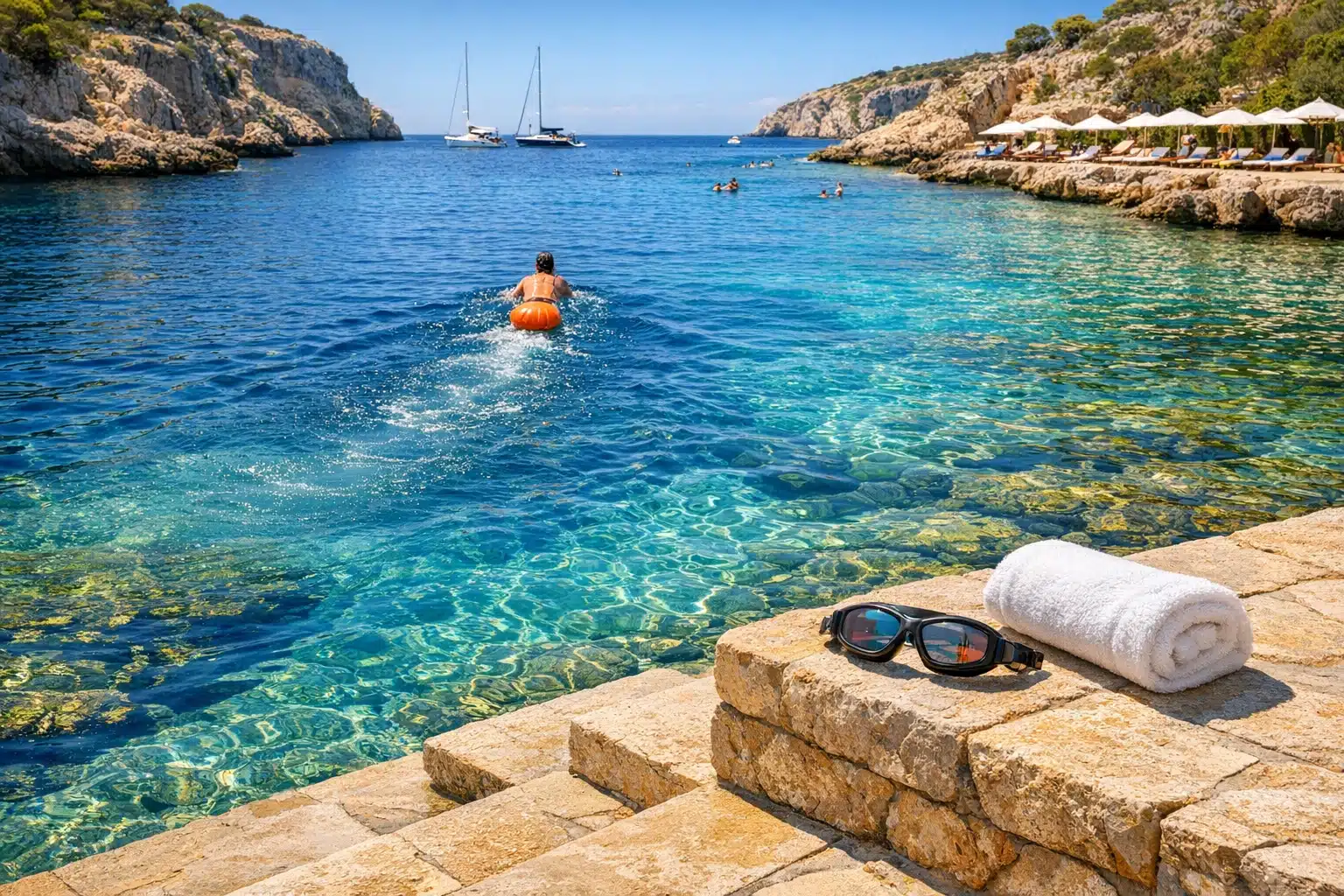
Explore the world of swimming
Swimming is one of those rare activities that feels equally at home in a school lesson, an Olympic final, and a quiet morning at the local pool. It builds endurance without the pounding stress of many land sports, teaches practical water safety, and offers a mental reset that few workouts can match. Whether you want better fitness, stronger technique, or simply more confidence in deep water, understanding how swimming works turns every lap into something more meaningful.
Article Outline
• Swimming as a foundation for fitness, safety, and recreation
• The main strokes and the technique that makes them efficient
• Health benefits, training science, and comparisons with other exercise
• Practical advice on equipment, learning, and safe progression
• Why swimming remains valuable across different ages, goals, and lifestyles
Why Swimming Matters More Than Many People Realize
Swimming is often introduced as a sport, yet its importance begins long before competition. It is a life skill, a public health tool, a form of recreation, and for millions of people, a reliable path into regular exercise. Long before lane ropes, electronic timing, or televised finals, humans learned to move through water for survival, transport, fishing, and exploration. That history still matters. In many regions, basic water competence is linked to safer communities because it reduces the risk of drowning and builds confidence around rivers, lakes, beaches, and pools. Learning to swim is not simply about speed; it is about knowing how to float, breathe calmly, tread water, and respect changing conditions.
What makes swimming especially distinctive is the environment itself. Water changes every movement. Because it is far denser than air, even simple actions create resistance, which means the body works continuously without the heavy impact associated with running or court sports. At the same time, buoyancy supports much of the body’s weight, so joints usually experience less stress than they would on land. This combination explains why swimming can suit very different groups: children learning coordination, athletes chasing endurance, adults managing stress, and older people looking for activity that feels challenging without feeling punishing. In the hush beneath the surface, effort sounds different; the workout becomes a conversation between breath, rhythm, and control.
Swimming also reaches into many areas of daily life. It can be intensely structured, wonderfully casual, or somewhere in between. A person might train for a meet, recover from a hard week with easy laps, or join aqua-based exercise after an injury. The same pool can host a swim lesson at dawn, a school practice after lunch, and a community class in the evening. That versatility is a major reason the activity remains relevant.
Common reasons people are drawn to swimming include:
• practical safety around water
• full-body conditioning
• low-impact movement for joints
• stress relief and mental focus
• social connection through clubs, lessons, and team training
Seen this way, swimming is not a narrow niche. It is a broad skill with athletic, educational, and personal value. That wide usefulness gives the sport a lasting place in modern life.
The Main Strokes and the Technique Behind Efficient Movement
To an untrained eye, swimming can look like little more than arms churning and legs kicking. In reality, technique determines almost everything. Two swimmers may appear equally strong, yet the one with better timing and body position usually travels farther with less effort. Water punishes wasted motion. A dropped elbow, lifted head, poorly timed kick, or rushed breath can create drag that steals speed immediately. For that reason, improvement in swimming often comes less from brute force and more from learning to move in a cleaner, more balanced way.
The four competitive strokes each teach something different. Freestyle, usually swum as front crawl, is the fastest and most common stroke for fitness training. It rewards a streamlined body line, steady rotation through the torso, and efficient side breathing. Backstroke shares many of the same principles but turns the swimmer face-up, which changes balance and orientation. Breaststroke is slower, with a pull and kick that must be carefully timed to avoid becoming a stop-and-go action. Butterfly is the most demanding for many learners because it combines a powerful dolphin kick with symmetrical arm recovery and precise rhythm. Each stroke has a different personality in the water.
A useful way to compare them is by what they emphasize:
• Freestyle usually teaches rhythm, rotation, and aerobic efficiency.
• Backstroke strengthens alignment awareness and shoulder control.
• Breaststroke highlights timing, glide, and coordinated propulsion.
• Butterfly develops wave-like body motion, power, and tempo discipline.
No matter the stroke, several technical principles remain constant. First, body position matters. A flatter, more horizontal shape reduces drag, allowing the swimmer to move through the water rather than fight against it. Second, propulsion should come from coordinated movement, not frantic movement. Strong kicks help, but they work best when connected to stable hips and well-placed arm actions. Third, breathing must fit the stroke instead of interrupting it. Many beginners lift the head too high to inhale, causing the legs to sink and the stroke to collapse. Good swimmers inhale quickly and return to alignment just as quickly.
Turns, starts, and push-offs also deserve attention because they create free speed. In a pool, a streamlined push from the wall can be faster than surface swimming for several meters. Coaches therefore teach swimmers not only how to move in open water between the flags, but how to use every wall, every glide, and every underwater phase wisely. Technique is what turns effort into progress, and in swimming, efficiency is often the difference between surviving a set and truly owning it.
Health Benefits, Training Science, and How Swimming Compares With Other Exercise
Swimming is frequently praised as a full-body workout, and that description is accurate, but it only tells part of the story. The body works against constant resistance while also managing breathing patterns, posture, and temperature changes. Large muscle groups in the shoulders, back, chest, core, hips, and legs contribute to propulsion or stability, depending on the stroke. At an aerobic pace, swimming can support cardiovascular fitness in the same way brisk cycling or steady jogging can. At higher intensities, interval sessions push heart rate upward and train the body to recover between hard efforts. The result is a form of exercise that can be adapted to very different goals without losing its central value.
Public health guidance for adults commonly recommends at least 150 minutes of moderate aerobic activity per week, and swimming can clearly help meet that target. The exact energy cost varies by stroke, pace, body size, and skill, but lap swimming often burns several hundred calories per hour, with vigorous sessions climbing much higher. More important than any single number is the quality of the effort. Because water supports the body, many people can sustain activity with less pounding on ankles, knees, and hips than they would experience during running. That makes swimming especially attractive for people returning from injury, carrying extra body weight, or managing joint discomfort.
The comparison with land exercise becomes clearer when you look at trade-offs. Running is simple and convenient, yet it places repeated impact on the lower body. Cycling builds endurance efficiently, but it does not challenge the upper body to the same degree. Strength training develops muscle and bone effectively, though it may not provide the same continuous aerobic demand. Swimming sits in an interesting middle ground: it blends endurance and muscular work, encourages controlled breathing, and cools the body through the surrounding water. It is not automatically superior to every other activity, but it offers a combination that few others match.
Mental benefits are another reason swimmers stay loyal to the sport. Repetitive laps can create a meditative rhythm, especially during longer aerobic sets. The swimmer focuses on counting strokes, timing breaths, and holding form, which leaves less room for mental clutter. Many people report that time in the pool lowers stress and improves mood after a difficult day. There is also a quiet confidence that grows from technical progress. The first length completed without stopping, the first calm deep-water tread, or the first smooth turn off the wall can feel small from the outside, yet each milestone changes the athlete’s relationship with the water.
In short, swimming offers broad physical benefits, meaningful psychological rewards, and a practical way to stay active across many phases of life. Its science is not mysterious. Move efficiently, breathe well, train consistently, and the body responds.
Learning to Swim Well: Training Habits, Equipment, and Safety That Truly Matter
Getting better at swimming does not require elite talent, but it does require patience with a skill that improves in layers. Beginners often expect progress to look dramatic from week to week. In practice, advancement is usually built from small corrections that gradually transform the whole stroke. A swimmer learns to float more calmly, then to exhale consistently, then to kick without stiffening, then to catch the water with the hands instead of slapping at it. Over time those pieces begin to connect. A lesson or coach can speed that process because technique flaws are easier to fix early than after they become habits.
A sensible training approach starts with structure. Instead of jumping into the pool and improvising, swimmers benefit from sessions with a clear purpose. One day may focus on aerobic endurance, another on drills, and another on speed or pacing. Even a short workout feels more productive when it has an order: warm-up, skill work, main set, and easy recovery. For example, a new swimmer might begin with a few relaxed lengths, practice kicking with a board, swim short repeats with plenty of rest, and finish with easy backstroke. Intermediate swimmers often add pull sets, pace targets, and timed intervals to develop efficiency under fatigue.
Useful equipment is usually simple:
• goggles that seal comfortably without constant adjustment
• a well-fitted swimsuit that allows free movement
• a kickboard for leg-focused drills
• a pull buoy to highlight body position and upper-body work
• fins, when used thoughtfully, to support ankle flexibility and technique awareness
Safety deserves equal attention because confidence should never become carelessness. In pools, that means understanding lane etiquette, entering the water carefully, and respecting lifeguard instructions. In open water, the demands rise sharply. Visibility changes, temperatures can drop fast, currents may shift, and distances are often harder to judge than they appear from shore. Even strong pool swimmers can feel unsettled outside lane lines. A bright tow float, a partner, local knowledge, and a realistic route are all sensible precautions. Cold water in particular can affect breathing and coordination within minutes.
New swimmers should also remember that fatigue in water can be deceptive. Technique breaks down before many people notice it, which is why short, focused practice is often more useful than long, sloppy practice. If the goal is improvement, stop when form falls apart, reset, and continue with intention. Swimming rewards consistency more than heroic single sessions. A person who trains three times a week with attention to detail often advances faster than someone who swims once a week until exhaustion. The water is an honest teacher: it reflects every habit, good or bad, and it steadily rewards those who learn to listen.
Swimming as a Lifelong Practice and a Smart Next Step for Readers
One of swimming’s greatest strengths is that it does not belong to one age group, one body type, or one narrow definition of success. A child may begin by blowing bubbles and learning to float. A teenager may discover racing, water polo, or lifeguard training. An adult may return to the pool after years away, surprised to find that technique matters even more now than youthful energy once did. Later in life, swimming can remain a reliable form of movement when other sports become less comfortable. That continuity is rare. Many activities are seasonal or physically exclusive, but swimming keeps offering doors back in.
The social side also deserves more credit than it usually receives. Although lap swimming can feel solitary, the wider culture around it is deeply communal. Masters teams, local clubs, triathlon groups, swim schools, and public pool communities create settings where beginners and experienced athletes often share water, advice, and encouragement. There is room for competitive ambition, but there is also room for quiet personal goals: swimming a first uninterrupted kilometer, mastering a flip turn, improving stroke count, or simply feeling less anxious in deep water. Progress in this sport is measured in more than medals.
Swimming is also adaptable in purpose. Some readers will treat it as cross-training for another sport. Others will use it to rebuild fitness after a long break. Some will value the meditative quality of steady laps, while others will be drawn to the thrill of racing or the adventure of open-water events. There are adaptive programs that broaden participation for swimmers with disabilities, and there are gentle aqua classes that help people remain active when hard impact is no longer practical. That range matters because a useful activity is one people can realistically continue, not merely admire from a distance.
If you are the kind of reader who wants a sensible next step, the advice is simple. Start small, but start deliberately. Learn or revisit the basics of floating, breathing, and balance. Choose consistency over intensity. Ask for technical feedback early. Treat safety as part of skill, not as an afterthought. Most of all, allow yourself to enjoy the process. Swimming can be demanding, awkward, and humbling at first, yet it often becomes deeply satisfying once rhythm replaces struggle.
For beginners, returning adults, and fitness-minded readers alike, the real value of swimming is not only in faster times or longer sets. It is in becoming comfortable in an environment that asks for patience, precision, and calm. That comfort can improve health, expand confidence, and open a form of movement you may carry for decades. The next meaningful lap is not reserved for experts. It begins when you push away from the wall with purpose.