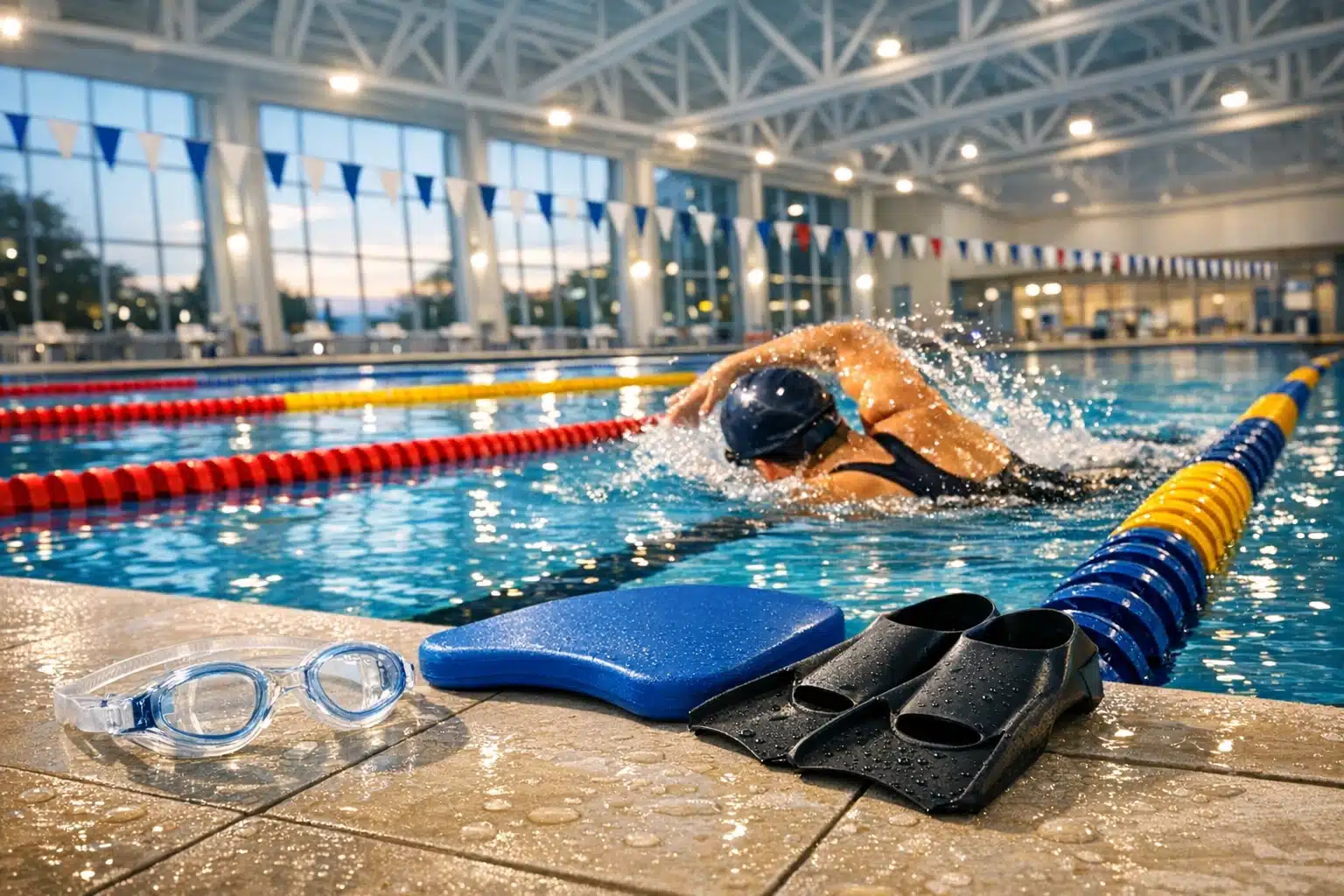
Explore the world of swimming
Swimming sits at a rare crossroads where play, survival, sport, and lifelong fitness meet. A child may enter the water to learn confidence, an adult may return to it for low-impact exercise, and an athlete may treat every lap as a study in precision and pacing. Because it can be relaxing or demanding, individual or social, swimming remains relevant in schools, public health, recreation, and elite competition around the world.
Article outline:
- Why swimming matters as a life skill, exercise, and sport
- The foundations of efficient movement in water
- A comparison of the main swimming strokes
- Training methods, equipment choices, and safety essentials
- How different people can build a sustainable swimming habit
Why Swimming Matters Beyond the Pool
Swimming deserves attention not only because it is enjoyable, but because it combines several forms of value that few activities offer at once. It is a practical safety skill, a full-body exercise, a competitive sport, and a recreational habit that can stay useful from childhood to older age. That range matters. Many physical activities are excellent for fitness but do not help in emergency situations. Swimming is different. Knowing how to float, tread water, and move calmly through deep water can reduce panic and improve personal safety in aquatic settings such as pools, lakes, rivers, and coastlines.
From a health perspective, swimming is often praised for being low impact, and that description is more than a slogan. Water supports part of the body’s weight, which can reduce stress on joints compared with high-impact activities such as running on hard surfaces. That makes swimming attractive for people recovering from injury, older adults managing stiffness, and beginners who want cardiovascular exercise without repeated pounding. At the same time, low impact does not mean low challenge. Water creates constant resistance, so the arms, shoulders, back, core, and legs all work together. A relaxed swim may feel graceful, but underneath that calm surface the body is coordinating breathing, balance, timing, and propulsion.
Swimming also fits modern health guidance well. Public health agencies commonly recommend that adults accumulate at least 150 minutes of moderate aerobic activity each week, and lap swimming can contribute meaningfully to that goal. The exact intensity depends on pace, stroke, and rest intervals, but even steady recreational swimming can build endurance. Competitive training raises the bar further by improving speed, power, and efficiency. In other words, swimming scales well. One person uses it to move gently after work, while another uses it to chase split times measured to the hundredth of a second.
There is also a mental side that keeps people coming back. Water changes the sensory environment: sound softens, movement slows, and attention narrows to breath and rhythm. For some swimmers, that creates a meditative state. For others, it becomes a place to test discipline. You count lengths, control effort, and learn that progress often appears quietly. One day a set feels impossible; a month later it becomes part of your warm-up. That subtle transformation is part of swimming’s charm.
A few reasons swimming remains widely relevant include:
- It teaches a genuine life skill linked to water safety.
- It can improve cardiovascular fitness and muscular endurance.
- It offers a low-impact option for many people with joint concerns.
- It can be social, competitive, therapeutic, or purely recreational.
Put simply, swimming matters because it is useful in the real world, adaptable in training, and rewarding over time. Few activities manage all three so well.
The Foundations of Efficient Movement in Water
People often assume swimming is mostly about strength, but beginners quickly learn a more interesting truth: technique usually matters first. In water, effort alone can backfire. Push hard with poor timing, lift the head too much, or tense the body unnecessarily, and the swimmer creates drag that wastes energy. Efficient swimming begins with understanding how the body interacts with water. The goal is not to fight the water in every moment. It is to align with it, reduce resistance, and apply force in useful directions.
Body position is the first major principle. A streamlined body rides higher and slips forward more cleanly. When the hips and legs sink, the swimmer effectively pulls extra weight through the water. That is why instructors emphasize looking down rather than forward in freestyle, lengthening the spine, and keeping the body balanced. The difference can feel small but look dramatic from the pool deck. Two swimmers may seem equally strong on land, yet the one with better balance in the water travels farther with each stroke and tires more slowly.
Breathing is the next piece, and it can be surprisingly difficult for new swimmers. Humans are used to breathing whenever they want; swimming requires rhythm. Most learners improve when they stop thinking of breathing as one big action and instead break it into phases: exhale steadily into the water, then turn or lift only enough to inhale quickly. Holding the breath creates tension and often causes panic. A smooth exhale makes room for a calmer next breath. That is one reason early lessons frequently include bubbles, floating drills, and kickboard work. These may seem simple, but they teach comfort, which is the foundation of control.
Propulsion comes from coordinated action rather than isolated muscle effort. The arms pull, the legs kick, and the core links the two. In freestyle and backstroke, body rotation helps extend reach and recruit larger muscles of the back. In breaststroke, timing becomes crucial because the pull, breath, kick, and glide form a sequence. In butterfly, rhythm is everything; when timing breaks down, the stroke becomes exhausting very quickly. Good coaching often returns to the same essentials again and again because they solve many visible problems at once.
Useful technical priorities for developing swimmers include:
- Learning to float and regain balance calmly
- Keeping the head and spine in a neutral position
- Exhaling underwater instead of holding the breath
- Using long, controlled movements before chasing speed
- Practicing drills that isolate one skill at a time
There is something almost poetic about the moment technique clicks. The swimmer is not suddenly stronger, yet the water feels less hostile. One length that used to feel like a struggle starts to feel possible, then repeatable, then enjoyable. That shift is why fundamentals deserve patience. In swimming, efficiency is not a luxury for advanced athletes; it is the doorway that lets everyone else in.
Understanding and Comparing the Main Swimming Strokes
One of the pleasures of learning swimming is realizing that the sport is not a single movement pattern but a family of strokes, each with its own rhythm, purpose, and personality. The four main competitive strokes are freestyle, backstroke, breaststroke, and butterfly. In addition, individual medley events combine all four, demanding versatility and careful pacing. Comparing the strokes helps swimmers choose what to practice, understand why one stroke feels natural while another feels stubborn, and appreciate the technical variety hidden inside what many outsiders simply call laps.
Freestyle, usually performed as front crawl in races, is generally the fastest and most efficient stroke for most swimmers. In competitive freestyle events, any stroke is technically allowed, but crawl dominates because its alternating arm action and flutter kick produce continuous forward momentum. The body rotates from side to side, allowing a longer reach and more effective pull. Breathing can happen every two, three, or more strokes depending on pace and preference. Freestyle is often the first stroke people learn for fitness because it scales well from easy aerobic swimming to intense sprint work.
Backstroke shares some structural similarities with freestyle, but the face stays above water and the swimmer travels on the back. That changes orientation and demands confidence in spatial awareness. Many beginners find the breathing easier because inhaling is unrestricted, yet maintaining a straight line can be difficult without ceiling markers or lane lines for reference. Backstroke also encourages shoulder mobility and body rotation, though swimmers must learn efficient hand entry and a stable head position to avoid wobbling through the water.
Breaststroke is slower for most swimmers, but it is often seen as approachable because the breathing pattern feels more intuitive. The stroke uses a simultaneous arm pull and a whip-like kick, followed by a glide. Timing is the heart of breaststroke. If the swimmer rushes, drag increases and momentum disappears. Because the head rises regularly, breaststroke is sometimes chosen in recreational settings where people want to look forward or conserve a calm pace. However, technically sound breaststroke is more complex than it first appears, especially at competitive speeds.
Butterfly is the stroke that often earns a dramatic reputation, and not without reason. Both arms recover together over the water, while the body moves with a wave-like undulation supported by a dolphin kick. Butterfly demands strength, mobility, timing, and rhythm in a highly coordinated package. To watch a skilled butterfly swimmer is to see force turned into choreography. To swim it badly is to feel as if the pool has suddenly thickened into syrup.
A simple comparison helps clarify their differences:
- Freestyle: fastest, efficient, widely used for fitness and racing
- Backstroke: face-up orientation, easier access to air, strong for balance and rotation work
- Breaststroke: distinct timing, comfortable pace for some recreational swimmers, technically subtle
- Butterfly: powerful and demanding, highly rhythmic, often used in shorter sets unless the swimmer is well trained
No stroke is automatically the best in every context. Freestyle may dominate training plans, yet backstroke can improve posture and balance, breaststroke can sharpen timing, and butterfly can teach rhythm and whole-body coordination. Together, the strokes reveal swimming’s real complexity: it is not just motion through water, but motion shaped by mechanics, breath, and style.
Training, Equipment, and Safety from Pool to Open Water
Once a swimmer has basic comfort and technique, progress usually depends on three connected areas: smart training, suitable equipment, and serious respect for safety. These pieces matter whether someone swims twice a week for general fitness or prepares for races. A useful training plan balances consistency and recovery. Many swimmers improve not by adding endless distance, but by giving each session a purpose. One day may focus on aerobic endurance, another on drills, another on speed or pacing. Structure helps. Instead of simply swimming until tired, the swimmer uses sets, intervals, and rest periods to target specific skills.
A standard session often includes a warm-up, technical drills, a main set, and a cooldown. For example, a recreational swimmer might do 200 meters easy, several short drill repeats, a main set of moderate freestyle intervals, and then a gentle finish. Competitive programs become far more detailed and may include kick sets, pull sets, sprint work, threshold training, and race-pace efforts. Pool length also shapes training. Many facilities use 25-meter or 25-yard pools, while Olympic competition is held in 50-meter pools. Shorter pools provide more turns; longer pools expose weaknesses in pure swimming efficiency because there are fewer walls to help.
Equipment should support skill rather than replace it. A comfortable swimsuit and reliable goggles are the true essentials. Beyond that, tools can be useful in moderation:
- Kickboards help isolate leg work and body alignment.
- Pull buoys support the legs so swimmers can focus on the upper body and rotation.
- Fins can improve ankle flexibility, body position, and drill quality.
- Paddles add resistance and highlight flaws in the catch, but they should be used carefully.
- Swim caps reduce drag slightly and keep hair controlled, especially in longer sessions.
Open-water swimming adds a different set of demands. Lakes, rivers, and oceans do not offer lane ropes, black lines, or evenly heated conditions. Currents, waves, poor visibility, changing weather, and water temperature all matter. In that environment, safety moves to the front of the conversation. Swimmers should avoid going alone, check local conditions, understand entry and exit points, and use visible gear such as a brightly colored cap or tow float where appropriate. A lifeguarded area or trained support partner can make a major difference. In cold water, underestimating the body’s response is a common mistake. Sudden immersion can affect breathing and coordination quickly, even for strong swimmers.
Pool safety deserves equal respect, just in a quieter form. Slippery decks, diving into shallow water, overestimating ability, or swimming while fatigued can turn routine exercise into risk. Parents and guardians should remember that supervision is active, not casual. Drowning does not usually resemble the loud, theatrical struggle shown in films; it can be fast and difficult to spot.
Good swimmers are not defined only by speed. They know how to train with intent, choose equipment wisely, and read conditions honestly. That combination may not look dramatic from the outside, but it is what keeps a swimming habit productive and sustainable.
Building a Lifelong Swimming Habit and What It Can Mean for You
Swimming becomes especially valuable when it stops being an occasional event and turns into a durable part of life. The path looks different for different people. A child may begin with water confidence classes and playful skill building. A teenager may join a team and discover the discipline of structured training. An adult with a desk job may use early morning laps to wake up both body and mind. An older swimmer may appreciate the way water supports movement while still offering meaningful exertion. That flexibility is one of swimming’s strongest advantages: the activity can adapt as goals change.
For beginners, the smartest approach is usually modest and consistent. Two or three sessions a week can be enough to build comfort and noticeable progress, especially when the swimmer focuses on technique rather than trying to power through long distances immediately. Many adults quit too early because they judge themselves by speed before they have learned efficiency. A better benchmark is control. Can you float without stress? Can you exhale steadily underwater? Can you swim a few lengths with a repeatable rhythm? Those are real milestones, even if they do not come with medals.
For fitness-focused swimmers, variety helps motivation. Alternating strokes, changing interval lengths, and mixing easy sessions with short, sharper sets can prevent boredom. Some swimmers enjoy tracking distance; others respond better to time-based goals such as a 30-minute session with planned recoveries. Social factors matter too. Masters clubs, community pools, triathlon groups, and adult lessons can provide accountability without turning every swim into a competition. The sound of a starter horn is not required for swimming to feel meaningful.
Swimming can also be unusually inclusive. Adaptive programs and aquatic therapy settings have shown how water can support people with different physical needs. Because buoyancy changes how movement feels, the pool can become a place where some individuals experience freedom and confidence that are harder to find on land. That point deserves emphasis. Swimming is not only about performance. It is also about access, comfort, and the simple human pleasure of moving well.
If you are wondering how to make swimming stick, these habits help:
- Choose realistic session lengths that fit your week.
- Learn proper technique early to avoid frustration.
- Set one or two measurable goals, such as frequency or continuous distance.
- Respect recovery, especially after harder sessions.
- Keep the experience enjoyable by varying pace, drills, or setting.
For the reader standing at the edge of the pool, this is the central takeaway: swimming rewards patience. It rarely gives all its benefits at once. First comes comfort, then coordination, then efficiency, then confidence. Over time, those gains add up to more than fitness. They create competence, safety, resilience, and a reliable way to reconnect with your body. If you are a beginner, start small and stay curious. If you already swim, refine the details and keep showing up. Water has a remarkable way of meeting people where they are, then quietly asking them to grow.