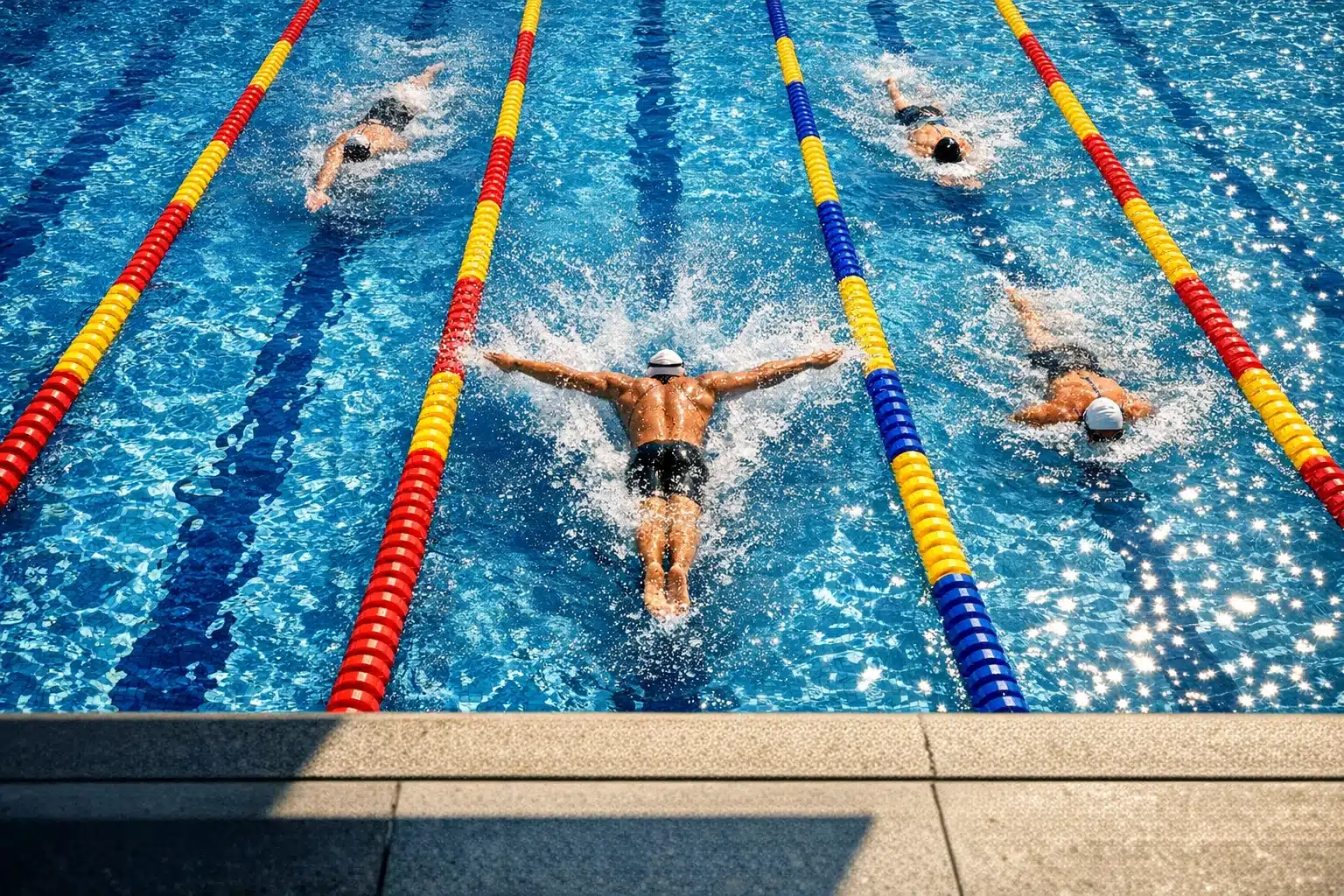
Explore the world of swimming
Swimming sits at the crossroads of survival skill, sport, exercise, and simple joy. Few activities can carry a child toward confidence, help an older adult stay active, and challenge an elite athlete in the same afternoon. Because water changes how the body moves and breathes, learning to swim reveals a different kind of coordination than land-based exercise. This article explores the essentials, benefits, techniques, safety habits, and wider culture that make swimming so relevant today.
Outline
1. The foundations of swimming and the environments where it happens. 2. The physical and mental benefits that make it valuable across age groups. 3. Technique, training, and how the major strokes compare. 4. Safety, equipment, and the special demands of pools, lakes, rivers, and the sea. 5. Swimming as a lifelong practice shaped by sport, community, and personal goals.
The Foundations of Swimming: Why Water Changes Everything
Swimming may look effortless when performed well, yet it is built on a small miracle of adaptation: humans are not born moving naturally through water with efficiency. On land, gravity dominates every step. In water, buoyancy, drag, pressure, and breath control reshape the rules. That is why swimming feels so distinctive even to people who are already fit. A strong runner can still feel awkward in the pool, while a seasoned swimmer often glides with quiet economy that is hard to appreciate from the deck.
At its most basic level, swimming is the ability to move through water while maintaining balance, breathing control, and directional awareness. This ability matters for more than recreation. It is closely tied to water safety, confidence around beaches and pools, and access to a major form of exercise. Many schools and community programs treat swimming not just as a sport, but as a life skill, and for good reason. Knowing how to float, tread water, and move efficiently can reduce panic and improve decision-making in unexpected situations.
Swimming also comes in different settings, each with its own demands. A calm indoor pool offers lines on the floor, predictable depth, and controlled temperature. Open water adds currents, waves, wind, and limited visibility. That contrast alone explains why a pool swimmer can feel like a beginner when stepping into a lake or sea for the first time. The water does not become hostile; it simply becomes less forgiving.
The four competitive strokes are often introduced as a useful map of the sport:
– Freestyle, usually swum with the front crawl, is the fastest and most common stroke.
– Backstroke is performed face-up and depends on alignment and rhythm.
– Breaststroke uses a wider pull and kick, with timing playing a central role.
– Butterfly combines a wave-like body motion with simultaneous arm recovery and high energy demand.
Beyond competition, many people swim for play, rehabilitation, or low-impact conditioning. That range is part of swimming’s appeal. It can be measured in split times and lap counts, yet it can also be as simple as feeling the water hold you up. In that moment, the pool becomes more than a training space. It becomes a place where physics and patience meet, and where progress often arrives one calm breath at a time.
Health Benefits of Swimming: Endurance, Strength, Recovery, and Mental Reset
Swimming earns its reputation as a full-body exercise because it recruits multiple muscle groups while asking the heart and lungs to work in steady partnership. The arms pull, the legs drive, the core stabilizes, and the back helps maintain posture and rotation. Unlike many high-impact activities, the water supports the body, which reduces stress on joints. That makes swimming attractive to people recovering from certain injuries, older adults seeking lower-impact movement, and beginners who want challenging exercise without the pounding often associated with running or jumping.
From a cardiovascular standpoint, regular swimming can contribute meaningfully to overall fitness. Public health guidance commonly recommends at least 150 minutes of moderate aerobic activity per week, and swimming can help meet that goal. The continuous nature of lap swimming encourages sustained effort, while interval sets allow athletes to train speed and heart rate recovery. Because breathing is rhythmically limited by the stroke, swimmers also develop a more deliberate awareness of respiration than they might during many land-based workouts.
The mental side deserves equal attention. Water has a way of narrowing focus. A swimmer often hears little beyond the splash, the exhale, and the turn at the wall. That sensory simplicity can feel meditative, especially in a busy week full of screens and interruptions. Some people use easy laps as active recovery. Others rely on structured sets to channel stress into repetition and measurable progress. Either way, swimming offers a rare blend of calm and effort.
Its benefits can be understood in several practical categories:
– Aerobic conditioning that supports heart and lung function
– Muscular endurance across the shoulders, back, core, and legs
– Lower-impact exercise that can feel gentler on knees and hips
– Improved coordination through breathing, timing, and body alignment
– Psychological relief through rhythm, immersion, and focused movement
Of course, swimming is not automatically easy on every body. Poor technique can aggravate shoulders, and overtraining can bring fatigue just as it can in any sport. Still, when taught well and practiced consistently, swimming becomes one of the most adaptable forms of exercise available. It can challenge an ambitious athlete, welcome a cautious beginner, and support a person easing back into movement after time away. Few activities span that spectrum so naturally.
Learning Technique and Building Skill: What Good Swimming Really Looks Like
Technique is the hidden engine of swimming. Two people may cover the same distance, yet one looks as if the water parts for them while the other seems to wrestle every meter. The difference usually comes down to body position, timing, and breath management more than raw effort. Beginners often assume they need to kick harder or pull faster. In reality, efficient swimming starts with reducing resistance. A streamlined body that rides high in the water conserves energy before the first strong pull even begins.
Breathing is often the first major hurdle. Many new swimmers lift the head too much, which causes the hips and legs to sink. That creates drag and quickly leads to exhaustion. Skilled swimmers exhale into the water and inhale during a brief, well-timed turn of the head or lift of the face, depending on the stroke. Once breathing becomes calmer, everything else improves: balance, rhythm, confidence, and endurance.
Each stroke teaches a different lesson:
– Freestyle rewards rotation, a relaxed recovery, and a steady flutter kick.
– Backstroke emphasizes body line, shoulder mobility, and awareness without looking forward.
– Breaststroke depends on timing; a rushed kick or pull disrupts the whole stroke cycle.
– Butterfly demands coordinated undulation, strength, and patience with technique development.
Training methods vary according to the swimmer’s goals. A beginner may focus on short repeats with lots of rest, drills for floating and kicking, and simple cues such as keeping the head neutral. An intermediate swimmer might add interval sets, pacing awareness, and turn practice. Competitive swimmers spend significant time on starts, underwater phases, stroke counts, and race strategy, because small improvements matter more as performance rises. Coaches often use drills to isolate one piece of the puzzle, such as fingertip drag for freestyle recovery or single-arm practice to improve balance and pull direction.
Comparison is useful here. On land, a person can often power through flawed mechanics for a while. Water is less generous. If your hand enters too wide, if your kick creates bubbles instead of propulsion, or if your breath comes late, the clock tells the truth immediately. That honesty can feel frustrating, but it is also what makes progress satisfying. Swimming teaches a valuable lesson: efficiency is not laziness. It is intelligent effort. Once a swimmer discovers that rhythm, the lane stops feeling endless and starts feeling musical, almost like the body has finally learned the language of the water.
Safety, Equipment, and Smart Habits in Pools and Open Water
Swimming is enjoyable and beneficial, but water does not forgive carelessness. Safety is not a gloomy side note to the sport; it is part of what makes the activity sustainable and responsible. Strong swimmers still need sound judgment, and weak swimmers need structured supervision and instruction. This is especially important because confidence can sometimes outpace ability. A child who loves splashing is not automatically water safe, and an adult who can complete pool laps may still be unprepared for cold water, waves, or current.
In pools, the rules are familiar yet important: respect lane directions, avoid diving into shallow water, and understand that fatigue can arrive suddenly after repeated efforts. Lifeguards add a critical layer of protection, but they are not a substitute for personal awareness. Parents and guardians should maintain active supervision around children rather than assuming a crowded pool is automatically safe.
Open water introduces another set of challenges. There may be no visible lane lines, no wall to grab, and no guarantee of warm conditions. Even experienced swimmers are advised to learn local conditions before entering unfamiliar water. Visibility, tides, boat traffic, water quality, and weather can all change the risk profile quickly. Many open-water swimmers go with partners, wear bright caps, and use tow floats that increase visibility.
Practical habits matter:
– Learn floating, treading water, and safe entry and exit techniques.
– Never overestimate distance based on how short it looks from shore.
– Use well-fitted goggles and, when needed, a cap or thermal gear appropriate to conditions.
– Stop if you feel dizzy, chilled, cramped, or disoriented.
– Treat pool decks, starting blocks, and wet surfaces as slip hazards.
Equipment in swimming is relatively simple, which is one reason the sport is widely accessible. A swimsuit, goggles, and a cap are common basics. Training tools such as kickboards, pull buoys, fins, and paddles can help when used correctly, but they should support skill rather than replace it. The most important “gear” is still awareness. Good swimmers read the environment. They notice depth markers, listen for whistles, track their own fatigue, and understand that the safest choice is sometimes to rest or get out. There is no drama in that decision, only wisdom. In swimming, smart habits are not separate from performance. They are part of what allows progress to continue.
Swimming as a Lifelong Practice: Sport, Community, and Personal Meaning
One of swimming’s greatest strengths is that it can remain relevant through nearly every stage of life. For children, it may begin as play mixed with lessons about floating, kicking, and trust. Teenagers may discover teams, time standards, and the intense satisfaction of racing. Adults often return to the pool for fitness, recovery, or the simple relief of moving without impact. Older swimmers may value the way water supports mobility while still offering real challenge. The same lane can host very different ambitions, and that is part of the sport’s quiet beauty.
Competitive swimming has a rich structure, from local meets to global events such as the Olympic Games and world championships. It rewards precision as much as power. Fractions of a second can separate places, and the sport’s culture tends to value discipline, repeatability, and technical detail. Yet competition is only one branch of the larger swimming world. Masters programs welcome adult swimmers of varying abilities. Triathletes use swimming as one piece of broader endurance training. Community pools serve families, schools, rehab patients, and casual lap swimmers whose goals may be health-focused rather than performance-focused.
Swimming also builds a distinct social environment. There is conversation before practice, quiet concentration during sets, and mutual respect among people sharing water space. In many clubs, swimmers learn more than turns and pacing. They learn routine, resilience, and how to improve through incremental effort. That mindset transfers well beyond the pool.
For many people, the appeal becomes deeply personal:
– Some love the measurable nature of times, splits, and distance.
– Some value the calm created by repetitive movement.
– Some appreciate that the pool welcomes solo effort without demanding solitude.
– Some simply enjoy the physical sensation of moving well through water.
That personal meaning is why swimmers often remain attached to the sport long after medals, lessons, or formal goals change. Water can challenge the ego, but it also rewards patience in a very honest way. It does not care about age, titles, or noise from the outside world. It responds to skill, consistency, and respect. In that sense, swimming is more than exercise and more than sport. It is a practice that teaches people how to stay composed, adapt to resistance, and keep moving with purpose even when progress feels slow. Few lessons are more useful than that.
Conclusion for New and Returning Swimmers
If you are curious about swimming, the best approach is not to chase perfection on day one, but to build comfort, technique, and consistency step by step. The sport offers an unusual combination of fitness, safety value, mental focus, and lifelong adaptability, which is why it serves beginners and dedicated athletes alike. Start with sound instruction, respect the environment, and give yourself time to learn the feel of the water. Once that relationship develops, swimming stops being just an activity and becomes a skill you can carry for years.