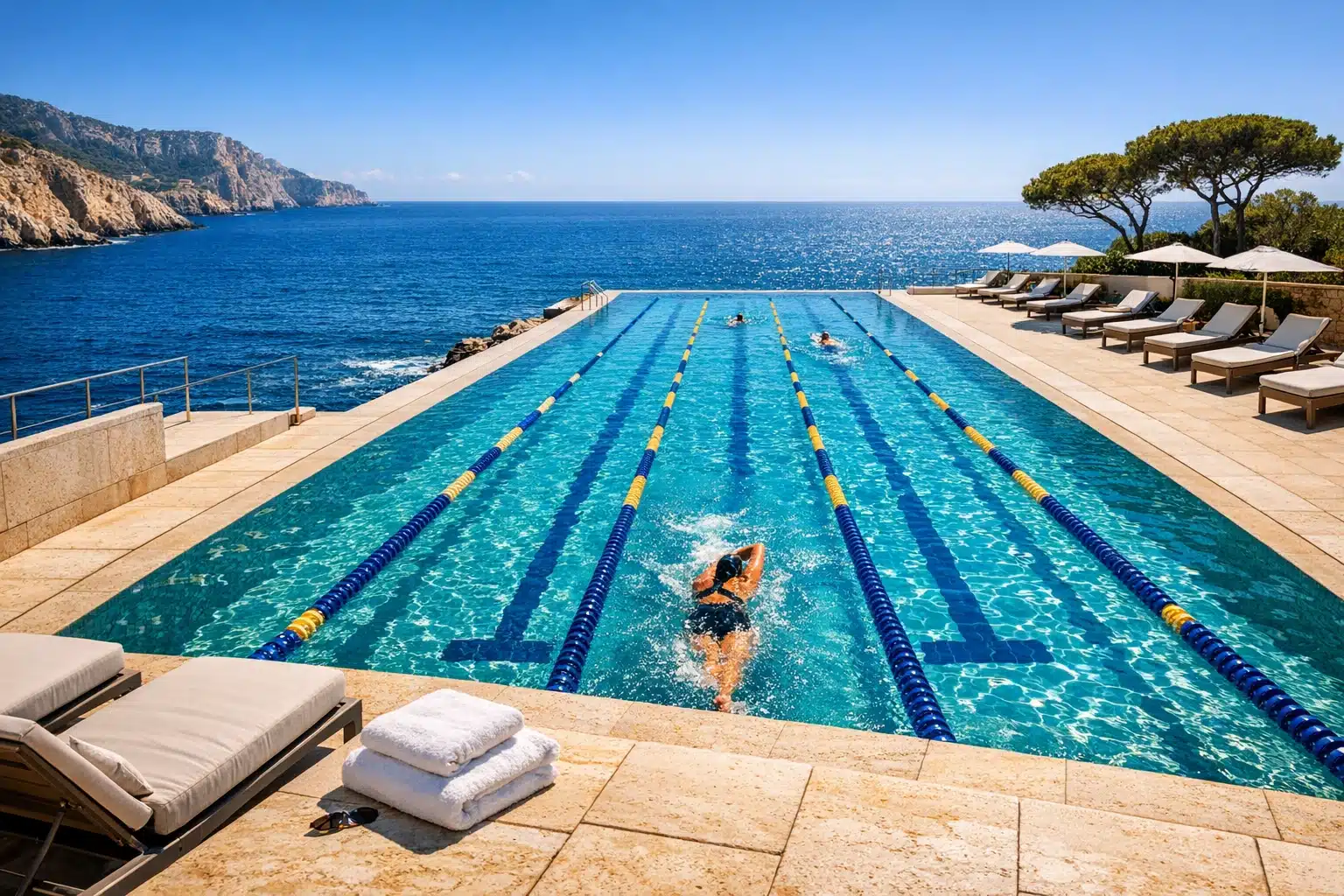
Explore the world of swimming
Step into a pool and the usual rules of movement seem to soften: gravity eases, noise fades, and every breath suddenly matters. That unusual setting makes swimming more than exercise; it becomes a lesson in control, rhythm, and calm under pressure. People come to it for very different reasons, from rehab and fitness to racing and pure fun, yet the water rewards them all in its own demanding way. The sections below map out the essentials, from basic understanding to long-term practice.
Article Outline
- How swimming works as movement, exercise, and skill
- Why it benefits cardiovascular fitness, joints, and mental well-being
- How the main strokes differ and what beginners should learn first
- What safety habits, training settings, and equipment matter most
- How swimming fits into sport, community, and lifelong healthy routines
1. Understanding Swimming: Why Water Changes Everything
Swimming is often introduced as a simple activity: move through water, stay afloat, and keep breathing. In reality, it is one of the most technically rich forms of exercise people can learn. Water changes the rules of movement because it supports body weight while also resisting every action. A useful comparison is this: in the air, a runner mostly pushes against the ground; in the water, a swimmer works against resistance in nearly every direction. Because water is far denser than air, even small adjustments in hand angle, head position, or hip alignment can noticeably change speed and effort.
That constant feedback is part of swimming’s appeal. The body quickly learns that efficiency matters. A tense neck, dropped elbow, or mistimed breath can interrupt rhythm like a missing note in a song. At the same time, the buoyancy of water makes swimming approachable for many people who find high-impact activity uncomfortable. Someone recovering from a minor joint issue may feel more freedom in a pool than on a treadmill, while a child learning to float may discover a rare mix of play and discipline in the same hour.
Swimming also stands apart because it blends skill with fitness more tightly than many other activities. A person can be strong on land and still struggle in the water if technique is poor. Conversely, a technically sound swimmer may glide past a stronger but less efficient athlete. This is why coaches often say that water rewards patience. Improvement comes not only from effort, but from better timing, posture, and awareness.
Several elements are always in play when a person swims:
- Body position, especially keeping the hips from sinking
- Breath control, which affects relaxation and timing
- Propulsion from arms and legs working in sequence
- Balance and rotation, particularly in front crawl and backstroke
- Endurance, which determines how long technique can hold together
Seen from poolside, swimming can look smooth and serene. From inside the lane, it is a careful negotiation between physics and breathing. That tension is exactly what keeps it interesting. The water is both partner and obstacle, and every length offers a fresh conversation between the swimmer’s intent and the medium carrying it forward.
2. Health and Fitness Benefits: More Than a Full-Body Workout
Swimming has earned a strong reputation as a full-body workout, and that reputation is well deserved. Nearly every major muscle group contributes in some way, from the shoulders and back to the core, hips, and legs. Unlike many machine-based exercises, swimming does not isolate movement into neat compartments. A single lap asks the body to stabilize, pull, kick, rotate, and breathe in sequence. That combination helps explain why even a short session can feel surprisingly demanding.
From a cardiovascular perspective, swimming can support the same broad public health goals as other forms of aerobic exercise. Health authorities such as the World Health Organization recommend at least 150 minutes of moderate-intensity activity per week for most adults, and regular swim sessions can contribute meaningfully to that target. Depending on stroke choice, pace, and body size, a moderate half hour in the pool may burn roughly 200 to 400 calories, while harder efforts can exceed that range. The exact number matters less than the pattern: repeated sessions improve stamina, challenge the heart and lungs, and train the body to use energy more efficiently.
One of swimming’s biggest advantages is reduced impact. Running and court sports can be excellent for fitness, but they load the joints with repeated force. In water, buoyancy offsets much of body weight, which can make movement more comfortable for older adults, people easing back into exercise, or individuals who simply prefer a lower-impact routine. That does not mean swimming is effortless. In fact, the resistance of water creates muscular demand without the pounding associated with many land-based activities.
Its benefits extend beyond muscles and lungs. Many swimmers describe the mental side of the activity as quietly addictive. Repetitive laps, controlled breathing, and the muffled soundscape of the pool can create a focused state that feels part meditation, part training session. For people with busy schedules, that kind of attention reset has genuine value.
Common reasons people choose swimming include:
- Building aerobic fitness with less joint stress
- Improving muscular endurance across the whole body
- Adding variety to a weekly exercise routine
- Supporting recovery days between harder training sessions
- Finding a form of movement that feels calming as well as challenging
Swimming is not a magic solution, and it does not replace every other form of exercise. Weight-bearing activity remains important for bone health, and some people benefit from strength training alongside pool work. Still, as a practical, scalable, and widely adaptable activity, swimming offers a rare combination: it can be gentle on the body while remaining demanding enough to keep even experienced athletes humble.
3. Strokes, Skills, and the Beginner Learning Curve
To outsiders, swimming may look like one skill with different visual styles. In practice, each stroke has its own logic, strengths, and frustrations. The four competitive strokes are freestyle, backstroke, breaststroke, and butterfly, and they differ in rhythm, body position, breathing demands, and efficiency. Freestyle, usually meaning front crawl, is the fastest and most commonly taught for fitness because it allows continuous forward motion and relatively efficient breathing once technique settles. Backstroke shares some of that body-line efficiency, but the face stays upward, which changes orientation and makes lane awareness more important. Breaststroke is slower but often easier for beginners to understand because the breathing pattern feels more direct. Butterfly is the most technically demanding of the four, requiring timing, mobility, and power that usually come later in a swimmer’s development.
Beginners often assume the first goal is speed. A better first goal is comfort. Before strokes become polished, swimmers need to learn how to float, exhale into water, recover from a missed breath, and maintain alignment. These are not glamorous skills, but they are the foundation. A relaxed exhale can solve problems that brute strength never will. So can learning to keep the head neutral rather than lifted too high, which tends to drag the hips downward and make each length harder than it needs to be.
A sensible learning sequence usually focuses on a few priorities:
- Water confidence and safe entry, exit, and floating
- Breathing control, including steady exhalation underwater
- Kicking from the hips rather than only the knees
- Arm mechanics that pull water backward instead of slapping at the surface
- Timing, so the stroke cycle feels connected rather than rushed
Comparing strokes helps clarify why some people progress faster in one than another. Freestyle rewards rotation and rhythm; breaststroke rewards timing and glide; backstroke rewards balance and symmetry; butterfly rewards coordinated whole-body motion. None of these styles is “easy” in an absolute sense. They simply distribute difficulty in different ways. A strong cyclist may adapt quickly to the leg action of breaststroke, while a former tennis player might connect sooner with the catch phase of freestyle because shoulder coordination already feels familiar.
The encouraging truth for new swimmers is that progress is often visible within weeks when practice is consistent. Early gains may look small from the deck, but they feel dramatic in the water: a calmer breath, a cleaner push-off, a lap completed without panic. Those moments matter. Swimming is one of the few activities where competence can transform experience almost overnight. What first feels chaotic can, with patient repetition, become surprisingly graceful.
4. Safety, Training Environments, and Essential Equipment
Swimming brings obvious benefits, but it also requires respect for the environment. Water is forgiving until it suddenly is not, which is why safety is not a side topic in swimming; it is central to the activity. In a supervised pool, basic precautions still matter: knowing your level, warming up gradually, avoiding horseplay, and following lane etiquette all reduce risk. In open water, the need for judgment becomes even greater. Currents, waves, cold temperatures, poor visibility, and distance from help can turn an enjoyable swim into a dangerous situation quickly.
Pool swimming and open-water swimming feel like related but distinct worlds. Pools offer measured distance, visible lane lines, lifeguards, and a controlled setting that supports technique work. Open water offers freedom, changing conditions, and a more natural sense of adventure, but it removes many of the reference points swimmers rely on. In a pool, the wall arrives on schedule. In a lake or sea, navigation, weather, and confidence become part of the workout.
Good habits make a major difference in both settings. Swimmers should choose an environment appropriate to their experience, tell someone where they are, and avoid overestimating their ability. Open-water swimmers are often advised to go with a partner or organized group, use visible gear such as a bright cap or tow float, and check local conditions before entering. Even strong athletes can be surprised by cold shock or fatigue when distance and temperature combine.
Equipment can help, although none of it replaces skill or caution. Common swim gear includes:
- Goggles for visibility and eye comfort
- A swim cap to reduce drag and keep hair manageable
- A kickboard for focused leg drills
- A pull buoy to isolate upper-body technique
- Fins for body position work and added propulsion during practice
Training tools are useful when they serve a purpose rather than becoming crutches. For example, fins can help a beginner feel proper body alignment, but they should not replace learning how to kick efficiently without assistance. Likewise, a smartwatch or pace clock can guide structured workouts, yet numbers alone do not guarantee smart training. Effort, recovery, and technique still matter.
There is also a social side to safety. Sharing lanes, passing politely, resting in predictable corners, and communicating with other swimmers make crowded pools far easier to navigate. In that sense, safety is not just about avoiding emergencies. It is about creating a water environment where people can train, learn, and enjoy themselves without confusion or unnecessary risk.
5. Conclusion: Making Swimming Work for You
Swimming lasts as a meaningful activity because it can grow with the person doing it. A child may begin with floating games and short lessons, a teenager may discover competition, an adult may return to the pool for fitness or stress relief, and an older swimmer may value the freedom of movement that water still offers when other exercise feels harsh. Few activities travel so well across different stages of life. That flexibility is one of its strongest arguments.
For some readers, the next step will be practical and simple: sign up for lessons, visit a local pool, or replace one gym session a week with a swim. For others, the appeal may lie in structure. Lap swimming, masters groups, triathlon training, and community clubs give people goals, coaching, and a reason to stay consistent. Competition is only one route. Many swimmers never care about racing the clock, and they still gain better endurance, improved confidence in water, and a dependable form of exercise they can return to for years.
Swimming also creates a kind of community that feels different from louder, more visible sports. Conversation happens at the wall between repeats. Progress is measured in quiet details: one fewer stroke per length, a smoother turn, a more relaxed breath. The work is internal, but it rarely has to be solitary. Parents, casual fitness swimmers, open-water enthusiasts, and former athletes can all share the same facility while pursuing entirely different goals.
If you are deciding whether swimming is worth your time, consider what you need most. Do you want lower-impact cardio, a practical safety skill, variety in your routine, or a sport with endless room for refinement? Swimming can answer any of those needs, provided you approach it with patience. The early stages may feel awkward, and progress can seem technical in a way that surprises beginners. Yet that is part of the reward. The water does not flatter sloppy habits, but it responds generously to steady practice.
For the target reader, the message is clear: you do not need elite speed, expensive gear, or a perfect stroke to begin. You need access to safe water, a willingness to learn, and enough consistency to let small improvements accumulate. Start where you are, stay curious, and let the pool teach you one length at a time. Swimming is not only something to watch or admire from the deck. It is a skill and a habit that can keep paying you back long after the first splash.