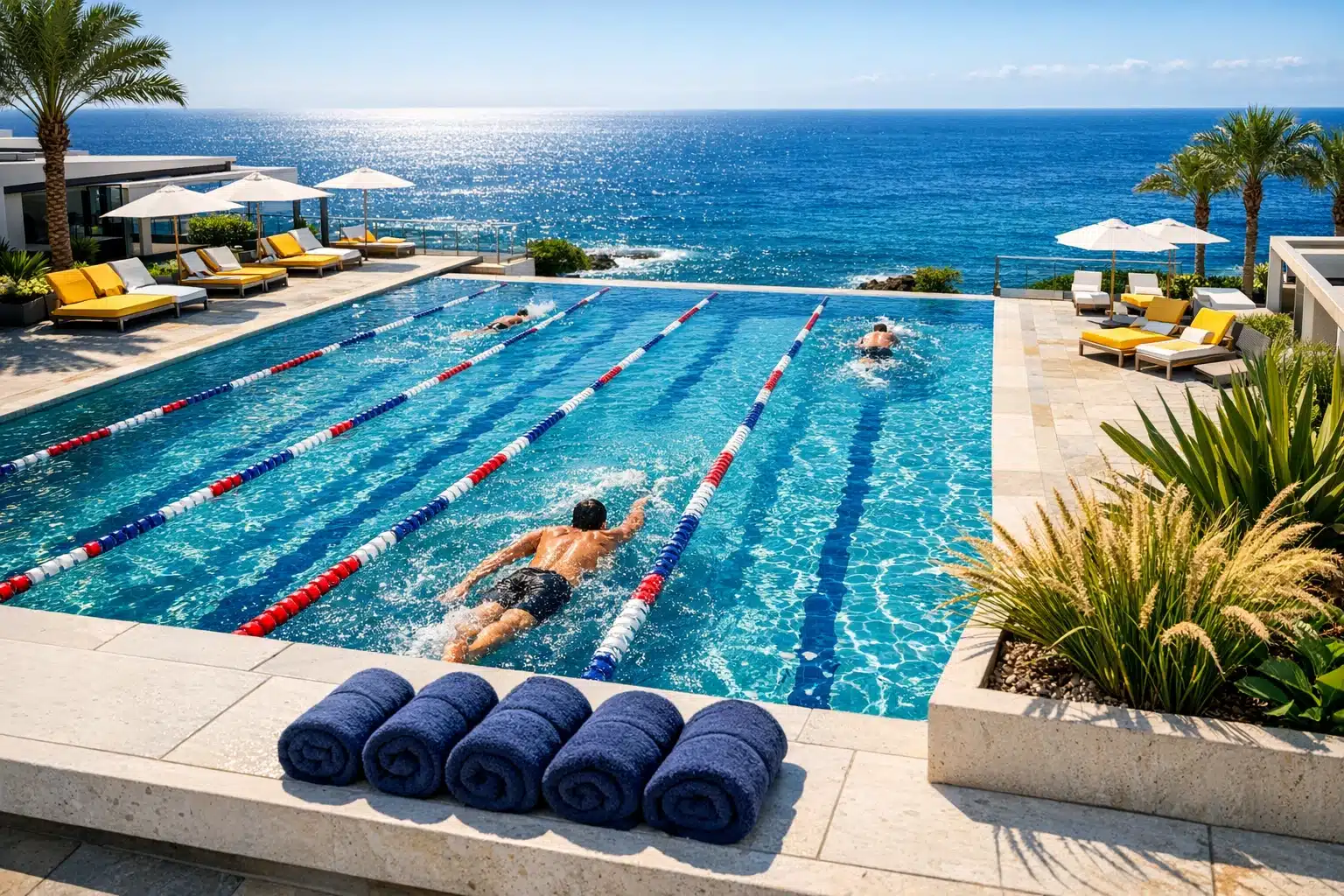
Explore the world of swimming
Swimming is more than a way to move through water; it is a lifelong skill that blends fitness, safety, and quiet confidence. From children learning to float to adults training for endurance, it offers a rare mix of low-impact exercise and practical value. This article explores how swimming works, why technique matters, and what makes the sport so adaptable. Step in, and the pool quickly becomes a classroom, a gym, and sometimes a place to breathe deeper than usual.
Outline:
– Why swimming matters and how it differs from many other sports
– The main strokes and what each one asks from the body
– Training, safety, equipment, and the learning process
– Competitive, recreational, and open-water swimming paths
– A concluding guide for beginners, families, and fitness-minded readers
Why Swimming Matters: Fitness, Safety, and Lifelong Value
Swimming stands in a category of its own because it is at once a sport, a survival skill, and a form of exercise that can last across decades of life. A person can first meet water with fear, curiosity, or delight, yet over time swimming often becomes something steadier: a habit that supports health and confidence. Unlike many land-based activities, it places the body in an environment where gravity feels softened. Water supports body weight, which is one reason swimming is often recommended for people who want movement without the repeated impact of running or jumping. That does not mean it is easy. Water is far denser than air, so every stroke asks the muscles to work against meaningful resistance.
From a fitness perspective, swimming is remarkably efficient. It recruits large muscle groups across the shoulders, back, core, hips, and legs, while also challenging the heart and lungs. Public health guidance commonly recommends at least 150 minutes of moderate aerobic activity per week, and swimming can contribute directly to that goal. For many people, lap swimming feels gentler on the joints than court sports or long-distance road running, yet it still builds endurance and coordination. The breathing pattern required in the water also teaches rhythm and control. A swimmer who learns not to panic when breath is limited gains a kind of calm that often extends beyond the pool deck.
Its practical value matters just as much as its athletic side. Basic swimming ability can reduce risk around water, whether the setting is a pool, lake, beach, or river. Floating, treading water, and moving to safety are not glamorous skills, but they are foundational. Parents often enroll children in lessons for that reason alone, and many adults return to lessons later in life because they never fully learned. There is no shame in that. In fact, adult swim education has grown precisely because more people recognize that water confidence is learned, not magically inherited.
Swimming also welcomes many different goals. Some people chase speed, counting every split and turn. Others use the pool to recover after injury, manage stress, or simply enjoy a quiet hour without phone notifications and traffic noise. A recreational swimmer drifting through an easy backstroke set and a sprinter exploding off the wall may look like they belong to different worlds, yet they share the same language of balance, breath, and body position.
Its value can be summed up in a few key strengths:
- Low-impact movement that can still be physically demanding
- Cardiovascular and muscular conditioning in one session
- A practical safety skill with real-world importance
- Adaptability for children, adults, older swimmers, and returning beginners
That combination is rare. Few activities can be playful, technical, therapeutic, and competitive all at once. Swimming can feel like work when the set gets hard, but it can also feel like freedom when the stroke finally clicks and the water begins to carry you forward instead of holding you back.
The Four Main Strokes and How They Compare
To understand swimming well, it helps to know that not all strokes ask the same things from the body. Freestyle, backstroke, breaststroke, and butterfly are the four competitive strokes, and each has a different rhythm, body position, and energy cost. Watching elite swimmers can make these movements look effortless, but under the surface each stroke is a carefully timed conversation between propulsion and drag. The swimmer is always trying to create more forward motion while disturbing the water as little as possible.
Freestyle, usually swum as front crawl, is the fastest and most commonly taught stroke for fitness. The body stays long and horizontal, the legs deliver a steady flutter kick, and the arms alternate in a continuous pull. Because the motion is efficient and streamlined, freestyle is often the stroke beginners eventually use for longer distances. It rewards relaxed breathing and good body rotation. Many new swimmers struggle by lifting the head too high to inhale, which makes the hips sink and adds resistance. When freestyle works well, it feels almost like sliding downhill through blue glass.
Backstroke is the only competitive stroke swum on the back. That position changes everything. Breathing is easier because the face stays above water, but orientation becomes trickier because the swimmer cannot see where they are going without using lane markers or flags. Backstroke also emphasizes shoulder mobility, hip rotation, and a strong flutter kick. For some people it feels more natural than freestyle; for others it feels unstable, as if the water might roll them out of position. It is often an excellent stroke for balance and posture because it encourages an open chest and long body line.
Breaststroke is slower than freestyle but highly technical. The arms sweep outward and inward while the legs perform a whip kick, followed by a glide. Timing is everything. A rushed breaststroke wastes energy, while a well-timed one seems to gather water and release it with purpose. It is popular among recreational swimmers because the head can rise regularly, but it can place stress on the knees or hips if the kick mechanics are poor. Butterfly, by contrast, is the most demanding stroke for many swimmers. Both arms recover over the water together, and the body moves with a wave-like dolphin kick. Butterfly requires strength, timing, and excellent rhythm. Even skilled swimmers often describe it with equal parts respect and caution.
A simple comparison helps clarify their strengths:
- Freestyle: fastest, efficient, ideal for endurance and lap swimming
- Backstroke: good for balance and breathing comfort, but harder for navigation
- Breaststroke: technical and controlled, often easier for casual swimmers to pace
- Butterfly: powerful and expressive, but typically the most fatiguing
Learning all four strokes broadens a swimmer’s skill set. It distributes effort across different muscle groups, reduces monotony, and improves overall feel for the water. Even swimmers who favor one stroke benefit from the others because variety exposes weaknesses and builds a more complete athlete. In the end, strokes are less like isolated tricks and more like dialects of the same language, each with its own accent, speed, and personality.
Learning to Swim Well: Technique, Training, Safety, and Equipment
Getting started in swimming can be humbling. A person may be fit on land and still feel awkward after two pool lengths. That is normal. Water punishes tension and rewards alignment, so progress often depends less on brute effort than on small technical improvements. Beginners usually advance fastest when they focus on a few fundamentals: body position, breathing, kick control, and a relaxed catch with the hands and forearms. If those elements improve, speed and endurance usually follow.
Technique matters because water resists wasted motion. A cyclist can push harder on the pedals and still move forward decently even with imperfect form. A swimmer with poor alignment, however, can expend huge energy just trying not to stall. This is why lessons, coaching, or even occasional feedback from an experienced swimmer can be so valuable. Drills such as kickboard work, side breathing practice, fingertip drag, and single-arm freestyle break larger movements into parts that are easier to fix. Video analysis is also increasingly common because swimmers are often surprised by what their stroke looks like compared with what it feels like.
Training structure makes a difference too. A productive swim session does not need to be complicated, but it should have purpose. Many swimmers divide a workout into warm-up, drill work, main set, and cool-down. That format creates room for both skill and conditioning. For example, a beginner session might include easy laps, short breathing drills, and a manageable main set of repeated 25- or 50-meter efforts with rest. More advanced swimmers may use interval training, pace work, pull sets, kick sets, and sprint sets to build aerobic capacity, speed, and race skills.
Useful habits for safer and more effective training include:
- Entering the water gradually and warming up before hard efforts
- Practicing rhythmic breathing instead of holding the breath too long
- Stopping if dizziness, chest discomfort, or unusual fatigue appears
- Following pool rules and respecting lane etiquette
- Using open-water safety gear, such as bright caps or tow floats, when appropriate
Safety deserves its own spotlight. Pools are controlled environments, but they still require attention to slippery surfaces, lane awareness, and fatigue. Open water introduces additional variables such as temperature, currents, visibility, and navigation. A calm-looking lake can turn demanding quickly. New open-water swimmers are usually wise to go with a group, wear highly visible gear, and learn local conditions before entering. Confidence in a pool does not automatically translate to confidence in the sea.
Equipment can help, though it should not become a distraction. A well-fitting swimsuit, goggles, and a cap are the basics. Kickboards, pull buoys, paddles, fins, and snorkels are training tools, not shortcuts. They can sharpen specific skills, but overuse may hide technical problems. The most important gear is consistency. Swim regularly enough, and even a difficult stroke starts to feel familiar. Miss long stretches, and the water seems to ask for introductions all over again. That challenge is part of swimming’s honesty, and perhaps part of its charm.
Swimming Beyond Laps: Competition, Open Water, and Different Ways to Enjoy the Sport
Many people first meet swimming through lessons or casual play, but the activity expands far beyond simple laps. Competitive pool swimming, masters programs, triathlon training, synchronized swimming, water polo support work, and open-water events all reveal different faces of the same discipline. This variety is one reason swimming stays relevant across age groups. A child may begin with basic strokes, a teenager may discover racing, an adult may return for fitness, and a retiree may keep swimming because it remains one of the most comfortable ways to stay active.
Competitive swimming in a pool is built around precision. Distances are fixed, turns are practiced, starts are measured, and small technical gains matter. Races can be won by tenths or even hundredths of a second. Training often emphasizes stroke efficiency, pacing, reaction time, and repeatability under fatigue. Olympic-standard pools are 50 meters long, while many community and school competitions take place in 25-meter or 25-yard pools. The environment is controlled, and that control helps athletes compare performance clearly from one meet to another.
Open-water swimming tells a different story. The course may be in a lake, river, or sea, and the swimmer must deal with chop, currents, weather, and navigation. Distances range from approachable community events to marathon swims that demand serious preparation. In the pool, the wall arrives every lap as a tiny reset button. In open water, there is no wall, no lane rope, and often no neat line to follow. Some swimmers find that unsettling. Others find it exhilarating. The experience can feel closer to exploration than repetition, like crossing a living landscape instead of circling a measured room.
Recreational swimming is equally important and often underestimated. Not everyone needs a stopwatch to benefit from the water. Aqua fitness classes, gentle lap sessions, family swim periods, and recovery workouts after other sports all make swimming useful in everyday life. Athletes from running, rowing, cycling, and team sports often use the pool to maintain aerobic work while reducing joint load. That cross-training role is one reason swimming appears in many broader fitness plans.
Swimming can serve different people in different ways:
- Young learners gain coordination, water safety, and confidence
- Competitive athletes develop discipline, speed, and race strategy
- Adults with busy schedules get efficient full-body exercise
- Older swimmers often appreciate the low-impact nature of the activity
- Triathletes and endurance athletes use it as part of multi-sport conditioning
The beauty of swimming lies partly in this flexibility. It can be solitary or social, strict or playful, measured or meditative. One person may love counting splits under bright pool lights, while another prefers the soft uncertainty of a dawn swim in open water. Both are swimming, and both are valid. The sport does not insist on a single identity. It invites you to find the version that fits your body, your goals, and your temperament.
Conclusion: What Swimming Offers to Beginners, Families, and Fitness-Minded Readers
If you are reading about swimming because you want to start, return, or improve, the encouraging truth is that this activity meets people where they are. You do not need to be fast, elegant, or fearless on day one. You need only a willingness to learn and enough patience to let the water teach you its rules. Progress in swimming can feel slow at first because technique influences everything, but that also means small adjustments create visible rewards. A calmer breath, a longer body line, or a more balanced kick can transform an entire session.
For beginners, the first goal should not be distance or speed. It should be comfort and control. Learning to float, exhale underwater, and move with basic efficiency is more valuable than fighting through laps in a panic. For parents, swimming offers a practical skill with lasting importance, along with a sport children can enjoy in lessons, teams, camps, or family recreation. For adults focused on health, it provides cardiovascular work, muscular engagement, and joint-friendly movement in one package. For older readers or those recovering from strain, the pool may offer a rare space where exercise feels supportive rather than punishing.
What makes swimming especially worthwhile is its long horizon. Some sports depend heavily on youth, impact tolerance, or specialized facilities. Swimming certainly benefits from access to safe water, but the core skill can stay useful for life. A teenager chasing race times, a parent squeezing in early laps, and a grandparent doing gentle lengths may all be getting something different from the same lane. Few activities make room for such variety without losing their identity.
If you want a practical way forward, keep it simple:
- Start with lessons or guided practice if your basics feel uncertain
- Choose consistency over heroic workouts
- Focus on technique before chasing harder sets
- Respect safety, especially outside the pool
- Let enjoyment remain part of the plan
Swimming rewards humility, repetition, and curiosity. It can challenge the body, settle the mind, and build confidence that travels far beyond the water’s edge. For readers who want exercise with purpose, a useful life skill, or simply a fresh way to move, swimming is not just another workout option. It is a world in itself, one that becomes richer each time you return to it.