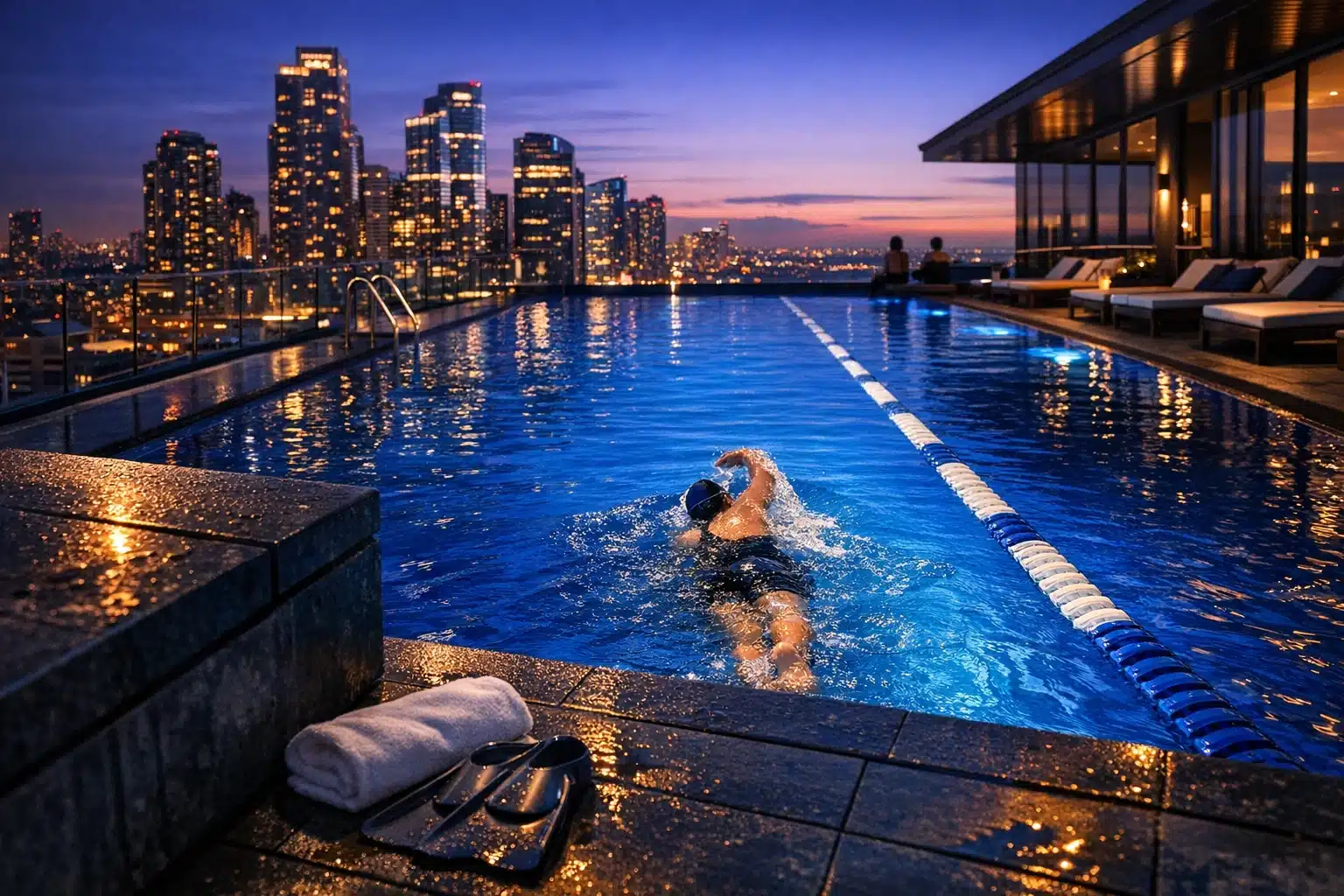
Explore the world of swimming
Swimming sits at a special crossroads between survival skill, sport, and lifelong recreation. It matters because it teaches people how to move safely through water while also offering one of the most joint-friendly forms of exercise available. From school lessons and family holidays to Olympic finals and rehabilitation clinics, swimming appears in remarkably different settings. That range is exactly why the topic deserves a closer look: it is practical, physical, technical, and surprisingly rich in culture.
Article Outline
- The unique place of swimming as a life skill, sport, and leisure activity
- The main strokes, technique basics, and how efficiency is built in the water
- The physical and mental benefits that make swimming widely recommended
- Training methods, safety rules, and the equipment that supports progress
- How swimming fits different ages, goals, and communities, followed by final guidance for readers
Swimming as a Life Skill, Sport, and Form of Recreation
Swimming is unusual because it serves several purposes at once. For some people, it begins as a safety lesson taught in childhood. For others, it becomes a competitive pursuit measured in split times, turns, and race strategy. Many simply know it as the quiet pleasure of slipping into a pool on a hot day and feeling the body grow lighter. Few activities can travel so easily between necessity and enjoyment.
One reason swimming stands apart is the environment itself. Water changes the rules. On land, gravity dominates every step, jump, and stride. In the pool, buoyancy supports the body, resistance pushes back in every direction, and breath control matters in a way runners and cyclists rarely experience. A new swimmer quickly learns that strength alone is not enough. Efficiency matters. Timing matters. Relaxation matters. Water rewards skill more generously than force.
Historically, swimming has deep roots. Civilizations near rivers, seas, and lakes treated water competence as part of daily life. In modern times, swimming expanded into public baths, school programs, military training, therapy, and international competition. Its role in the Olympic Games helped turn it into a global spectator sport, while local community pools made it part of ordinary life. That dual identity is still visible today: one lane may hold a teenager training for a meet, while the next lane carries an older adult recovering mobility after an injury.
Swimming also compares favorably with many other forms of exercise because it can adapt to different abilities. A person who struggles with high-impact sports may still be able to swim comfortably. Someone returning to fitness after a long break may find water less intimidating than a crowded gym floor. People who dislike repetitive pounding on pavement often appreciate the smoother rhythm of the pool, where movement feels more circular than jarring. Even the soundscape is different. The world narrows to splashes, exhalations, and the muffled calm that exists just below the surface.
Its broad appeal can be summarized in a few simple strengths:
- It teaches practical water competence and confidence
- It supports recreation, fitness, therapy, and competition
- It is low impact compared with many land-based activities
- It can be practiced individually or socially
That versatility explains its lasting relevance. Swimming is not only about speed or distance. It is about learning how to cooperate with an element that can be both inviting and unforgiving. In that sense, every lesson in the water carries two stories at once: one about health and one about respect.
The Four Main Strokes and the Craft of Efficient Technique
To watch experienced swimmers is to see how technique turns effort into motion. Beginners often assume that swimming is mostly about moving arms and legs as fast as possible, yet the opposite is usually true. Good swimmers travel farther with each stroke because their bodies stay aligned, their breathing stays organized, and their timing avoids wasted movement. Technique is not decoration in swimming; it is the engine.
The four main competitive strokes are freestyle, backstroke, breaststroke, and butterfly. Freestyle, usually swum as the front crawl, is generally the fastest and most common stroke for fitness swimmers. Its alternating arm action and flutter kick allow continuous forward motion, but it demands sound breathing habits. Many beginners lift the head too high to inhale, which drops the hips and creates drag. A smoother approach is to rotate the body slightly and take the breath to the side, keeping one goggle near the water line.
Backstroke is often the easiest stroke for people who feel anxious about face-down breathing because the mouth and nose stay above the surface. Even so, it presents its own challenges. Swimmers must maintain a long body line, avoid excessive knee bend, and learn to travel straight without visual reference. It can feel freeing at first, almost like floating with purpose, but efficient backstroke still depends on coordination.
Breaststroke is slower but highly technical. Its pull, breath, kick, and glide must happen in a clean sequence. Mistime one part and the stroke becomes tiring very quickly. Butterfly is the most dramatic stroke to watch and often the most demanding to learn. It uses a dolphin kick and simultaneous arm recovery that require rhythm, upper-body power, and excellent timing. When done well, butterfly looks like controlled momentum; when done poorly, it feels like wrestling the water.
Across all strokes, a few principles remain essential:
- Keep the body as streamlined as possible to reduce drag
- Use steady exhalation so breathing stays calm rather than rushed
- Coordinate kick and pull instead of treating them as separate actions
- Prioritize distance per stroke before trying to increase speed
Turns and push-offs also matter more than casual observers may realize. In pool swimming, every wall is an opportunity to regain speed. A strong push-off in a streamlined position can be faster than surface swimming for a short distance, which is why competitive swimmers practice starts and turns so obsessively. Technique shapes every second of a race and every meter of a workout.
The beauty of stroke development is that progress often arrives quietly. One day the water feels heavy and resistant; another day it seems to open a narrow path ahead. That shift usually comes not from brute effort, but from learning how to move with greater precision.
Physical and Mental Benefits of Swimming
Swimming is widely respected because it trains the body without demanding the same impact as many land sports. Water supports body weight, which can reduce stress on joints while still providing resistance in every direction. That combination makes swimming attractive to people who want a substantial workout without the repeated pounding associated with activities such as running on hard surfaces. The resistance of water is also constant, so even simple movements ask the muscles to work.
From a physical standpoint, swimming can improve cardiovascular endurance, muscular stamina, coordination, and mobility. A steady lap session challenges the heart and lungs, especially when rest intervals are short or distances increase over time. At the same time, the shoulders, back, core, hips, and legs all contribute to propulsion and stability. Unlike some exercises that heavily favor one region of the body, swimming tends to distribute effort across multiple muscle groups. That is one reason many athletes in other sports use it during conditioning blocks or recovery periods.
For general health, swimming can help adults meet widely recommended activity goals, such as accumulating at least 150 minutes of moderate aerobic exercise per week. Exact calorie burn varies by body size, stroke, intensity, and skill level, but a moderate session often uses several hundred calories per hour. More importantly, it can be sustained over time because it is adaptable. Some people enjoy long, even-paced swims; others prefer short intervals with structured rest. Both approaches can support fitness when practiced consistently.
The mental benefits deserve equal attention. Swimming has a rhythm that many people find restorative. The cycle of reach, pull, kick, and breath creates a steady pattern that can narrow attention and reduce mental clutter. Some swimmers describe the experience as meditative, especially during longer aerobic sets. Even recreational swimmers often report feeling calmer after time in the pool. The effect is not magical, but it is understandable: exercise supports mood, water softens sensory overload, and repetitive movement can settle a busy mind.
Swimming may be especially helpful for people in the following situations:
- Those returning to exercise after a long break
- Older adults seeking joint-friendly activity
- Individuals cross-training for endurance sports
- People who prefer structured, measurable workouts
It is not perfect for every goal. Building maximal bone-loading strength, for example, usually requires land-based resistance training as well. Swimming can also irritate shoulders when technique is poor or training volume rises too quickly. Still, as part of a balanced lifestyle, it offers unusual range. It can challenge an athlete, support rehabilitation, refresh a tired mind, and turn exercise into something that feels less like punishment and more like movement with purpose.
Training Smarter, Staying Safe, and Choosing Useful Equipment
Good swimming progress is built through patience and structure rather than random effort. Many new swimmers make one of two mistakes: they either drift through the pool without a plan, or they try to copy advanced workouts before developing the basics. A better approach is to think in layers. First comes comfort in the water. Then comes body position, breathing, and stroke control. Distance and speed become far more rewarding once those foundations are steady.
A practical swim session usually includes a warm-up, a main set, and a cool-down. The warm-up can be easy laps mixed with drills that sharpen technique. The main set might focus on endurance, such as repeated 100-meter efforts with short rests, or on speed through shorter repeats. The cool-down gives the body a chance to settle and often leaves the swimmer feeling fresher later in the day. Even two or three thoughtful sessions per week can create visible improvement.
Drills are especially valuable because they isolate specific skills. Kick sets can improve balance and leg engagement. Pull sets can highlight arm mechanics and body rotation. Single-arm drills, catch-up drill, or sculling work can help swimmers feel how the water moves around the hands and forearms. What seems subtle in instruction becomes obvious in the pool: the water punishes sloppiness and rewards attention.
Safety, however, must always outrank performance. Drowning remains a serious public health issue in many parts of the world, particularly where swim instruction and supervision are limited. Pool rules are not decorations on the wall; they are there because risk multiplies quickly in water. Every swimmer should understand the basics:
- Never overestimate your ability, especially in deep or open water
- Swim in supervised areas whenever possible
- Avoid diving where depth is unclear
- Use flotation devices appropriately, especially for children and weak swimmers
- Respect weather, currents, and water temperature outdoors
Equipment can support learning, though it should not replace skill. Useful items include goggles for visibility and comfort, a well-fitted swimsuit, a cap for hair control, and sometimes training aids such as kickboards, pull buoys, fins, or paddles. Each has a purpose. Fins can help learners understand body alignment and propulsion, while paddles increase resistance and expose flaws in the catch. Yet tools should be used thoughtfully. Too much dependence on gear can hide weaknesses instead of solving them.
Open-water swimming adds extra beauty and extra complexity. Lakes, rivers, and the sea offer a sense of freedom that no lane line can copy, but visibility, navigation, currents, and temperature shift the safety equation. In open water, even confident pool swimmers need humility. The smartest swimmer is not the boldest one. It is the one who prepares well, reads conditions carefully, and knows when to stay on shore.
Swimming for Different Ages and Goals: Final Takeaways for Readers
One of swimming’s strongest qualities is that it can stay with a person across nearly every stage of life. A child may begin with floating and blowing bubbles, slowly learning that water can be understood rather than feared. A teenager may discover competition, teamwork, and the discipline of early-morning practice. An adult may return to the pool after years away and find that the body remembers more than expected. Later in life, swimming can remain a steady companion when higher-impact activities feel less inviting. Few forms of movement age this gracefully.
Different swimmers also bring different goals. Some want fitness without strain on the knees or back. Some want rehabilitation after injury, under professional guidance. Some are drawn to the technical side and enjoy trimming seconds from intervals through careful work. Others simply want confidence at the beach, on holiday, or around children in the water. All of these goals are valid, and swimming has room for them. That wide doorway is part of its enduring appeal.
Swimming also creates community in ways that are easy to overlook. Masters groups, school teams, local clubs, public lesson programs, and open-water groups all connect people through a shared environment. The pool can be solitary when needed, but it rarely feels isolating for long. Advice travels across lanes. Encouragement comes between sets. A person who arrives nervous on the first day often leaves a few weeks later with new routines and new familiarity. Water has a quiet way of turning strangers into regulars.
For readers wondering how to begin or restart, a simple plan is often best:
- Start with realistic sessions instead of heroic distances
- Invest in basic instruction if technique feels uncertain
- Track consistency before chasing speed
- Use variety to stay engaged, including drills, easy swims, and short challenges
- Treat safety as a core skill, not a side note
Conclusion for New and Returning Swimmers
If you are considering swimming, the strongest reason to try it is not that it promises perfection. It is that it offers rare balance. It can teach safety, improve fitness, support mental reset, and remain accessible across changing seasons of life. You do not need to be fast to benefit from it, and you do not need competitive ambition to take it seriously. Begin where you are, learn patiently, and let technique grow over time. In the end, swimming rewards consistency more than bravado, and that makes it one of the most practical and satisfying activities a reader can choose.