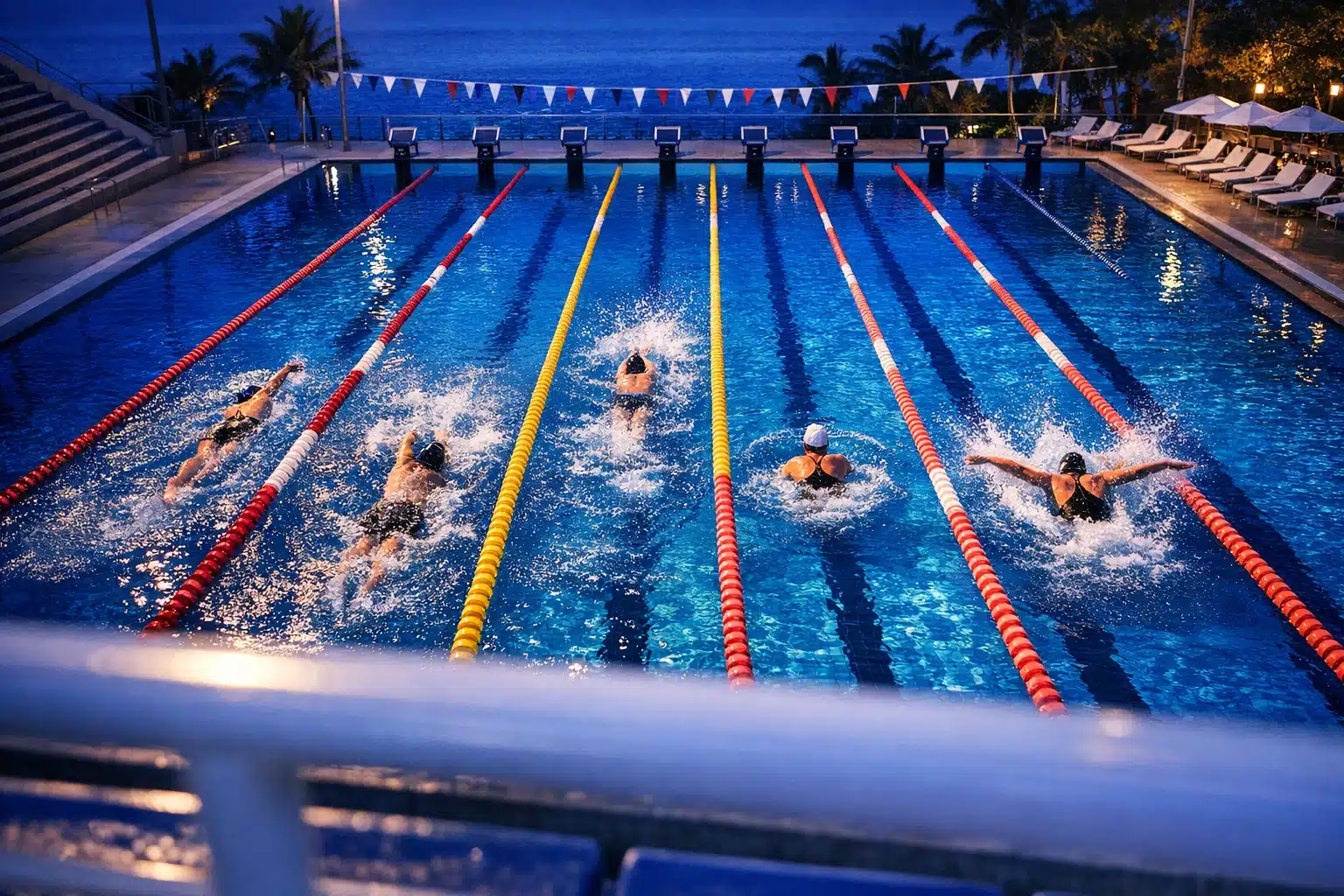
Explore the world of swimming
Swimming sits at the crossroads of sport, survival skill, and everyday wellbeing, which is why it stays relevant from childhood lessons to senior fitness programs. Few activities ask the lungs, heart, muscles, and mind to cooperate so smoothly while the water cushions the body. Whether someone wants confidence in deep water, a stronger back, or a welcome break from chair-bound routines, the pool offers a practical place to begin.
Outline
• Why swimming matters in daily life and sport
• The four main strokes and the technique behind them
• Health benefits, safety habits, and efficient movement
• Training approaches for beginners, recreational swimmers, and competitors
• Gear choices, swimming environments, and ways to make the habit last
Why Swimming Matters Beyond Fitness
Swimming is often introduced as a sport, but that description only captures part of its value. It is also a safety skill, a rehabilitation tool, a social activity, and for many people, a reliable way to manage stress. Unlike some forms of exercise that require expensive facilities or a highly competitive mindset, swimming can be adapted to many goals. One person may enter the water to recover from a knee injury, another may train for a triathlon, and a third may simply want forty quiet minutes away from notifications and noise. The same pool can welcome all three.
One of swimming’s most important strengths is its relationship with the body. Water supports body weight through buoyancy, which usually reduces impact on joints compared with running or court sports. That matters for older adults, people returning to exercise, and those who carry old injuries from work or past training. At the same time, the water resists movement in every direction. In practical terms, that means swimmers are not only moving through space; they are moving against a constant, gentle force. The result is a workout that can build endurance and muscular control without the pounding that often comes with land-based activity.
Swimming also holds a public safety role that should not be overlooked. Knowing how to float, breathe calmly, and move efficiently in water can reduce panic and improve decision-making in unexpected situations. Public health organizations regularly treat swim instruction as a useful life skill because water is a common feature of recreation, travel, and daily life in many regions. A child who learns to respect the water early often grows into an adult who makes better choices around beaches, lakes, and pools.
Its appeal becomes even clearer when compared with other popular exercises. Running is simple and effective, but it can be tough on ankles and knees. Cycling develops endurance well, yet it depends on equipment, road safety, and often weather. Swimming offers a different rhythm: the breath becomes deliberate, the soundscape narrows, and movement feels almost stitched into the surface of the water. Key reasons people stay with it include:
• low-impact conditioning
• improved breathing control
• full-body coordination
• water confidence that extends beyond sport
In that sense, swimming is not just about covering laps. It is about learning to move with efficiency in an environment that rewards patience, technique, and awareness. That combination gives the activity unusual staying power across the lifespan.
The Main Strokes and the Technique That Shapes Them
To an untrained eye, swimming can look simple: arms pull, legs kick, and the body moves forward. In reality, technique decides almost everything. A swimmer with average strength and good mechanics often moves better than a stronger swimmer who fights the water. That is because water magnifies inefficiency. A slightly dropped elbow, a poorly timed breath, or a wide kick can create drag that quickly steals speed and energy.
The four main competitive strokes are freestyle, backstroke, breaststroke, and butterfly, and each has a distinct character. Freestyle, usually swum with a front crawl, is the fastest and most common stroke for fitness swimming. It relies on body rotation, a steady flutter kick, and a streamlined position that keeps the hips near the surface. Breathing to the side, rather than lifting the head forward, helps maintain balance and reduces unnecessary resistance. Backstroke shares the alternating arm pattern of freestyle but is performed face-up, which changes orientation, breathing, and spatial awareness. Swimmers must learn to travel straight without staring at the lane line below them.
Breaststroke is often chosen by beginners because the face can stay out of the water more often, but it is not an easy stroke to master well. Its whip kick and glide phase require timing and flexibility, and mistakes in kick mechanics can make it tiring or even uncomfortable on the knees. Butterfly is the most demanding for many swimmers. Its undulating body action, two-arm recovery, and powerful dolphin kick require timing, trunk strength, and rhythm. When done well, it looks almost musical. When rushed, it feels like wrestling a wave that refuses to listen.
Across all strokes, some technical principles remain constant:
• a long, balanced body line reduces drag
• controlled breathing supports rhythm
• propulsion works best when the hands and forearms hold the water rather than slap at it
• kicks should support body position, not create frantic splash
Comparisons between strokes are useful because they reveal different strengths. Freestyle is usually best for sustained lap swimming and speed development. Backstroke improves posture awareness and offers a face-up alternative for variety. Breaststroke can be comfortable at easy intensity and is widely used in recreational settings. Butterfly builds power and timing, though it is often practiced in shorter repeats. Learning even the basics of each stroke expands a swimmer’s skill set and makes training more interesting. The water may be the same, but each stroke tells the body a different story.
Health Benefits, Safety Habits, and the Science of Moving Well
Swimming is widely respected because it combines cardiovascular work, muscular endurance, and mobility in a single activity. When done regularly, it can help people meet general physical activity goals such as the widely cited recommendation of at least 150 minutes of moderate aerobic activity per week for adults. Lap sessions, aqua fitness classes, and structured drills can all contribute to that total. The exact training effect depends on pace, stroke choice, and duration, but even moderate swimming asks the heart and lungs to work steadily over time.
The body benefits in several ways at once. The upper back, shoulders, chest, core, hips, and legs all take part, though the emphasis changes by stroke. Because the water supports the body, many people who struggle with impact-heavy exercise find swimming more sustainable. That makes it appealing for older adults, people managing extra body weight, and those easing back into movement after time away. Water also encourages range of motion, especially through the shoulders and ankles, although technique and individual mobility still matter. A relaxed warm-up remains important, because even supported movement can turn awkward if the body enters cold and stiff.
The mental side deserves equal attention. Many swimmers describe a session as calming because the environment narrows attention. Breathing follows a pattern, visual distractions are reduced, and repetitive motion can create a focused, almost meditative state. This does not mean swimming replaces professional care for mental health needs, but it can be a valuable part of a healthy routine. The pool often becomes a place where effort feels orderly rather than chaotic.
Safety, however, should sit beside enthusiasm at all times. Confidence in a pool does not automatically transfer to deep lakes, rivers, or surf. Strong fitness on land does not guarantee skill in open water. Useful habits include:
• learning basic floating and treading water
• respecting lifeguard instructions and lane rules
• avoiding breath-holding contests
• staying hydrated, even though the water hides sweat loss
• using a buddy system when conditions are unfamiliar
Efficient movement also protects the swimmer. Overreaching on entry, crossing the midline with the hands, or forcing too much intensity too soon can irritate the shoulders and neck. Good coaching, video feedback, or even a careful friend on deck can reveal patterns the swimmer cannot feel in the moment. In swimming, health benefits grow best when technique and safety are treated as part of the workout, not as side notes added later.
Training Paths for Beginners, Fitness Swimmers, and Competitors
A good swimming plan starts by matching the session to the swimmer’s real level, not the level they wish they had. Beginners need water comfort, breath control, and body position long before they need hard intervals. Recreational swimmers often benefit most from consistency and technique work, because efficiency adds more enjoyment than simply forcing extra laps. Competitive swimmers, by contrast, train with greater structure, using pace targets, race-specific sets, starts, turns, and recovery strategies. The goals differ, but the logic is shared: skill first, then load, then performance.
For a beginner, a strong session may be built around short repeats with plenty of rest. A few lengths of kicking with a board, floating drills, and easy freestyle with pauses can teach calm breathing and balance. There is no shame in needing rest after 25 meters or yards; many new swimmers discover that swimming exposes breathing habits they never had to think about on land. Improvement often arrives not through brute effort, but through small technical wins such as exhaling underwater or keeping the head steadier.
Fitness swimmers usually sit in the middle ground. They may not race, but they want measurable progress. A simple practice framework works well:
• warm-up to loosen the shoulders and settle breathing
• drill work to improve one technical theme
• a main set for endurance, speed, or pacing
• a cool-down to reset the body
For example, a recreational swimmer might do 200 easy, then four 50s of drill, followed by eight 100s at a sustainable pace with short rest, and finish with 100 easy backstroke. That structure is far more purposeful than swimming aimlessly until bored. It creates a reason for each part of the session.
Competitive training adds more precision. Swimmers may track stroke count, split times, turn speed, and heart-rate response. Sprint specialists often use short, explosive sets with longer recovery, while distance swimmers perform larger aerobic volumes and threshold work. Dryland training, mobility, and sleep become part of the equation because performance depends on more than pool time alone. Even so, elite-looking plans are not automatically better for everyone. A busy adult with three weekly sessions might thrive on focused, repeatable training rather than trying to copy a club program designed for teenagers swimming nine times a week.
The smartest training path is the one that keeps improvement possible and frustration manageable. In swimming, progress often comes quietly: a smoother breath, fewer strokes per length, or the moment a once-intimidating set starts to feel possible. Those small markers matter because they keep the door open for long-term development.
Gear, Swimming Environments, and a Practical Conclusion for Readers
Swimming does not require a mountain of equipment, but the right basics can noticeably improve comfort and consistency. Good goggles are usually the first priority. If they leak or fog constantly, attention drifts away from technique and toward irritation. A suit that stays secure matters just as much, whether the swimmer prefers a training jammer, briefs, one-piece, or a modest recreational style. Caps are useful for keeping hair managed, reducing drag slightly, and protecting long hair from some pool exposure, though not every casual swimmer feels the need to wear one.
Training tools can help when used with purpose. Kickboards isolate leg work, pull buoys shift focus toward body position and the upper body, and fins can teach rhythm or help beginners feel speed and alignment. Paddles increase resistance and can improve awareness of the catch, but they should be introduced carefully to avoid overloading the shoulders. The rule is simple: tools should teach something, not distract from weak fundamentals.
The setting also changes the experience. Indoor pools offer consistency, lane lines, and predictable water conditions. Outdoor pools bring light, weather, and a different sense of space. Open water, whether in lakes, rivers, or the sea, adds navigation, visibility concerns, currents, temperature shifts, and a greater need for planning. For those conditions, safety gear and habits matter more:
• bright caps improve visibility
• tow floats can help others spot the swimmer
• checking local rules, weather, and water quality is essential
• entering with a partner is far wiser than swimming alone
For readers wondering where they fit, the answer is broad and encouraging. Parents can treat swimming as both a confidence-building activity and a meaningful safety lesson. Adults returning to exercise can use it as a joint-friendly way to rebuild stamina. Busy professionals may value the mental reset that comes from following the black line at the bottom of a lane after a long day. Older swimmers often appreciate that the water allows steady effort without the same impact demands found elsewhere.
That is the lasting promise of swimming, and it is a practical one rather than a flashy one. You do not need to chase medals to benefit from the sport. You need a safe environment, a willingness to learn, and enough patience to let technique develop over time. Start with simple goals, respect the water, and keep sessions regular. If you do, swimming can grow from an occasional workout into a durable skill that supports health, confidence, and enjoyment for years to come.