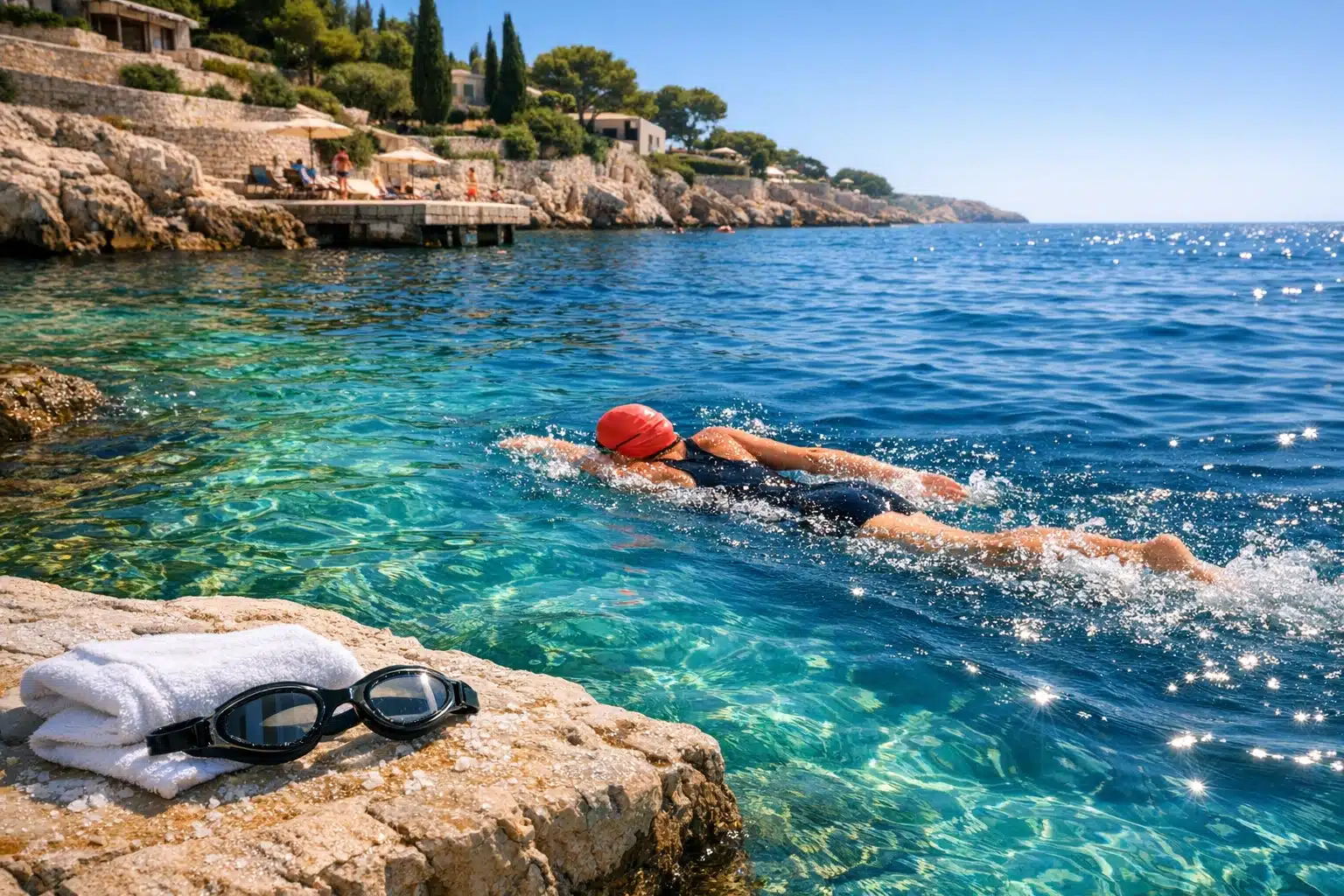
Explore the world of swimming
Swimming sits at a curious intersection of survival skill, sport, and quiet personal ritual. In one lane, a beginner learns to trust the water; in another, a trained athlete measures each stroke against the clock. Because it strengthens the heart, challenges the whole body, and spares the joints from heavy impact, swimming remains relevant across ages and ability levels. Understanding how it works makes every length more meaningful.
Outline: this article first explains what makes swimming different from many land-based activities, then compares the major strokes and the technique behind them. It goes on to examine physical and mental benefits, moves into training and safety, and closes with practical guidance for readers who want swimming to become a long-term part of life.
Why Swimming Stands Apart
Swimming is unusual because it asks the body to move through an environment that resists nearly every action. On land, gravity dominates and the ground gives something firm to push against. In water, buoyancy lifts you while resistance slows you, so every motion needs better coordination. That difference changes the experience completely. A runner can often rely on rhythm and impact, but a swimmer must manage breathing, balance, propulsion, and timing all at once. Even a simple lap turns into a small engineering problem: how can the body travel forward with the least wasted effort?
One reason swimming remains widely valued is that it serves many purposes at the same time. It is a life skill tied to safety, a recreational activity enjoyed by families, a rehabilitation option used after injury, and a competitive sport with deep technical complexity. Public pools, lakes, rivers, and coastlines have also made it culturally important in different ways. In some communities, swimming is linked to summer freedom and childhood confidence; in others, it is tied to military training, survival education, or elite sport. That broad relevance helps explain why swimming is practiced by small children wearing goggles too big for their faces and older adults counting steady, careful lengths in the morning.
Physics also gives swimming its special character. Water is roughly 800 times denser than air, which means it provides constant resistance. That resistance can be a challenge, but it is also the secret behind swimming’s training value. Every stroke recruits muscles while asking the heart and lungs to keep up. At the same time, the water supports body weight, which reduces pounding on hips, knees, and ankles. Compared with activities such as running or jumping sports, that makes swimming friendlier for many people with joint sensitivity or those returning from time away from exercise.
What truly sets swimming apart can be summed up clearly:
– It combines skill learning with cardiovascular work.
– It can be gentle for the joints while still physically demanding.
– It develops body awareness in a way few sports do.
– It works equally well as play, therapy, exercise, or competition.
There is also a mental difference that many swimmers notice quickly. Pools create a strange little world of repetition and focus. The sound is muted, the view is narrow, and progress is measured one length at a time. It can feel mechanical, almost like counting gears inside a machine, yet it can also feel poetic, as if the water briefly edits the noise out of the day. That blend of discipline and calm is a major part of swimming’s lasting appeal.
Understanding the Main Strokes and Basic Technique
To appreciate swimming fully, it helps to compare the major strokes, because each one teaches a different relationship with the water. Front crawl, often called freestyle in competition, is generally the fastest and most efficient stroke for covering distance. Its alternating arm action and flutter kick allow for continuous forward motion, which is why it dominates distance events and triathlons. Breaststroke is slower, but it is easier for many beginners to understand because the movements are more symmetrical and the head can rise naturally during the breathing phase. Backstroke flips the swimmer onto the back, making breathing simpler, though body alignment and straight navigation can become challenging. Butterfly is the most explosive of the four, demanding strong timing, core control, and shoulder power. When performed well, it looks less like exercise and more like a deliberate surge through the surface.
These strokes are not just stylistic choices; they create different training effects and suit different goals. A recreational swimmer looking for relaxed, sustainable exercise may prefer front crawl mixed with backstroke. Someone who wants a technical challenge might spend time refining breaststroke timing or learning butterfly drills. Competitive swimmers often train all four because medley events require versatility and because each stroke builds awareness that helps the others. For example, breaststroke can improve feel for timing, while backstroke sharpens posture and balance.
Good technique matters more in swimming than many newcomers expect. A stronger person does not always move faster if their body position creates extra drag. In fact, inefficient swimming can feel exhausting very quickly, which is why beginners sometimes assume they are “bad at cardio” when the real problem is mechanics. Basic principles apply across strokes:
– Keep the body as long and aligned as possible.
– Look for a balanced position rather than lifting the head too high.
– Exhale steadily into the water instead of holding tension.
– Pull with purpose, but avoid rushing the recovery.
– Use the kick to support rhythm, not just to splash.
Breathing deserves special attention because it often decides whether a swimmer feels smooth or frantic. On land, breathing is automatic and unconstrained. In the pool, the face enters and leaves the water on a schedule, so panic can begin when timing breaks down. Skilled swimmers make breathing part of the stroke instead of a separate event. In front crawl, that means rotating the body and turning the head just enough to inhale. In breaststroke, it means lifting only as much as needed before returning forward into a streamlined line.
Technique also changes slightly by setting. A 25-meter pool encourages frequent turns and shorter pacing segments, while a 50-meter pool exposes flaws in endurance and stroke economy. Open water adds waves, sighting, and temperature changes. The lesson is simple: learning strokes is not merely about memorizing movements. It is about understanding how to move efficiently in a changing medium where small adjustments can make an outsized difference.
Health Benefits Beyond the Obvious
Swimming is often recommended for general fitness, but the reasons go beyond the usual claim that it is “good exercise.” It challenges the cardiovascular system, recruits major muscle groups, and improves movement control in a way that feels different from gym-based routines. Because the water supports body weight, many people can exercise for longer with less discomfort than they might feel during high-impact activities. That does not make swimming effortless; it simply means the stress is distributed differently. For people managing joint stiffness, carrying extra weight, or rebuilding fitness after inactivity, that distinction can be important.
The cardiovascular benefits are one of the strongest reasons to swim regularly. Public health guidance from major organizations such as the American Heart Association encourages adults to accumulate at least 150 minutes of moderate aerobic activity per week, and swimming can clearly contribute to that target. Depending on stroke choice, pace, and body size, a recreational swimmer may burn several hundred calories in an hour, often somewhere in the rough range of 400 to 700. More importantly, swimming trains the heart and lungs to work efficiently under sustained effort. Interval sets, longer aerobic swims, and technique-focused sessions can all serve different conditioning goals. Unlike some activities where boredom arrives quickly, swimmers can vary speed, strokes, equipment, and set structure enough to keep training fresh.
Swimming also develops muscular endurance and coordination. Front crawl asks the shoulders, back, core, and legs to cooperate in a continuous chain. Breaststroke emphasizes timing and inner-leg drive. Butterfly places heavy demands on trunk strength and rhythm. Even easy swimming teaches posture in motion, because balance in water depends on how the head, hips, and torso align. This is one reason swimmers often become more aware of their body position in everyday life. They learn, sometimes unconsciously, that a slight change in tension or angle affects the result.
The mental side deserves equal attention. Many swimmers describe sessions as calming, not because the sport is easy, but because it is immersive. The repetitive sound of water, the lane markings, and the focus on counting lengths can reduce mental clutter. Some people use swimming as active recovery from stressful workdays; others value it as a form of structured solitude. Research on exercise and mood more broadly suggests that regular physical activity can help reduce stress and support emotional well-being, and swimming fits naturally into that picture.
The benefits are broad, but realistic expectations matter:
– Swimming supports health; it is not a miracle cure.
– Progress usually comes from regular practice, not one hard session.
– Technique improvements often unlock fitness gains.
– Enjoyment increases the chance that a routine will last.
In practical terms, swimming is powerful because it can be adapted. A teenager training for speed, a new parent looking for manageable exercise, and a retiree staying mobile may all share the same pool while pursuing different versions of success. Few activities can make that claim as convincingly.
Training Smarter and Staying Safe
Many people enter the pool with admirable enthusiasm and a vague plan, then wonder why improvement stalls. Smarter swimming begins with structure. A useful session usually includes a warm-up, a technique element, a main set, and a calmer finish. The warm-up raises body temperature and helps the stroke settle. Technique drills sharpen specific skills such as balance, catch position, kick timing, or breathing rhythm. The main set targets a goal, whether that is endurance, speed, pacing, or recovery. The final easy lengths bring the heart rate down and give the swimmer a chance to hold form while fatigued. This framework is simple, but it prevents training from becoming random splashing.
Beginners often improve fastest when they focus on efficiency before intensity. It is tempting to chase more laps immediately, yet poor mechanics repeated for long periods usually create frustration rather than progress. A swimmer who learns to float well, exhale underwater, and hold a streamlined body line may gain more from twenty focused minutes than from an hour of disorganized effort. Intermediate swimmers can then add interval training, such as repeating 50-meter or 100-meter efforts with short rest. Advanced swimmers often use pace clocks, stroke counts, and heart-rate awareness to make sessions more precise.
A practical training checklist can help:
– Start with a pace you can control.
– Rest enough to maintain quality during drills.
– Track distance, time, or perceived effort in a notebook or app.
– Mix easy, moderate, and harder days across the week.
– If possible, ask a coach or experienced swimmer to review technique.
Safety is just as important as training quality. Strong confidence in water should never become carelessness. Pool swimmers need to respect lane etiquette, depth markers, and facility rules. Diving into shallow water, pushing through crowded lanes, or ignoring fatigue can turn a routine session into a preventable problem. Open-water swimming requires even more caution because conditions change fast. Cold water, currents, low visibility, and boat traffic introduce risks that do not exist in a standard lane pool. Swimming with a partner, checking local conditions, wearing visible gear, and understanding entry and exit points are sensible precautions rather than signs of fear.
Equipment can support both performance and safety when used well. Goggles improve visibility and reduce irritation. A well-fitted swimsuit minimizes drag and distraction. Kickboards, pull buoys, fins, and paddles can isolate parts of the stroke, though they are best used with purpose. None of these tools replaces sound fundamentals. The strongest long-term improvement still comes from consistent practice, patient feedback, and respect for the environment. In swimming, as in many skills, the smartest path is rarely the loudest one. Quiet accuracy tends to win.
Swimming for Different Goals and a Practical Conclusion
One of swimming’s biggest strengths is its flexibility. Not everyone enters the water for the same reason, and the sport adapts remarkably well to different aims. A child may begin with water confidence and playful movement. A busy adult may want a time-efficient workout before work. A triathlete may focus on pacing and open-water skills. An older swimmer might prioritize mobility, circulation, and routine. Because the pool can host all of these goals at once, swimming avoids the narrow identity that some sports acquire. You do not have to think of yourself as an “athlete” to benefit from it, and you do not have to avoid ambition just because you started late.
That flexibility also makes swimming easier to personalize. If you enjoy numbers, you can track intervals, split times, and stroke counts. If you prefer a more relaxed approach, you can build sessions around time in the water and perceived effort. If competition excites you, local meets, masters programs, and open-water events offer progression without demanding elite status. If health is the main goal, consistency matters more than speed. A realistic weekly routine might be two or three sessions of 30 to 45 minutes, gradually expanded as confidence grows. Many swimmers discover that once the barrier of getting to the pool is removed, the session itself becomes the easy part.
There are, of course, practical barriers. Access to safe facilities is not equal everywhere, lesson costs can be a challenge, and some adults feel self-conscious about starting late. Those concerns are real, but they do not make the sport inaccessible by definition. Community centers, group classes, public pools, and beginner-friendly lane times can lower the threshold significantly. The key is to start with a purpose that feels personal rather than borrowed. Trying to swim because it suits your body, schedule, or mindset is more durable than choosing it because it looks impressive from outside the water.
For readers considering their next step, the conclusion is straightforward. If you want exercise that builds endurance, teaches body control, and remains useful across decades of life, swimming is worth serious attention. If you already swim, refining technique and training with a little more intention can make the sport more rewarding without making it joyless. And if you are still undecided, think of swimming not as a test to pass but as a language to learn. The first words may feel clumsy, but over time the water begins to make sense, and once it does, the pool stops being just a place to exercise. It becomes a place where skill, health, and quiet confidence meet.